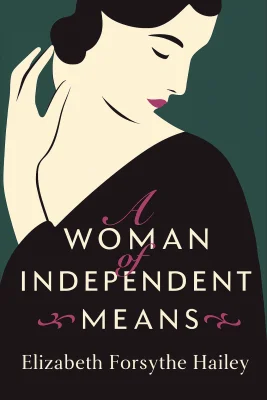
A Woman of Independent Means
Categories
Fiction, Classics, Feminism, Historical Fiction, Romance, Adult, Womens, Book Club, Historical, Novels
Content Type
Book
Binding
Paperback
Year
1999
Publisher
Virago Press Ltd
Language
English
ISBN13
9781860497667
File Download
PDF | EPUB
A Woman of Independent Means Plot Summary
Introduction
The year is 1899, and nine-year-old Bess Alcott sits in a fourth-grade classroom in Honey Grove, Texas, penning her first letter to her classmate Rob Steed. "I just asked Miss Appleton to put us on the same team for the spelling bee," she writes with the confidence of someone who has never been denied anything she wanted. Little does she know that this simple note will mark the beginning of a correspondence that will span seven decades, chronicling a life lived with fierce independence in an age when women were expected to remain quietly in the shadows. Through nearly seventy years of letters—to husbands, children, friends, and business associates—Bess Alcott Steed Garner emerges as a woman who refuses to be contained by the conventions of her time. From a privileged childhood in small-town Texas to travels across Europe, from devastating personal tragedies to triumphant business ventures, her story unfolds not through narrative but through her own words, captured in the intimate moments when pen meets paper. Each letter reveals another facet of a woman who understood that true independence comes not from rejecting love and family, but from meeting life's challenges with intelligence, courage, and an unwavering sense of her own worth.
Chapter 1: The Confident Heiress: Foundations of Independence
The letters begin with childish declarations of friendship and adventure, but even at nine years old, Bess Alcott displays the commanding presence that will define her entire life. When she contracts tuberculosis at fifteen and must spend months in bed, she writes to Rob with characteristic determination: "I have lost a year of my life! Somehow I will make up for it and then I will never lose another day." The disease that might have broken another spirit only sharpens her resolve to seize every moment that follows. Her father Andrew Alcott has built a modest empire in Honey Grove, and Bess grows up understanding that money is power—but more importantly, that power carries responsibility. When she decides to leave Mary Baldwin College to marry Rob, she writes to her parents with the confidence of someone accustomed to having her wishes granted: "I love Rob and I want to live my life at his side. I know his family has no money and he cannot afford to be married now, but my family does and I can." The young couple settles in Dallas, where Rob enters the real estate business with Bess's financial backing. She hands him a formal loan document for twenty thousand dollars, witnessed by their servants, treating their marriage as both a love affair and a business partnership. When Rob's first major deal succeeds, she orchestrates their entry into Dallas society with the precision of a military campaign, securing their membership at the country club and hosting dinner parties that establish their social position. But Bess's letters reveal something more complex than mere social climbing. When her mother dies suddenly, leaving her a substantial inheritance, she writes with surprising maturity about the nature of wealth: "I never realized she was a woman of independent means. I always attributed her sense of dignity and self-esteem to a more spiritual source." At twenty-one, she already understands that money without purpose is meaningless, but money in the hands of someone with vision can change the world. Her first pregnancy brings both joy and restlessness. As Rob's business demands more of his time, Bess finds herself alone in their grand house, writing increasingly philosophical letters about the nature of marriage and independence. The seeds of her lifelong struggle are already visible—how to remain herself while building a life with another person.
Chapter 2: Widowhood and Rebirth: Managing Life's Unexpected Turns
The Spanish flu pandemic of 1919 strikes Dallas with devastating force, and Rob Steed becomes one of its victims. Bess, now twenty-eight with three children, faces her first real test of independence. Her letters from Rob's deathbed are among the most heartbreaking in the entire correspondence, revealing a woman watching her perfect world crumble while maintaining the strength her family needs. "Rob faced his death more honestly than I did," she writes to her father, "never indulging any false hope toward the end, but calmly making changes in his will and charting future courses of action for me to follow." Even in grief, she recognizes Rob's final gift—the trust he places in her ability to manage alone. The business Rob built is hemorrhaging money, destroyed by insurance claims from the pandemic. Every advisor tells Bess to declare bankruptcy, but she mortgages everything she owns to keep the company afloat. Her letters to the board of directors crackle with determination: "I am determined to meet all the claims as promptly as possible, though this may entail considerable personal sacrifice on the part of everyone involved in the company." Manning, Rob's business partner, thinks she's making a catastrophic mistake. The employees rally behind her instead, accepting reduced salaries in exchange for stock options. Slowly, painfully, she rebuilds what the pandemic destroyed. Her letters during this period reveal a woman discovering strengths she never knew she possessed. But grief nearly breaks her. The intimate letters to her closest friend Arthur Fineman expose the depth of her despair: "A widow seems to me like some parasitic plant still clinging tenaciously to the limbs of a fallen tree, ignoring the fact that the tree now lies lifeless on the ground." Only the children keep her anchored to life, their needs forcing her to function when her own desires have died. Arthur becomes her closest confidant, managing her investments and offering the intellectual companionship she craves. Their relationship dances on the edge of impropriety, but Bess maintains perfect control—she needs his friendship too much to risk it for romance. When he proposes marriage, she gently refuses, understanding that their bond is stronger as chosen companions than it would be as conventional spouses.
Chapter 3: The Mother's Grip: Children Taking Flight
As her children grow, Bess faces the peculiar challenge of being both mother and father, disciplinarian and nurturer. Her letters reveal a woman trying to prepare her children for a world that has already proven dangerous and unpredictable. When her daughter Eleanor is struck by a car, Bess moves into the hospital room and creates an elaborate fantasy world to sustain the child through months of recovery. "Every morning when she wakes up, there is a letter from the Cloud Fairy on her pillow and a present beside it," she writes. The Cloud Fairy becomes one of Bess's greatest creations—a benevolent spirit who watches over Eleanor from the sky, turning the ceiling of a hospital room into a gateway to wonder. Years later, when Eleanor is grown, she still treasures those letters that transformed her darkest time into an adventure. The decision to send Andrew east to prep school sparks the first major conflict with her second husband, Sam Garner. Sam, raised in poverty, cannot understand why any boy needs more than a Texas education. But Bess has seen enough of the world to know that her son will need every advantage she can provide. "Andrew's friendship with your son has been a source of greater pride to me than any of his academic achievements," she writes to Roger Wainwright's parents. "The ability to choose friends wisely was his father's greatest asset in business." Eleanor proves even more challenging. Brilliant and artistic, she abandons Vassar to study art in Florence, writing letters that barely conceal her romantic entanglement with an Italian count. Bess crosses the Atlantic to retrieve her daughter, but finds Eleanor changed—no longer the sheltered girl who left America, but a woman who has tasted independence and found it intoxicating. The letters between mother and daughter become a fascinating duel of wills. Bess wants Eleanor to return to conventional life, but Eleanor has inherited her mother's stubborn independence. "I fully intend to continue my education but since I never expect to complete it, why should I spend any more time at college?" Eleanor writes, throwing Bess's own words back at her. The daughter has learned too well from the mother's example.
Chapter 4: Voyages and Homecomings: The World Beyond Dallas
Throughout the 1920s and 1930s, Bess's wanderlust reaches its peak. Her letters from Europe sparkle with the joy of discovery—Venice at sunset, the Blue Grotto at Capri, chamber music in Swiss mountain hotels. But these journeys are more than mere pleasure trips; they represent her ongoing education in the art of living. Travel also becomes her escape from a marriage that grows more confining each year. Sam Garner loves her completely but possesses none of Rob's intellectual curiosity. While Bess devours books and seeks out new experiences, Sam retreats into routine and familiar patterns. Her letters home often crackle with barely suppressed irritation at his provincial attitudes. The most revealing letters come from a chance encounter on a cruise with Richard Prince, a wealthy widower from Atlanta. Their brief affair—conducted with perfect propriety but unmistakable passion—shows Bess what her life might have been with a different kind of man. "I met my late husband when we were children," she writes after their parting. "We reached adulthood together and continued to grow even after we were married. But you and I have both made this trip before." The relationship remains unconsummated but emotionally devastating. For the first time since Rob's death, Bess glimpses the possibility of perfect companionship with a man who matches her intellectual appetite and financial independence. But she also recognizes the impossibility of such a relationship within the constraints of conventional society. Her travels become a form of therapy, each journey providing the emotional and intellectual stimulation she cannot find at home. When Sam finally accompanies her to Europe, his discomfort with foreign customs and languages only emphasizes how different they are. "Sam flies into a rage if I attempt to question him about his final wishes and berates me till bedtime for assuming I will outlive him," she writes during their Swiss holiday, revealing the growing tension in their marriage. But the travels also deepen her appreciation for home. Each return to Dallas brings renewed energy for her business investments and social obligations. She becomes a patron of the arts, serves on charitable boards, and transforms her home into a gathering place for the city's cultural elite.
Chapter 5: Legacy in Letters: The Final Correspondence
The approach of World War II finds Bess entering her sixties with characteristic vigor, but the letters begin to show signs of the losses that will define her later years. Arthur Fineman dies of a heart attack, leaving a void in her life that no one else can fill. "He took the place of a husband at a time when I was very much alone in the world and even after each of us married someone else, his wise and cultivated presence continued to be an important part of my life," she writes in one of her most poignant letters. The war brings its own tragedies. Andrew serves in the Pacific while Eleanor's husband joins the European campaign. Bess throws herself into war work, rolling bandages and organizing relief efforts, but her letters reveal a woman struggling to maintain her optimism in the face of global catastrophe. When Annie Hoffmeyer's son Franz is killed in action, Bess's letter of condolence draws on her own experience of loss: "I know too well the despair engulfing you at this moment. And the anger at a life denied." The post-war years bring a new challenge—aging. Sam's health deteriorates rapidly, and Bess finds herself caring for a man who has become increasingly bitter and dependent. Her letters reveal the cruel irony of their situation: she who always craved independence now finds herself tied to someone who has lost his. "Sometimes being a good mother gets in the way of being a good person," she writes during a particularly difficult period with Eleanor, but the same could be said of being a good wife to a failing husband. Yet even as her contemporaries begin to die off, Bess continues planning new adventures. She takes cruises to the Arctic Circle and Hawaii, maintains correspondence with friends around the world, and throws herself into the lives of her grandchildren with the same intensity she once brought to her business ventures. Her great-granddaughter becomes her special joy, a new generation to inspire and influence. The letters from her seventies show a woman determined to remain engaged with life until the very end. She sells her large house and moves to a high-rise apartment, buys television sets and air conditioning, and embraces every technological advancement. "I grow increasingly impatient with my friends who mourn the past and decry the present," she writes. "I am thrilled with every technological advance I have lived to enjoy."
Chapter 6: The Matriarch's Twilight: Reflections and Release
Bess's final letters reveal a woman coming to terms with mortality while refusing to surrender to it. When Sam dies after years of declining health, she writes with characteristic honesty about the relief she feels: "I had not realized how much I had missed her," she admits after spending a day with her daughter following Sam's death. The stroke that ends their conversation comes while she is preparing for one last trip to California to see her newest great-grandchild. The fragmentary final letter, written after her stroke, shows a mind retreating into memory but still reaching toward the future. "Baby is beautiful. Like child of Cloud Fairy. I want to hold," she manages to write, her handwriting shaky but her love undimmed. The Cloud Fairy who once comforted a hospitalized daughter now returns to welcome another generation. Her last coherent thoughts are of sailing away on one final voyage, dining with the captain as she had done on so many Atlantic crossings. The metaphor is perfect—Bess Alcott Steed Garner as eternal traveler, always ready for the next adventure, always curious about what lies beyond the horizon. The newspaper obituary that ends the collection is dry and formal, listing her accomplishments and survivors. But it cannot capture the vivid personality revealed in seven decades of correspondence, or the revolutionary nature of a woman who carved out a life of perfect independence while never abandoning her responsibilities to those she loved.
Summary
Through the intimate medium of personal letters, Bess Alcott Steed Garner emerges as a prototype of modern womanhood—financially astute, emotionally intelligent, and utterly unwilling to limit her horizons to match society's expectations. Her correspondence spans the transformation of America from a provincial, male-dominated society to the complex modern world, and she serves as both witness and participant in that transformation. From her first childhood note to a classmate to her final stroke-impaired message to a great-granddaughter, every letter reveals a woman determined to live life on her own terms while meeting every obligation with grace and competence. What makes Bess revolutionary is not her rejection of traditional female roles but her expansion of them. She is simultaneously devoted wife and shrewd businesswoman, loving mother and independent traveler, gracious hostess and patron of the arts. Her letters prove that true liberation comes not from abandoning responsibility but from choosing how to meet it, not from rejecting love but from loving without losing oneself in the process. In an age when women were expected to disappear into their families, Bess Steed Garner wrote herself into permanent existence, leaving behind a record of a life lived with intelligence, courage, and uncompromising integrity. Her desired epitaph—"To be continued"—captures perfectly the spirit of a woman who understood that the best lives are not endings but beginnings, inspiring others to reach for the same heights of independence and accomplishment.
Best Quote
“Sometimes being a good mother gets in the way of being a good person.” ― Elizabeth Forsythe Hailey, A Woman of Independent Means
Review Summary
Strengths: The review highlights the book's engaging epistolary style and the well-developed character of Bess Alcott Steed, who is described as complex and compelling. The narrative spans significant historical events, adding depth and interest. The emotional impact and memorable scenes are also praised, with the book maintaining its appeal upon a second reading. Overall: The reviewer expresses a strong positive sentiment, recommending the book for its captivating storytelling and character development. The book is likened to a page-turner, with the reader forming a deep connection to the protagonist, making it a highly recommended read.
About Author

Elizabeth Forsythe Hailey
Hailey interrogates the intricate layers of women's independence and familial ties through her compelling narratives. Her early education at the Sorbonne and Hollins College laid the foundation for a career rich in journalism, playwriting, and novelistic endeavors. Collaborating with her husband on projects like "Mary Hartman, Mary Hartman" enabled her to hone a craft that would later emerge in her literary work. Her breakthrough book, "A Woman of Independent Means", not only achieved bestseller status but also offered profound insights into women's resilience and autonomy, inspired by her grandmother's life. The novel's success translated to multiple adaptations, thereby extending its impact across different media.\n\nHailey's writing method fuses autobiographical nuances with broader themes of self-reliance and endurance. Her belief that "liberation begins inside" resonates in her exploration of women's spiritual and psychological independence. This thematic focus is not just confined to one book; her other novels like "Life Sentences" and "Joanna's Husband and David's Wife" further delve into these complex emotional terrains. Readers benefit from Hailey's ability to translate personal and familial history into universal narratives that serve as both mirrors and windows, fostering a deeper understanding of women's roles and challenges. Therefore, her works remain pivotal for those interested in stories that bridge personal history with wider societal themes.
Read moreDownload PDF & EPUB
To save this Black List summary for later, download the free PDF and EPUB. You can print it out, or read offline at your convenience.
A Woman of Independent Means
by Elizabeth Forsythe Hailey
