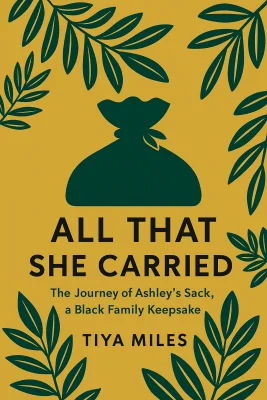
All That She Carried
The Journey of Ashley's Sack, a Black Family Keepsake
Categories
Nonfiction, Biography, History, Memoir, Audiobook, Book Club, Historical, African American, American History, Race
Content Type
Book
Binding
Hardcover
Year
2021
Publisher
Random House
Language
English
ISBN13
9781984854995
File Download
PDF | EPUB
All That She Carried Plot Summary
Introduction
# Love's Legacy: Black Women's Survival Through Slavery's Separation In the winter of 1852, an enslaved woman named Rose faced every mother's worst nightmare. Her nine-year-old daughter Ashley was about to be sold away from her, torn from her arms by the brutal machinery of American slavery. In this moment of unthinkable crisis, Rose gathered what few possessions she had and packed them into a cotton sack: a tattered dress, three handfuls of pecans, and a braid of her own hair. As she pressed this humble emergency pack into Ashley's hands, she whispered words that would echo across generations: "It be filled with my Love always." Mother and daughter would never see each other again. This extraordinary story might have been lost to history if not for Ashley's granddaughter, Ruth Middleton, who in 1921 embroidered the family narrative onto the very sack Rose had packed. Through this single artifact, we witness the remarkable resilience of Black women who transformed ordinary objects into vessels of survival, memory, and resistance. Their story reveals how enslaved mothers fought to preserve family bonds within a system designed to destroy them, how material culture carried emotional truths across generations, and how acts of love became forms of historical resistance. From the auction blocks of Charleston to the Great Migration north, this humble cotton sack illuminates the creative strategies African American women employed to maintain their humanity and protect their children against seemingly insurmountable odds.
Chapter 1: Winter of 1852: Rose's Emergency Pack and Impending Sale
The year 1852 found Rose living in the shadow of an inevitable catastrophe. Her enslaver, Robert Martin of South Carolina, had died, and Rose understood what this meant for enslaved families like hers. Estate settlements routinely scattered enslaved people to the highest bidders, with no consideration for family bonds or human attachments. As Milberry Martin prepared to liquidate her late husband's property "for the purpose of Partition," Rose faced the reality that her nine-year-old daughter Ashley would soon be sold away from her. In this moment of existential crisis, Rose performed an act of profound maternal love. She hastily gathered the few possessions available to her and packed them into a cotton sack that would serve as Ashley's emergency kit. The items she chose revealed both practical wisdom and deep emotional intelligence. A tattered dress would provide Ashley with clothing and dignity in her new circumstances. Three handfuls of pecans offered concentrated nutrition that could sustain a child through uncertain times, while also serving as potential seeds for future planting. Most poignantly, Rose included a braid of her own hair, creating a physical connection that could travel with Ashley even as their bodies were forced apart. The cotton sack itself tells a story of the circular exploitation that characterized American slavery. Likely manufactured from cotton harvested by enslaved hands, processed in northern factories, and returned south as packaging for agricultural goods, this humble bag embodied the economic system that reduced human beings to property. Yet Rose transformed this industrial object into something sacred, filling it not just with material necessities but with her love and hopes for her daughter's survival. Rose's final words to Ashley carried the weight of a mother's blessing and a promise that transcended physical separation. When she told her daughter that the sack would be "filled with my Love always," she was asserting that their bond could not be severed by sale or distance. This radical vision of love as something that could persist beyond physical presence became a form of resistance to slavery's logic, which insisted that enslaved people were merely property with no meaningful connections to one another. In packing this emergency kit, Rose demonstrated the visionary fortitude that enabled enslaved mothers to protect their children even when they could not protect themselves.
Chapter 2: The Auction Block: Charleston's Human Market and Family Division
Charleston, South Carolina, stood as the epicenter of America's domestic slave trade, a city where immense wealth was built upon the systematic buying and selling of human beings. By the 1850s, Charleston had transformed into one of the busiest slave-trading ports in the United States, with auction houses dotting the landscape and traders conducting their brutal commerce in full public view. The auction block itself became the physical manifestation of slavery's cruelest logic, a platform where families were torn apart and human bonds were severed for profit. The process of preparing enslaved people for sale was deliberately dehumanizing. Potential buyers examined them like livestock, inspecting teeth, muscles, and reproductive capabilities. Children as young as Ashley were routinely separated from parents, with auctioneers grouping families based on market value rather than kinship bonds. British traveler Harriet Martineau captured the horror of witnessing a Charleston slave auction, describing the jarring transition "from the slavemarket to the abodes of the slavemasters, bright with sunshine, and gay with flowers, courtesies, and mirth." This human trafficking underwrote Charleston's legendary wealth and refined culture. The city's elite built magnificent mansions, imported luxury goods from Europe, and cultivated reputations for sophisticated living, all made possible by the commodification of human beings. As one historian noted, "The auction block underwrote the purchase of pianos, wedding dresses, the education of slaveholding women and men, tours of Europe, northern vacations, and the maintenance of the slave society of the South." The contrast between this genteel lifestyle and its brutal foundation revealed the moral bankruptcy at the heart of antebellum Southern society. For those experiencing sale, the psychological trauma was immeasurable. Louisa Picquet, sold away from her mother in South Carolina, recalled decades later seeing her "mother right on her knees, with hands up, prayin' to the Lord for me. I never could forget her." The domestic slave trade reached its apex in the 1850s, with young women like Ashley fetching between five hundred and six hundred dollars. Those sold "down the river" to the cotton frontier faced even harsher conditions than they had known in the established eastern slave states. Yet even as the auction block achieved its terrible purpose of separating Ashley from Rose, it could not destroy the love that traveled with her in that carefully packed cotton sack.
Chapter 3: Ashley's Journey: Carrying Mother's Love Through Cotton Country
After her sale in Charleston, nine-year-old Ashley vanished from conventional historical records, appearing only in the embroidered narrative her granddaughter would stitch decades later. Yet by examining the broader context of enslaved children's experiences, we can trace the contours of her likely journey into the South Carolina interior. Following the auction block, Ashley would have been transported to the expanding cotton frontier, a region transformed by the forced removal of Cherokee and Creek peoples and the brutal labor demands of King Cotton. Ashley carried her mother's sack through this harsh landscape, clutching the tangible evidence of Rose's love as she faced an uncertain future. The items packed with such care took on new significance in her changed circumstances. The tattered dress provided both physical protection and a connection to home, perhaps still carrying Rose's scent to comfort a frightened child. The pecans offered crucial nutrition during the traumatic transition while representing the possibility of future growth and sustenance. Most importantly, the braid of Rose's hair served as physical proof that she had been loved, that she belonged to someone beyond her enslaver. The Civil War erupted when Ashley would have been in her late teens, bringing both hope and new dangers to enslaved communities. When Union forces marched through South Carolina in early 1865, they left a path of destruction that affected all residents. Freedom came with the war's end, but it arrived in a landscape of devastation and uncertainty. South Carolina's former slaveholders quickly reasserted control through Black Codes that severely restricted African Americans' rights and mobility, forcing many formerly enslaved people like Ashley to work for previous owners under exploitative labor contracts. Despite these overwhelming challenges, Ashley survived and established a family of her own. She gave birth to a daughter she may have named Rosa, possibly honoring her lost mother's memory. This daughter would later marry and give birth to Ruth, who would eventually embroider the family story onto the precious sack. Ashley's success in preserving both the physical object and its accompanying narrative across decades of hardship speaks to her determination to carry forward her mother's legacy of love and resilience. The sack became more than a container of emergency supplies; it transformed into a portable sanctuary containing evidence of Ashley's true identity beyond slavery's definitions.
Chapter 4: Seeds and Survival: Creating Meaning from Meager Possessions
The three handfuls of pecans Rose packed for Ashley reveal the sophisticated survival strategies and ecological knowledge that sustained enslaved communities. Pecans were native to North America, particularly abundant along southern river valleys, and represented an ideal survival food: calorie-dense, protein-rich, and capable of long-term storage without spoiling. For an enslaved child facing an uncertain journey, these nuts could mean the difference between life and death, providing concentrated nutrition that could be eaten immediately or saved for lean times. Beyond their immediate nutritional value, the pecans carried deeper significance as potential seeds for future abundance. Enslaved people throughout the South maintained complex relationships with the natural environment, cultivating provision gardens where they grew food for their own consumption and sometimes for trade. These gardens represented crucial spaces of relative autonomy within the plantation system, where enslaved people could exercise some control over their diet and economic circumstances. The knowledge of which plants could sustain life during difficult journeys formed part of a broader ecological literacy that enslaved women passed down through generations. Rose's choice of pecans also reflected the cultural fusion that characterized enslaved people's survival strategies. Indigenous peoples across the South had harvested wild pecans for millennia, recognizing their value as a storable food source. When enslaved Africans were forcibly brought to these lands, they quickly learned to incorporate native foods into their dietary practices, combining this knowledge with their own agricultural traditions from Africa. This adaptive wisdom created what food historians call a "culinary grammar" that preserved cultural heritage while ensuring physical survival. The story of these pecans connects to broader histories of seed-saving and agricultural resistance among oppressed peoples. Throughout the diaspora, enslaved Africans smuggled seeds from their homelands, preserving cultural foodways and creating new agricultural traditions in the Americas. After emancipation, land ownership and food sovereignty remained central to African American conceptions of freedom. The pecans in Ashley's sack thus represented not just immediate sustenance but a tradition of agricultural knowledge that helped ensure Black survival across generations. When Rose carefully measured out those three handfuls, she was drawing on centuries of wisdom about which foods could carry a people through their darkest hours.
Chapter 5: Ruth's Needle: Embroidering Family Memory in 1921 Philadelphia
In 1921, nearly seventy years after Rose packed the emergency sack for Ashley, their descendant Ruth Middleton took up needle and thread to permanently inscribe their family story onto the worn cotton cloth. Ruth had migrated north from South Carolina to Philadelphia as part of the Great Migration, joining millions of African Americans who left the South seeking better opportunities and escape from Jim Crow oppression. In her new northern home, working as a domestic servant while raising her daughter Dorothy, Ruth made a momentous decision to transform oral family history into a material text that could survive beyond living memory. The timing of Ruth's embroidery was deeply significant. The early 1920s marked a period of heightened racial violence across America, including deadly race riots that claimed hundreds of Black lives. It was also an era when the "Lost Cause" narrative of the Civil War was gaining prominence, romanticizing the Old South while minimizing slavery's horrors. Against this backdrop of continued racial trauma and historical distortion, Ruth's act of recording her family's experience represented a form of counter-memory, an insistence that the true stories of enslaved people not be forgotten or sanitized. Using red thread that evoked both blood ties and sacred text, Ruth carefully stitched her family narrative onto the sack: "My great grandmother Rose mother of Ashley gave her this sack when she was sold at age 9 in South Carolina it held a tattered dress 3 handfulls of pecans a braid of Roses hair. Told her It be filled with my Love always she never saw her again. Ashley is my grandmother, Ruth Middleton, 1921." In just fifty words, Ruth captured a family saga spanning three generations and encompassing the central traumas of American slavery: family separation, the commodification of human beings, and the struggle to maintain bonds of love across forced divides. Ruth's choice of embroidery as her medium connected her to both African American textile traditions and the broader women's needlework culture of her time. While enslaved women had been forced to sew for their enslavers' profit, free Black women in the early twentieth century embraced needlework as a sign of respectability and feminine accomplishment. By employing this traditionally feminine craft to document her family's experience of slavery, Ruth was participating in what scholars call "textile testimony," using fabric arts to preserve histories that might otherwise go untold. Her embroidered narrative stands as a rebuke to the silences and distortions of conventional archives, asserting through needle and thread that her family's story deserved to be remembered and honored.
Chapter 6: Material Witness: The Sack's Journey to National Recognition
The journey of Ashley's sack from Ruth's Philadelphia home to its current place in the Smithsonian National Museum of African American History and Culture reveals the complex pathways through which African American material culture has been preserved, lost, and reclaimed. After Ruth's death in 1942, the sack passed to her daughter Dorothy, who treasured it as a family heirloom until her own death in 1988. Somehow, in the years that followed, this precious artifact became separated from the family and eventually found its way to a Tennessee flea market, where it sat unrecognized among bins of old fabrics. In 2007, a white woman browsing the flea market discovered the sack and immediately recognized its historical significance. Rather than keeping it as a curiosity, she made the remarkable decision to donate it to the Middleton Place Foundation in Charleston, South Carolina, which later loaned it to the Smithsonian. This act of recognition and restitution represents a rare moment of historical justice, returning an African American family's story to its proper place in the national narrative. The sack's rediscovery challenges us to consider how many other precious artifacts of Black history may be scattered in attics, estate sales, and flea markets, waiting to be recognized and preserved. The sack's installation in the National Museum of African American History and Culture has transformed it from a private family heirloom into a powerful public witness to the experience of slavery. Museum visitors often report profound emotional responses when encountering the artifact, with many moved to tears by Ruth's simple yet devastating narrative. This emotional connection represents a different kind of historical knowledge, one that acknowledges the affective dimensions of the past and recognizes love as a historical force capable of transcending time and circumstance. As a museum object, the sack continues to generate new meanings and conversations about American history. It challenges traditional museum practices that have often privileged the material culture of the wealthy and powerful while ignoring the possessions of the marginalized. The sack's presence in the nation's premier institution of African American history represents a broader shift toward recognizing the historical importance of ordinary objects when they carry extraordinary stories. It stands as testimony to the power of material culture to preserve voices that were systematically silenced, ensuring that Rose's act of love and Ruth's act of remembrance continue to speak to new generations of Americans grappling with the legacies of slavery and the ongoing struggle for racial justice.
Summary
The story of Ashley's sack illuminates the extraordinary resilience of African American women who transformed ordinary objects into vessels of survival, memory, and resistance across generations of oppression. From Rose's desperate act of maternal love in 1852 to Ruth's careful embroidery in 1921, this humble cotton bag demonstrates how Black women preserved family bonds and human dignity within systems designed to destroy both. The items Rose chose for her daughter's emergency pack reveal a profound understanding of what was needed for both physical and emotional survival: clothing for protection and dignity, food for sustenance and future growth, and a token of remembrance that could carry love across the chasm of forced separation. This remarkable journey from slavery to freedom to national recognition offers profound lessons for our contemporary moment. It reminds us that even in our darkest hours, small acts of care and preservation matter immensely. It teaches us that objects can become powerful vessels of memory and connection when imbued with intention and love. Most importantly, it demonstrates how marginalized people have always found ways to assert their humanity and maintain bonds of kinship despite overwhelming oppression. As we face our own societal challenges, we might look to Rose's example of courage and foresight, Ashley's determination to carry on, and Ruth's commitment to preserving truth, recognizing that our survival depends on bearing up to the weight and promise of our shared history while filling our own emergency packs with love that might sustain future generations.
Best Quote
“Things become bearers of memory and information, especially when enhanced by stories that expand their capacity to carry meaning.” ― Tiya Miles, All That She Carried: The Journey of Ashley's Sack, a Black Family Keepsake
Review Summary
Strengths: The review highlights the audiobook's exceptional narration by Janina Edwards, describing her voice as compassionate, warm, and engaging. The book is praised for its beautiful writing and its tribute to African-American women, particularly through the historical and personal story of Ashley's sack. The review appreciates the book's ability to deepen understanding of history in an engaging manner. Overall: The reviewer expresses a strong positive sentiment, recommending the book highly. They emphasize its emotional impact and historical significance, particularly in portraying the experiences of Black women during slavery. The audiobook is described as captivating and a must-listen for those interested in personal and historical narratives.
About Author

Tiya Miles
Miles explores the intricate intersections of African American, Native American, and women's histories, thereby offering a nuanced perspective on the past. Her work frequently delves into themes of historical struggles and the conjoined narratives of Black and Native peoples, using place as a central focus. Meanwhile, her research includes public histories of plantations and environmental storytelling, which she has applied to initiatives like ECO Girls, designed to foster environmental education and self-esteem among young women in urban areas. Miles also investigates how childhood experiences in nature influence personal development, as demonstrated in her book, "Wild Girls: How the Outdoors Shaped the Women Who Challenged a Nation."\n\nMiles' method involves weaving historical narratives with contemporary issues, making her work accessible and relevant to a wide range of readers. This approach benefits educators, historians, and anyone interested in the complexities of cultural intersections and environmental themes. Her acclaimed book, "All That She Carried," exemplifies her ability to connect individual stories to broader historical contexts, winning the 2021 National Book Award for Nonfiction. This book, among others, solidifies her status as a leading figure in her field, earning her multiple awards and recognition.\n\nFor readers, Miles offers an engaging journey through history that challenges conventional narratives while enriching the understanding of cultural interconnections. Her writing not only contributes to scholarly discourse but also offers valuable insights into the experiences that shape individual and collective identities. With works like "The Cherokee Rose: A Novel of Gardens and Ghosts," Miles captures the imagination, bringing to life the ghosts of history in a manner that resonates with both academic and general audiences. Her bio reveals a commitment to exploring these multifaceted themes, enhancing our comprehension of historical and environmental narratives.
Read moreDownload PDF & EPUB
To save this Black List summary for later, download the free PDF and EPUB. You can print it out, or read offline at your convenience.
All That She Carried
by Tiya Miles
