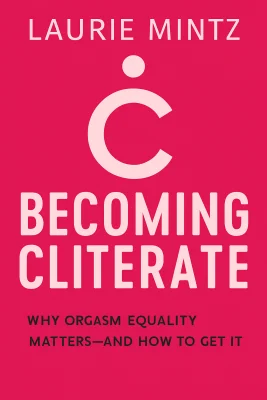
Becoming Cliterate
Why Orgasm Equality Matters—And How to Get It
Categories
Nonfiction, Self Help, Psychology, Health, Science, Relationships, Audiobook, Feminism, Sexuality, Womens
Content Type
Book
Binding
Kindle Edition
Year
2017
Publisher
HarperOne
Language
English
ASIN
B01KFBO7AM
ISBN
0062484400
ISBN13
9780062484406
File Download
PDF | EPUB
Becoming Cliterate Plot Summary
Introduction
Are you tired of faking orgasms? Frustrated by partners who seem to have no clue about what brings you pleasure? Perhaps you've experienced the all-too-common scenario where your male partner finishes quickly during intercourse while you're left unsatisfied, wondering if something is wrong with you. The truth is, you're not alone. Approximately 50 percent of women aged eighteen to thirty-five report difficulty reaching orgasm with a partner. Yet this isn't your fault—it's a cultural problem. Our society has perpetuated a massive lie about female pleasure, focusing almost exclusively on intercourse as the route to sexual satisfaction. But here's the liberating truth: 95 percent of women need clitoral stimulation to reach orgasm. Throughout these pages, you'll discover the essential knowledge about your body and practical skills to transform your sexual experiences. You'll learn to communicate your desires confidently, embrace mindfulness during intimate moments, and take ownership of your pleasure. This journey isn't just about more orgasms—it's about creating equality in the bedroom and developing a healthier relationship with your sexuality.
Chapter 1: Recognize the Pleasure Gap and Cultural Myths
The pleasure gap is real and significant. Research consistently shows that men are having far more orgasms than women—64 percent of women versus 91 percent of men report having orgasms during their most recent sexual encounters. This disparity grows even wider during casual hookups, where 55 percent of men versus only 4 percent of women typically reach orgasm during first-time sexual encounters. This isn't a reflection of women's bodies being "complicated" or "difficult"—it's the result of cultural misinformation about how women actually experience pleasure. The primary culprit behind this pleasure inequality is our culture's excessive focus on intercourse. Movies, pornography, and even women's magazines constantly portray women having rapid, intense orgasms from penetration alone. Julie, a 29-year-old woman who attended Dr. Mintz's human sexuality class, shared how she spent years believing something was wrong with her because she couldn't orgasm during intercourse like women in movies. "I faked it for three years with my college boyfriend," she admitted. "I was too embarrassed to tell him that I needed clitoral stimulation." When Julie finally learned that her experience was completely normal—that most women cannot orgasm from penetration alone—she felt an immense sense of relief. Julie's breakthrough came when she gathered the courage to have an honest conversation with her new partner about what she actually needed for pleasure. She stopped faking orgasms and instead showed him how she liked to be touched. She incorporated a small vibrator during intercourse and discovered that combining clitoral stimulation with penetration created a much more satisfying experience for her. Her partner, rather than feeling inadequate, appreciated her honesty and was enthusiastic about learning what truly brought her pleasure. The solution to closing the pleasure gap begins with understanding female anatomy. The clitoris is the female pleasure center, containing thousands of nerve endings dedicated solely to sexual pleasure. Its visible part (the glans) is just the tip of an extensive internal structure. Most women need direct or indirect stimulation of the clitoris to reach orgasm—not just penetration. Learning to incorporate clitoral stimulation before, during, or after intercourse can transform your sexual experience. To challenge these myths in your own life, start by rejecting the idea that you should orgasm from intercourse alone. Experiment with different types of touch and communicate clearly with your partner about what feels good. Remember that your sexual pleasure matters just as much as your partner's. As Julie discovered, embracing this knowledge doesn't diminish intimacy—it enhances it by creating more satisfying experiences for everyone involved. The pleasure gap isn't inevitable—it's fixable. By understanding the truth about female orgasms and letting go of harmful cultural myths, you can begin your journey toward sexual satisfaction and equality in the bedroom.
Chapter 2: Understand Your Anatomy and Embrace Self-Discovery
The path to sexual pleasure begins with understanding your unique anatomy. The vulva—not the vagina—refers to the external female genitalia, which includes the labia (lips), clitoral hood, clitoral glans, and vaginal opening. The clitoris itself is far more extensive than most people realize; what we see externally is merely the tip (glans) of an internal structure that includes a shaft and legs that extend along the vaginal canal. This remarkable organ contains approximately 8,000 nerve endings dedicated solely to pleasure—more concentrated than any other part of the human body, male or female. Rebecca's story illustrates how transformative anatomical knowledge can be. At 32, she had never experienced an orgasm despite an active sex life with multiple partners. In therapy, she revealed she had never explored her own body through masturbation because she felt uncomfortable and "didn't know what to do." Her therapist suggested she begin with simple self-exploration using a mirror. "The first time I looked at myself, I couldn't even identify my clitoris," Rebecca admitted. With guidance, Rebecca began to examine her vulva, identifying each part. She was surprised to discover how sensitive her clitoral glans was—almost too sensitive for direct touch—and learned that stimulating the surrounding areas felt more pleasurable. As Rebecca continued her exploration, she discovered that gentle circles around her clitoral hood with lubricated fingers created intensely pleasurable sensations. She experimented with different pressures, rhythms, and locations, noting what felt good. After several sessions of self-discovery, she experienced her first orgasm. "It was like finally understanding a language my body had been speaking all along," she described. This newfound knowledge transformed her intimate relationships as well. She was able to guide her next partner, showing him what she had learned about her body. To begin your own anatomical exploration, find a private, comfortable space with good lighting. Using a mirror, identify each part of your vulva: the outer lips (labia majora), inner lips (labia minora), clitoral hood, clitoral glans, vaginal opening, and urethral opening. Notice the unique coloration, shape, and symmetry of your genitals—every vulva is as unique as a fingerprint. Gently touch different areas with lubricated fingers to discover your sensitivity patterns. Remember that women vary significantly in their genital anatomy and sensitivity. Some women have clitoral glans that are extremely sensitive and prefer indirect stimulation through the hood or labia. Others may enjoy more direct pressure. Some find the area just to the left or right of the clitoris most pleasurable. The key is discovering what works specifically for your body, not following a one-size-fits-all approach. Self-exploration isn't just educational—it's essential for sexual satisfaction. Research shows that women who understand their bodies and how they respond to different types of touch have significantly higher rates of orgasm with partners. By becoming familiar with your anatomy, you're taking the first crucial step toward sexual empowerment and pleasure.
Chapter 3: Master Mindfulness for Sexual Pleasure
Mindfulness—the practice of being fully present in the moment—can revolutionize your sexual experience. During intimate encounters, many women find themselves distracted by self-conscious thoughts about their bodies, worries about performance, or completely unrelated concerns. These mental distractions create a barrier to pleasure and orgasm. When your brain is busy judging or analyzing, it cannot fully experience physical sensations. Mindfulness helps you quiet these distracting thoughts and immerse yourself in the physical experience of pleasure. Consider Megan's experience. As a successful 35-year-old attorney, she excelled at multitasking and problem-solving. However, these same mental habits sabotaged her sexual satisfaction. "Even with partners I was attracted to, I couldn't stop my mind from wandering during sex," she explained. "I'd worry about how my body looked, whether I was taking too long, or start mentally reviewing my work calendar." Despite physical stimulation that should have been pleasurable, Megan rarely reached orgasm because her mind wasn't present enough to experience pleasure. After learning about mindfulness techniques, Megan began practicing daily meditation for just five minutes each morning. She gradually extended her practice and started applying mindfulness techniques to everyday activities like showering and eating. When she eventually applied these skills to sexual encounters, she noticed a dramatic difference. By focusing on physical sensations—the texture, pressure, temperature, and rhythm of touch—she was able to stay present and experience significantly more pleasure. "It was like someone turned up the volume on my sensations," she described. "I could feel so much more when I wasn't caught up in my thoughts." Within a few months, Megan was experiencing regular orgasms with her partner. To incorporate mindfulness into your sexual experiences, start by practicing in non-sexual contexts. When showering, notice the sensation of water on your skin. While eating, focus completely on the flavors and textures. When walking, feel each step and the air against your skin. These everyday moments of mindfulness strengthen your ability to stay present during intimate encounters. During sexual activity, use your breath as an anchor. When you notice your mind wandering, gently bring your attention back to physical sensations without judgment. A particularly effective technique is to focus on your five senses during intimate moments. Notice what you see, hear, smell, taste, and most importantly, feel. When distracting thoughts arise—and they will—simply observe them without attachment and return your focus to bodily sensations. Think of these thoughts as clouds passing across the sky of your awareness, not as demands for your attention. Remember that mindfulness is a skill that improves with practice. Be patient and compassionate with yourself as you develop this ability. Many women report that mindfulness not only enhances their ability to reach orgasm but also deepens their connection with partners and increases overall sexual satisfaction. By learning to quiet the critical voice in your head, you create space for your body's natural pleasure responses to emerge.
Chapter 4: Take Control of Your Own Orgasm
Taking responsibility for your own orgasm means shifting from a passive to an active role in your sexual experiences. It means recognizing that no partner—no matter how skilled or attentive—can read your mind. You must understand what brings you pleasure and be willing to ensure those needs are met, either through direct communication or by taking action yourself during partnered sexual activities. Sarah's journey illustrates this principle perfectly. At 28, she had experienced orgasms only through masturbation but never with a partner. In relationships, she would hope her partners would somehow figure out what she needed, and when they didn't, she would either fake orgasms or resign herself to disappointment. "I kept waiting for someone to give me the perfect orgasm," she explained, "as if it were a gift that only the right person could bestow." This passive approach left Sarah consistently unsatisfied and eventually resentful in her relationships. The turning point came when Sarah realized she was the expert on her own body. She began masturbating regularly to better understand exactly what types and patterns of touch brought her to orgasm. She discovered that she needed firm, consistent clitoral stimulation and that her orgasms were more intense when she incorporated a vibrator. Initially, she felt embarrassed about incorporating these techniques with her partner, fearing he might feel inadequate. However, when she finally demonstrated what worked for her, her partner was enthusiastic and grateful for the guidance. To take control of your own orgasm, start by mastering self-pleasure. Experiment with different techniques, rhythms, and pressures to discover what consistently brings you to climax. Don't be afraid to incorporate accessories like vibrators or lubricants if they enhance your experience. Remember that the goal is discovery, not performance—there's no "right way" to masturbate. Once you've developed this understanding, bring that knowledge into partnered sex. During partnered sexual encounters, be willing to incorporate elements of self-touch. You might stimulate your clitoris during intercourse, guide your partner's hand to show them what you like, or use a vibrator before, during, or after other sexual activities. Many women find that taking turns is an effective approach—perhaps receiving oral sex or manual stimulation to orgasm first, then engaging in intercourse or pleasuring their partner afterward. Communication is essential for this approach to work. Practice simple, positive phrases like "I love when you touch me here" or "Could you go a little slower?" Frame your requests as enhancements rather than criticisms. Remember that most partners genuinely want to please you but need guidance on how to do so effectively. By taking responsibility for your own pleasure, you transform your sexual experience from one of hope and chance to one of intention and satisfaction. This approach doesn't diminish intimacy—it enhances it by creating more fulfilling experiences for both partners.
Chapter 5: Communicate Your Desires with Confidence
Effective sexual communication can transform your intimate experiences, yet many women find it challenging to express their desires clearly. Cultural conditioning often teaches women to prioritize their partner's pleasure over their own and to avoid appearing "demanding" in bed. However, research consistently shows that women who communicate their sexual preferences have significantly more satisfying experiences and more frequent orgasms. Consider Elena's experience. At 31, she had been with her partner Michael for three years and had never had an orgasm during their sexual encounters. Though she masturbated regularly and knew exactly what brought her to climax, she struggled to communicate these needs to Michael. "I worried that he'd think I was criticizing him or that he'd feel inadequate if I suggested doing things differently," she explained. Instead, she would gently guide his hand or change positions, hoping he would intuitively understand what she needed. When these subtle cues didn't work, she would occasionally fake orgasms to avoid awkwardness. The breakthrough came when Elena participated in a workshop on sexual communication. She learned practical techniques for expressing needs positively and realized how much her silence was actually hurting their relationship. She decided to have an honest conversation with Michael outside the bedroom. "I was terrified," she recalled, "but I started by telling him how much I enjoyed our intimacy and then shared specific things that would help me experience even more pleasure." To her surprise, Michael was relieved and grateful for her guidance. "He told me he'd always suspected I wasn't fully satisfied but didn't know how to ask or what to change." To improve your own sexual communication, start with simple "I" statements that focus on your experience rather than your partner's performance. For example, "I love when you touch me softly" is more effective than "You're touching too hard." Use specific, descriptive language rather than vague suggestions. "I'd love you to circle my clitoris with your tongue" provides clearer guidance than "That feels good." Timing matters significantly in sexual communication. Choose relaxed, non-sexual moments for longer discussions about preferences or concerns. During sexual activity, keep communication brief, positive, and action-oriented. Simple phrases like "slower," "right there," or "don't stop" can provide immediate guidance without disrupting the mood. Non-verbal cues like placing your hand over your partner's to guide their movements can also be highly effective. For topics that feel particularly vulnerable, try "communication about communication"—meta-communication that acknowledges the difficulty of the conversation. For example, "I feel nervous talking about this, but it's important to me because I want our intimacy to be amazing for both of us." This approach helps create safety for challenging discussions. Remember that good sexual communication isn't just about expressing needs—it's also about creating an atmosphere of appreciation. Generously acknowledge what your partner does well and what brings you pleasure. Research shows that relationships thrive when positive comments outnumber criticisms by at least five to one. By combining clear requests with genuine appreciation, you create a positive cycle that encourages open communication and greater sexual satisfaction.
Chapter 6: Redefine Sex Beyond Penetration
Our culture has narrowly defined "sex" as penis-in-vagina intercourse, with everything else relegated to "foreplay." This limited definition creates a hierarchy where penetration is viewed as the main event and other forms of sexual expression are considered merely preparatory. This perspective not only ignores how most women actually experience pleasure but also diminishes the rich variety of sexual activities that can bring fulfillment to all genders. Maria's story illustrates how transformative it can be to expand one's definition of sex. After seven years of marriage, Maria and her husband Carlos had fallen into a predictable sexual routine that rarely resulted in orgasm for her. "We always followed the same script—some kissing and touching, then intercourse until he finished, and that was it," she explained. "I thought that's just how sex was supposed to be." Maria occasionally experienced orgasms during solo masturbation but believed that "real sex" meant intercourse and that her pleasure was secondary. Everything changed when Maria read an article challenging the traditional definition of sex. She realized that she had been accepting a model designed around male pleasure while neglecting her own needs. With this new perspective, Maria initiated a conversation with Carlos about trying different approaches. They began to explore a variety of activities—oral sex, manual stimulation, using vibrators together—and treated each as equally valid forms of intimacy, not just as steps toward intercourse. They sometimes took turns focusing entirely on one person's pleasure, and other times they explored simultaneous stimulation in different positions. To redefine sex in your own life, start by examining your language. Notice when you use the word "sex" to mean only intercourse and challenge this limited definition. Consider adopting more inclusive terminology like "getting intimate" or "fooling around" that doesn't privilege any particular activity. Remind yourself that any consensual activity that brings pleasure and connection is "real sex," whether it involves penetration or not. Explore the concept of sexual scripts—the unwritten rules we follow during intimate encounters. The traditional script usually follows a linear progression: kissing, touching, oral sex, intercourse, male orgasm, end scene. Try creating new scripts that are circular rather than linear, that prioritize mutual pleasure over a particular end point, and that might not include penetration at all. Consider taking turns focusing entirely on one person's pleasure, then the other's. Incorporate a variety of stimulation into your sexual repertoire. Experiment with different touch techniques, oral sex approaches, toys, and positions. Pay attention to which activities consistently bring you pleasure and make these central to your intimate encounters, not just occasional additions. Remember that there's no hierarchy of sexual activities—the most valuable ones are simply those that bring the most pleasure and connection to you and your partner. By expanding your definition of sex beyond penetration, you create space for more satisfying experiences that honor how your body actually experiences pleasure. This redefinition doesn't diminish intercourse—it simply places it alongside other equally valuable forms of sexual expression.
Chapter 7: Spread the Knowledge for Collective Change
Individual sexual empowerment is powerful, but cultural change requires collective action. The pleasure gap persists partly because accurate information about female sexuality remains marginalized while myths continue to be perpetuated through media, education, and casual conversation. By sharing your knowledge with others, you contribute to a broader cultural shift toward sexual equality and satisfaction for all. Maya's experience demonstrates how sharing knowledge can create ripple effects. After discovering the information in this book and transforming her own sex life, Maya noticed her close friends still struggling with the same issues she had overcome. During a girls' night, when one friend complained about disappointing sexual experiences, Maya gently shared what she had learned about clitoral stimulation and the myth of vaginal orgasms. "At first, there was awkward silence," Maya recalled. "Then suddenly everyone started sharing their own experiences. It turned out none of them regularly orgasmed during intercourse alone, but each thought she was the only one with this 'problem.'" This conversation sparked ongoing discussions about pleasure, communication, and sexual equality. Inspired by the impact of these conversations, Maya became more deliberate about sharing knowledge. When watching movies with friends that portrayed unrealistic female orgasms, she would point out the inaccuracy. She recommended resources to female friends and family members. She even had thoughtful conversations with male friends about the importance of clitoral stimulation, finding that most were genuinely interested in becoming better partners but lacked accurate information. "One friend later told me our conversation completely changed his approach to intimacy and saved his relationship," Maya shared. To become an advocate for pleasure equality, start with your closest circles. When sexual topics arise naturally in conversation, offer accurate information in a non-judgmental way. Share resources that have helped you—books, articles, or websites focused on female pleasure. Consider hosting a book club discussion or gathering where these topics can be explored in a supportive environment. Challenge harmful myths when you encounter them. When friends make comments that perpetuate the vaginal orgasm myth or the idea that women's bodies are "complicated," gently offer alternative perspectives. Share statistics about the pleasure gap and how it can be addressed. Remember that your personal experience can be powerful—sharing how knowledge changed your own sexual satisfaction makes abstract concepts concrete and relatable. Men can be important allies in this cultural shift. Share information with the men in your life—partners, friends, brothers, or sons when age-appropriate. Many are eager to learn but have never had access to accurate information about female pleasure. The "Cliteracy for Him" chapter provides a perfect resource designed specifically for male readers. By speaking openly about female pleasure and orgasm equality, you help normalize these conversations and challenge the silence that has perpetuated myths for generations. Each conversation contributes to a world where women feel entitled to sexual pleasure and where all partners have the knowledge to create truly satisfying intimate experiences.
Summary
Throughout these pages, we've explored how understanding your anatomy, embracing mindfulness, taking ownership of your pleasure, communicating effectively, redefining sex, and spreading knowledge can transform your intimate experiences. The journey to orgasm equality isn't just about having more orgasms—though that's certainly a wonderful benefit. It's about reclaiming your right to sexual pleasure and challenging cultural myths that have kept too many women from experiencing the satisfaction they deserve. As we conclude, remember these powerful words from the book: "There can't be true quality without equality." This applies to all realms of life, including the sexual. Your pleasure matters just as much as your partner's, and you deserve sexual experiences that honor how your body actually works. Today, take one small step toward sexual empowerment—whether that's exploring your own body with curiosity rather than judgment, having an honest conversation with a partner about what brings you pleasure, or simply reminding yourself that you are entitled to satisfying sexual experiences. The pleasure gap isn't inevitable—it's fixable—and it begins with embracing your cliteracy.
Best Quote
“Quality sex is only possible with true sexual equality. We've never--at any point in Western history--had a time where the majority of the population valued women's ways of orgasm as equal to a man's. It's time to change history.” ― Laurie Mintz, Becoming Cliterate: Why Orgasm Equality Matters—And How to Get It
Review Summary
Strengths: The book is praised for its clear, accessible, and well-written style, making complex topics casual and understandable. It effectively bridges the gap between factual knowledge and personal perceptions about sex, offering enlightening insights. The author uses humor and intelligence to engage readers, providing a science-based yet approachable narrative. The book challenges myths about sexuality and emphasizes the importance of communication in sexual encounters. Overall: The reviewer expresses a highly positive sentiment, recommending the book as a transformative resource for understanding sexuality and intimacy. It is particularly valuable for those seeking to enhance their sexual knowledge and communication skills.
About Author

Laurie Mintz
Mintz interrogates the complexities of female sexual empowerment through her research and writing. Her work predominantly focuses on enhancing female sexual pleasure and advocating for orgasm equality, as seen in her book "Becoming Cliterate: Why Orgasm Equality Matters and How to Get It." By analyzing self-help literature, she provides readers with practical tools to increase sexual desire and improve sexual functioning, particularly among women. This approach not only empowers individual readers but also challenges societal myths about female sexuality, promoting more equitable and open communication in relationships.\n\nBeyond her written work, Mintz contributes to the academic and clinical fields by teaching courses like the Psychology of Human Sexuality at the University of Florida, where she is an Emeritus Professor. Her early career research on eating disorders, including a widely cited article and an assessment tool translated into multiple languages, underscores her dedication to addressing complex psychological issues. Furthermore, Mintz's recognition as a Fellow of the American Psychological Association and a Forbes "50 over 50" innovator highlights the national impact of her contributions to psychology. Her bio reveals a blend of academic rigor and accessible writing, making her an influential figure for those seeking to deepen their understanding of sexual health and empowerment.
Read moreDownload PDF & EPUB
To save this Black List summary for later, download the free PDF and EPUB. You can print it out, or read offline at your convenience.
Becoming Cliterate
by Laurie Mintz
