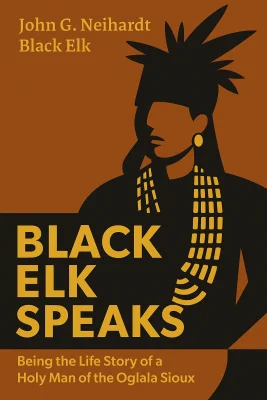
Black Elk Speaks
Being the Life Story of a Holy Man of the Oglala Sioux
Categories
Nonfiction, Philosophy, Biography, History, Memoir, Religion, Spirituality, American History, Indigenous, Native American
Content Type
Book
Binding
Paperback
Year
2004
Publisher
Bison Books
Language
English
ASIN
0803283857
ISBN
0803283857
ISBN13
9780803283855
File Download
PDF | EPUB
Black Elk Speaks Plot Summary
Introduction
# Black Elk: Sacred Vision and Spiritual Journey of a Lakota Holy Man In the winter of 1932, an aging Lakota holy man sat beneath a shelter of pine boughs on a barren hill in South Dakota, sharing his life story with a poet who had come seeking wisdom. Black Elk was nearly blind, his people scattered and broken, their sacred Black Hills stolen, their buffalo gone forever. Yet within this seemingly defeated man burned a vision so powerful it would eventually touch millions of hearts across the world. Born in 1863 during the final decades of free Plains Indian life, Black Elk witnessed both the golden age of his people and their tragic destruction at Wounded Knee. This remarkable figure embodied the collision between two worlds—the ancient spiritual traditions of the Lakota and the relentless advance of American expansion. As a young warrior, he rode with Crazy Horse and survived Custer's Last Stand. As a holy man, he received visions that revealed the sacred nature of all life and the interconnectedness of all beings. Through his eyes, we glimpse not only the dramatic events that shaped the American West, but also profound insights into the nature of spiritual power, the meaning of suffering, and the eternal struggle between material progress and sacred wisdom. His story offers us a window into a worldview that sees the earth as our mother and all creatures as relatives in the great circle of existence.
Chapter 1: The Great Vision: Spiritual Awakening at Nine
The most defining moment of Black Elk's life came not through any conscious seeking, but through a mysterious illness that struck him as a young boy. In 1872, while his family was camped along the Powder River, nine-year-old Black Elk suddenly collapsed and lay unconscious for twelve days, his body so still that his parents feared he had died. But during this time, his spirit was experiencing something extraordinary: a great vision that would shape the rest of his life and preserve ancient wisdom for future generations. In this vision, Black Elk was taken by spirit messengers to a sacred place where he met the Six Grandfathers, representing the powers of the four directions plus the sky and earth. Each grandfather bestowed upon him sacred gifts and responsibilities. From the west came the power to make live and to destroy, symbolized by a wooden cup of water and a bow. From the north came the power of endurance and purification through a sacred herb and cleansing wind. The east brought wisdom through the morning star and a sacred pipe, while the south offered the power of life and growth through a flowering stick and the nation's sacred hoop. The vision showed Black Elk standing at the center of the world, where he saw a tree that was meant to bloom and shelter all of his people. He witnessed both the sacred hoop of his nation and understood that this hoop was connected to all the hoops of all peoples, forming one great circle of life. The grandfathers told him that he had been chosen to help his people walk the good red road of spiritual understanding, and that through his power, the weak would be made strong and the nation would flourish. When Black Elk finally awakened from his twelve-day trance, he found himself forever changed. The ordinary world seemed different, charged with spiritual significance that others could not see. He began to notice that he could sense things before they happened and that animals and natural phenomena spoke to him in ways they did not to others. Yet he also carried a tremendous burden, for he understood that he had been given a sacred responsibility to use these gifts for his people's welfare. The vision haunted and guided him throughout his youth. He saw in it both promise and warning, understanding that his people faced great trials ahead but that there was also hope for renewal and spiritual strength. The flowering tree at the center of the world became his central symbol, representing not just the Lakota nation but all of life flourishing in harmony. This vision would later drive him to perform sacred ceremonies, guide him through the darkest periods of his people's history, and ultimately inspire him to share this wisdom with the world.
Chapter 2: Witness to History: From Little Bighorn to Wounded Knee
Black Elk's life unfolded against the backdrop of the most dramatic and tragic period in Plains Indian history, and he witnessed many of its pivotal moments firsthand. As a young teenager, he was present at the Battle of the Little Bighorn in 1876, where he saw Custer's forces overwhelmed by the combined Lakota, Cheyenne, and Arapaho warriors. Though too young to fight in the main battle, he participated in the aftermath, experiencing both the triumph of victory and the sobering realization that this success would bring terrible retribution from the U.S. government. The years following Little Bighorn brought increasing pressure on the Plains tribes. Black Elk's band, led by Crazy Horse, continued to resist confinement to reservations, but the buffalo herds were disappearing, and the military pressure was relentless. Black Elk witnessed the gradual breakdown of traditional life as his people were forced to surrender their weapons, their horses, and ultimately their freedom. The death of Crazy Horse in 1877, killed while in custody at Fort Robinson, marked the end of armed resistance and the beginning of a new, more difficult chapter in Lakota history. During the 1880s, Black Elk experienced firsthand the harsh realities of reservation life. The government's promises of food and supplies often went unfulfilled, leaving his people hungry and dependent. Traditional ceremonies were banned, children were taken away to boarding schools, and the sacred hoop of the nation seemed broken beyond repair. It was during this period of despair that Black Elk began to understand more deeply the meaning of his childhood vision and his responsibility to help preserve and revitalize his people's spiritual traditions. The Ghost Dance movement of 1890 offered a brief moment of hope, promising the return of the buffalo and the resurrection of deceased relatives. Black Elk participated in these ceremonies, experiencing powerful visions that seemed to connect with his earlier spiritual experiences. However, this hope was brutally shattered at Wounded Knee on December 29, 1890, when U.S. troops massacred approximately 300 Lakota men, women, and children who were participating in the Ghost Dance. Black Elk was present at Wounded Knee, and the experience left him devastated. He had believed that his sacred vision and the Ghost Dance would protect his people, but instead he witnessed the slaughter of innocents, including many women and children. The massacre marked what he later called "the end of the dream," the final destruction of the traditional way of life and the sacred hoop that had sustained his people for generations. This traumatic event would haunt him for the rest of his life and drive his later efforts to preserve Lakota spiritual wisdom before it was lost forever.
Chapter 3: The Medicine Man: Healing Power and Sacred Ceremonies
Following his great childhood vision, Black Elk gradually grew into his role as a medicine man and spiritual leader among his people. However, this transformation was not immediate or easy. For years after his vision, he struggled with fear and uncertainty, knowing that he possessed sacred power but unsure how to use it properly. The Thunder Beings who had appeared in his vision seemed to demand that he acknowledge and act upon his gifts, and he lived in terror that lightning might strike him down if he failed to fulfill his spiritual obligations. The turning point came when Black Elk was eighteen and finally performed the Horse Dance, a public ceremony that reenacted key elements of his great vision. With the help of older medicine men who recognized his spiritual gifts, he organized an elaborate ritual involving painted horses, sacred regalia, and dancers representing the various powers he had encountered in his vision. The ceremony was a success, and afterward, Black Elk felt a tremendous sense of relief and empowerment, as if he had finally stepped into his true calling. From that point forward, Black Elk began practicing as a healer and spiritual guide. His methods combined the traditional Lakota understanding of illness as spiritual imbalance with the specific powers granted to him in his vision. He would use sacred herbs, ritual purification, and spiritual intervention to treat both physical ailments and psychological distress. His reputation as a powerful medicine man grew throughout the Lakota communities, and people would travel great distances to seek his help. Black Elk's healing practice was based on his understanding that all illness stemmed from spiritual causes and that true healing required addressing the whole person, not just physical symptoms. He would often enter altered states of consciousness during healing ceremonies, allowing the spiritual powers from his vision to work through him. He was particularly known for his ability to treat mental illness and spiritual affliction, conditions that conventional medicine of the time could not address effectively. Throughout his career as a medicine man, Black Elk never forgot that his primary responsibility was to the spiritual welfare of his entire people, not just individual patients. He saw his healing work as part of a larger mission to keep the sacred hoop of his nation intact and to help his people maintain their connection to the spiritual world even as their traditional way of life was being destroyed. This broader vision would later motivate him to share his knowledge with outsiders, believing that preserving this wisdom in written form might help ensure its survival for future generations.
Chapter 4: Across the Ocean: Life with Buffalo Bill's Wild West Show
In 1886, when Black Elk was twenty-three years old, he made a decision that would profoundly expand his understanding of the world beyond the Great Plains. Buffalo Bill Cody was recruiting Lakota performers for his Wild West Show, which was planning an unprecedented tour of Europe. Despite the concerns of his family and the uncertainty of leaving his homeland, Black Elk decided to join the troupe, driven partly by curiosity about the white man's world and partly by a hope that he might learn something that could help his struggling people. The journey across the Atlantic Ocean was a revelation and an ordeal. Black Elk had never seen such vast expanses of water, and the steamship voyage left him and many of his fellow performers seasick and disoriented. When they finally arrived in England, he found himself in a world utterly different from anything in his experience. The crowded cities, the elaborate architecture, and the complex social hierarchies of Victorian England both fascinated and troubled him. Performing in Buffalo Bill's Wild West Show gave Black Elk a unique perspective on how white audiences viewed Native Americans. The show presented a romanticized and often inaccurate version of Plains Indian life, emphasizing warfare and exotic customs while ignoring the deeper spiritual and cultural dimensions of Lakota society. Black Elk participated in mock battles, demonstrated traditional skills, and allowed himself to be displayed as a curiosity from the American frontier, all while observing how these performances shaped white people's understanding of his people. The highlight of the European tour came when the troupe performed for Queen Victoria during her Golden Jubilee celebration in 1887. Black Elk was impressed by the dignity and kindness of the elderly queen, who spoke warmly to the Native American performers and expressed genuine interest in their welfare. This encounter gave him hope that not all white people were hostile to his people, and that there might be possibilities for mutual understanding and respect. However, Black Elk's time in Europe also deepened his understanding of the challenges facing his people. He observed the poverty and inequality in European cities, noting that white civilization was not the paradise that some had claimed. He also experienced a profound spiritual crisis while overseas, feeling disconnected from the land and the spiritual forces that had always guided him. During a mysterious illness in Paris, he experienced a vision in which his spirit traveled back to Pine Ridge, allowing him to see his family and homeland from afar. This experience convinced him that his true calling lay with his people, and he eventually made his way back to America, carrying with him a broader but more complex understanding of the world his people now had to navigate.
Chapter 5: The Ghost Dance: Hope and Tragedy for a People
By 1890, the Lakota people were living in conditions of desperate poverty and cultural suppression on the Pine Ridge Reservation. The buffalo were gone, traditional ceremonies were banned, and government rations were inadequate to prevent hunger and suffering. It was into this atmosphere of despair that news arrived of a new spiritual movement spreading among Native American tribes across the West. A Paiute prophet named Wovoka, known to the Lakota as the Wanekia or "One Who Makes Live," claimed to have received a revelation that promised the return of the old ways and the resurrection of all who had died. The Ghost Dance, as this movement came to be known, offered a message of hope that resonated powerfully with the Lakota. According to Wovoka's teachings, if Native people performed certain ritual dances and lived according to specific moral principles, the white man's world would pass away, the buffalo would return, and all the Indian dead would come back to life. The earth would be renewed, and Native peoples would once again live in the abundance and freedom of the old days. Black Elk was initially skeptical of the Ghost Dance, but as the movement spread among his people, he began to see connections between Wovoka's teachings and his own childhood vision. Both spoke of spiritual renewal, the restoration of the sacred hoop, and the flowering of the tree of life. When he finally participated in a Ghost Dance ceremony, he experienced powerful visions that seemed to confirm the movement's spiritual authenticity. In these visions, he traveled to the spirit world and saw deceased relatives living in happiness and plenty. The Ghost Dance gave Black Elk and his people a sense of purpose and hope that they had not felt for years. The ceremonies brought communities together, reinforced traditional values, and provided a spiritual framework for understanding their suffering. Black Elk became one of the movement's leaders among the Oglala Lakota, helping to organize dances and interpret the visions that participants experienced. He created special Ghost Dance shirts that he believed would protect the wearers from harm, drawing on the spiritual powers granted to him in his great vision. However, the Ghost Dance also aroused fear and suspicion among white authorities, who saw it as a potential threat to their control over the reservations. Government agents banned the ceremonies and called in military troops to suppress the movement. The growing tension culminated in the tragic massacre at Wounded Knee on December 29, 1890, where U.S. soldiers killed approximately 300 Lakota men, women, and children. Black Elk was present at the massacre and witnessed the brutal end of the Ghost Dance movement. The tragedy shattered his faith in the immediate fulfillment of the Ghost Dance prophecies, but it also deepened his commitment to preserving Lakota spiritual traditions for future generations who might someday see the flowering of the sacred tree.
Chapter 6: The Broken Hoop: Grief and Despair after Wounded Knee
The massacre at Wounded Knee marked a devastating turning point in Black Elk's life and in the history of the Lakota people. As he stood among the frozen bodies scattered in the snow-filled gulch, Black Elk felt that something fundamental had died along with the victims. The sacred hoop of his nation, which he had seen whole and strong in his childhood vision, now seemed irreparably broken. The tree that was supposed to bloom at the center of the world appeared withered and dead, and Black Elk began to question whether he had failed in his sacred mission. In the immediate aftermath of Wounded Knee, Black Elk experienced a profound spiritual crisis. The Ghost Dance had promised protection and renewal, but instead had led to slaughter. The sacred shirts he had made, which were supposed to turn away bullets, had offered no protection to the innocent victims. For the first time since his great vision, Black Elk began to doubt the reality and power of his spiritual gifts. He wondered if he had misunderstood his calling or if the spiritual world had abandoned his people in their hour of greatest need. The years following Wounded Knee were marked by a deep depression that affected not only Black Elk but his entire community. The survivors of the massacre were traumatized, and the broader Lakota population lived under increased military surveillance and cultural suppression. Traditional ceremonies were more strictly forbidden than ever, children continued to be taken away to boarding schools where they were punished for speaking their native language, and the economic conditions on the reservations remained desperate. During this dark period, Black Elk largely withdrew from his role as a medicine man and spiritual leader. He felt that his power had failed when his people needed it most, and he was reluctant to make promises of healing or spiritual guidance that might prove as empty as the Ghost Dance prophecies had seemed. The vibrant spiritual world that had once surrounded him appeared muted and distant, and he struggled to find meaning in a reality that seemed to contradict everything his vision had promised. Yet even in his despair, Black Elk could not entirely abandon his spiritual calling. He continued to help individuals who came to him for healing, though he did so with less confidence than before. He also began to reflect more deeply on the meaning of his great vision, wondering if perhaps its fulfillment was meant for a future generation rather than his own. The sacred hoop might be broken for now, but the spiritual truths he had been shown remained valid. This gradual recognition would eventually lead him to seek new ways of preserving and sharing the wisdom he had been given, even if the immediate restoration of his people's traditional way of life seemed impossible.
Chapter 7: Legacy of Wisdom: Black Elk's Enduring Spiritual Message
In his later years, Black Elk came to understand that his sacred mission might take a different form than he had originally envisioned. Rather than seeing the immediate restoration of the Lakota nation's traditional way of life, he began to focus on preserving the spiritual wisdom of his people for future generations. This shift in perspective led to his collaboration with poet John Neihardt in the early 1930s, when Black Elk was nearly seventy years old and felt the urgency of sharing his knowledge before it was lost forever. The decision to work with Neihardt was not made lightly. Black Elk had spent decades as a Catholic catechist, having converted to Christianity in 1904, and he understood that sharing his traditional spiritual knowledge might be controversial within his community. However, he came to believe that the fundamental truths revealed in his great vision transcended any single religious tradition and that preserving this wisdom was essential for the spiritual welfare of all people, not just the Lakota. Through his collaboration with Neihardt, Black Elk was able to articulate a spiritual vision that spoke to universal human concerns while remaining rooted in Lakota tradition. His teachings emphasized the interconnectedness of all life, the importance of living in harmony with natural cycles, and the need for individuals to understand their place within the larger sacred hoop of existence. He showed how personal spiritual experience could provide guidance for both individual healing and community renewal. Black Elk's legacy extends far beyond the preservation of historical and cultural information. His life story demonstrates the possibility of maintaining spiritual integrity even in the face of overwhelming cultural change and personal tragedy. He showed how ancient wisdom traditions could adapt and survive even when their original social context was destroyed. His example suggests that spiritual truth can transcend cultural boundaries and speak to people across different backgrounds and historical periods. Perhaps most importantly, Black Elk's vision of the sacred hoop offers a model for understanding human relationships that emphasizes cooperation rather than competition, spiritual connection rather than material accumulation, and responsibility to future generations rather than short-term gain. His teaching that the hoop of his people was connected to all the hoops of all peoples provides a framework for thinking about global community and environmental stewardship that remains relevant today.
Summary
Black Elk's life journey from visionary child to respected elder represents one of the most profound spiritual autobiographies in American literature, offering timeless wisdom about the relationship between individual calling and community responsibility. His story demonstrates that true spiritual leadership often requires the courage to preserve and share sacred knowledge even when the immediate fulfillment of one's vision seems impossible, trusting that future generations will find ways to apply ancient wisdom to new circumstances. From Black Elk's experience, we can learn the importance of remaining open to spiritual guidance throughout our lives, even when that guidance leads us into unfamiliar territory or requires us to bridge different worlds and traditions. His example suggests that our deepest personal visions and callings are ultimately meant to serve not just ourselves but the larger community of all life, and that sharing our gifts with others, even across cultural boundaries, may be essential for the survival and renewal of wisdom traditions in an interconnected world.
Best Quote
“Crazy Horse dreamed and went into the world where there is nothing but the spirits of all things. That is the real world that is behind this one, and everything we see here is something like a shadow from that one.” ― Black Elk, Black Elk Speaks: Being the Life Story of a Holy Man of the Oglala Sioux
Review Summary
Strengths: The review highlights the historical significance of "Black Elk Speaks," noting its depth and the detailed prophetic dreams of Black Elk. It draws interesting parallels between Black Elk and Laura Ingalls Wilder, emphasizing their shared impact on South Dakota's cultural narrative. The memoir's ability to depict the beauty of South Dakota and its historical context is also praised. Weaknesses: The reviewer finds the memoir dense and challenging to read, likening it to a door stopper. There is a sense of regret for not having encountered Black Elk's story earlier in life. Overall: The reader expresses a mixed sentiment, appreciating the memoir's historical importance and connection to South Dakota, but also finding it a challenging read. The recommendation is cautious, acknowledging the book's depth and significance while noting its complexity.
About Author

John G. Neihardt
Neihardt delves into the intricate tapestry of American history, weaving narratives that explore the settlement of the Great Plains and the cultural intersections between European-American and Native American worlds. His work often blends epic poetry with philosophical reflection, creating a rich dialogue on cultural identity and spirituality. Neihardt's method is rooted in his profound respect for Native American traditions, as demonstrated in his renowned book "Black Elk Speaks", which brings to life the spiritual journey of the Oglala Lakota holy man, Black Elk. This approach not only honors indigenous perspectives but also bridges cultural divides by preserving these vital stories.\n\nWhile Neihardt's exploration of historical narratives provides a deep understanding of the cultural landscape of the American West, his early works also reveal a fascination with Eastern philosophies. Beginning his literary career with "The Divine Enchantment", a book inspired by Hindu mysticism, Neihardt displays a lifelong commitment to examining the diverse spiritual and philosophical threads that weave through human experience. This thematic diversity broadens his appeal, engaging readers interested in the intersection of history, culture, and spirituality.\n\nFor readers and scholars, Neihardt's body of work offers a unique lens through which to view American history and its cultural complexities. His role as Nebraska’s Poet Laureate in perpetuity highlights the enduring impact of his literary contributions. By intertwining epic poetry with historical and cultural narratives, Neihardt's works continue to resonate with those who seek a deeper understanding of the American identity and its multifaceted heritage. His legacy, captured in works like "A Cycle of the West", cements his place as a pivotal figure in American literature, enriching our collective bio of cultural consciousness.
Read moreDownload PDF & EPUB
To save this Black List summary for later, download the free PDF and EPUB. You can print it out, or read offline at your convenience.
Black Elk Speaks
by John G. Neihardt
