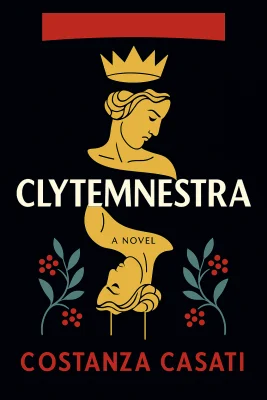
Clytemnestra
Categories
Fiction, Audiobook, Historical Fiction, Fantasy, Mythology, Adult, Book Club, Historical, Greek Mythology, Retellings
Content Type
Book
Binding
Hardcover
Year
2023
Publisher
Sourcebooks Landmark
Language
English
ISBN13
9781728268231
File Download
PDF | EPUB
Clytemnestra Plot Summary
Introduction
# Blood of the Lioness: A Queen's Path to Vengeance The bronze blade catches firelight as Clytemnestra draws it across her palm, watching crimson drops fall onto the marble floor of her chamber. Nine years have passed since Agamemnon sailed for Troy, nine years since he murdered their daughter Iphigenia on a windswept altar to buy favorable winds from the gods. Tonight, beacon fires blaze across the mountains, announcing Troy's fall and her husband's imminent return. The Queen of Mycenae has spent a decade sharpening more than just her blade. This is not the story the bards will sing. They will paint her as a faithless wife who betrayed a noble king, but they were not there when Agamemnon's sword opened her first husband's throat, when he dashed her infant son against stone walls, when he dragged their daughter screaming to the sacrifice. In the blood-soaked halls of ancient Greece, where kings devour their own children for glory and heroes rape princesses for sport, Clytemnestra learned that justice wears a woman's face and carries a mother's rage. The lioness is about to reclaim her throne.
Chapter 1: The Spartan Sisters: Bonds Forged in Bronze and Blood
The training ground echoes with the clash of bronze as two young women circle each other in the dust. Clytemnestra moves like a hunting cat, her spear steady, dark eyes calculating distance and weakness. Across from her, Helen raises her shield, golden hair catching sunlight like spun metal. This is Sparta, where even princesses learn to kill. The match ends with Clytemnestra's blade at her sister's throat. Helen yields with grace, but something haunts her famous eyes. Later, away from watching warriors, the truth spills out like wine from a cracked cup. Theseus, the hero-king of Athens, had stolen Helen away, violated her in his palace before their brothers rescued her. The shame burns in her voice as she begs Clytemnestra to stay silent. Their father Tyndareus cares nothing for his daughter's pain, only for the political advantage her beauty brings. Suitors arrive daily, bearing gifts and promises, their eyes hungry as wolves. When the Atreidai come seeking wives among Leda's daughters, the air itself seems to thicken with menace. Agamemnon and Menelaus, exiled sons of Atreus, carry themselves like men who have never been denied anything they desired. Standing in the shadows of the great hall, Clytemnestra watches these brothers study her family like merchants appraising livestock. Helen will choose Menelaus from among her suitors, sealing one half of their father's bargain. The other half remains unspoken, hanging in the air like a blade waiting to fall. Some prices, Clytemnestra knows, are too high to pay, even for a kingdom's alliance.
Chapter 2: First Love's Promise: Marriage to Tantalus of Maeonia
The ship cuts through wine-dark waters toward Maeonia, carrying Clytemnestra away from Sparta's harsh mountains to a land of golden valleys and silver streams. King Tantalus waits on the dock, his face gentle where her father's was carved from stone, his eyes holding something she has never known: unconditional love. For the first time in her warrior's life, she allows herself to dream of happiness. Maeonia proves to be everything Tantalus promised. The palace walls gleam with frescoes of dancing griffins and blooming gardens, while the people prosper under their king's wise rule. Clytemnestra finds herself not merely a wife but a true partner in governance, learning diplomacy's delicate art, the weight of decisions affecting thousands of lives. When their son is born, perfect and golden-haired, her joy seems complete. But happiness in the age of heroes is fragile as morning mist. Word comes that Agamemnon has set his sights on Maeonia's wealth, arriving with honey on his tongue and an army at his back. He speaks of alliances and mutual benefit while his warriors sharpen their swords in the courtyard. Tantalus, ever trusting, welcomes him as a guest. The laws of hospitality are sacred, after all. The attack comes at dawn. Clytemnestra wakes to screams and bronze clashing against bronze, racing to the nursery to find nightmare made flesh. Tantalus lies in spreading crimson, his throat opened like a sacrifice, while Agamemnon holds their infant son high above his head. Before she can move, before she can even scream, he dashes the baby against the stone floor. The sound echoes in her mind like thunder, drowning out everything else. Her world ends in that moment, replaced by something cold and sharp as winter steel.
Chapter 3: The Night of Betrayal: Murder Most Foul
The wedding ceremony is a mockery draped in purple silk and bitter irony. Clytemnestra stands like a marble statue beside Agamemnon, her face revealing nothing of the fire burning within. The priests chant their blessings while she dreams of driving a dagger between her new husband's ribs, but she is alone in enemy territory, surrounded by his loyal warriors. Revenge will have to wait, patient as a hunting cat in tall grass. Mycenae rises from the hills like a crown of gold and blood, its massive walls topped with carved lions that seem to snarl at the world below. The palace corridors echo with armed footsteps and whispered threats, every shadow potentially hiding death. Agamemnon rules through fear and casual brutality, his word absolute, his temper legendary among those who serve him. Yet Clytemnestra refuses to cower in her gilded cage. She walks these halls with Spartan steel in her spine, meeting every challenge with the cold dignity of a queen. The other court women whisper behind their hands, calling her proud, calling her dangerous. They are not wrong. She begins weaving her own web of influence, identifying those who chafe under Agamemnon's rule, learning the names of every servant, every guard, every merchant who enters the palace. When her daughter Iphigenia is born, golden-haired and perfect, Clytemnestra feels her frozen heart crack open with unexpected love. As she holds her newborn daughter, she makes a silent vow that cuts deeper than any oath sworn on bronze or blood. This child will never know the helplessness she has endured. This child will be strong, will be free, will be everything her mother could not be. The lioness has found something worth protecting, and her claws grow sharper with each passing day.
Chapter 4: Chains of Gold: Captive Queen of Mycenae
Years flow like honey mixed with poison as Clytemnestra learns to rule from the shadows. She bears Agamemnon more children: sharp-eyed Electra who sees too much, gentle Chrysothemis who bends like a reed in wind, and young Orestes who carries his father's features but his mother's hidden fire. The palace becomes a stage where she performs the role of dutiful queen while plotting in darkness. Iphigenia grows into radiance itself, beloved by all who meet her. She dances with goddess-like grace and tends wounded birds with gentle hands, her laughter echoing through corridors that have known too much blood. Clytemnestra watches her eldest daughter with fierce pride and terrible fear, knowing that in this world of wolves, the most beautiful flowers are often the first to be plucked. The queen builds her network carefully, identifying allies among the servants who remember kindness, the merchants who value fair dealing, the guards who respect strength over brutality. Knowledge becomes her currency, hoarded like a miser hoards gold. She learns which counselors truly hold power, which nobles might be turned, which weaknesses lie hidden beneath Mycenae's golden facade. When news arrives that Helen has fled Sparta with Paris, the Trojan prince who came seeking alliance and found love instead, Agamemnon's rage shakes the palace foundations. This is the insult that cannot be borne, the excuse he has waited years to find. The oath sworn by Helen's suitors binds them to her defense, and now he can call upon every king and hero in Greece to follow him to war. Clytemnestra watches her husband's preparations with cold calculation, sensing that this war will reshape everything she knows about power and revenge.
Chapter 5: The Altar's Crimson: Iphigenia's Sacrifice at Aulis
The messenger arrives with dawn, his horse lathered with sweat and his face bright with false joy. He speaks of marriage, of alliance, of Iphigenia wedding the great hero Achilles before the Greek fleet sails for Troy. Agamemnon's eyes gleam with satisfaction as he explains the political advantages, but Clytemnestra studies her husband's face and sees the lie beneath his smile like rot beneath golden fruit. At Aulis, the Greek camp sprawls along the shoreline like a festering wound. Thousands of ships bob at anchor in the windless bay, their sails hanging limp as burial shrouds. The air shimmers with heat and the stench of too many men packed too close together, their tempers fraying like old rope. When they are brought before the assembled kings, Clytemnestra sees Odysseus watching her with calculating eyes, and her warrior's instincts scream danger. There is no wedding feast prepared, no celebration. Only the cold altar stone and the seer Calchas with his twisted smile. The truth strikes her like a physical blow when rough hands seize Iphigenia, dragging her toward the sacrificial altar. The gods demand a virgin's blood for favorable winds, and they have chosen her daughter as the price. Iphigenia's confusion turns to terror as she realizes there will be no marriage, no happy ending, only death dressed in religious ceremony. Clytemnestra fights like a lioness defending her cub, but there are too many of them. Strong arms pin her back as Agamemnon raises the blade high, sunlight catching bronze like captured fire. Her daughter's face, beautiful and afraid, calls for a mother who cannot save her. The knife falls, and Clytemnestra's world drowns in crimson spray that will stain her dreams forever. In that moment, watching her child's life pour out onto uncaring stone, the last of her mercy dies, replaced by something harder than bronze and sharper than any blade ever forged.
Chapter 6: Nine Years of Shadows: Building Power in Darkness
The palace feels different when Clytemnestra returns from Aulis, the very stones whispering of betrayal and loss. Agamemnon has sailed for Troy with his army, leaving her to rule Mycenae in his absence. The elders expect a broken woman, a grieving mother who will defer to their wisdom. Instead, they find a queen forged in fire and tempered in blood, harder than the bronze lions that guard her gates. She begins by consolidating power with surgical precision, replacing Agamemnon's most loyal supporters with men who owe their positions to her. The treasury flourishes under her management, trade routes expand like veins carrying gold through the kingdom's body, and the city's defenses grow stronger. When bandits threaten the mountain passes, she leads the response personally, her sword drinking deep of their blood while her warriors watch in awe. Letters arrive sporadically from the war, each one a reminder of the glory being won with her daughter's blood. Troy's walls stand strong while heroes die for Helen's beauty, the siege stretching from months into years like a wound that refuses to heal. Agamemnon leads his army with ruthless efficiency, earning fame with every victory, his name sung in halls across the civilized world. But grief is a poison that seeps into everything, turning wine to vinegar and joy to ash. Clytemnestra walks the palace halls at night, haunted by memories of Iphigenia's laughter, her questions, her dreams of the future that will never come. The rage grows inside her like a cancer, feeding on itself, growing stronger with each passing year. When word comes that Aegisthus, the cursed son of Thyestes, seeks shelter in her palace, she sees something in his ice-cold eyes that calls to her own darkness. She grants him sanctuary, knowing she is welcoming either salvation or destruction through her gates.
Chapter 7: The Wolf's Alliance: Aegisthus and the Art of Revenge
Aegisthus arrives like a shadow given flesh, hooded and dangerous, his scarred face telling stories of violence survived and vengeance deferred. He is the last son of Thyestes, sworn enemy of the House of Atreus, and by all laws of blood and honor, Clytemnestra should turn him away. Instead, she sees a kindred spirit in his cold blue-green eyes, another soul broken by the cruelty of those who wear crowns and call themselves kings. The palace buzzes with tension as word spreads of the stranger's identity. Leon, her loyal guard, watches Aegisthus with barely concealed hostility, while Electra studies him with her usual sharp intelligence. Young Orestes treats the situation as an interesting puzzle, unaware that his mother is weighing possibilities that could reshape the kingdom's future. But Clytemnestra has learned patience from the hunting cats of Sparta, and she knows that the most dangerous predators are those who wait in shadows. Over months of careful conversation, she and Aegisthus discover they share more than hatred for Agamemnon. Both have lost everything to the Atreidai's ambition, both have learned to smile while planning murder, both understand that justice sometimes wears a bloody face. When he becomes her lover, it is not from passion but from recognition, two weapons finding their perfect balance in each other's hands. Together they plan with the precision of master craftsmen, identifying every weakness in Mycenae's defenses, every ally who might be turned, every moment when Agamemnon will be most vulnerable. The king will return crowned with victory and drunk on his own legend, expecting to find his wife humbled and grateful. Instead, he will find that the woman he left behind has become something far more dangerous than he ever imagined. The wolf and the lioness have formed their alliance, and the ancient world will tremble before their combined fury.
Chapter 8: Justice Served Cold: The King's Final Bath
The beacon fires blaze across the mountains like fallen stars, their message racing from peak to peak faster than any horse could run. Troy has fallen at last, its walls breached, its towers burning, its people scattered like leaves before the wind. After ten long years of siege and slaughter, the war is over, and the victorious kings are sailing home with holds full of gold and hearts full of pride. Agamemnon's ships appear on the horizon like black birds against the sunset sky, their sails pregnant with wind and their prows cutting through wine-dark waters. He returns in triumph, his vessels heavy with Trojan treasure and his bed warmed by Cassandra, daughter of fallen Priam. The prophetess sits in chains beside her captor, her mad eyes seeing futures that no one believes, her warnings falling on ears deafened by victory's song. The palace feast is a masterpiece of false welcome, wine flowing like water while death stalks the halls in shadows. Clytemnestra plays her part to perfection, the dutiful wife greeting her conquering husband with appropriate joy and submission. She speaks of lonely years and faithful waiting while servants prepare the ritual bath, hot water scented with oils and herbs, steam rising like incense to honor the returning hero. In the bathhouse, away from watching eyes, the final act begins. Agamemnon lies naked and vulnerable in the steaming water as Clytemnestra approaches with soft cloth and hidden blade. They speak of old wounds and older debts, of choices made and prices paid in blood and tears. When he realizes her intent, he fights with the desperate fury of a cornered beast, but she has had nine years to prepare for this moment, nine years to hone her hatred to a razor's edge. The dagger finds its mark again and again until the water runs red and the king of men breathes no more, his glory drowning in his own blood like so many others before him.
Summary
Clytemnestra's transformation from loving wife to avenging fury stands as one of literature's most compelling portraits of justified rage. Stripped of everything she held sacred by men who saw her only as a political pawn, she chose not to break but to bend like steel in the forge, emerging harder and more dangerous than before. Her patient cultivation of power, her careful weaving of alliances, and her willingness to wait years for the perfect moment demonstrate that true strength lies not in immediate gratification but in the long game of survival and revenge. The lioness has reclaimed her throne, but victory tastes of ashes when purchased with a daughter's blood and a kingdom's fear. The bards will sing of her as a monster, painting Agamemnon as a hero wronged by his faithless wife, but she was there when the blade fell at Aulis, when her child's blood bought favorable winds for a war of pride and greed. In the end, perhaps that knowledge is enough. She has carved her name in history with fire and bronze, has shown the world that even queens can be lions when their cubs are threatened, and the ancient world will never forget the price of crossing a Spartan princess who learned too well the lessons her enemies taught her.
Best Quote
“Kings and heroes drop like flies, but queens outlive them all.” ― Costanza Casati, Clytemnestra
Review Summary
Strengths: The review highlights the author's success in crafting a compelling narrative around Clytemnestra, providing depth to her character and motivations. The exploration of Greek mythological figures in relation to Clytemnestra is praised, maintaining focus on her story. The emotional portrayal of Clytemnestra's anguish and need for vengeance is noted as particularly effective. Weaknesses: The review mentions a slight faltering in narrative pace during the middle section, specifically when chronicling the years Clytemnestra waits for her moment of vengeance. Overall: The review conveys a positive sentiment, recommending the book for its in-depth character exploration and engaging narrative, despite minor pacing issues.
About Author

Costanza Casati
Casati redefines narratives by blending historical depth with feminist perspectives, challenging traditional portrayals of legendary female figures. Her writing method involves a rigorous exploration of themes such as female ambition, love, and betrayal, which are intricately woven into her novels. This approach is evident in her debut book, "Clytemnestra", where she provides a nuanced retelling of the ancient Greek queen's story, giving voice and complexity to a character historically vilified. Meanwhile, her second novel, "Babylonia", set in the Assyrian Empire, further illustrates her commitment to examining the tragic consequences of war and the quest for immortality.\n\nThe author’s bio highlights her unique academic background, having studied Ancient Greek literature through one of Italy’s most demanding programs before earning a distinguished degree from the Warwick Writing MA. This solid foundation enables her to craft novels that resonate with depth and authenticity. Her engagement with readers extends beyond her books; through her online literary activities, she connects with a global audience, fostering a community of avid readers. \n\nCostanza Casati’s literary contributions have earned her significant recognition, including the Glass Bell Award for "Clytemnestra" and the distinction of being a Sunday Times bestseller for "Babylonia". Her works appeal to readers interested in historical and feminist fiction, offering them stories rich with emotional and intellectual engagement.
Read moreDownload PDF & EPUB
To save this Black List summary for later, download the free PDF and EPUB. You can print it out, or read offline at your convenience.
Clytemnestra
by Costanza Casati
