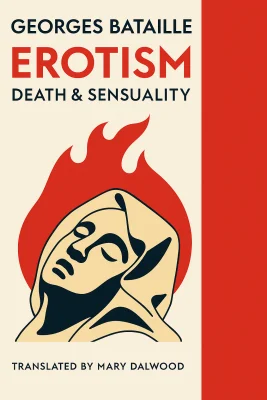
Erotism
Death and Sensuality
Categories
Nonfiction, Psychology, Philosophy, Religion, Anthropology, Sexuality, Essays, Theory, France, Erotica
Content Type
Book
Binding
Paperback
Year
1985
Publisher
City Lights Publishers
Language
English
ASIN
0872861902
ISBN
0872861902
ISBN13
9780872861909
File Download
PDF | EPUB
Erotism Plot Summary
Introduction
What drives humanity's most profound experiences of intensity and transcendence? Why do we find ourselves simultaneously drawn to and repelled by the very forces that seem to threaten our civilized existence? These questions probe the deepest contradictions of human nature, where our most sacred and profane impulses intertwine in ways that traditional analysis struggles to comprehend. This exploration reveals how eroticism operates not as mere physical desire, but as a fundamental force that exposes the fragile boundaries between life and death, the sacred and the forbidden, continuity and isolation. Through a systematic examination of taboos and their transgression, we discover that what appears to be humanity's most disruptive impulse may actually be the key to understanding our deepest spiritual yearnings. The theoretical framework presented here challenges conventional distinctions between religious experience and erotic passion, revealing them as different manifestations of the same underlying drive toward transcendence and unity.
Chapter 1: The Dialectic of Taboo and Transgression
The relationship between taboo and transgression forms the fundamental dialectical structure that distinguishes human sexuality from animal behavior. Unlike animals that follow instinctual patterns, humans have created elaborate systems of prohibition that paradoxically generate the very desires they seek to suppress. This dialectical process represents the engine of human eroticism. Taboos function not merely as restrictions but as creative forces that transform simple biological urges into complex erotic experiences. The prohibition itself becomes eroticized, creating a dynamic where transgression is not the opposite of the taboo but its necessary completion. This relationship reveals itself most clearly in religious contexts, where sacred transgression occurs within carefully defined boundaries, allowing communities to experience the dangerous forces of sexuality and violence without complete social dissolution. The universality of incest taboos illustrates this principle perfectly. By prohibiting sexual relations within the immediate family, societies create the foundation for complex marriage systems that transform women into gifts exchanged between groups. This transformation of potential sexual partners into objects of ceremonial exchange demonstrates how taboos channel erotic energy into social cohesion while simultaneously maintaining the transgressive charge that gives eroticism its power. The taboo thus creates both the prohibition and the irresistible allure of its violation. Modern society's relationship with pornography and sexual taboos reveals this same dialectical structure. The more society claims to have liberated sexuality from traditional restrictions, the more it seeks new forms of transgressive excitement. This endless cycle suggests that transgression requires taboo as surely as taboo generates transgression, creating a perpetual engine of desire that can never be finally satisfied or completely suppressed.
Chapter 2: Death and Continuity in Erotic Experience
The connection between eroticism and death reveals itself most clearly in the fundamental paradox of sexual reproduction. At the cellular level, reproduction involves the death of discontinuous beings and their fusion into new continuity. This biological reality provides the foundation for understanding why human sexuality carries such profound associations with mortality and transcendence. Individual existence is characterized by discontinuity—each person remains fundamentally isolated within the boundaries of their separate being. This isolation creates a persistent nostalgia for the continuity that existed before individual consciousness emerged and will return after death. Erotic experience offers a temporary escape from this isolation through moments where individual boundaries dissolve and partners experience a form of continuity that echoes both birth and death. The phenomenon of orgasm, popularly known as "the little death," exemplifies this connection. During sexual climax, normal consciousness temporarily dissolves, creating an experience that parallels both the loss of individual identity in death and the mystical dissolution sought in religious practice. This parallel is not accidental but reveals the underlying structure of human transcendent experience. The violence associated with eroticism stems from this same source. Sexual passion frequently involves a desire to break down the barriers that maintain individual identity, leading to fantasies and practices that simulate death or dissolution. This explains why erotic imagery often incorporates elements of danger, submission, and symbolic destruction. The pleasure derived from such experiences reflects not pathological sadism but the fundamental human yearning to transcend the limitations of isolated individual existence.
Chapter 3: Sexuality as Sacred Violence
The sacred nature of sexuality emerges from its capacity to channel violence in socially productive ways while maintaining the transgressive power necessary for spiritual transcendence. This understanding requires recognizing that violence, rather than being simply destructive, represents the force necessary to break through the barriers that confine individual existence within narrow boundaries. Sexual violence differs from simple aggression by its ritual character and its orientation toward fusion rather than destruction. In erotic encounters, the violence aims not at eliminating the other but at dissolving the boundaries that separate self and other. This dissolution requires a form of violence against the ego structures that maintain individual identity, creating the conditions for experiences of unity and transcendence. The phenomenon of sacrifice reveals the deeper structure underlying erotic violence. In religious sacrifice, the death of the victim creates a moment of sacred continuity that allows witnesses to experience the divine. Sexual congress operates according to similar principles, with the symbolic death of individual identity creating conditions for experiencing unity with the beloved and, through that unity, with existence itself. The degradation often associated with sexuality reflects this same dynamic. The reduction of partners to objects, the use of crude language, and the embrace of supposedly shameful acts all serve to break down the civilized persona that maintains individual boundaries. This degradation is not inherently pathological but represents one strategy for achieving the ego dissolution necessary for transcendent erotic experience. This understanding illuminates why societies throughout history have maintained complex relationships with prostitution and other forms of sexual transgression. These practices serve essential functions by providing outlets for the sacred violence that civilized life necessarily suppresses, while their marginalization maintains the transgressive charge that gives them their spiritual power.
Chapter 4: Religious Sacrifice and Erotic Impulse
The parallel between religious sacrifice and erotic activity reveals their common origin in humanity's attempt to transcend the limitations of individual existence. Both practices involve the ritual destruction of boundaries, the experience of sacred violence, and the temporary achievement of continuity that transcends normal consciousness. Ancient religious practices explicitly recognized this connection through fertility rituals, sacred prostitution, and ceremonial orgies that combined sexual transgression with religious devotion. These practices were not primitive superstitions but sophisticated technologies for accessing transcendent states of consciousness through the controlled violation of fundamental taboos. The mechanism of sacrifice involves the transformation of a living, discontinuous being into an object of sacred contemplation through its ritual death. This transformation creates a moment when witnesses can experience the continuity that underlies apparent discontinuity. Sexual activity operates through parallel mechanisms, with the symbolic death of individual identity in orgasm creating similar opportunities for transcendent experience. Christianity's relationship with this tradition reveals both continuity and transformation. While Christian theology emphasizes the unique character of Christ's sacrifice, the structure of the Mass maintains the essential elements of earlier sacrificial practices. The transformation of bread and wine into body and blood recreates the fundamental dynamic of sacrifice while sublimating its violent aspects into symbolic form. The Christian emphasis on the happy fault (felix culpa) that necessitated redemption reveals the deeper theological recognition that transgression is not simply evil but necessary for the achievement of the highest good. This paradox illuminates the complex relationship between sin and salvation that mirrors the erotic relationship between taboo and transgression.
Chapter 5: Eroticism, Solitude and the Dissolution of Self
Erotic experience ultimately confronts individuals with the fundamental solitude of human existence while simultaneously offering the possibility of transcending that solitude through union with another. This paradox creates the distinctive character of human sexuality as opposed to simple animal reproduction. The intensity of erotic desire stems from its promise to overcome existential isolation through fusion with the beloved. Yet this very intensity often leads to experiences of profound solitude, as the failure to achieve complete union reveals the ultimate impossibility of escaping individual existence. This cycle of hope and disappointment drives the compulsive character that often characterizes erotic obsession. Mystical experience offers an alternative path toward the same goal of transcending individual limitations. Rather than seeking fusion with another person, mystical practice aims at direct dissolution of the ego in union with the divine or absolute. This path avoids the disappointments inherent in erotic relationships while maintaining access to the same fundamental experience of transcendence. The comparison between erotic and mystical experience reveals their essential similarity in structure and goal, even as they differ in method and object. Both involve the dissolution of normal ego boundaries, both create experiences of unity that transcend individual existence, and both generate the intense states of consciousness that characterize humanity's highest spiritual achievements. The language of mystical literature throughout history draws extensively on erotic imagery, revealing the deep connections between these apparently distinct forms of experience. The solitude that ultimately characterizes both erotic and mystical experience is not simply negative but represents the necessary condition for authentic transcendence. Only by fully accepting the reality of existential isolation can individuals develop the spiritual strength necessary for genuine moments of unity and transcendence.
Chapter 6: Beauty and the Profanation of the Sacred
Beauty in erotic experience functions not simply as attraction but as a sacred quality that demands profanation for the achievement of authentic transcendence. This paradox reveals why aesthetic considerations play such a crucial role in erotic life and why the most intense sexual experiences often involve elements that seem to contradict conventional notions of beauty and refinement. The beauty of the desired person creates a sacred object that inspires reverence and worship. Yet erotic fulfillment requires the deliberate profanation of this sacred beauty through acts that reduce the beloved to animal physicality. This profanation is not sadistic destruction but necessary transgression that breaks through the aesthetic distance that would otherwise prevent genuine intimacy. The nakedness that reveals beauty simultaneously destroys the artificial constructions that maintain social distance and individual boundaries. The removal of clothing symbolically represents the stripping away of civilized identity that must occur for authentic erotic encounter. This explains why nakedness remains charged with transgressive power even in societies with relatively liberal sexual attitudes. The role of crude language and degrading imagery in erotic contexts serves similar functions. By reducing the sublime to the ridiculous, such elements break down the reverent attitude that would prevent the ego dissolution necessary for transcendent experience. The deliberate embrace of the disgusting and shameful creates conditions where normal self-consciousness cannot be maintained. This dynamic illuminates the complex relationship between pornography and authentic erotic experience. While pornography often appears to celebrate sexuality, its systematic reduction of erotic encounter to mechanical performance eliminates the sacred dimension that gives sexuality its transcendent potential. True eroticism requires the maintenance of both beauty and its profanation, creating the tension necessary for genuine transformation rather than mere physical release.
Summary
The essence of human eroticism lies not in simple physical pleasure but in the profound dialectical relationship between taboo and transgression that creates opportunities for transcending the fundamental isolation of individual existence. Through the systematic violation of sacred boundaries, erotic experience opens pathways to the continuity and unity that represent humanity's deepest spiritual aspirations. This theoretical framework reveals the inadequacy of approaches that treat sexuality as either merely biological function or simple social construction. Instead, eroticism emerges as a fundamental aspect of human spirituality that operates through mechanisms parallel to those found in religious sacrifice, mystical experience, and artistic creation. By understanding these connections, we gain insight not only into the nature of sexual desire but into the basic structures of human transcendence itself, opening new possibilities for integrating physical and spiritual dimensions of human experience.
Best Quote
“Beauty is desired in order that it may be befouled; not for its own sake, but for the joy brought by the certainty of profaining it.” ― Georges Bataille, Erotism: Death and Sensuality
Review Summary
Strengths: The review highlights the intellectual curiosity that led the reader to explore the book, particularly due to its association with notable thinkers like Derrida, Lacan, and Foucault. It also acknowledges the presence of intriguing elements within the text. Weaknesses: The reviewer expresses a lack of understanding regarding the author's fascination with themes of transgression and perversity. There is a noted disconnect between the reader's expectations and the insights gained, particularly in comprehending the allure of such themes. Overall: The reader's sentiment is mixed, with an initial interest driven by intellectual curiosity but ultimately resulting in a lack of fulfillment in understanding the book's deeper themes. The recommendation level appears low for those seeking clarity on the allure of transgression and perversity.
About Author

Georges Bataille
Bataille investigates the depths of human experience by challenging conventional norms through his provocative exploration of themes such as sex, death, and the sacred. As an author deeply invested in the annihilation of rational individuality, his work pursues the transcendental act of communion, often through controversial narratives that blend eroticism with philosophical inquiry. His early book, "Histoire de l’oeil", exemplifies his unique approach to literature, where the boundaries of rational thought are dismantled to reveal a more primal and chaotic understanding of human nature. This thematic interest in transgression and taboo not only defines his literary style but also influences his philosophical outlook, reflected in works like "L’Érotisme", which dissects the intersection of the sacred and the profane.\n\nFor readers interested in the avant-garde, Bataille’s writings offer a complex yet rewarding exploration of the human condition. His bio reveals a life of intellectual rigor combined with personal struggle, which informs his views on the irrational and the power of the obscene. Engaging with movements such as Surrealism and Existentialism, Bataille's work resonated with later thinkers like Michel Foucault, who praised him as a pivotal figure in 20th-century thought. Readers fascinated by the limits of human experience will find Bataille’s examination of these themes both challenging and enlightening, as he relentlessly interrogates the constructs that define our perception of reality.\n\nBataille's impact extends beyond literature into broader cultural studies, offering profound insights that question and redefine the accepted moral frameworks. His journal "Critique", for instance, stands as a testament to his enduring influence on intellectual circles, while his posthumously published work "Ma Mère" continues to provoke and inspire. This dedication to exploring uncomfortable truths has cemented Bataille’s place as a significant and provocative author whose works remain relevant for those seeking to understand the complexities of human desire and morality.
Read moreDownload PDF & EPUB
To save this Black List summary for later, download the free PDF and EPUB. You can print it out, or read offline at your convenience.
Erotism
by Georges Bataille
