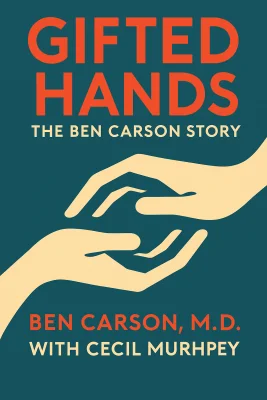
Gifted Hands
The Ben Carson Story
Categories
Nonfiction, Christian, Biography, Memoir, Medicine, Medical, Autobiography, Biography Memoir, Book Club, Inspirational
Content Type
Book
Binding
Paperback
Year
1996
Publisher
Zondervan
Language
English
ASIN
B0041JKGZK
File Download
PDF | EPUB
Gifted Hands Plot Summary
Introduction
In the sterile corridors of Johns Hopkins Hospital, a young surgeon's hands moved with extraordinary precision as he prepared to attempt what many deemed impossible—separating twins joined at the brain. This moment would define not only the lives of two infants, but also mark a pivotal achievement in the career of Dr. Benjamin Carson, a man whose journey from the streets of Detroit to the pinnacle of neurosurgery defies every statistical probability. Carson's story transcends the typical narrative of professional success. Born into poverty, raised by a single mother with limited education, and initially dismissed as academically hopeless, he transformed himself through an unwavering commitment to excellence and an unshakeable faith in human potential. His rise from a struggling student to becoming the youngest division director in Johns Hopkins history at age 33 represents more than personal triumph—it embodies the power of determination, education, and mentorship to reshape destinies. Through his extraordinary surgical innovations, his dedication to inspiring young minds, and his profound understanding that true success lies not in personal achievement but in lifting others, Carson's life offers timeless lessons about overcoming adversity, pursuing excellence, and using one's gifts in service to humanity.
Chapter 1: Overcoming Poverty and Finding Purpose
Benjamin Carson's earliest memories were painted with the harsh realities of urban poverty in 1950s Detroit. When his father abandoned the family, eight-year-old Ben faced a world that seemed to offer little hope for a Black child from the inner city. The small prefab house on Deacon Street became both sanctuary and symbol of struggle, as his mother Sonya worked multiple domestic jobs to keep their family afloat. These were the years when dreams seemed as distant as the wealthy suburbs where his mother cleaned houses, yet they would prove foundational in shaping Carson's character and worldview. The pivotal moment came not through dramatic revelation, but through quiet determination. Sonya Carson, despite her own third-grade education, recognized that her sons' futures depended entirely on education. Her radical decision to limit television and mandate library visits transformed the Carson household into an unlikely launching pad for academic excellence. Young Ben initially resisted these restrictions, but gradually discovered that books opened doorways to worlds beyond his circumstances. The local library became his second home, and knowledge became his escape route from poverty's constraints. Carson's early exposure to suffering—both his own and that of others in his community—planted the seeds of his calling to medicine. At age eight, listening to a pastor's sermon about missionary doctors, he felt his first stirring toward healing others. This wasn't merely childhood fantasy; it was the beginning of a purposeful journey that would guide every subsequent decision. The combination of academic awakening and compassionate calling created a powerful internal compass that would navigate him through decades of challenges ahead. Perhaps most significantly, these formative years taught Carson that circumstances do not determine destiny. Watching his mother sacrifice her own comfort for his education, seeing neighbors struggle yet maintain dignity, and experiencing firsthand how knowledge could transform perspective—these lessons became the bedrock of his later philosophy that every individual possesses untapped potential waiting to be developed.
Chapter 2: Academic Transformation and Self-Belief
The transformation from academic failure to excellence didn't happen overnight for Carson, but when it began, its momentum proved unstoppable. In fifth grade at Higgins Elementary, he occupied the humiliating position of class dummy, unable to answer even basic questions while his classmates mocked his ignorance. His teacher's surprised delight when he scored nine out of thirty on a math quiz—a vast improvement from his usual zero—marked the beginning of his academic resurrection. This small victory, combined with eyeglasses that finally allowed him to see the blackboard clearly, initiated a remarkable turnaround. The key breakthrough came through his mother's relentless insistence on reading. Initially viewing books as punishment, Carson gradually discovered that reading wasn't just about completing assignments—it was about acquiring power. Every book he consumed added to his knowledge base, expanding his vocabulary and deepening his understanding of the world. By sixth grade, he was recognizing paintings at the Detroit Institute of Arts and could identify classical music pieces, skills that would later prove crucial in gaining admission to Yale and Johns Hopkins. Carson's academic evolution revealed a crucial truth about learning: excellence isn't about innate intelligence alone, but about developing systematic habits of curiosity and persistence. His memorization of multiplication tables, once viewed as an impossible mountain to climb, became automatic through repetition and practice. This experience taught him that any seemingly insurmountable challenge could be conquered through disciplined effort and proper guidance. The social dynamics of his transformation were equally significant. Former tormentors became seekers of his help, approaching him with questions they once would have ridiculed him for asking. This reversal taught Carson about the fluid nature of reputation and the power of sustained effort to reshape others' perceptions. More importantly, it instilled confidence that would carry him through future challenges when others doubted his capabilities. By the time Carson graduated high school, he had not only overcome his early academic struggles but had achieved recognition that would open doors to America's most prestigious institutions. His journey from remedial student to academic star demonstrated that intellectual capacity isn't fixed—it can be developed, nurtured, and ultimately unleashed to achieve extraordinary results.
Chapter 3: Medical School Challenges and Divine Intervention
Carson's arrival at Yale University brought him face-to-face with the humbling reality that intelligence takes many forms, and his previous academic dominance meant little among the nation's most gifted students. Surrounded by classmates whose SAT scores dwarfed his own and whose preparatory education had been far superior, Carson initially struggled to maintain the confidence that had carried him through high school. His first chemistry exam became a moment of reckoning that would test both his faith and his determination to pursue medicine. The night before his chemistry final, Carson faced what appeared to be certain failure. Having neglected proper study habits throughout the semester and finding himself hopelessly behind in understanding complex chemical principles, he prepared for the devastating blow that would end his medical aspirations before they truly began. In desperation, he turned to prayer, asking God for either a miracle or clarity about an alternative path. What followed challenged every rational explanation he might have offered. That night, Carson experienced what he would later describe as a divine dream in which a shadowy figure worked through chemistry problems at the blackboard while he took careful notes. Upon waking, he hurriedly wrote down what he remembered, half-convinced that stress had created an elaborate fantasy. When he opened his exam booklet hours later, however, every problem matched exactly what he had seen in his dream. The impossible had become reality, and Carson achieved a score of 97—near the top of his class. This experience fundamentally altered Carson's relationship with both his studies and his faith. He recognized that while divine intervention had rescued him from immediate disaster, he bore responsibility for placing himself in such a precarious situation through poor preparation and misplaced priorities. The incident became a catalyst for developing the disciplined study habits that would serve him throughout medical school and beyond. More profoundly, the chemistry exam miracle convinced Carson that his calling to medicine was authentic and divinely supported. This certainty would sustain him through the grueling years of medical training ahead and would later inform his approach to surgery, where he regularly witnessed outcomes that transcended purely medical explanations. The young man who had once struggled with multiplication tables now understood that his journey toward healing others was part of a larger purpose that extended far beyond personal achievement.
Chapter 4: Mastering Neurosurgery at Johns Hopkins
Carson's arrival at Johns Hopkins as a resident marked his entry into medicine's most demanding specialty at the world's most prestigious medical institution. The transition from medical student to neurosurgical resident required not only technical mastery but also the development of judgment, composure, and leadership skills that would be tested daily in life-or-death situations. Under the mentorship of Dr. Donlin Long, Carson began the transformation from promising student to accomplished surgeon. The hierarchical nature of neurosurgical training meant that Carson had to prove himself at every level, earning increased responsibility through demonstrated competence and reliability. His year in Australia proved crucial to this development, providing him with surgical experience that typically required several years to accumulate in American programs. Operating on two or three cases daily, Carson honed the technical skills and developed the stamina necessary for complex procedures that could last many hours. Perhaps more importantly, Carson learned to navigate the interpersonal dynamics of hospital culture while maintaining his core values and identity. When some colleagues and patients initially questioned his abilities due to his race or age, Carson responded not with confrontation but with excellence. He built relationships with nurses, technicians, and support staff, recognizing that successful surgery required teamwork and mutual respect among all participants. Carson's innovative approach to complex problems began emerging during his residency, as demonstrated by his development of a new technique for locating the foramen ovale during trigeminal neuralgia surgery. Rather than accepting the difficulty as inevitable, he devised a simple yet effective method using metal rings and X-ray alignment that saved time and reduced patient risk. This willingness to question established procedures and seek improvement would characterize his entire career. By the time Carson completed his residency, he had mastered not only the technical aspects of neurosurgery but also the art of surgical judgment—knowing when to operate, when to wait, and when to innovate. His appointment as chief of pediatric neurosurgery at age 33 represented recognition not just of his surgical skills but of his leadership potential and commitment to advancing the field through both clinical excellence and research innovation.
Chapter 5: Groundbreaking Surgeries and Medical Innovations
Carson's reputation as a pioneering neurosurgeon was built through his willingness to attempt procedures that others deemed impossible or inadvisable. His first hemispherectomy on four-year-old Maranda Francisco exemplified this approach—taking on a case where the alternative was certain death while facing significant risks of surgical failure. The successful removal of half of Maranda's brain, followed by her remarkable recovery and return to normal childhood activities, established Carson as a leader in treating the most complex pediatric neurological conditions. The development of Carson's hemispherectomy program revealed his systematic approach to medical innovation. Rather than relying solely on surgical skill, he built collaborative relationships with neurologists, anesthesiologists, and intensive care specialists to create comprehensive treatment protocols. His ability to work effectively with pediatric neurologist Dr. John Freeman and others demonstrated how breakthrough medical advances often require interdisciplinary cooperation and shared commitment to pushing beyond established limitations. Carson's most famous achievement—the separation of the Binder twins joined at the head—showcased his capacity to organize and lead complex medical endeavors. The five-month preparation period, involving seventy medical professionals and requiring unprecedented coordination and planning, tested his leadership abilities as much as his surgical skills. The successful 22-hour operation, using hypothermic arrest and innovative reconstruction techniques, represented a triumph of careful preparation, technical excellence, and collaborative teamwork. Beyond individual surgical achievements, Carson's innovations in brain tumor research and surgical techniques contributed to advancing neurosurgery as a field. His development of the New Zealand white rabbit model for brain tumor research provided other researchers with improved tools for studying cancer treatment. This commitment to research alongside clinical practice demonstrated his understanding that today's impossible procedures could become tomorrow's routine treatments through systematic investigation and innovation. Carson's surgical philosophy emphasized that technical excellence alone wasn't sufficient—successful outcomes required understanding each patient as a unique individual with specific needs and circumstances. His practice of spending extensive time with families, explaining procedures and risks while providing emotional support, reflected his belief that healing involved more than repairing damaged tissue. This holistic approach to patient care became a model for other surgeons and contributed to Johns Hopkins' reputation for both technical excellence and compassionate treatment.
Chapter 6: Family Balance and Personal Philosophy
Despite his demanding surgical career, Carson maintained an unwavering commitment to his family that reflected his deepest values and shaped his approach to success. His marriage to Candy, begun during their Yale years and sustained through the challenges of medical training and surgical practice, provided the foundation for a life philosophy that measured achievement not merely by professional accomplishment but by the quality of relationships and the positive impact on others' lives. Carson's decision to limit his work hours and prioritize family time represented a conscious choice to reject the common medical culture that treats family as secondary to career advancement. His determination to be home by seven o'clock most evenings and to reserve weekends for family activities demonstrated his belief that professional success without personal fulfillment was ultimately hollow. This balance wasn't easily achieved—it required saying no to lucrative opportunities and prestigious speaking engagements that might have accelerated his career trajectory. The birth of his three sons deepened Carson's understanding of the importance of present, engaged fatherhood. Having grown up without a father, he was determined that his children would know him as more than a name or a face in photographs. This commitment influenced his approach to travel and professional obligations, often taking his family with him on speaking engagements and medical conferences when possible. Carson's personal philosophy centered on the belief that every individual possesses God-given talents that carry corresponding responsibilities. His own success, he maintained, created obligations to use his platform for encouraging others, particularly young people from disadvantaged backgrounds who might see their circumstances as insurmountable barriers. This perspective transformed his public speaking from mere career enhancement into a form of ministry and service. The integration of faith into Carson's daily life and professional practice wasn't superficial or merely cultural—it represented a foundational worldview that shaped his approach to decision-making, patient care, and personal relationships. His practice of prayer before each surgery and his regular Bible study reflected a belief that divine guidance was available and necessary for navigating life's most challenging moments. This faith provided both humility in success and resilience in facing inevitable failures and disappointments.
Chapter 7: THINK BIG: Inspiring the Next Generation
Carson's commitment to youth education and motivation grew from his recognition that talent exists in every community but often lacks the guidance and encouragement necessary for development. His creation of the THINK BIG philosophy provided young people with a practical framework for personal development that addressed both skill-building and character formation. The acronym itself—covering Talent, Hope, Insight, Nice, Knowledge, Books, In-depth learning, and God—reflected Carson's belief that success required multiple dimensions of growth rather than singular focus on academic or professional achievement. Through his extensive speaking engagements at schools, particularly those serving disadvantaged communities, Carson challenged young people to reject limiting beliefs about their potential based on race, economic status, or educational background. His own story served as powerful evidence that circumstances don't determine destiny, but his message went beyond mere inspiration to provide specific strategies for academic and personal improvement. The emphasis on reading, time management, and goal-setting offered practical tools that students could immediately implement. Carson's critique of contemporary culture's emphasis on sports and entertainment careers wasn't intended to diminish those fields but to broaden young people's awareness of diverse paths to success and fulfillment. He encouraged students to consider careers in science, technology, medicine, and other fields where significant contributions could be made while achieving financial stability and social impact. His presentations of successful professionals from various fields helped expand students' vision of what was possible for their own lives. The establishment of scholarship programs and educational initiatives represented Carson's commitment to moving beyond inspiration toward concrete action. His dream of creating national scholarship opportunities for talented students regardless of background reflected his understanding that potential alone wasn't sufficient—young people needed financial support and institutional access to transform ability into achievement. These efforts demonstrated his belief that successful individuals had obligations to help others climb the same ladders they had used. Perhaps most significantly, Carson's youth outreach emphasized character development alongside academic achievement. His discussions of honesty, kindness, perseverance, and faith reflected his conviction that technical skills without moral foundation ultimately led to hollow success. By sharing his own struggles with temper control and the transformative power of spiritual discipline, Carson provided young people with models for personal growth that addressed the whole person rather than merely professional capabilities.
Summary
Benjamin Carson's extraordinary journey from struggling student to world-renowned neurosurgeon embodies the transformative power of education, determination, and service to others, demonstrating that no background is too humble to produce greatness when combined with unwavering commitment to excellence. His life story challenges every assumption about limitations imposed by poverty, race, or circumstances, offering instead a compelling narrative of how individual potential can be unleashed through proper guidance, systematic effort, and faith in possibilities that extend beyond immediate appearances. Carson's legacy extends far beyond his surgical innovations and medical achievements to encompass his role as educator, mentor, and inspiration to countless young people who discovered through his example that their dreams were not impossibly ambitious but achievable through disciplined work and strategic thinking. His THINK BIG philosophy and commitment to youth development reflect his understanding that true success lies not in personal accomplishment alone but in empowering others to recognize and develop their own gifts. For anyone facing seemingly insurmountable obstacles, questioning their own potential, or seeking to make a positive impact on others' lives, Carson's story provides both inspiration and practical guidance for transforming vision into reality through persistence, faith, and service to something greater than oneself.
Best Quote
“Success is determined not by whether or not you face obstacles, but by your reaction to them. And if you look at these obstacles as a containing fence, they become your excuse for failure. If you look at them as a hurdle, each one strengthens you for the next.” ― Ben Carson, Gifted Hands: The Ben Carson Story
Review Summary
Strengths: The book is praised for its motivational impact, particularly for healthcare professionals, and its engaging storytelling that emphasizes education and faith. It is noted for being accessible to younger audiences and includes a personal narration by the author. Weaknesses: Criticisms include the author's controversial personal views, such as transphobia, and a lack of depth in exploring Ben Carson's identity beyond his professional achievements. Some readers express disappointment upon revisiting the book, citing changes in perception over time. Overall: The general sentiment is mixed. While the book is recognized for its inspirational qualities and educational value, especially for young readers, some readers are disillusioned by the author's current public persona and the book's limited scope. Recommendations are cautious, with a suggestion to consider alternative role models.
About Author

Ben Carson
Carson charts a course of perseverance and hope through his dual careers in medicine and literature. As a pioneering neurosurgeon, he is renowned for groundbreaking procedures such as the first successful separation of occipital craniopagus twins in 1987, reflecting his commitment to solving complex medical challenges. This drive is mirrored in his literary endeavors, where he focuses on themes like overcoming adversity and the transformative power of education and faith. His direct and inspirational style blends personal anecdotes with motivational insights, offering readers a roadmap for unleashing their potential.\n\nIn his books, Carson extends his surgical precision to the art of storytelling. "Gifted Hands: The Ben Carson Story" exemplifies his method of weaving autobiographical elements with motivational messages, illustrating his journey from a challenging childhood to becoming a celebrated surgeon. Moreover, in "Think Big: Unleashing Your Potential for Excellence", he imparts strategies for personal development and success, appealing to a broad audience interested in self-improvement and resilience. His works not only inspire individuals but also highlight the importance of education and personal perseverance in achieving one's goals.\n\nCarson's impact reaches beyond literature and medicine; he has also served as the U.S. Secretary of Housing and Urban Development. His diverse career is punctuated by prestigious accolades such as the Presidential Medal of Freedom, emphasizing his influence in both public and private sectors. Through his books and public service, Carson offers a unique bio of a life dedicated to advancing human potential, making him a significant figure for those seeking motivation and a deeper understanding of overcoming life's challenges.
Read moreDownload PDF & EPUB
To save this Black List summary for later, download the free PDF and EPUB. You can print it out, or read offline at your convenience.
Gifted Hands
by Ben Carson
