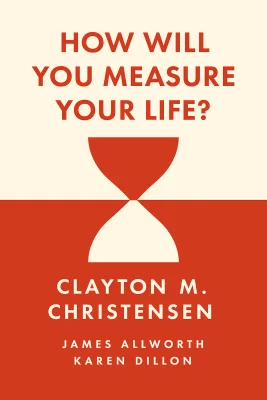
How Will You Measure Your Life?
Categories
Business, Nonfiction, Self Help, Psychology, Philosophy, Leadership, Productivity, Audiobook, Management, Personal Development
Content Type
Book
Binding
Kindle Edition
Year
2012
Publisher
Harper Business
Language
English
ASIN
0062102427
ISBN
0062102427
ISBN13
9780062102423
File Download
PDF | EPUB
How Will You Measure Your Life? Plot Summary
Introduction
Picture this: You're at your 25-year class reunion, surrounded by accomplished former classmates who seemingly have it all. Impressive job titles, beautiful homes, enviable salaries. Yet as conversations deepen, you discover something troubling. Behind the facade of professional success, many are profoundly unhappy. Some haven't spoken to their children in years. Others are navigating their third divorce. Several admit they feel trapped in careers they once thought would fulfill them. How did such bright, well-intentioned people end up so far from the lives they had envisioned? This disconnect between external achievement and internal satisfaction isn't accidental—it's the predictable result of how we measure success. Too often, we're seduced by metrics that seem important in the moment: salary increases, prestigious titles, social recognition. But these markers can lead us astray from what truly creates lasting happiness and meaning. The key lies in understanding that the same principles that guide successful businesses can illuminate the path to a fulfilling personal life. By applying rigorous thinking about strategy, resource allocation, and purpose to our own lives, we can avoid the trap of optimizing for the wrong things. The insights ahead will help you build a life where professional achievement and personal fulfillment work in harmony, rather than in opposition.
Chapter 1: Finding Purpose: How Motivation Shapes Career Fulfillment
At a small technology company, Diana worked as an analytical chemist, helping scientists use specialized equipment to analyze their experimental compounds. From the outside, her job seemed straightforward enough—run tests, deliver results. But day after day, Diana found herself caught in the middle of frustrating turf battles. Every scientist on the twenty-person team needed their test run as the highest priority. With limited equipment and only ten hours in her workday, Diana couldn't satisfy everyone. The constant pressure left her feeling underappreciated and drained. Her CEO, observing Diana at a company picnic with her husband and two young children, suddenly saw her life in full context. She wasn't just a scientist—she was a mother and wife whose mood and sense of self-worth rippled through her entire family. He could envision her coming home after a difficult day, carrying that frustration and disappointment to the dinner table, affecting everyone she loved. But he could also imagine the opposite: Diana leaving work energized and fulfilled, bringing that positive energy home to enrich her family's evening. The difference wasn't just about Diana's job satisfaction—it was about the quality of life for everyone who mattered to her. This revelation points to a fundamental truth about motivation that many organizations and individuals get wrong. We often assume that external rewards—better pay, impressive titles, corner offices—are what drive performance and satisfaction. But research reveals a more nuanced reality. While adequate compensation and fair treatment are essential hygiene factors that prevent dissatisfaction, they don't actually create fulfillment. True motivation comes from intrinsic elements: meaningful work, opportunities for growth, recognition for achievements, and increasing responsibility. When we chase only the external markers of success, we may find ourselves in the same trap as Diana—professionally advancing but personally depleting. The secret to career fulfillment lies in understanding what genuinely energizes us, then seeking opportunities that provide both the foundation of fair treatment and the deeper satisfaction of purposeful contribution.
Chapter 2: The Balance of Planning and Emergence in Life Strategy
Honda's entry into the American motorcycle market wasn't supposed to happen the way it did. In the 1960s, the company had a clear, deliberate strategy: compete head-to-head with Harley-Davidson and European imports by selling comparable large motorcycles at significantly lower prices. They invested heavily in this plan, shipping their big bikes to Los Angeles and setting up operations. But everything went wrong. American customers saw Honda's large motorcycles as inferior substitutes, and worse, the bikes leaked oil under the stress of long, high-speed American highways. Honda was burning through cash, air-freighting broken motorcycles back to Japan for repairs. Meanwhile, Honda had also shipped a few of their small Super Cub motorcycles—tiny bikes used in Japan for urban deliveries. As Honda's American operation struggled financially, employees began using these little bikes to run errands around Los Angeles. One weekend, a frustrated Honda employee took his Super Cub into the hills west of the city, riding up and down through the dirt to blow off steam about their failing strategy. Other employees joined him the next weekend. Soon, other people in the hills began asking where they could buy these fun "dirt bikes." A Sears buyer spotted a Honda employee on a Super Cub and inquired about selling them through Sears' catalog. Gradually, Honda realized that their accidental discovery—a market for small, affordable off-road motorcycles—was keeping their American venture alive. This story illustrates a crucial principle for managing our careers and lives. Sometimes our most deliberate plans, despite being logical and well-researched, simply don't work out as expected. Meanwhile, unexpected opportunities emerge from the most unlikely places. The key is knowing when to persist with our original strategy and when to pivot toward something better that we never could have planned. Early in our careers, when we're still discovering our strengths and passions, we need to be open to emergent opportunities—experimenting, learning, and adjusting course as we discover what truly energizes us. But once we've found work that aligns with our motivations and capabilities, it's time to be more deliberate, focusing our efforts to build expertise and create impact. The most fulfilling careers often combine both approaches: starting with exploration and experimentation, then shifting to focused execution once we've discovered our unique path forward.
Chapter 3: Your Resources Reveal Your True Priorities
Despite having a brilliant concept for handheld ultrasound devices that could revolutionize healthcare, SonoSite faced an unexpected challenge. Their CEO Kevin Goodwin had developed two products: the laptop-sized Titan and the smaller, less expensive iLook. While both had enormous potential, Goodwin was particularly excited about the iLook's possibilities—it had generated a thousand sales leads in just six weeks. Eager to see how customers were responding, he arranged to attend a sales call with one of the company's top salespeople. What happened next taught Goodwin a valuable lesson about the gap between intentions and reality. Despite Goodwin's repeated prompting during the sales meeting, the salesman completely ignored the iLook, focusing entirely on selling the more expensive Titan. Three times the CEO asked his employee to demonstrate the handheld device. Three times he was ignored. The salesman wasn't being defiant—he was responding rationally to how success was measured. Sales commissions were based on total dollar value and gross margins. Selling one Titan generated the same commission as selling five iLooks, so naturally, the sales force directed their limited time and energy toward the more profitable option. This disconnect between stated strategy and actual behavior reveals a fundamental truth: our real priorities aren't determined by what we say matters, but by how we allocate our resources—our time, energy, and attention. Companies can declare that innovation is crucial, but if they only reward short-term revenue generation, employees will focus on closing immediate deals rather than nurturing breakthrough products. Similarly, in our personal lives, we might claim that family relationships are our highest priority, yet consistently choose to work late, check email during family time, or fill weekends with activities that exclude our loved ones. The activities that consume our resources reveal our actual values, regardless of our stated intentions. If there's misalignment between what we say we care about and where we invest our precious time and energy, we'll inevitably drift away from the life we claim to want. True fulfillment requires the courage to align our daily choices with our deepest values, even when external pressures push us in different directions.
Chapter 4: Building Deep Relationships That Last
Fast-food executives were puzzled. Despite months of research asking customers how to improve their milkshakes—make them chocolatier, cheaper, chunkier?—sales remained flat. Traditional market research had failed because it focused on customer demographics rather than understanding the real job customers were hiring the milkshake to do. The breakthrough came when researchers spent hours in restaurants observing actual behavior, discovering something surprising: nearly half of milkshakes were sold in early morning to commuters buying nothing else, drinking alone, and driving away. When researchers interviewed these morning customers, they uncovered the true purpose behind their purchase. These commuters faced a long, boring drive to work and knew they'd be hungry mid-morning. They had tried alternatives—bananas disappeared too quickly, bagels required dangerous multitasking with cream cheese while driving, doughnuts left sticky fingers and guilt. But a thick milkshake? Perfect. It took twenty minutes to consume through that thin straw, fit perfectly in the cup holder, and satisfied them until lunch. The milkshake wasn't competing with other milkshakes—it was competing with bananas, breakfast bars, and anything else that could make the commute interesting while warding off hunger. This revelation about understanding the job to be done applies powerfully to our personal relationships. Too often, we approach our marriages, friendships, and family connections by giving what we want to give, rather than understanding what the other person actually needs. We might work late to provide financial security when our spouse most needs conversation and emotional connection. We might buy elaborate gifts when our children most need our undivided attention. We might offer solutions when our friends most need empathy. The secret to deep, lasting relationships lies in developing genuine empathy—putting ourselves not just in someone else's shoes, but in their entire life situation. When we truly understand the job our loved ones need us to do for them, and then consistently do that job well, relationships flourish. But when we assume we know what others need without truly listening and observing, even our most well-intentioned efforts can miss the mark entirely.
Chapter 5: Family Culture: Creating Values That Endure
When Edgar Schein studied organizational culture, he discovered that it forms through a predictable process. When groups face challenges repeatedly, they develop ways of solving problems together. If these approaches work, they get used again and again until they become instinctive. Eventually, people don't even think about alternative ways of handling situations—the successful approach becomes "just how we do things here." This process creates powerful, self-sustaining cultures that guide behavior even when managers aren't watching. Pixar exemplifies this cultural formation in action. Unlike traditional film studios that develop movie ideas in one department and hand them to directors for execution, Pixar recognized that directors are naturally more motivated to build out their own concepts. So they developed a process of helping directors refine their ideas through brutally honest daily feedback sessions. These critiques can be intense, but everyone shares the same priority: making exceptional films. Because this approach has consistently produced successful movies, it's become embedded in Pixar's culture. Employees no longer hesitate to offer tough feedback—they know it serves the higher goal they all share. The same cultural dynamics operate in families, whether we're conscious of it or not. Every time family members face a problem or challenge together, they're establishing patterns that can become permanent. When a child acts out and gets away with it because exhausted parents don't have the energy to respond consistently, they're inadvertently building a culture of defiance. When family members regularly help each other with difficult tasks and celebrate those contributions, they're building a culture of mutual support. The key insight is that family culture will form regardless of our intentions—the only question is whether we'll be thoughtful about shaping it. By identifying the values we want our family to embody and then consistently reinforcing behaviors that reflect those values, we can create the kind of family environment where everyone thrives, even when parents aren't around to supervise every decision.
Chapter 6: The Slippery Slope of Compromise and Integrity
Blockbuster's executives thought they were being smart. When Netflix emerged with its mail-order DVD service in the late 1990s, Blockbuster analyzed the threat using sound business principles. They looked at Netflix's smaller market, lower profit margins, and the likelihood that a postal service would cannibalize Blockbuster's profitable retail stores. The marginal cost analysis was clear: why invest in a less profitable business that would hurt their existing operations? Meanwhile, Netflix saw the same opportunity differently—compared to having no business at all, those margins looked fantastic. By 2011, Netflix had nearly 24 million customers while Blockbuster had declared bankruptcy. The established company's rational analysis led them to optimize for preserving their current profits rather than building capabilities for the future. They focused on marginal costs—the immediate expense of entering the new market—rather than considering the full cost of not adapting. What looked like smart financial management in the short term became a catastrophic strategic error because it ignored how the competitive landscape was fundamentally shifting. This same marginal thinking creates one of the most insidious traps in personal integrity. When faced with ethical decisions, it's tempting to rationalize: "Just this once, given these extenuating circumstances, it's okay to bend the rules." The immediate marginal cost of a small compromise seems negligible compared to the full cost of always doing the right thing. But each small compromise makes the next one easier to justify, creating a gradual slide toward behavior we never intended. Nick Leeson's destruction of Barings Bank began with hiding one small trading mistake, but each subsequent deception was justified by what he'd already done. The most reliable path to integrity isn't trying to hold to our principles 98 percent of the time—it's holding to them 100 percent of the time. When we establish clear boundaries and never cross them, we avoid the slippery slope entirely. The short-term costs of unwavering integrity are always visible and manageable, but the long-term costs of compromise are often invisible until they become catastrophic.
Summary
Through story after story, a powerful pattern emerges: the gap between our intentions and our reality often determines whether we build lives of meaning or drift toward outcomes we never wanted. The technology CEO who valued innovation but rewarded only short-term sales, the successful professionals who claimed to prioritize family but invested all their energy in career advancement, the established companies that understood market disruption intellectually but couldn't change their resource allocation—all fell victim to the same fundamental disconnect between stated values and actual behavior. The path forward requires both clear vision and disciplined execution. We must understand what truly motivates us beyond external rewards, remain open to unexpected opportunities while staying anchored to our core values, and most importantly, ensure that our daily choices reflect our deepest priorities. Whether building a career, nurturing relationships, or developing character, the principles remain consistent: strategy emerges from the accumulation of countless small decisions, culture forms through repeated behaviors, and integrity requires unwavering commitment to our principles. The most successful and fulfilled among us aren't those who've avoided difficult choices, but those who've learned to make decisions that align with their authentic selves, even when the immediate costs seem high. True success isn't measured by external achievements alone, but by the alignment between who we aspire to be and how we actually live each day.
Best Quote
“It's easier to hold your principles 100 percent of the time than it is to hold them 98 percent of the time.” ― Clayton M. Christensen, How Will You Measure Your Life?
Review Summary
Strengths: The book is praised for its clear, simple language and effective use of analogies. It avoids unnecessary repetition and provides practical career advice. The writing is noted for its high consistency and flow, and it is appreciated for integrating business principles into family roles. The book is authored by three diverse and experienced individuals, enhancing its credibility. Weaknesses: Some readers find the author's theories to be obvious and self-evident, questioning the necessity of linking every idea to business. The emphasis on purpose as a process involving "likeness, commitment, and metrics" is seen as overly simplistic and potentially pretentious. Overall: The book receives mixed reviews. While it is valued for its practical advice and engaging writing style, some readers criticize its theoretical depth and business-centric approach. It is recommended for those seeking straightforward career guidance but may not appeal to those looking for deeper insights.
About Author

Clayton M. Christensen
Christensen explores the intricacies of innovation, focusing on how disruptive technologies can reshape industries. His work challenges established norms by analyzing why successful companies often falter when faced with innovative threats. Central to his philosophy is the concept of disruptive innovation, a framework he meticulously developed in his book "The Innovator’s Dilemma." By highlighting how new entrants can outmaneuver established firms through less conventional means, Christensen provides a roadmap for organizations seeking to adapt and thrive in rapidly changing markets.\n\nThrough his books, Christensen addresses diverse sectors, including healthcare and education, demonstrating how his theories can be applied across various domains. In "The Innovator’s Prescription," co-authored with Jerome Grossman and Jason Hwang, he translates his innovation framework to the healthcare industry, proposing solutions that increase accessibility and reduce costs. Meanwhile, his earlier book "Disrupting Class," co-authored with Michael B. Horn and Curtis Johnson, delves into the educational sector, advocating for reforms through innovative strategies. These works underscore his belief that embracing disruption can lead to substantial progress and growth.\n\nChristensen's influence extends beyond academic circles, impacting entrepreneurs and executives who seek practical guidance for managing change. His clear, analytical writing style, enriched with case studies, equips readers with tools to navigate the uncertainties of technological advancement. His legacy, marked by awards and recognitions, continues to shape the strategies of businesses worldwide, ensuring that his insights remain a cornerstone for understanding and fostering innovation.
Read moreDownload PDF & EPUB
To save this Black List summary for later, download the free PDF and EPUB. You can print it out, or read offline at your convenience.

How Will You Measure Your Life?
by Clayton M. Christensen
