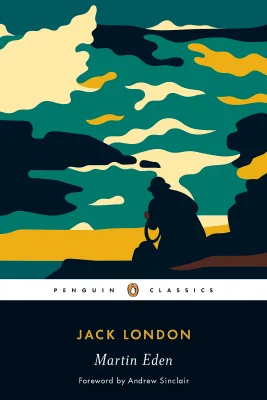
Martin Eden
Categories
Fiction, Classics, Historical Fiction, Literature, American, The United States Of America, 20th Century, Novels, Adventure, Roman
Content Type
Book
Binding
Paperback
Year
1994
Publisher
Penguin
Language
English
ASIN
B009CRYU26
File Download
PDF | EPUB
Martin Eden Plot Summary
Introduction
# The Drowning Dreams of Martin Eden The brass doorknob turns under calloused fingers, and Martin Eden steps into a world that might as well be another planet. The spacious hall stretches before him, filled with books and paintings and the scent of refinement. His sea-weathered hands tremble as he removes his cap, every movement a betrayal of his working-class origins. Behind him lies the brutal world of forecastles and street fights, ahead waits Ruth Morse—golden-haired, ethereal, impossibly pure. He has sailed the seven seas, fought with fists and knives, lived among the dregs of humanity. But nothing has prepared him for this: the sight of a woman who seems carved from starlight, whose very presence makes him ache with a longing he cannot name. Ruth Morse represents everything he has never dared to dream of—culture, education, beauty beyond the reach of his rough world. As their hands touch in greeting, Martin feels the first stirrings of an ambition that will either lift him to the heights or destroy him utterly.
Chapter 1: The Sailor's Awakening: A Fateful Encounter
The evening air carries the weight of destiny as Martin Eden finds himself thrust into the Morse family drawing room. Arthur Morse, his face still bearing bruises from the waterfront brawl where Martin had rescued him, makes nervous introductions. But Martin barely hears the words. His entire being focuses on the girl who glides toward them, her pale gold hair catching the lamplight like spun silk. Ruth Morse moves with the unconscious grace of someone who has never known want or fear. Her blue eyes hold depths Martin has never encountered—not the hard glitter of saloon girls or the desperate hunger of factory workers, but something pure and luminous that makes his breath catch. When she speaks, her voice carries the musical cadence of education, each word precisely formed, each sentence a small work of art. "Won't you sit down, Mr. Eden?" The simple courtesy undoes him. No one has ever called him "Mister" before. In his world, he is simply Martin, or sailor, or hey-you. But here, in this room filled with leather-bound books and oil paintings, he becomes someone worthy of respect. His massive frame, built by years of hauling lines and fighting storms, seems suddenly clumsy and oversized. The conversation flows around him like a foreign language. Ruth speaks of poetry and literature with casual familiarity, dropping names like Swinburne and Browning as if they were personal acquaintances. Martin listens with the desperate intensity of a drowning man, catching fragments of meaning, storing away every word for later examination. When she reads aloud from "The Princess," her voice transforms the printed words into something magical, something that reaches deep into his soul and awakens hungers he never knew existed. As the evening progresses, Martin begins to understand the vast gulf that separates their worlds. Ruth's hands are soft and white, unmarked by labor. Her family speaks in quiet, cultured tones about books and ideas and distant places they have visited for pleasure, not survival. They inhabit a realm of the mind where beauty and truth matter more than the next meal or the next berth. And yet, something in Ruth's eyes suggests she sees beyond his rough exterior to the man struggling to emerge from within.
Chapter 2: Love and Aspiration: Ruth's World Beckons
The library becomes Martin's cathedral, its towering shelves his altar of transformation. Armed with a dictionary and an iron determination, he attacks the fortress of knowledge with the same ferocity he once brought to bar fights. Grammar books yield their secrets under his relentless assault. Philosophy texts that once seemed impenetrable begin to crack open, revealing glimpses of universal truths that set his mind ablaze. Herbert Spencer becomes his prophet, evolution his new religion. The revelation strikes him like lightning on a storm-tossed deck—everything connects, everything follows natural law, everything makes sense. The bird's flight, the flower's bloom, the very thoughts in his head, all part of one magnificent, interconnected system. He reads with the hunger of a man who has discovered fire, consuming knowledge with an appetite that frightens even him. Ruth guides his studies with gentle patience, correcting his grammar, introducing him to the classics, opening doors to worlds he never imagined. Under her tutelage, his crude sailor's vocabulary expands to encompass ideas that once lay beyond his reach. She teaches him the difference between "you was" and "you were," between the rough speech of the fo'c'sle and the refined language of educated society. The transformation is not without cost. His old companions look at him with suspicion and mockery. His sister Gertrude shakes her head at his "book learning," while her husband Bernard Higginbotham sneers at the "literary fella" who thinks himself too good for honest work. Martin finds himself caught between worlds—no longer at home in the saloons and boarding houses of his past, not yet accepted in the drawing rooms of his dreams. But the fire of ambition burns too bright to be extinguished. In the small hours of the night, while the city sleeps, Martin reads by lamplight, his powerful frame hunched over books that promise to remake him. Mathematics, physics, literature, philosophy—he devours them all with the systematic thoroughness of a man who knows his life depends on it. For he has seen his future in Ruth's eyes, and nothing will stop him from claiming it.
Chapter 3: The Writer's Forge: Rejection and Perseverance
The blank page stares back at Martin like an accusation. His head swims with stories—tales of storm-lashed seas and exotic ports, of men who live and die by strength and cunning. But when he tries to capture these visions in words, they slip away like smoke. The gulf between what he sees in his mind and what appears on paper seems unbridgeable. His first story, "The Wine of Life," pours from him in a fever of creation. He writes of adventure and danger, of the savage beauty he has witnessed in far corners of the world. The words flow like blood from an opened vein, raw and powerful and utterly his own. When he finishes, he knows he has created something magnificent. The editors, surely, will recognize his genius. The rejection slip arrives with the brutal efficiency of a knife thrust. No explanation, no encouragement, just a printed form that reduces his dreams to worthless paper. More stories follow, each one met with the same cold dismissal. The pile of returned manuscripts grows in the corner of his room like a monument to failure. Ruth reads his work with polite interest, but Martin sees the truth in her careful words. She finds his stories crude, his style unpolished, his subjects unsuitable for refined tastes. When she suggests he write about "nicer" things, he realizes she cannot understand the dark beauty he finds in life's struggles. To her, literature should elevate and inspire, not drag readers through the muck and blood of real experience. The typewriter becomes his enemy and his salvation. Each day he pounds out new stories, new articles, new attempts to break through the wall of editorial indifference. His money dwindles as postage stamps devour his meager savings. The landlord grows impatient, his sister worried, his brother-in-law openly contemptuous. But Martin persists with the stubborn determination of a man who has nothing left to lose. Desperation drives him to hack work—grinding out formulaic stories for the newspaper syndicates, crafting sentimental verse for the magazines. The work makes his soul rebel, but it keeps food on his table and hope alive in his heart. Somewhere out there, he believes, an editor waits who will recognize the fire in his words.
Chapter 4: Between Worlds: Class Barriers and Social Alienation
The Shelly Hot Springs laundry becomes Martin's purgatory, where steam and sweat replace dreams and aspirations. Joe Dawson, the head laundryman, greets him with the weary camaraderie of the damned. Together they wage war against endless mountains of soiled linen, their bodies moving in the mechanical rhythm of industrial slavery. The work is hell made manifest. Fourteen-hour days in suffocating heat, handling scalding irons and caustic chemicals until his hands crack and bleed. The hotel guests lounge in cool comfort while Martin and Joe labor like demons in their subterranean world. Every shirt must be perfect, every collar precisely starched, every piece of "fancy starch" handled with the delicacy of surgical instruments. Martin's body adapts with the resilience of youth, but his mind rebels against the monotony. The books that once filled his thoughts fade to distant memories. Ruth becomes a phantom from another life, her image wavering like a mirage in the superheated air. He is becoming what he most fears—a work-beast, a creature of pure physical function with no room for dreams or aspirations. Saturday nights offer the only escape. Joe disappears into alcoholic oblivion, seeking temporary freedom in the bottom of a bottle. Martin resists at first, clinging to his vision of self-improvement. But the pressure builds like steam in a boiler until something must give. When he finally breaks, the whiskey tastes like liquid salvation, washing away the accumulated poison of too much toil. The cycle repeats with mechanical precision. Work, exhaustion, brief respite, then back to work again. Martin watches his dreams crumble like old paper, his ambitions dissolving in the acid bath of necessity. Yet somewhere deep inside, a spark of rebellion still glows. He will not surrender completely. He cannot. Ruth's face haunts him still, a reminder of the world that waits beyond the laundry's steaming hell. When he finally escapes back to Oakland, sunburned and lean, Ruth greets him with genuine pleasure. His transformation amazes her—the crude sailor has become something approaching a gentleman. But the gulf between them yawns ever wider. She cannot comprehend the brutal realities that have shaped his character, while he sees her clearly now as a pale flower of civilization, beautiful but fragile, utterly dependent on the very system that has crushed men like him.
Chapter 5: Brissenden's Warning: Art Versus Commerce
Russ Brissenden appears in Martin's life like a comet blazing across a dark sky—brilliant, erratic, and doomed. Thin to the point of emaciation, with the telltale flush of consumption burning in his hollow cheeks, he possesses a mind that cuts through pretense and convention with surgical precision. Where others see Martin as a rough-hewn curiosity, Brissenden recognizes a kindred spirit, another soul caught between the world of ideas and the brutal realities of survival. Their friendship is forged in the smoky atmosphere of waterfront saloons, over glasses of whiskey that Brissenden consumes with the desperate intensity of a man racing against time. He is everything Martin aspires to be—a true artist, uncompromising in his vision, contemptuous of the commercial demands that force lesser writers to prostitute their talents. His poetry blazes with a fierce beauty that makes Martin's own efforts seem clumsy by comparison. "Beauty is the only master worth serving," Brissenden declares, his thin lips curling in disdain at the mention of magazine editors and their mercenary concerns. He sees through Ruth's bourgeois respectability with cruel clarity, warning Martin that such women will always choose security over passion, convention over truth. His words sting because they carry the weight of hard-won wisdom. But Brissenden is dying, and he knows it. The disease that ravages his lungs is matched by a spiritual sickness that no medicine can cure. He has glimpsed the heights of artistic achievement only to find them barren and cold, populated by critics and editors who lack the very qualities they presume to judge. In Martin, he sees his younger self—still hopeful, still believing that talent and determination might be enough. When Brissenden takes his own life, leaving behind his masterpiece "Ephemera" scattered across a blood-stained hotel room floor, Martin understands the terrible price that true artists pay for their uncompromising vision. The newspapers call it suicide, but Martin knows better. His friend had simply chosen his moment to exit a world that had no place for genuine beauty. The lesson burns clear: in America, success means selling your soul to the highest bidder.
Chapter 6: Hollow Victory: The Taste of Success
The telegram arrives on a gray Oakland morning, yellow paper crackling in Martin's trembling hands. "The White Mouse" magazine wants to buy his story "Adventure" for forty dollars—more money than he has seen in months. But the victory feels hollow, tainted by the memory of Brissenden's warnings about commercial success and the fresh wound of his friend's death. The checks begin arriving like autumn leaves—first a trickle, then a flood. "The Shame of the Sun," his philosophical essay attacking mysticism, becomes a sensation when Singletree, Darnley & Co. publishes it. Suddenly, everyone wants to meet the mysterious Martin Eden. Dinner invitations pour in from the same people who had ignored him when he was starving. The Morses, who had forbidden him their house, now welcome him with open arms and calculating smiles. "I always knew you had potential," Mr. Morse declares over brandy and cigars, his earlier contempt forgotten in the glow of Martin's newfound fame. The hypocrisy is breathtaking, but Martin smiles and nods, playing the role of grateful protégé while his soul curdles with disgust. Ruth returns to him like a moth to flame, her blue eyes bright with renewed love—or is it simply the reflection of his bank account? The magazines that had rejected his work for years now beg for his manuscripts. Editors who had dismissed him as a crude amateur now hail him as a literary genius. The same stories they had scorned are suddenly masterpieces worthy of prominent placement and generous payment. Martin publishes everything—his old work, his new work, even juvenilia he had written in his earliest days of struggle. The money pours in like water through a broken dam, but it brings no satisfaction, only a growing sense of emptiness and betrayal. The literary world that had once seemed like paradise reveals itself as a carnival of frauds and sycophants, all dancing to the tune of public opinion and commercial profit. Critics who had never heard of him six months earlier now write lengthy analyses of his "artistic development," while society hostesses compete to have him grace their dinner tables. The final insult comes when "Ephemera" is published posthumously in The Parthenon, accompanied by breathless commentary about the "discovery" of a new poetic voice. Martin watches in horror as his dead friend's masterpiece is dissected and commodified, turned into another product for the cultural marketplace. The same mob that would have ignored Brissenden in life now celebrates him in death.
Chapter 7: Disillusionment: The Price of Recognition
Success tastes like ashes in Martin's mouth. The world that had once rejected him now prostrates itself at his feet, but their worship is as meaningless as their earlier scorn. He sees the machinery of fame with brutal clarity—the way public opinion shifts like weather, the way critics manufacture significance from thin air, the way society values appearance over substance. Ruth presses him to marry her, her family's objections magically evaporated by his success. But Martin sees her clearly now—not the ethereal goddess of his dreams, but a product of her class, trained from birth to value money over truth, respectability over passion. When she comes to his hotel room one night, offering herself with desperate intensity, he feels nothing but pity for both of them. "I loved you when you had nothing," she whispers against his chest, but the lie hangs in the air between them like smoke. She had loved an idealized version of him, a romantic fantasy that had nothing to do with the real Martin Eden. Now she loves his fame and fortune, which are equally false. The woman who had inspired his transformation has become another symbol of the world's corruption. The working men who had once been his brothers now look at him with suspicion and resentment. His success has made him a traitor to his class, a sellout who has abandoned his principles for bourgeois acceptance. Even his family treats him differently—his sister Gertrude accepting his money with tears of gratitude, his brother-in-law suddenly eager to be associated with his famous relative. Martin realizes with growing horror that he has become a prisoner of his own success. The world demands that he continue producing, continue playing the role of celebrated author, but the fire that had once driven him to write has been extinguished by the very achievement of his dreams. He is wealthy, famous, and utterly alone—a hollow man wearing the mask of triumph while his soul withers away inside. The revelation strikes him with the force of physical blow: he has won everything he thought he wanted, only to discover that victory is indistinguishable from defeat. The paradise he glimpsed in Ruth's drawing room was a mirage, the literary world he fought to enter as corrupt and shallow as the waterfront bars he had left behind. Success built on society's approval is as hollow as the praise of strangers.
Chapter 8: The Final Voyage: Return to the Sea
The Mariposa cuts through Pacific swells toward Tahiti, carrying Martin away from the civilization that has both made and destroyed him. He stands at the rail, watching California disappear into the morning haze, feeling nothing but a vast emptiness where his dreams had once burned. The other passengers treat him like royalty—the famous author taking a well-deserved vacation—but their attention feels like insects crawling on his skin. In his stateroom, he finds a volume of Swinburne and reads the words that will become his epitaph: "From too much love of living, from hope and fear set free, we thank with brief thanksgiving whatever gods may be that no life lives forever; that dead men rise up never; that even the weariest river winds somewhere safe to sea." The poetry speaks to something deep in his exhausted soul. He has fought so hard to live, to transform himself from a brutal sailor into a man of letters, but the victory has cost him everything that made life worth living. Success has revealed the hollowness at the heart of human ambition, the way society values fame over truth, appearance over substance. The boy who had dreamed of becoming worthy of Ruth's love has discovered that worthiness itself is a lie. That night, as the ship rolls through tropical darkness, Martin makes his final choice. He opens the porthole and looks down at the phosphorescent wake, remembering the clean violence of his youth when problems could be solved with fists and courage. Those days seem like another lifetime, another person's memories. He slips through the porthole feet first, his shoulders catching briefly before the ship's roll frees him. The warm Pacific closes over his head like a benediction, washing away the pain and disappointment of his brief, brilliant life. For a moment, his body fights against his will, the primitive instinct for survival driving him back to the surface. But Martin Eden has learned to master his instincts, to bend his will to higher purposes. He fills his lungs with seawater and sinks into the depths, the lights of the Mariposa fading above him like dying stars. In the end, the ocean that had made him claims him back, offering the peace that success had never brought. The boy who had dreamed of transforming himself through words finds his final transformation in silence, becoming one with the vast indifference of the sea.
Summary
Martin Eden's journey from ignorant sailor to celebrated author becomes a brutal education in the realities of class and ambition in early twentieth-century America. His love for Ruth Morse drives him to transform himself through sheer force of will, devouring books and ideas with the same savage intensity he once brought to street fights and sea voyages. Yet even as his mind expands and his writing improves, he discovers that talent alone cannot overcome the barriers that separate the working class from the world of culture and respectability. The tragedy of Martin's story lies not in his failure to achieve literary success, but in his gradual realization that the very qualities that make him a powerful writer—his honesty, his refusal to compromise, his intimate knowledge of life's harsh realities—are precisely what make him unsuitable for the genteel world he seeks to enter. His suicide is not an act of despair but of clarity, the final choice of a man who refuses to live a lie, even a profitable one. The weariest river has indeed wound its way safely to sea, finding in death the authenticity that life had denied him.
Best Quote
“But I am I. And I won't subordinate my taste to the unanimous judgment of mankind” ― Jack London, Martin Eden
Review Summary
Strengths: The review highlights Jack London's skillful exploration of personal evolution and enlightenment through the character of Martin Eden. It praises the intellectual and moral journey of the protagonist, who rises from ignorance to cultural and philosophical heights. The narrative's ability to evoke deep introspection and its vivid portrayal of transformation are commended. Weaknesses: The review criticizes the protagonist's unrealistic transformation and his inability to cope with emotional failure, leading to an abrupt decision to commit suicide. It questions the plausibility of Eden's drastic change and his ultimate sense of emptiness despite achieving success. Overall: The review conveys a mixed sentiment, appreciating the novel's thematic depth and London's writing while expressing skepticism about the believability of the protagonist's metamorphosis. The recommendation is cautious, suggesting a re-examination of the novel's concluding paragraph for its literary beauty.
About Author

Jack London
London investigates the human struggle against nature and societal structures, often embedding his narratives in the stark environments of Alaska and the Yukon during the Klondike Gold Rush. By crafting tales like "The Call of the Wild" and "White Fang," he explores themes of survival, loyalty, and the primal instincts of animals and humans alike. His writing, therefore, transcends mere adventure stories to interrogate deeper questions of existence and belonging, making them resonate with readers who seek more than just a thrilling narrative.\n\nBeyond his exploration of the wilderness, London connects with societal and political issues through his works. His dystopian novel "The Iron Heel" and the non-fiction exposé "The People of the Abyss" delve into class struggle and the harsh realities of industrial society, reflecting his advocacy for socialism and workers' rights. Meanwhile, his involvement with the radical literary group "The Crowd" in San Francisco underscored his commitment to these causes. For readers interested in the intersection of literature and activism, London's books offer a powerful lens through which to view early 20th-century socio-political dynamics.\n\nIn this short bio, London's impact as an author extends to his innovative contributions to the emerging science fiction genre and his international celebrity status, which was rare for writers of his time. His works, rich in both thematic depth and adventure, appeal to a diverse audience ranging from literary enthusiasts to those interested in history and social issues. Therefore, London's legacy is not only in his storytelling prowess but also in his ability to challenge readers to consider broader themes of humanity and society.
Read moreDownload PDF & EPUB
To save this Black List summary for later, download the free PDF and EPUB. You can print it out, or read offline at your convenience.
Martin Eden
by Jack London
