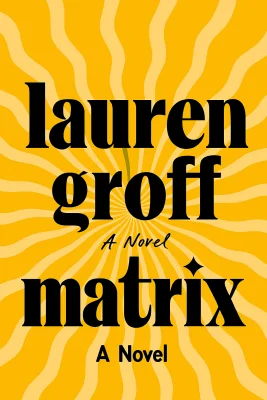
Matrix
Categories
Fiction, Religion, Audiobook, Feminism, Historical Fiction, Book Club, Historical, LGBT, Literary Fiction, Queer
Content Type
Book
Binding
Hardcover
Year
2021
Publisher
Riverhead Books
Language
English
ISBN13
9781594634499
File Download
PDF | EPUB
Matrix Plot Summary
Introduction
In the cold March drizzle of 1158, a seventeen-year-old giantess rides alone through the English countryside toward her exile. Marie de France—bastard daughter of rape, cast off from Eleanor of Aquitaine's glittering court—approaches a dying abbey where twenty starving nuns await salvation or death. What begins as punishment becomes transformation, as this unwanted girl discovers that the Virgin Mary herself has chosen her for a far greater destiny than any earthly crown could offer. This is the story of how one woman's rage and love built an empire within abbey walls. Through visions that blur the line between divine revelation and earthly ambition, Marie will transform a handful of dying nuns into a fortress of female power, constructing labyrinths both literal and spiritual that challenge the very foundations of medieval authority. But every act of creation demands its price, and the greatest builders must eventually face what they have wrought.
Chapter 1: Exile and Arrival: A Royal Bastard Cast into Wilderness
The scent of Eleanor's perfume still lingered in Marie's chamber when the blow fell. The queen glided through the door like a predator wrapped in sable and jewels, her ladies trailing behind like carrion birds. Marie's half-sister—another royal bastard, but one who had learned the art of court survival—averted her eyes, complicit in what was to come. Eleanor's voice dripped honey over poison as she announced the papal dispensation. Marie, that great ungainly creature with her sword practice and disputations, would become prioress of a royal abbey. Wasn't it wonderful? At last they knew what to do with this odd half-sister to the crown. The queen's kohl-rimmed eyes swept over Marie with the satisfaction of a chess player delivering checkmate. Marie's protests died in her throat. She was unworthy, had no vocation, but Eleanor merely smiled. Did Marie truly think marriage awaited her? Three heads too tall, with that terrible deep voice and those massive hands? No spouse would accept such a creature. This was mercy, not punishment. The abbey was starving, diseased, perfect for someone who had fooled the world for two years by impersonating her own dead mother. When Eleanor departed, Marie collapsed onto her bed beside Cecily, her loyal servant. But even Cecily—the one constant in Marie's life since childhood—delivered her own betrayal. She would not follow Marie into that living death among dead-eyed nuns. Better to stay and marry, to bear children, to live. As the perfume faded from the chamber, Marie tasted the apricot pits she kept for their bitterness, feeling the sun set forever inside her chest. The abbey materialized from gray mist like a mirage of despair. Pale stone buildings crouched on their hill, surrounded by falling fences and smoldering burn piles. In the churchyard, fourteen fresh graves gleamed black in the drizzle—nuns and child oblates recently taken by a disease that turned flesh blue as victims drowned in their own lungs. Marie's horse plodded through mud and horse shit until she slipped and fell face-first at the feet of blind Abbess Emme, who smiled vaguely and praised Marie's humility while Subprioress Goda muttered about this great clumsy lunk of a girl. That first night, as Marie lay too tall for her narrow bed with cold stone against her bare feet, she dreamed of the crusade her mother and aunts had joined when she was small. She saw again that tent in the Byzantine Empire, the naked woman lying in furs who had taken Marie's dagger and sent her stumbling back into the night. It was Eleanor—even then, even as a child, Marie had been marked by that face which absorbed all light, all breath from her lungs, all thought from her head.
Chapter 2: Taking Root: From Reluctant Prioress to Visionary Leader
Marie's first months at the abbey passed in a blur of hunger and cold liturgy. Twenty-six nuns lived like skeletons, their faces blue with chilblains, surviving on soups where meat was boiled and removed to save for future soups. The abbess hummed uselessly through her blindness while Subprioress Goda dispensed cruelty like sacrament. Marie held herself apart, nurturing the lais she wrote by candlelight in the barn—poems that would win Eleanor back, that would deliver her from this gray purgatory. When no reply came to her manuscripts, when her merlin was torn apart by a wild hawk, Marie finally understood the full weight of her abandonment. Eleanor had cast her out completely. There would be no rescue, no return to court. The choice was simple: die of despair or seize control of this dying place. The transformation began with violence. Marie rode out with her mother's crusader sword to confront the renters who had defaulted on abbey lands, claiming starvation while living like gentry. She thundered her warhorse into their hall at dawn, scattering the sleeping household with her abbess staff until they fled bleeding into the forest. She installed a loyal widow and her children as the rightful inhabitants, stripping the estate of silver, paintings, and livestock. By day's end, every delinquent renter had appeared with payments, half proud to answer to such a fierce and royal commander. Marie discovered that most souls craved a force greater than themselves. Her height and Plantagenet features, her descendance from the fairy Mélusine, became weapons more powerful than any blade. When she pulled three other defaulters from their beds at midnight, when she sat in judgment over disputes with the authority of ancient law, the countryside began to whisper of the giant abbess whose anger could bend nature itself. The abbey's transformation followed quickly. Marie demoted the corrupt cellatrix who hoarded bacon while nuns starved, promoting in her place honest Sister Mamille, who had lost her nose to a jealous hound but retained her sense of justice. She established a scriptorium when silk work proved unprofitable, charging a quarter the price of monastery copyists. The revenue exceeded ten years of weaving in a single season. By her seventh year as prioress, they were forty nuns strong, no longer starving but growing sleek as abbey lambs in spring pastures.
Chapter 3: Building Walls: The Labyrinth and Abbey's Transformation
In the twilit fields of 1188, as Marie stood watching her nuns harvest winter rye, the Virgin Mary split the sky. In a vision that shook the ground beneath her feet, Marie saw the Mother of God clothed in radiance, dropping a wine-red rose upon the forest. The petals circled in supernatural wind, tearing down great trees in a precise pattern—a labyrinth, with Marie herself as the broom flower holding a shining moon at its heart. The message was clear: the apocalyptic beasts were loose upon the world, and only by building walls around walls could Marie protect her daughters from the corruption beyond. She must create an island of women, entire unto themselves, where no authority existed but her own. Marie assembled her council in the deep night: Prioress Tilde, mechanical Sister Asta, wise Ruth, and reluctant Wulfhild the bailiff. Only Wulfhild dared resist, citing the cost and questioning Marie's endless hunger to expand the abbey's reach. But when Marie spoke with the Virgin's borrowed authority, even Wulfhild's spine bent to the greater will. For two years, the forest rang with falling trees and the shouts of working nuns. Asta designed false roads and clever blinds, creating a maze that would confound any visitor while hiding the true path to the abbey. Teams of the strongest women moved like ants across the countryside, building what appeared to be an endless woodland track that led nowhere, doubling back on itself through careful engineering and transplanted growth. Marie herself worked alongside her daughters, swinging axes and hauling stones, her body remembering the joy of physical labor. She watched her nuns grow strong and proud, their faces bright with purpose as they carved this sanctuary from ancient forest. When winter halted the work, they returned to the abbey like tired horses brought to stable, but soon the confines felt like captivity and they longed for open air and the satisfaction of creation. The day Marie rode the completed labyrinth alone, testing it as a stranger would, she nearly lost herself in her own creation. Hours passed as her horse followed the winding track, and in her confusion she felt the presence of the devil, the great evil stalking her through the shadows between trees. Terror seized her until prayer broke like dawn across her consciousness, and she understood that she had been released from her sins. Behind her, unseen, lay the displaced families of squirrels and badgers, the vanished birds and broken nests—the price paid in small lives for human ambition.
Chapter 4: Sacred Defiance: Claiming Priestly Powers and Divine Vision
When fire consumed the town cathedral and its priests, Marie faced a crisis that would define her reign. The papal interdict had fallen over England, but worse than political maneuvering was the spiritual void left by those charred bones in the ashes. Her nuns could not be shriven, could not receive communion. In their faces she saw the gray pallor of souls cut off from grace. The solution came to her not as vision but as necessity. Marie had always been more theologian than mystic, more politician than saint. If she was mother to these women, then she held parental authority blessed by God himself. Like Mary Magdalene, Apostola Apostolorum, who preached and converted multitudes, Marie would assume the sacerdotal duties her daughters required. The first Mass she celebrated in stolen vestments sent shock waves through the abbey. Old nuns wept in horror while young ones watched with barely contained hilarity. Sister Wevua fled the chapel bellowing like a wounded animal, but most remained, caught between competing sins—to leave Mass or hear it presided over by a woman. Marie smiled as she offered cup and bread, blessed as she raised the host, her authority burning bright as any priest's ordination. In confession, Marie heard the true stories her daughters had carried like stones in their hearts. The novice who was no virgin because a shadow had visited her bed from age eight. The murders committed in self-defense, the rapes endured in silence, the secret pregnancies that ended in blood and terror. Women's voices telling women's truths to a woman's ear, finding absolution impossible anywhere else in Christendom. Through these whispered secrets, Marie felt her nuns' love growing warm around her like sunlight. They could not revolt now—she knew too much of them, held their souls too carefully in her hands. And when their sadnesses weighed too heavily, Marie would steal down to the scriptorium and change the Latin of missals into the feminine, slashing women into holy texts with wicked joy. If the divine office was meant only for women's voices, why shouldn't God herself smile down upon her daughters? The power grew easier with practice. When her diocesan superiors visited, Marie showed them her carefully prepared account books that demonstrated the abbey's careful poverty, fed them roasted pig and sweet wine until they departed satisfied. She had learned Eleanor's lesson well: reputation was the strongest fortress any woman could build.
Chapter 5: Sovereign Domain: Creating a Women's Island in a Hostile World
By her fiftieth year, Marie ruled an empire disguised as a convent. The abbey had grown to nearly a hundred nuns, their wealth carefully hidden behind displays of humble piety. Young women arrived not as discarded daughters but as eager novices seeking education and purpose under the legendary abbess whose visions had reshaped the spiritual landscape of northern England. But power attracted enemies, and Marie's spies brought word of conspirators gathering in taverns, planning a bloody lesson for these unnatural women who dared remove themselves from male authority. Two dozen men meant to breach the labyrinth, to scatter the nuns and claim their hidden gold. Marie felt her warrior blood stir—the same fury that had driven her aunts in Eleanor's Ladies' Army during the crusade of her childhood. On a moonlit night in late harvest, Marie rode out with forty of her strongest daughters. They had trained no armies, wielded no swords, but they possessed something more dangerous: intimate knowledge of their own territory and the tactical genius of desperate women. In the sixth lobe of the labyrinth, where Asta had prepared hidden pitfalls and weighted nets, they waited in perfect silence. The battle was swift and brutal. Catgut strung across the road decapitated riders in showers of blood. The strongest villeinesses swarmed from concealment to bind stragglers while novices rained stones from the canopy above. Within thirty heartbeats, the threat was ended—two attackers dead, nineteen wounded, all delivered hooded to the town cathedral where they spent the night among ancient bones, learning the price of challenging women who had found their strength. The victory's cost was a single villeiness, mother of six, whose entrails spilled hot through her fingers before Nest could save her. Marie held her own grief like a blade, knowing that one death might purchase decades of safety. Across the countryside, the story would spread from woman to woman, servant to lady, growing in the telling until it became legend. The abbess and her daughters were not to be touched. Queen Eleanor, still captive but never powerless, wrote careful warnings wrapped in agricultural metaphors. Beware of blight in your fields, she counseled, for word of corruption spreads swiftly. But Marie had learned statecraft from the master herself. She flooded the roads with songs and stories of the abbey's holiness, spending gold like water to build an unassailable reputation for piety and divine favor.
Chapter 6: Final Vision: Death and the Burning of Legacy
In her final years, Marie's body began the slow collapse that had claimed her mother and grandmother before her. The egg hardened between her breasts, but her mind remained sharp as ever, watching Eleanor's letters arrive with news of children dead in meaningless wars, of the great Angevin empire crumbling to dust. The queen herself died at Fontevraud in 1204, and with her passing Marie felt something essential drain from the world—not love, for that had long since transformed into something more complex, but the electric tension that had driven her since that first glimpse of radiance in Eleanor's court. Wulfhild's death struck deeper. Her loyal bailiff, worn down by decades of travel and conflict on Marie's behalf, succumbed to fever brought on by the construction of Marie's final monument: a great lake formed by damming the marshlands beyond the abbey grounds. Marie held her oldest friend as opium eased her passage, feeling the last of her human loves slip away into memory and regret. The abbey continued its cycles without pause. Matins, Lauds, Prime, Terce, Sext, None, Vespers, Compline. Seasons turning like prayer wheels, bringing fresh novices to replace the nuns who escaped their bodies in death. Marie's authority was absolute now, her reputation secured, her sisters safe behind walls both physical and spiritual that no earthly power dared breach. When Marie's own death approached, she saw it clearly—the final vision that came not in fire and glory but in the quiet dissolution of an old woman's failing heart. She had built something magnificent and terrible, a sanctuary that would outlive empires, a place where women could find purpose beyond the narrow confines the world allowed them. Whether it was holy or merely human mattered less than its endurance. Prioress Tilde, good and obedient, would inherit this carefully constructed paradise. On the night after Marie's funeral, she discovered the abbess's hidden book of visions—God as a brooding hen laying the eggs of creation, Eve and Mary sharing a kiss of reconciliation, Marie herself as protector above any earthly authority. In panic and orthodoxy, Tilde fed the manuscript to her fire, watching decades of revolutionary theology curl into ash and smoke. Such small fires, she could not know, would eventually heat the world beyond bearing.
Summary
Marie de France died as she had lived—too large for the world that tried to contain her. From the unwanted bastard dumped at a dying abbey, she had built an empire of women that would endure for centuries, its walls proof against kings and popes alike. Her nuns would remember her as builder and protector, the giant abbess whose visions had delivered them from poverty and powerlessness into something approaching freedom. But the true measure of Marie's legacy lay not in stones or gold, but in the transformation she had worked upon herself and others. The rage-filled girl who had arrived in 1158, burning with thwarted ambition and unrequited love, had become something unprecedented in the medieval world: a woman who wielded absolute authority over her own domain, who spoke with the voice of divinity itself, who proved that even within the strictest constraints, human will could carve out spaces of magnificent defiance. In the end, that may have been vision enough.
Best Quote
“Aging is a constant loss; all the things considered essential in youth prove with time that they are not. Skins are shed, and left at the roadside for the new young to pick up and carry on.” ― Lauren Groff, Matrix
Review Summary
Strengths: The novel is praised for its exceptional writing and remarkable detail in depicting 12th-century life. The character of Marie is described as fierce and formidable, and the research underpinning the novel is noted as impressive. The book is also recognized for its lush and enjoyable prose. Weaknesses: The ending is perceived as faltering, lacking a clear conclusion. Some scenes are difficult to visualize. The novel's portrayal of Marie as an indomitable heroine may reduce its emotional impact, and there is a noted discrepancy between the historical figure of Marie de France and the novel's character. Overall: The reviewer enjoyed the novel despite initial reservations about the subject matter. While the book is well-written and engaging, some historical liberties and visualization issues are noted. It is recommended for those interested in historical fiction with strong female leads.
About Author

Lauren Groff
Groff reframes the literary landscape with her compelling exploration of identity, community, and history. Her purpose as an author centers on probing the psychological depths and emotional intensities of her characters, offering readers a chance to engage with themes of love, loss, and transformation. Her writing, evident in works like "The Monsters of Templeton" and "Fates and Furies", combines lyrical prose with innovative narrative structures, inviting readers to consider the complex interplay between individual desires and societal expectations.\n\nGroff's method often involves blending historical and speculative elements, as seen in "Matrix" and "The Vaster Wilds", where imaginative reconstructions provide fresh perspectives on the past. This approach not only enriches the reading experience but also challenges the audience to rethink conventional narratives. Her stories, published in esteemed outlets such as "The Atlantic" and "Ploughshares", showcase her ability to intertwine rich imagery with rhythmic language, appealing to readers who appreciate detailed and evocative storytelling.\n\nGroff's impact extends beyond her books, as she has received significant recognition, including being named one of the 100 most influential people by "TIME" magazine in 2024. Her contributions to literature have been acknowledged through numerous awards, reflecting her status as a critical voice in contemporary American literature. For those interested in a nuanced examination of human experiences, Groff's work offers a profound and resonant exploration of life's complexities.
Read moreDownload PDF & EPUB
To save this Black List summary for later, download the free PDF and EPUB. You can print it out, or read offline at your convenience.
Matrix
by Lauren Groff
