Modern Man in Search of a Soul
Categories
Nonfiction, Self Help, Psychology, Philosophy, Science, Religion, Spirituality, Classics, Audiobook, Psychoanalysis
Content Type
Book
Binding
Paperback
Year
1955
Publisher
Harcourt
Language
English
ASIN
0156612062
ISBN
0156612062
ISBN13
9780156612067
File Download
PDF | EPUB
Modern Man in Search of a Soul Plot Summary
Introduction
In an age of unprecedented technological advancement and material prosperity, why do so many individuals find themselves wrestling with profound feelings of emptiness and spiritual disconnection? This question strikes at the heart of modern existence, where external progress seems inversely related to internal fulfillment. The contemporary individual often experiences a peculiar form of suffering that cannot be addressed through conventional means—a malaise of the soul that transcends physical ailments or material deprivation. This psychological exploration presents a comprehensive framework for understanding the human psyche as a complex system operating on multiple levels of consciousness. Through careful analysis of dreams, symbols, and the unconscious mind, we encounter a revolutionary approach to psychological healing that recognizes both personal and collective dimensions of human experience. The work addresses fundamental questions about the relationship between individual consciousness and universal patterns of meaning, the role of spiritual experience in psychological health, and the integration of opposing forces within the personality. These insights offer not merely academic understanding but practical wisdom for navigating the unique challenges of modern existence and achieving authentic selfhood.
Chapter 1: The Conscious and Unconscious Mind
The human psyche operates as a dynamic system where consciousness represents only the visible tip of a vast psychological iceberg. While we tend to identify ourselves entirely with our conscious thoughts and deliberate actions, the unconscious mind contains the majority of our psychological activity, operating according to its own logic and purposes. This unconscious realm is not merely a repository of forgotten memories or repressed desires, but an active, creative force that continuously influences our behavior, relationships, and life direction. The unconscious manifests itself most clearly through dreams, which serve as direct communications from this deeper layer of the psyche. Unlike random neural firing during sleep, dreams present coherent symbolic messages that address our current life situations with remarkable wisdom and insight. They often reveal solutions to problems that have baffled our conscious minds, or warn us of dangers we have failed to recognize. The symbolic language of dreams may seem foreign to rational thought, yet it speaks to fundamental truths about our psychological state and life direction. Understanding the relationship between conscious and unconscious requires recognizing that these are not opposing forces but complementary aspects of a unified system. When conscious attitudes become too rigid or one-sided, the unconscious naturally produces compensatory material to restore psychological balance. This self-regulating function ensures that we do not stray too far from our authentic nature or ignore essential aspects of our development. The practical implications of this understanding extend far beyond academic psychology. By learning to dialogue with the unconscious through dream work and active imagination, individuals can access a profound source of guidance and creative energy. This relationship transforms the experience of being human from a purely rational enterprise to a meaningful collaboration between different levels of awareness. The conscious mind provides direction and discrimination, while the unconscious offers depth, creativity, and connection to larger patterns of meaning. Modern education and culture tend to overvalue conscious control while dismissing unconscious processes as primitive or irrelevant. This imbalance contributes significantly to the psychological difficulties plaguing contemporary society. Restoring respect for the unconscious and learning to work constructively with its manifestations represents a crucial step toward psychological wholeness and authentic living.
Chapter 2: Dreams as Pathways to the Psyche
Dreams function as natural therapeutic communications from the unconscious, offering insights that conscious analysis alone cannot provide. Rather than random mental activity during sleep, dreams present carefully constructed symbolic scenarios that address the dreamer's current psychological situation. Each dream image carries multiple layers of meaning, connecting personal experiences with universal human themes through a language that transcends literal interpretation. The symbolic nature of dreams allows them to communicate complex psychological truths that would be impossible to express in ordinary language. A dream of climbing a mountain might represent the dreamer's spiritual aspirations, their struggle for achievement, or their need to gain perspective on life challenges. The specific details—the weather conditions, companions, obstacles encountered—all contribute to the dream's precise message for that particular individual at that moment in their development. Understanding dreams requires abandoning the assumption that they disguise or conceal meaning. Instead, they reveal exactly what they intend to communicate, but in a symbolic form that requires translation. This process of interpretation is not about imposing external theories but about allowing the dream images to speak for themselves. The most meaningful interpretations often arise through careful attention to the dreamer's personal associations combined with understanding of universal symbolic patterns. Dreams serve multiple functions in psychological life. They compensate for one-sided conscious attitudes, provide early warnings about developing problems, suggest creative solutions to life challenges, and connect us with deeper sources of wisdom and guidance. A successful businessperson might dream of being lost in a forest, suggesting that their single-minded focus on achievement has disconnected them from their natural instincts and deeper values. The therapeutic value of dream work extends beyond problem-solving to include personality development and spiritual growth. Through consistent attention to dreams, individuals develop a relationship with the unconscious that enriches every aspect of their lives. This practice transforms sleep from mere physical restoration into an active partnership with the deeper wisdom of the psyche. Dreams become trusted advisors, creative collaborators, and sources of meaning that illuminate the path toward psychological wholeness.
Chapter 3: The Stages of Psychological Development
Human psychological development unfolds through distinct phases, each presenting unique challenges and opportunities for growth. The first half of life focuses primarily on ego development, social adaptation, and establishing one's place in the world. During this period, the individual must develop a strong sense of personal identity, acquire necessary skills for survival and success, and learn to navigate social relationships effectively. The psychological tasks of youth center on separation from family, career establishment, and finding a suitable mate. However, the goals and values that drive the first half of life become inadequate for the second half. Around midlife, often triggered by external circumstances such as career plateaus, relationship changes, or confrontation with mortality, individuals begin questioning the meaning and purpose of their achievements. The external markers of success—wealth, status, accomplishments—no longer provide the same satisfaction, leading to what might be called a spiritual crisis of meaning. This midlife transition represents a crucial turning point in psychological development. The individual must shift focus from external achievement to internal development, from ego expansion to soul cultivation. This process often involves confronting aspects of personality that were neglected or suppressed during the achievement-focused years. The ambitious executive might discover their artistic sensibilities, while the nurturing parent might develop their intellectual capabilities. The second half of life requires a fundamental reorientation toward meaning, wisdom, and spiritual development. Rather than conquering the outer world, the mature individual turns toward understanding the inner world of psyche and spirit. This shift demands letting go of youthful omnipotence fantasies and accepting the limitations and mysteries of human existence. The ego, which served as the hero of the first half of life, must now learn to serve something greater than itself. This developmental process cannot be rushed or skipped. Attempts to embrace spiritual concerns prematurely, without first establishing a solid ego foundation, result in psychological inflation or escapism. Conversely, clinging to youthful attitudes beyond their appropriate time leads to stagnation and meaninglessness. Healthy development requires honoring each life stage while remaining open to the evolutionary pressures that call us toward greater psychological maturity and spiritual depth.
Chapter 4: Religion and the Spiritual Problem
The modern individual faces a unique spiritual predicament: traditional religious forms have lost their compelling power, yet the fundamental human need for meaning and transcendence remains as strong as ever. This crisis manifests not as a rejection of spirituality itself, but as an inability to find authentic spiritual nourishment within inherited religious frameworks. The sophisticated modern mind can no longer accept religious teachings on faith alone, yet purely rational approaches to life leave the soul undernourished and restless. This spiritual vacuum creates a profound psychological problem, as the human psyche appears to require some form of religious or transcendent orientation for optimal functioning. Without connection to meanings larger than personal survival and pleasure, individuals experience depression, anxiety, and a sense of existential emptiness. The symptoms of spiritual starvation often masquerade as purely psychological or medical problems, yet they resist treatment until the underlying spiritual dimension is addressed. The challenge lies not in returning to outgrown religious forms but in discovering new ways to experience the sacred that remain authentic to contemporary consciousness. This requires distinguishing between religion as institutional doctrine and religiosity as a fundamental human capacity for experiencing the numinous. The former may indeed be obsolete for many individuals, while the latter represents an essential aspect of psychological health and development. Modern psychology has inadvertently become a secular form of spiritual guidance, as individuals seek from therapists what they once received from priests and ministers. This places psychological practitioners in the difficult position of addressing spiritual questions without adequate training in matters of ultimate meaning. Yet the therapeutic relationship, when conducted with proper depth and reverence, can facilitate genuine spiritual experiences and transformations. The resolution of this spiritual problem requires developing what might be called a "psychological religiosity" based on direct experience of the transcendent dimensions of the psyche. Through dreams, active imagination, and careful attention to synchronistic events, individuals can cultivate a personal relationship with the sacred that bypasses institutional intermediaries while remaining grounded in psychological reality. This approach honors both the scientific worldview and the soul's hunger for meaning, creating a bridge between reason and faith that serves the needs of contemporary consciousness.
Chapter 5: The Therapeutic Relationship
The healing relationship between therapist and patient transcends the medical model of expert diagnosis and treatment, evolving into a mutual encounter between two human beings exploring the mysteries of psychological existence. This relationship succeeds not through the application of techniques but through the creation of a sacred space where authentic transformation becomes possible. The therapist's primary tool is not theoretical knowledge but their own psychological development and capacity for genuine human relatedness. Effective therapy requires the therapist to bring their whole personality into the encounter, including their own shadows, limitations, and ongoing struggles for self-understanding. This authentic presence creates the conditions necessary for the patient to risk similar honesty and vulnerability. The therapeutic relationship thus becomes a laboratory for exploring the complexities of human connection, revealing patterns that extend far beyond the consulting room into all areas of the patient's relational life. The phenomenon of transference illustrates how the therapeutic relationship activates deep psychological patterns from the patient's past. Rather than viewing these projections as obstacles to overcome, the skilled therapist recognizes them as valuable information about the patient's inner world and relational patterns. The careful analysis and gradual withdrawal of these projections allows the patient to reclaim disowned aspects of themselves while developing more realistic and mature ways of relating to others. Countertransference reactions in the therapist provide equally valuable information about the therapeutic dynamic and the patient's psychological state. When the therapist finds themselves unusually irritated, protective, or emotionally affected by a patient, these responses often reflect important unconscious communications about the patient's inner experience. The therapist's willingness to examine their own reactions honestly, without acting them out destructively, models the kind of self-awareness that facilitates psychological growth. The ultimate goal of the therapeutic relationship is not dependency but the cultivation of the patient's own capacity for self-reflection and inner guidance. The therapist serves as a temporary auxiliary ego, supporting the patient through the difficult work of psychological development until they can establish a reliable relationship with their own unconscious wisdom. This process transforms the patient from a helpless victim of unconscious forces into an active participant in their own psychological evolution.
Chapter 6: Archetypes and the Collective Unconscious
Beneath the personal layer of the unconscious lies a deeper stratum containing universal patterns of human experience that transcend individual biography. These archetypal forms represent the inherited psychological foundations of human nature, similar to how instincts represent inherited behavioral patterns. The collective unconscious serves as the common psychological substrate that connects all human beings across cultures and historical periods, explaining why similar myths, symbols, and spiritual experiences appear independently in different civilizations. Archetypes manifest as universal themes and images that carry profound emotional and spiritual significance: the Great Mother, the Wise Old Man, the Hero, the Shadow, the Divine Child. These patterns appear spontaneously in dreams, fantasies, and creative expressions, often with numinous power that indicates their deep psychological importance. When activated, archetypes can profoundly transform an individual's life direction and self-understanding, providing access to transpersonal sources of meaning and guidance. The Hero archetype illustrates how these universal patterns operate in psychological development. Every individual must undertake their own hero's journey, separating from the familiar world of childhood, confronting challenges and obstacles, discovering their unique gifts and powers, and eventually returning to contribute something valuable to their community. This archetypal pattern provides the underlying structure for countless myths and stories while also guiding actual psychological development in living individuals. The Shadow archetype represents everything about ourselves that we prefer not to acknowledge—our inferior functions, repressed desires, primitive impulses, and moral failings. While uncomfortable to confront, the Shadow contains vital energy and authenticity that must be integrated for psychological wholeness. The failure to acknowledge one's Shadow leads to projection of these unwanted qualities onto others, creating conflict and preventing genuine self-knowledge. Understanding archetypal dynamics provides a broader context for personal struggles and transformations. Individual neuroses often reflect conflicts between personal ego-consciousness and archetypal forces seeking expression. The resolution comes not through suppressing these transpersonal energies but through finding conscious, creative ways to honor their legitimate claims. This process connects the individual to the deeper streams of human experience while maintaining personal responsibility and ethical development.
Chapter 7: The Tension of Opposites in Psychic Life
The human psyche operates through a fundamental dynamic of opposing forces that creates both psychological tension and the energy necessary for development. These polarities—consciousness and unconsciousness, thinking and feeling, introversion and extraversion, persona and shadow—exist in constant creative tension rather than seeking static balance. The attempt to eliminate one pole of these opposites impoverishes psychological life, while accepting and working with the tension generates the energy needed for growth and transformation. This principle of opposition manifests at every level of psychological experience. The more completely we identify with one side of our nature, the more powerfully the opposite quality constellates in the unconscious. The excessively rational person develops intense irrational symptoms, while the overly emotional individual may experience cold, calculating thoughts that seem foreign to their conscious personality. These compensatory reactions serve to restore psychological equilibrium and prevent the personality from becoming too one-sided. The recognition of psychological opposites challenges the common assumption that integration means eliminating conflict and achieving permanent harmony. Instead, psychological health involves maintaining creative tension between opposing forces while developing the ego strength necessary to hold these contradictions without premature resolution. This capacity to tolerate ambiguity and paradox marks the difference between mature and immature consciousness. The transcendent function represents the psyche's natural ability to bridge opposites and create new solutions that honor both poles of a conflict. This process cannot be forced through willpower but emerges spontaneously when the individual maintains conscious awareness of the opposing positions without identifying exclusively with either one. Dreams often provide symbols that unite conflicting elements, suggesting new ways of being that transcend the original polarization. The practical application of this understanding revolutionizes approaches to personal problems and psychological symptoms. Rather than viewing depression as something to eliminate, we might explore what legitimate psychological need it serves. Rather than condemning our anger, we investigate what values or boundaries it seeks to protect. This approach transforms psychological symptoms from meaningless obstacles into valuable communications from the unconscious about necessary life changes or developments.
Summary
The fundamental insight emerging from this psychological exploration is that human wholeness requires conscious collaboration between ego-consciousness and the deeper wisdom of the unconscious mind. This partnership transcends the modern split between reason and spirituality, offering a path toward authentic individuation that honors both personal responsibility and transpersonal meaning. The journey toward psychological maturity involves neither the inflation of ego-consciousness nor its dissolution, but rather its transformation into a servant of the deeper Self that encompasses both personal and universal dimensions of human experience. The implications of this understanding extend far beyond individual therapy to encompass the spiritual crisis of modern civilization itself. As traditional religious containers lose their power to provide meaning and guidance, psychology emerges as a bridge between scientific understanding and spiritual experience. This psychological approach to the sacred offers hope for healing the destructive split between mind and soul that characterizes contemporary culture, pointing toward a more integrated way of being human that embraces both the achievements of modernity and the perennial wisdom of the ages.
Best Quote
“How can I be substantial if I do not cast a shadow? I must have a dark side also If I am to be whole.” ― C.G. Jung, Modern Man in Search of a Soul
About Author
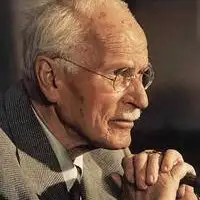
C.G. Jung
Jung reframes the understanding of the human psyche through his integration of psychology, mythology, and spirituality. His pioneering concept of the collective unconscious challenges the notion of the individual mind as an isolated entity by positing that all humans share a set of universal experiences and symbols known as archetypes. Meanwhile, his work on psychological types explores the dichotomy of introversion and extraversion, laying the groundwork for subsequent personality assessments like the Myers-Briggs Type Indicator. By intertwining the conscious with the mystical, Jung offers a nuanced framework for exploring the human condition.\n\nTo convey his ideas, Jung employs a multidisciplinary approach that synthesizes scientific rigor with rich symbolic analysis. His exploration of the unconscious is deeply rooted in diverse cultural narratives, allowing him to address both the rational and the mystical dimensions of the psyche. This method is particularly evident in his seminal book, "Psychological Types," which delineates four principal psychological functions: thinking, feeling, sensation, and intuition. By utilizing an interdisciplinary lens, Jung not only advances the field of psychology but also enriches broader cultural dialogues, bridging gaps between science and spirituality.\n\nFor readers, the benefit of engaging with Jung's work lies in its capacity to offer profound insights into personal and collective aspects of existence. His theories empower individuals to better understand themselves and their relationships with others, thereby promoting personal growth and self-awareness. Additionally, his emphasis on the spiritual aspects of psychological health makes his work relevant to those seeking a more holistic understanding of well-being. As a result, Jung's legacy endures, influencing diverse fields such as literature, art, and religion, while his ideas continue to inspire those interested in the complexities of human nature.
Read moreDownload PDF & EPUB
To save this Black List summary for later, download the free PDF and EPUB. You can print it out, or read offline at your convenience.
Modern Man in Search of a Soul
by C.G. Jung
