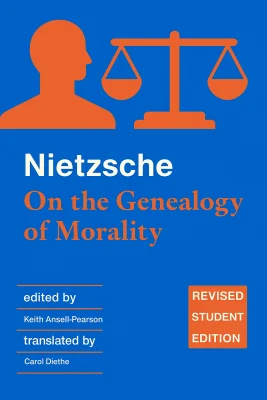
On the Genealogy of Morality
Categories
Nonfiction, Psychology, Philosophy, History, Religion, Classics, German Literature, School, 19th Century, Theory
Content Type
Book
Binding
Paperback
Year
2006
Publisher
Cambridge University Press
Language
English
ASIN
052169163X
ISBN
052169163X
ISBN13
9780521691635
File Download
PDF | EPUB
On the Genealogy of Morality Plot Summary
Introduction
# The Genealogy of Morality: Nietzsche's Critique of Value Systems The moral foundations that guide human behavior and shape civilizations have rarely been subjected to rigorous historical examination. What appears as natural law or divine command may actually represent the crystallization of ancient power struggles, psychological needs, and cultural accidents that have hardened into seemingly eternal truths. This investigation challenges the assumption that moral progress follows a rational trajectory toward universal justice, instead revealing how contemporary ethical systems emerged from specific historical conflicts between fundamentally different human types with opposing relationships to power, suffering, and life itself. The genealogical method employed here traces moral concepts back to their psychological and social origins, examining not whether these concepts are true or false, but what purposes they served and what conditions made their acceptance possible. Through this archaeological approach to moral consciousness, the analysis reveals how concepts like good and evil, guilt and innocence, virtue and vice developed from pre-moral social arrangements and evolved through concrete historical struggles. This perspective opens possibilities for understanding morality as human creation rather than discovered truth, potentially enabling more conscious and creative approaches to cultural development and value formation.
Chapter 1: The Genealogical Method: Tracing Moral Origins Through History
The genealogical approach represents a revolutionary departure from traditional moral philosophy by investigating the historical development of ethical concepts rather than their logical structure or metaphysical foundations. This method rejects the assumption that moral categories represent timeless truths discovered through reason or revealed through divine authority. Instead, it treats moral systems as human artifacts that emerged under specific historical conditions and evolved through concrete social processes involving particular psychological types and power relationships. The methodology combines philological analysis with psychological investigation to uncover the hidden motivations behind moral development. By examining the etymological roots of moral terms, genealogy reveals how words like "good" and "bad" originally referred to social distinctions rather than ethical categories. Archaeological investigation of ancient legal practices, religious rituals, and cultural customs provides evidence for how moral concepts developed from practical social arrangements designed to manage conflict and coordinate behavior within specific communities. The psychological dimension of genealogical analysis examines the human types who created and propagated different moral systems. Rather than treating moral concepts as abstract ideas, this approach investigates the life conditions, emotional needs, and power relationships that motivated moral innovation. The analysis reveals how different psychological orientations toward strength, weakness, suffering, and domination shaped the development of competing value systems that continue to influence contemporary moral consciousness. The historical perspective demonstrates that moral concepts undergo continuous transformation as they encounter new social conditions and serve different cultural functions. What begins as practical social arrangement gradually acquires sacred authority and appears to represent natural law. The genealogical method makes visible this process of moral development, revealing the contingent nature of what appears necessary and opening space for critical evaluation of inherited moral assumptions. The ultimate goal of genealogical investigation extends beyond academic understanding to cultural criticism and potential transformation. By revealing the historical origins and psychological functions of moral systems, genealogy creates possibilities for more conscious engagement with questions of value and meaning. This critical dimension makes genealogy a tool for cultural renewal rather than merely historical research, enabling individuals and communities to take greater responsibility for the values they choose to affirm and promote.
Chapter 2: Master-Slave Morality: Two Fundamental Approaches to Value Creation
The distinction between master and slave morality reveals two fundamentally different psychological orientations toward value creation that emerged from contrasting social positions and life experiences. Master morality originated among powerful, aristocratic individuals who possessed the independence and strength to create values based on their own experiences of excellence and nobility. These individuals evaluated actions and qualities according to whether they expressed the attributes they found admirable in themselves and their peers: strength, beauty, courage, magnanimity, and creative power. The master type creates values through spontaneous self-affirmation, designating their own way of life as "good" without reference to external standards or comparison with others. Their concept of "bad" emerges only as a secondary consideration, referring simply to whatever lacks the qualities they prize in themselves. This evaluative process flows from abundance and self-confidence rather than reaction to external threats or resentment toward others. The masters judge from their own perspective without needing to consider how others might evaluate them or seeking validation from external authority. Slave morality, by contrast, emerges from a position of powerlessness and represents a fundamentally reactive response to domination. Unable to affirm their own conditions directly, those in subordinate positions develop a moral system based on negation of their oppressors' values. They designate the masters' way of life as "evil" and define their own qualities as "good" precisely because they oppose what the powerful represent. This reactive structure makes slave morality essentially dependent on what it opposes, requiring constant reference to external standards for its own definition. The psychological mechanism underlying slave morality involves a complex process of creative revaluation driven by resentment and the need for psychological compensation. Unable to achieve direct victory over their oppressors, the powerless achieve imaginary triumph through moral reversal, transforming their apparent disadvantages into spiritual superiorities. Suffering becomes virtue, weakness becomes moral strength, and the inability to act becomes the choice not to act. This revaluation provides psychological relief while creating an entirely new framework for understanding human relationships and obligations. The historical development of Western moral consciousness reflects the ongoing struggle between these two fundamental approaches to evaluation. While master morality dominated in ancient aristocratic societies that valued honor, excellence, and cultural achievement, slave morality achieved its greatest triumph through Christianity, which universalized the perspective of the oppressed and made it the foundation of European moral consciousness. This historical victory transformed the meaning of basic moral concepts and created the evaluative framework within which modern individuals understand themselves and their relationships to others.
Chapter 3: Ressentiment and Guilt: How Weakness Becomes Moral Authority
Ressentiment operates as a creative psychological force that transforms the experience of powerlessness into moral authority through sophisticated processes of revaluation and meaning-creation. This complex emotional state differs fundamentally from simple resentment or anger because it involves systematic reconstruction of value systems rather than direct response to immediate threats. The individual consumed by ressentiment cannot simply react against oppression but must develop elaborate intellectual and moral frameworks that justify their position and condemn their oppressors while appearing to transcend mere personal interest. The psychology of ressentiment involves a fundamental reversal of natural evaluative processes that creates new forms of moral consciousness. Instead of affirming their own qualities and experiences as the basis for judgment, individuals driven by ressentiment define themselves primarily through negation of what they cannot become or possess. Their sense of self-worth depends entirely on moral condemnation of others' values rather than positive self-affirmation, creating a reactive and dependent form of identity that requires constant reference to external targets for its own definition. The creative dimension of ressentiment lies in its capacity to generate entirely new moral categories that serve the psychological needs of the powerless while claiming universal validity. The invention of concepts like "evil," "sin," and "spiritual equality" represents genuine intellectual achievement that reshapes cultural consciousness and provides alternative frameworks for understanding human relationships. These conceptual innovations transform apparent disadvantages into moral superiorities and create new forms of social authority based on suffering rather than strength. The development of guilt as a central moral concept illustrates how ressentiment achieves cultural power through psychological manipulation. By creating elaborate systems of moral obligation and spiritual debt, those driven by ressentiment make others responsible for their suffering while positioning themselves as moral authorities qualified to judge and condemn. The guilty individual becomes psychologically dependent on those who claim the authority to grant forgiveness, creating relationships of spiritual domination that may prove more effective than physical force. The historical success of ressentiment-based morality demonstrates its sophisticated understanding of human psychology and social dynamics. Christianity represents the most successful example of this process, transforming the reactive morality of the oppressed into a comprehensive worldview that claims universal validity and divine authority. This transformation involves theological and philosophical elaboration that conceals the reactive origins of the moral system while making it appear to represent objective truth about human nature and cosmic justice.
Chapter 4: The Ascetic Ideal: Life-Denial as Cultural Phenomenon
The ascetic ideal represents a comprehensive worldview that devalues earthly existence in favor of otherworldly goals, achieving its cultural power through its ability to provide meaning for human suffering and direction for human will. This ideal encompasses not merely religious practices of self-denial but a fundamental orientation toward life that treats material existence as obstacle to spiritual fulfillment. Its psychological appeal lies in offering purpose and significance to those who find ordinary life meaningless or unbearable, while its cultural influence extends far beyond explicitly religious contexts. The ascetic ideal functions by redirecting the will to live toward the negation of life itself, creating a paradoxical situation where vital energy is used to oppose vitality. Rather than eliminating the human will, asceticism channels this will toward transcendent goals that appear to justify present sacrifice and suffering. This redirection provides psychological relief for those who cannot affirm existence directly while maintaining the basic structure of willing that defines human consciousness, preventing the complete collapse into nihilistic despair. The cultural power of asceticism manifests differently across various social types and institutional contexts. For philosophers, ascetic practices provide the conditions of independence and focus necessary for sustained intellectual work, allowing them to pursue knowledge without distraction from social obligations or sensual pleasures. For artists, ascetic discipline may serve as technique for concentrating creative energy, though it risks cutting them off from the experiential sources that nourish artistic inspiration and cultural relevance. The priestly class represents the most complete embodiment of the ascetic ideal, using it simultaneously as personal discipline and tool for social control. Priests achieve authority by positioning themselves as mediators between the suffering masses and the transcendent realm that promises eventual relief from earthly difficulties. Their power depends on maintaining both the ideal's credibility as path to salvation and the social conditions that make it psychologically necessary for their followers, creating vested interest in perpetuating the very suffering they claim to address. The historical dominance of ascetic ideals reveals something troubling about human cultural development and the relationship between civilization and psychological health. The widespread appeal of life-denying philosophies suggests that most human beings find existence itself problematic and seek escape from the conditions of earthly life through otherworldly compensation. This tendency toward nihilistic solutions indicates a fundamental crisis in human culture that manifests as systematic inability to affirm life on its own terms without external justification or transcendent meaning. The persistence of ascetic values in apparently secular contexts demonstrates their continued influence on contemporary consciousness. The scientific commitment to truth regardless of consequences, the artistic pursuit of beauty through suffering, and the moral emphasis on selflessness and sacrifice all reflect ascetic psychology adapted to modern conditions. Understanding this continuity is essential for recognizing how life-denying tendencies continue to shape cultural development even when their religious origins are forgotten or explicitly rejected.
Chapter 5: Will to Power: The Hidden Drive Behind Moral Systems
The will to power operates as the fundamental drive underlying all organic life, manifesting in the constant struggle to expand, dominate, and impose one's own interpretation on experience. This basic life-force expresses itself not merely in obvious forms of political or physical domination but in all creative and interpretive activities, including the development of moral systems and cultural values. Understanding moral phenomena requires recognizing how different expressions of will to power compete for dominance and shape the evolution of human consciousness through complex processes of cultural creation and destruction. The creation of moral systems represents a sophisticated expression of will to power that involves the attempt to establish one's own values as universal standards and shape others' behavior according to one's own needs and perspectives. Both master and slave moralities express will to power, but through fundamentally different strategies and psychological mechanisms. Master morality represents direct, confident assertion of one's own values based on strength and abundance, while slave morality achieves power through indirect methods of moral revaluation and the systematic creation of guilt and obligation in others. The historical development of moral systems reflects ongoing struggles between different forms of will to power, with victory going to those forms that prove most effective at organizing human energy and achieving cultural dominance. The triumph of Christian morality represents the victory of a particular strategy of will to power that achieved dominance through apparent self-denial and the promise of otherworldly compensation. This victory demonstrates the sophistication and adaptability of life-force in finding new expressions when direct assertion becomes impossible or counterproductive. The will to power manifests not only in the creation of moral systems but in their ongoing interpretation and application across different historical periods and cultural contexts. Each generation reinterprets inherited moral concepts according to its own needs and circumstances, gradually transforming their meaning and function while maintaining apparent continuity with tradition. This process of creative reinterpretation ensures that moral systems remain living forces rather than dead traditions, though it also means that moral concepts never possess fixed or eternal significance. The recognition of will to power as the underlying force in moral development opens possibilities for more conscious and deliberate cultural creation. Instead of accepting inherited moral systems as natural or divinely ordained, individuals and cultures can recognize them as human creations that can be modified or replaced according to changing needs and aspirations. This recognition makes possible a more experimental and creative approach to moral and cultural development, though it also requires the psychological strength and intellectual honesty to take full responsibility for the values one chooses to affirm and promote. The implications of this analysis extend beyond academic philosophy to practical questions of cultural renewal and individual development. If moral systems are expressions of will to power rather than discoveries of eternal truth, then the evaluation of different moral possibilities must focus on their consequences for human flourishing rather than their conformity to abstract principles. This perspective enables more sophisticated engagement with questions of value while avoiding both relativistic nihilism and dogmatic absolutism.
Chapter 6: Beyond Traditional Morality: Toward Creative Value Revaluation
The critique of existing moral systems points toward the possibility and necessity of creating new values more adequate to human potential and more conducive to cultural achievement. The revaluation of values cannot simply involve returning to pre-Christian aristocratic morality, since historical conditions have changed irreversibly and contemporary challenges require genuinely new responses. Instead, it must involve creative synthesis that preserves what was life-affirming in ancient values while transcending the limitations of both master and slave morality through more sophisticated understanding of human psychology and cultural dynamics. The individuals capable of leading this revaluation must develop beyond the simple opposition between aristocratic self-assertion and democratic equality that has dominated Western moral consciousness. They must be psychologically complex enough to combine strength with compassion, independence with responsibility, creative power with cultural sensitivity. This requires spiritual sophistication that goes beyond anything achieved in previous history, demanding individuals capable of bearing the full weight of value creation without traditional supports from religion, tradition, or popular opinion. The new philosophers and cultural creators must possess sufficient psychological health and intellectual honesty to create values from their own resources while taking full responsibility for the consequences of their creations. They cannot appeal to God, nature, reason, or democratic consensus as sources of moral authority but must find the strength to affirm values based on their understanding of what serves life most effectively. This requires not only intellectual sophistication but also emotional maturity and spiritual vitality of the highest order. The revaluation must begin with fundamental affirmation of life, including its suffering, struggle, and uncertainty, rather than seeking escape through otherworldly hopes or abstract ideals. The new morality must find ways to make existence meaningful and beautiful in itself, without requiring external justification or transcendent compensation. This demands tragic wisdom that can say yes to life even in full knowledge of its difficulties and limitations, combined with creative power capable of transforming these difficulties into opportunities for growth and achievement. The cultural implications of this revaluation extend to every aspect of human social organization and individual development. Instead of morality based on universal rules and abstract principles, human communities need value systems based on excellence, creativity, and the cultivation of human potential. Instead of institutions designed primarily to protect the weak and mediocre, cultures require institutions designed to promote the strong and exceptional while maintaining genuine care for human dignity and possibility. This transformation does not require return to the brutal exploitation and callous indifference of earlier aristocratic societies, but rather development of new forms of cultural organization that incorporate the genuine insights of democratic and Christian morality while transcending their limitations. The task involves creating synthesis that promotes excellence without destroying compassion, affirms hierarchy without denying human dignity, and celebrates strength without glorifying cruelty. The goal is not choosing between competing moral systems but creating new possibilities that serve life more completely than any previous morality has achieved.
Summary
The genealogical investigation reveals that contemporary moral systems emerged not from rational deliberation or divine revelation but from complex psychological and social struggles between different human types with fundamentally different relationships to power, suffering, and cultural creation. The historical development of Western moral consciousness reflects the victory of reactive, life-denying value systems that originated among the powerless and achieved dominance through sophisticated strategies of revaluation, guilt-creation, and the systematic transformation of weakness into moral authority. This analysis provides essential tools for cultural criticism and conscious value creation, enabling recognition of the contingent and interested nature of moral systems that may appear natural or universal. The genealogical method opens possibilities for more experimental and creative engagement with questions of value, pointing toward cultural renewal based on honest acknowledgment of human needs and potentials rather than inherited prejudices disguised as eternal truths about human nature and cosmic justice.
Best Quote
“Man, the bravest of animals, and the one most accustomed to suffering, does not repudiate suffering as such; he desires it, he even seeks it out, provided he is shown a meaning for it, a purpose of suffering. The meaninglessness of suffering, not suffering itself, was the curse that lay over mankind so far.” ― Friedrich Nietzsche, On the Genealogy of Morals
Review Summary
Strengths: The review highlights Nietzsche's profound questioning of moral judgments through a genealogical method, emphasizing his exploration of master and slave morality, the origins of guilt and punishment, and the critique of ascetic ideals. It appreciates Nietzsche's depth as a thinker who challenges foundational assumptions, making his work intellectually stimulating. Weaknesses: The review notes Nietzsche's complexity and the difficulty in understanding his arguments due to the need to suspend conventional reasoning and assumptions. It suggests that grasping his interconnected concepts is essential for easier comprehension. Overall: The review conveys a positive sentiment towards Nietzsche's work, recognizing its intellectual depth and challenge. It recommends engaging with Nietzsche's ideas for those willing to question and explore beyond traditional moral concepts.
About Author
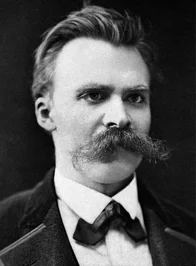
Friedrich Nietzsche
Nietzsche probes the depths of human existence through his radical rethinking of morality and culture, crafting a philosophy that challenges readers to reassess foundational beliefs. By rejecting conventional truths, Nietzsche disrupts traditional religious and moral frameworks with provocative concepts such as the "will to power" and the "Übermensch." His method of philosophical inquiry—characterized by aphoristic brilliance and profound irony—enables him to interrogate established norms and provoke introspection. Therefore, his work transcends mere academic discourse, seeking to inspire a personal and societal reevaluation of values.\n\nNietzsche's exploration of nihilism, particularly evident in works like "The Birth of Tragedy" and "Thus Spake Zarathustra," positions the existential void not as a threat but as an opportunity for creative renewal. This distinctive approach, which situates the individual at the center of meaning-making, invites readers to embrace life's uncertainties with courage and inventiveness. Meanwhile, his critique of religion and morality in "The Anti-Christ" challenges prevailing power structures and advocates for a transformative revaluation of values. Through these themes, Nietzsche not only influences philosophical thought but also impacts literature, psychology, and cultural criticism, shaping contemporary discourse on truth and creativity.\n\nReaders benefit from engaging with Nietzsche's ideas, as they offer a profound examination of human potential and the complexities of existence. Those interested in existentialism, postmodern thought, or cultural criticism will find his work particularly resonant. By delving into Nietzsche's rich and challenging prose, as exemplified in his book "Beyond Good and Evil," individuals can expand their understanding of philosophy's role in everyday life and gain insight into the enduring questions of power, truth, and individual creativity. This bio of Nietzsche serves as a guide to his transformative influence and the ongoing relevance of his philosophical inquiries.
Read moreDownload PDF & EPUB
To save this Black List summary for later, download the free PDF and EPUB. You can print it out, or read offline at your convenience.
On the Genealogy of Morality
by Friedrich Nietzsche
