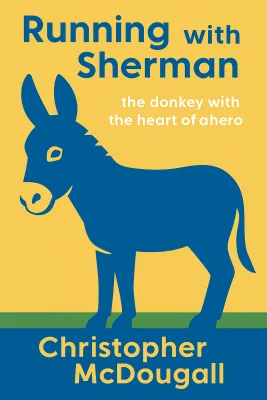
Running with Sherman
Categories
Nonfiction, Sports, Biography, Memoir, Animals, Audiobook, Autobiography, Biography Memoir, Book Club, Adventure
Content Type
Book
Binding
Hardcover
Year
2019
Publisher
Knopf
Language
English
ISBN13
9781524732363
File Download
PDF | EPUB
Running with Sherman Plot Summary
Introduction
# Fear That Thing, Do That Thing: How Purpose Transforms Both Animals and Humans Have you ever watched someone you love disappear into the darkness of depression, wondering if they'll ever find their way back to joy? Or perhaps you've felt trapped in your own cycle of fear and purposelessness, questioning whether meaningful change is even possible. In a world where we've become increasingly disconnected from the natural partnerships that once sustained human wellbeing, the most profound healing often emerges from the most unexpected relationships. This extraordinary true story follows the parallel journeys of Sherman, a severely neglected donkey rescued from near-death, and Zeke, a brilliant young man struggling to recover from a suicide attempt. Their unlikely partnership reveals how purpose-driven challenges, authentic animal-human bonds, and patient community support can transform even the most broken spirits. You'll discover why movement becomes medicine for both trauma and depression, learn practical strategies for building resilience through caring for others, and understand how embracing fear-inducing challenges together creates unbreakable healing bonds that restore both physical and mental health.
Chapter 1: The Unwanted Donkey: Finding Hope in the Most Broken Places
When the pickup truck pulled into the driveway that September afternoon, what emerged from the trailer was barely recognizable as a living creature. Sherman, a gray donkey rescued from an animal hoarder's collapsing barn, stood motionless with crusted filth covering his coat and hooves grown into witch-like claws from years of neglect. The veterinarian's assessment was grim: this animal was so physically and psychologically damaged that euthanasia might be the most merciful option. Yet something extraordinary happened when Lawrence, a curious goat, approached the traumatized donkey with unusual gentleness. Instead of his typical aggressive greeting, Lawrence carefully sniffed Sherman from head to toe, then lay down beside the broken stranger and stayed there through the night, as if understanding that this creature needed a guardian angel. The first glimmer of hope came not through medical intervention, but through the simple presence of another being who refused to abandon Sherman in his darkest hour. Lawrence's vigil seemed to awaken something dormant in Sherman's spirit. Over the following days, the donkey began to lift his head slightly when Lawrence approached, then took tentative steps to follow his unlikely companion around the pasture. What had seemed like a hopeless case of terminal neglect slowly revealed itself to be a profound capacity for resilience, waiting to be awakened by genuine care and unwavering commitment. Sherman's rescue illuminates a fundamental truth about recovery from trauma: healing rarely happens in isolation. Whether we're dealing with physical ailments, emotional wounds, or spiritual emptiness, the presence of another being who sees our worth despite our brokenness can spark the first flicker of hope. The key insight here is that sometimes the most damaged among us possess incredible hidden strength, but it requires someone willing to sit with us in our pain without trying to fix us immediately. Lawrence didn't attempt to cure Sherman's depression or force him to be grateful for his rescue. He simply offered consistent, non-judgmental companionship that said, "You matter, and I'm not going anywhere." This principle extends far beyond animal rescue into human relationships and recovery. When we encounter people paralyzed by depression, addiction, or trauma, our instinct might be to offer advice or push them toward quick solutions. But Sherman's story suggests that lasting transformation begins with the radical act of showing up consistently, without agenda or timeline, creating a safe space where healing can unfold naturally. The most powerful gift we can offer someone in crisis isn't our expertise or optimism, but our willingness to believe in their capacity for recovery even when they can't see it themselves.
Chapter 2: Building Trust Through Patience: The Donkey Tao Approach
Training Sherman required abandoning every conventional approach to animal handling that relied on dominance and control. Traditional methods only triggered his trauma responses, sending him into defensive spirals that could last for hours. The breakthrough came when his trainer discovered what she called "Donkey Tao," inspired by ancient philosophy of attraction through non-attachment. Instead of forcing Sherman to comply with human demands, every interaction had to be structured so that cooperation felt like Sherman's own choice rather than submission to external pressure. The transformation became evident during Sherman's first encounter with a simple puddle, barely a foot wide and containing no actual water. He froze as if facing an ocean, his entire body trembling with terror at this perceived threat. Rather than dragging him across or flooding him with overwhelming stimuli, his handlers simply waited. They sat with him in that fear, allowing him to process the threat at his own pace until he chose to take that first tentative step. The victory wasn't in conquering Sherman's will through superior force, but in earning his trust enough that he would choose courage over safety when the moment felt right to him. This patient approach revealed a profound principle about working with traumatized beings, whether animal or human. Force creates resistance and reinforces the victim's sense of powerlessness, but patience creates genuine partnership built on mutual respect. When we encounter someone paralyzed by fear or past hurt, our natural impulse might be to push them forward for their own good, believing that we know what's best for their healing journey. Yet Sherman's transformation demonstrates that lasting change comes only when individuals feel safe enough to choose growth rather than having it imposed upon them. The "Donkey Tao" method teaches us that the most powerful transformations happen not when we break someone's resistance, but when we create conditions where they can discover their own strength and make their own brave choices. This requires us to release our attachment to timelines and outcomes, focusing instead on building the trust and safety that make authentic change possible. Sherman's handlers learned to celebrate tiny victories, to respect his need for processing time, and to maintain faith in his capacity for growth even during setbacks and apparent regression.
Chapter 3: The Gang of Three: How Community Creates Unbreakable Strength
Sherman's healing accelerated dramatically when two other rescued donkeys joined his world, forming what became known as the "Gang of Three." Flower, a magnificent chestnut mare with her own fears about water and shadows, became Sherman's devoted companion and emotional anchor. Matilda, a fearless mini-donkey rescued from slaughter, emerged as the unlikely leader of their trio despite her small stature. Together, they created a dynamic where each donkey's strengths compensated for the others' weaknesses, and their collective courage far exceeded what any of them possessed individually. The magic of their partnership became evident during their first group training run. Sherman, who had previously balked at every challenge when working alone, suddenly began racing ahead when he realized his companions might leave him behind. The fear of abandonment that had once paralyzed him now motivated him to push through barriers he'd never attempted solo. Watching Flower overcome her terror of creek crossings because Matilda led the way, then seeing Sherman follow because he trusted Flower, revealed something profound about the nature of healing communities: we don't overcome our limitations by becoming perfect, but by finding others whose imperfections complement our own. This principle extends far beyond animal behavior into human relationships and recovery systems. The most effective support networks aren't composed of flawless individuals who have already solved all their problems, but of people whose various struggles and strengths create a web of mutual aid and encouragement. Sherman thrived not because his companions were fearless, but because their different fears and areas of courage created opportunities for each to be both helper and helped, teacher and student, leader and follower depending on the situation. When we're building our own support systems, we might instinctively seek out those who seem to have everything figured out, believing that their strength will somehow transfer to us through proximity. But Sherman's gang teaches us a different approach: look for those whose journeys intersect meaningfully with your own, creating space for reciprocal healing and growth. The most powerful communities are those where everyone has both something valuable to contribute and something important to receive, where vulnerability is met with understanding rather than judgment, and where individual healing happens through collective purpose and shared challenges.
Chapter 4: Movement as Medicine: Running Toward Recovery and Connection
The revelation that movement could be Sherman's salvation came gradually, but once discovered, it transformed everything about his recovery trajectory. Initially, coaxing Sherman to take even a few steps on solid ground was a major victory, his damaged hooves making every movement painful and his traumatized spirit resistant to any form of exertion. But as his body healed and his confidence grew through the support of his donkey companions, something remarkable happened: Sherman began to crave the rhythm and purpose of running. His ears would perk up at the sound of halters being prepared, and he would position himself eagerly at the gate, ready for the next adventure. The science behind this transformation runs deeper than simple physical rehabilitation. Movement triggers the release of endorphins and dopamine, the body's natural antidepressants, while also stimulating the production of brain-derived neurotrophic factor, which helps repair neural pathways damaged by trauma and depression. For Sherman, who had spent months confined in a tiny, filthy stall with no stimulation or purpose, the act of running represented the ultimate reclamation of his freedom and agency. Each stride was a declaration that he was no longer a victim of his circumstances, but an active participant in his own recovery and growth. The power of movement as medicine extends directly to humans struggling with depression, anxiety, and trauma. Sherman's journey illustrates that exercise isn't just about physical fitness or weight management; it's about reclaiming agency over our lives and reconnecting with our bodies' natural capacity for strength and resilience. When we move our bodies with intention and purpose, we send a signal to every cell that we're ready to rebuild and move away from death toward life. The rhythmic, meditative quality of sustained movement also provides a natural form of therapy that can be more effective than traditional talk therapy for certain types of trauma and depression. The key insight from Sherman's transformation is that movement works best when it's not solitary suffering endured for abstract health benefits, but shared adventure undertaken with companions who provide motivation, accountability, and joy. Running alone might provide some biochemical benefits, but running with purpose, alongside companions who share the journey and celebrate progress, creates a healing synergy that can overcome even the deepest wounds. Sherman's enthusiasm for training runs wasn't just about the physical activity itself, but about the community, purpose, and sense of belonging that came with being part of a team working toward meaningful goals.
Chapter 5: When Humans and Animals Heal Each Other Together
The arrival of Zeke, a brilliant college student home from Penn State while struggling with severe depression and recovering from a suicide attempt, created an unexpected partnership that would ultimately save two lives. When Zeke first encountered Sherman in the pasture, something profound clicked between the traumatized young man and the recovering donkey. Both carried invisible wounds from their respective traumas, both had been written off by others as potentially hopeless cases, and both desperately needed a reason to keep fighting for their lives and futures. Their daily training runs became a form of mutual therapy unlike anything either had experienced through traditional treatment approaches. Zeke provided Sherman with patient, consistent guidance, never losing his temper when the donkey tested boundaries or reverted to old fears during difficult moments. In return, Sherman gave Zeke something that no human relationship had been able to provide during his darkest period: a sense of purpose and competence that existed outside his own psychological struggles. There's something uniquely healing about caring for another wounded creature; it allows us to step outside our own pain and discover reserves of strength, patience, and nurturing capability we didn't know we possessed. The bond between Zeke and Sherman reveals a profound truth about recovery that challenges conventional approaches to mental health treatment: sometimes we heal not by focusing intensively on our own wounds and problems, but by tending to someone else's needs with dedication and consistency. This isn't about avoiding our issues or playing savior to distract from personal problems, but about discovering that we have something valuable and necessary to offer even in our darkest moments. When Zeke guided Sherman through intimidating creek crossings or coaxed him past frightening shadows on the trail, he was simultaneously learning to navigate his own fears and obstacles with courage and persistence. The reciprocal nature of their healing demonstrates that the most powerful therapeutic relationships are those where both parties are simultaneously giver and receiver, teacher and student, healer and healed. Zeke's parents watched in amazement as their son, who had been too depressed to leave his room for weeks, became someone who couldn't wait to get outside each morning to spend time with his four-legged partner. Sherman's transformation from a withdrawn, fearful animal to an eager athlete paralleled Zeke's journey from suicidal despair to renewed engagement with life and future possibilities.
Chapter 6: The Skirt and Smile Strategy: Learning from Fearless Champions
The world of competitive burro racing revealed an unexpected truth about high performance and partnership: some of the most successful athletes were women who approached the demanding sport with joy and emotional intelligence rather than aggression and dominance. Barb Dolan, a dental hygienist who became one of the most dominant burro racers in history, exemplified this approach. Rather than trying to intimidate her donkey into submission through shouting and force, Barb developed a partnership based on clear communication, mutual respect, and deep attunement to her animal partner's needs and capabilities. This lesson became particularly powerful when fourteen-year-old Lynzi Doke entered her first World Championship race. Born prematurely with severe lung damage that nearly killed her as an infant, Lynzi had spent her childhood fighting for every breath and overcoming medical limitations that forced her family to move from the mountains to sea level just so she could survive. Yet when she discovered burro racing, her quiet, patient approach to working with donkeys proved far more effective than the loud, domineering style that many experienced male competitors employed. Her natural empathy and emotional intelligence created partnerships that transcended mere athletic performance. During her debut race, Lynzi demonstrated what observers called the "skirt and smile" strategy. While other racers shouted commands and fought with their donkeys when things got difficult, Lynzi ran in calm synchronization with her partner, Chugs. She positioned herself close to the donkey's flank, matching his rhythm and breathing, communicating through subtle shifts in body language and energy rather than verbal commands or physical force. Her approach was so effective that she finished fourth overall in her first World Championship, ahead of dozens of more experienced competitors who had been racing for years. The success of athletes like Lynzi and Barb challenged conventional wisdom about what it takes to excel in demanding, competitive environments. Their approach emphasized partnership over dominance, patience over aggression, and emotional intelligence over brute force. They understood intuitively that their donkey partners were not machines to be controlled or obstacles to be overcome, but intelligent beings with their own motivations, fears, and capabilities that needed to be honored and worked with rather than against. This insight transformed not just racing performance, but offered a blueprint for approaching any challenging endeavor that requires partnership and sustained effort. The "skirt and smile" strategy isn't about being soft or non-competitive; it's about being smart enough to achieve ambitious goals through collaboration, emotional attunement, and long-term thinking rather than short-term dominance and force that ultimately creates resistance and burnout.
Chapter 7: World Championship Day: Trust Me, I've Got This
Race day dawned with Sherman experiencing what may have been the greatest moment of his transformation: stepping out of the trailer to discover that the entire town of Fairplay, Colorado had been taken over by donkeys. The streets were filled with his kind, dozens of burros preparing for competition, their voices creating a symphony of brays that echoed through the mountain town at 10,000 feet elevation. Sherman's metamorphosis was complete in that moment; the broken animal who had once stood motionless in a filthy stall now held his head high, ears forward with excitement, eager to join his tribe in the ultimate adventure. The starting line was controlled chaos as sixty donkeys and their human partners jostled for position while spectators cheered and cameras flashed. Sherman, who had once been terrified of new situations and unfamiliar people, seemed energized rather than overwhelmed by the commotion. When the starting gun fired, he surged forward with the pack, his months of patient training evident in his smooth gait and confident demeanor. For the first time since his rescue, Sherman was exactly where he belonged: part of a community, engaged in meaningful work, surrounded by beings who understood and celebrated his unique capabilities. The thirteen-mile race through treacherous mountain terrain became a testament to everything Sherman's team had learned about partnership, persistence, and mutual support. As they climbed through thin air that left even experienced athletes gasping for breath, past treeline and into terrain that challenged both human and animal endurance, Sherman demonstrated the heart of a true champion. When his human partners struggled with altitude sickness and oxygen deprivation, he seemed to sense their distress and adjusted his pace accordingly, providing encouragement through gentle nudges and vocalizations that said, "We've got this together." The most powerful moment came near the finish line, when Sherman spotted Zeke waiting in the crowd despite being unable to run due to his broken foot. Although Sherman had been paired with a substitute partner for the race, he had never forgotten who had first believed in his potential during those dark early days of recovery. His surge toward the finish line wasn't just about completing an athletic challenge; it was about returning triumphantly to the person who had helped him discover that he was capable of so much more than anyone had ever imagined possible. Crossing the finish line in 28th place out of 52 starters represented far more than a respectable showing for first-time competitors. It was validation of everything they had learned about healing, purpose, and the transformative power of community support. Sherman had traveled an impossible distance, not just the thirteen miles of mountain terrain, but the journey from the depths of neglect and trauma to the heights of athletic achievement and joyful partnership. His human companions had learned equally valuable lessons about resilience, teamwork, and how caring for another being's dreams can restore our own capacity for hope and determination.
Summary
The deepest healing happens not when we focus solely on fixing ourselves in isolation, but when we discover purpose through caring for another wounded soul who needs us to be strong, consistent, and brave. Sherman's journey from near-death to mountain athlete, paralleled by Zeke's recovery from suicidal depression, reveals that the most powerful medicine isn't found in pills or therapy sessions alone, but in the daily practice of showing up with dedication for someone whose wellbeing depends on our commitment and growth. Start small but start today: find a way to care for another living being, whether through volunteering at animal shelters, mentoring someone facing challenges, or simply committing to daily movement with a companion who shares your journey. Embrace the healing power of purpose by taking on responsibilities that require you to be reliable, patient, and courageous even when you don't feel ready, and remember that recovery is rarely a solo journey. Seek out your own supportive community by building relationships where everyone's weaknesses are balanced by others' strengths, creating a network where healing becomes not just possible, but inevitable through shared challenges and mutual encouragement.
Best Quote
“Patience and kindness don’t show up on demand; they’re disciplines that require constant practice, and there is no better boot camp for learning those skills than hitching your survival to your ability to discern—and respect—the needs of another creature” ― Christopher McDougall, Running with Sherman: How a Rescue Donkey Inspired a Rag-tag Gang of Runners to Enter the Craziest Race in America
Review Summary
Strengths: The review highlights the book's engaging storytelling and the heartwarming journey of Sherman, the rescued donkey. It praises the depiction of the Amish community and the exploration of mental health issues. The narrative is described as both exhilarating and exhausting, with a strong emotional appeal to animal lovers. The author's earnest narration is also noted as a positive aspect. Weaknesses: The review mentions that the author's voice can sometimes be overly dramatic, which might detract from the listening experience. Overall: The reader expresses a highly positive sentiment, awarding the book five stars and recommending it as a cherished read. The story's unique focus on donkey racing and its blend of human and animal characters make it appealing, even to those uninterested in sports.
About Author

Christopher McDougall
McDougall probes the extraordinary capabilities of the human body through narratives that delve into the themes of endurance and cultural richness. His writing method combines investigative journalism with engaging storytelling, offering insights into the limits of human potential. By exploring diverse cultures and human experiences, McDougall's works challenge readers to rethink the boundaries of physical and mental endurance. His focus on resilience and physical excellence is evident in his renowned book, "Born to Run," which intertwines the story of the Tarahumara tribe with insights into running physiology. \n\nIn his works, McDougall critiques modern sports technology, particularly the use of running shoes, and advocates for the benefits of natural movement. His engaging prose is both accessible and often humorous, inviting readers to join him on his journey of discovery. Through narratives like "Natural Born Heroes" and "Running with Sherman," McDougall extends his exploration into the human-animal bond and the historical aspects of heroism, illustrating the potential for growth when humans connect deeply with their environment and history.\n\nReaders benefit from McDougall's ability to blend personal adventure with broader cultural inquiries, making his books compelling for anyone interested in human performance and cultural anthropology. His influence extends beyond literature into the sporting world, credited with inspiring the barefoot-running movement. McDougall's engaging talks and articles further amplify his impact, making him a prominent figure in adventure writing and human potential exploration.
Read moreDownload PDF & EPUB
To save this Black List summary for later, download the free PDF and EPUB. You can print it out, or read offline at your convenience.
Running with Sherman
by Christopher McDougall
