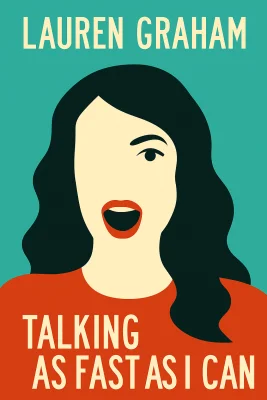
Talking as Fast as I Can
From Gilmore Girls to Gilmore Girls
Categories
Nonfiction, Biography, Memoir, Audiobook, Essays, Adult, Autobiography, Biography Memoir, Humor, Comedy
Content Type
Book
Binding
Kindle Edition
Year
2016
Publisher
Ballantine Books
Language
English
ASIN
B01G0GD07M
ISBN
0425285189
ISBN13
9780425285183
File Download
PDF | EPUB
Talking as Fast as I Can Plot Summary
Introduction
Lauren Graham's journey from a starry-eyed drama student to one of television's most beloved actresses exemplifies the power of persistence, authenticity, and finding your voice in an industry that often seems impenetrable. Born in Hawaii but raised across continents, Graham's early life was marked by constant change and adaptation—experiences that would later inform her ability to breathe life into complex, fast-talking characters who navigate their own transitions with wit and grace. What sets Graham apart in Hollywood isn't just her rapid-fire delivery or her ability to make exposition feel like intimate conversation, but her genuine understanding of the struggles that define modern life. From waiting tables while auditioning for commercials to becoming the face of one of television's most cherished mother-daughter relationships, her story resonates with anyone who has ever dared to pursue an improbable dream. Through her experiences, readers will discover how embracing vulnerability can become a source of strength, how professional setbacks often lead to unexpected opportunities, and how maintaining authenticity in a world of artifice can ultimately become one's greatest asset.
Chapter 1: Early Years: Hawaii, Japan, and Finding Her Voice
Lauren Graham's earliest memories were formed against a backdrop of constant movement and cultural immersion that would profoundly shape her worldview. Born in Honolulu in 1967, she spent her first years in Tokyo, where her missionary-raised mother had grown up speaking fluent Japanese. This early exposure to different languages and cultures planted seeds of adaptability that would serve Graham well throughout her career, though at the time, her most pressing concerns involved mashed peas and what she now admits was an inexplicable fascination with belly buttons. The family's nomadic lifestyle continued when her father, seeking more time with his young daughter, made the remarkable decision to move them to the Virgin Islands to live on a houseboat. This unconventional arrangement saw three-year-old Lauren sleeping in what doubled as the kitchen while being picked up for nursery school by motorboat rather than bus. Such experiences, while perhaps seeming chaotic from the outside, instilled in Graham an early appreciation for life's unexpected turns and the importance of finding adventure in uncertainty. When they eventually settled in Southampton, New York, Graham's intellectual curiosity began to surface in more conventional ways. Her ability to read fluently before kindergarten led to her skipping a grade—a development that would have lasting psychological impact. Rather than feeling ahead of her peers, she often felt displaced and awkward, as if she were constantly trying to catch up socially with classmates who were chronologically older. This sense of being slightly out of step with her environment became a defining characteristic that Graham would later channel into her acting. The feeling of being an observer, of watching others navigate social situations with apparent ease while she worked to decode the unspoken rules, gave her an acute awareness of human behavior and social dynamics. Her early experiences with feeling different, whether due to her unconventional upbringing or academic acceleration, taught her that fitting in wasn't always possible—but finding your own voice was essential. The constant relocations of her childhood also fostered in Graham a deep appreciation for storytelling and connection. In a world where friends and familiar places were temporary, books and performances offered consistent sources of comfort and inspiration. She found solace in classic films and began developing the wit and verbal dexterity that would later become her trademark, using humor as both a shield and a bridge in social situations where she felt uncertain.
Chapter 2: The Struggling Artist: Odd Jobs and Persistence
Graham's transition from college graduate to working actor was marked by a series of jobs that would humble anyone's artistic aspirations while simultaneously building the resilience necessary for a career in entertainment. Armed with an English degree from Barnard College and dreams of Broadway success, she entered the unforgiving landscape of New York City's service industry, where survival often took precedence over artistic pursuits. Her employment history during these years read like a manual for aspiring actors: cocktail waitress at comedy clubs where she watched Ray Romano perform to small audiences, saleswoman at Barney's where she admits to giving questionable fashion advice, and coat check girl spending Saturday nights in closets. She worked as a tutor, a temp, and even spent one memorable day in a dog costume at a World Cup soccer convention, learning the hard way that smiling inside a mascot head served no purpose while enduring the indignity of strangers knocking on her furry skull. Perhaps most formative were her experiences in the commercial audition circuit, where she learned to convey wholesomeness and enthusiasm while holding products and speaking directly to camera "like talking to your best friend." These auditions taught her invaluable lessons about quick character creation and the ability to find truth in artificial situations—skills that would prove essential in her television career. The repetitive nature of commercial work, while artistically unfulfilling, provided steady practice in managing nerves and maintaining consistency across multiple takes. Graham's determination during this period was remarkable not just for its duration but for its evolution. When faced with the reality that her theatrical dreams weren't materializing as quickly as hoped, she didn't abandon her goals but rather expanded her definition of success. She learned to find satisfaction in small victories: booking a commercial that would pay rent for several months, getting callbacks even when she didn't land roles, or simply maintaining enough flexibility in her survival jobs to attend auditions. The financial pressures of this period were considerable, and Graham has been refreshingly honest about the choices she made to stay afloat. Living in tiny apartments with inadequate heating, surviving on creative combinations of inexpensive foods, and carefully calculating which subway trips were essential became part of her daily routine. These experiences gave her a profound appreciation for financial security that would influence her later career decisions and her understanding of the privilege inherent in being able to pursue artistic dreams. Most importantly, these years taught Graham about the dignity of work itself. Whether serving drinks or folding sweaters, she approached each job with professionalism and found ways to learn from every experience. This work ethic, combined with her growing understanding of the entertainment industry's realities, prepared her for the long-term commitment that a successful acting career would require.
Chapter 3: Breaking Through: Gilmore Girls and Career Defining Moments
The audition process for Gilmore Girls exemplified everything that had led Graham to that moment: preparation meeting opportunity, persistence finally paying off, and the ability to recognize something special when it appeared. When the script first crossed her desk, she initially passed on reading it due to scheduling conflicts with another show. However, when the role remained unfilled and the producers were willing to work around her existing commitments, Graham encountered material that would change her life—and television—forever. Creator Amy Sherman-Palladino had crafted dialogue that crackled with intelligence and moved at a pace that most television writing couldn't match. For Graham, who had spent years perfecting her ability to deliver rapid-fire conversation naturally, it was as if the role had been written specifically for her strengths. Lorelai Gilmore was sharp, vulnerable, fiercely independent yet deeply connected to her daughter, and blessed with the kind of pop culture-referencing wit that felt both contemporary and timeless. The casting process itself was unconventional—Graham and Alexis Bledel met for the first time at a Toronto hotel, having been cast without the traditional chemistry read that would typically be required for a show centered on a relationship. This leap of faith on the part of the producers proved inspired, as the two actors immediately found a rhythm that would define their characters' extraordinary bond for years to come. When Gilmore Girls premiered in 2000, it occupied a challenging time slot opposite NBC's powerhouse "Friends," leading many to predict quick cancellation. However, the show's unique voice and devoted fanbase allowed it to thrive on the WB network, where it became a defining series for both the network and its audience. Graham's performance as Lorelai earned critical acclaim and award nominations, establishing her as one of television's most distinctive leading actresses. What made Graham's work so compelling wasn't just her mastery of Sherman-Palladino's linguistic gymnastics, but her ability to ground Lorelai's rapid-fire delivery in genuine emotion. Whether navigating complex family dynamics with her own mother or supporting her daughter's academic ambitions, Graham brought depth and authenticity to moments that could have felt merely clever. Her chemistry with the entire Stars Hollow ensemble created a lived-in world that audiences wanted to inhabit. The success of Gilmore Girls also demonstrated Graham's intuitive understanding of what made television work. She recognized that the show's appeal lay not in dramatic plot twists but in the authentic portrayal of relationships and the celebration of intellectual curiosity and emotional honesty. Her commitment to the material and her collaborative approach with fellow actors helped create television that was both entertaining and meaningful.
Chapter 4: Finding Balance: Relationships, Writing, and Personal Growth
As Gilmore Girls established Graham as a television star, she faced new challenges in maintaining authenticity while navigating increased public attention and professional opportunities. The show's success brought both welcome recognition and unwanted scrutiny, particularly regarding her personal life and relationships. Graham learned to establish boundaries between her public and private selves, developing strategies for protecting her personal relationships while fulfilling her professional obligations. Her romantic life during this period became a subject of media fascination, which Graham handled with characteristic wit and deflection. She perfected the art of giving interviews that satisfied publicity requirements without revealing more than she was comfortable sharing. This balancing act became more complex when she began dating fellow actors, requiring careful navigation of professional relationships and personal feelings while maintaining privacy in an industry that thrives on exposure. Graham's relationship with Peter Krause, which began during their work on Parenthood, demonstrated her growth in managing both personal and professional boundaries. Their initial meeting during a SAG Awards presentation years earlier had been pleasant but unremarkable, yet their later collaboration revealed deeper compatibility. Their courtship exemplified Graham's evolved approach to relationships: grounded in genuine friendship and shared values rather than industry convenience or publicity benefits. The relationship also introduced Graham to new experiences and perspectives, particularly through Krause's love of outdoor activities and gear. Her humorous accounts of discovering REI and learning about technical fabrics and equipment became metaphors for relationship growth—the willingness to try new things and step outside comfort zones while maintaining one's essential identity. These experiences taught her about preparation and protection, both literally in terms of outdoor gear and metaphorically in terms of emotional resilience. Professionally, this period saw Graham begin to explore writing, initially as a creative outlet during downtime on set. Her first novel, "Someday, Someday, Maybe," emerged from quiet moments in her Parenthood trailer when she found herself with rare free time and a desire to create something independently. This transition from performer to creator represented significant personal growth and artistic evolution. The writing process revealed new aspects of Graham's creativity and gave her greater control over her artistic expression. Unlike acting, where she interpreted others' words and visions, writing allowed her to develop original characters and situations. This creative expansion provided both fulfillment and new challenges, requiring discipline and persistence different from but related to her acting work.
Chapter 5: The Return to Stars Hollow: Revisiting Lorelai Gilmore
When Netflix announced the production of "Gilmore Girls: A Year in the Life" in 2016, nearly a decade after the original series ended, Graham faced the unique challenge of returning to a character and world that had defined much of her career. The prospect was both thrilling and daunting—how could she recapture the essence of Lorelai Gilmore while acknowledging the passage of time and her own growth as both an actor and a person? The preparation for the revival required Graham to reconnect with aspects of herself and her craft that had evolved significantly since 2007. She had to rediscover Lorelai's rhythm and voice while incorporating the wisdom and experience she had gained through subsequent roles and life experiences. This process proved surprisingly emotional, as returning to the character meant confronting both cherished memories and the reality of how much had changed in the intervening years. The physical reconstruction of the Stars Hollow sets created a surreal experience of familiar yet altered spaces. Everything looked right but felt slightly different—rooms were marginally larger or smaller, lighting had subtle variations, and the absence of original cast members like Edward Herrmann created poignant reminders of time's passage. These environmental changes mirrored Graham's own internal experience of returning to a role that remained essentially unchanged while she had continued growing and evolving. Working with Alexis Bledel again revealed how their on-screen relationship had deepened through maturity and mutual respect. The easy chemistry they had developed years earlier remained intact, but now carried additional layers of professional experience and personal growth. Their scenes together felt both nostalgic and fresh, capturing the essence of what made their original dynamic so compelling while adding new dimensions. The four-episode structure of the revival allowed for a more cinematic approach to storytelling, giving Graham opportunities for extended scenes and character development that the original series' format sometimes couldn't accommodate. Her performance in the revival demonstrated both continuity with her original interpretation and growth as an actor, particularly in emotionally demanding sequences that required sustained intensity. The overwhelming positive response to the revival validated Graham's decision to return to the role while confirming the enduring appeal of the character and world she had helped create. The experience reminded her of the unique chemistry that occurs when exceptional writing meets committed performances and resonates with audiences who see their own experiences reflected in the characters' journeys.
Chapter 6: Creative Evolution: From Actor to Author
Graham's transition from established television actress to published author represented a significant creative evolution that began during quiet moments in her Parenthood trailer. Her first novel, "Someday, Someday, Maybe," drew inspiration from her own experiences as a struggling actor in 1990s New York while creating entirely fictional characters and situations. This balance between personal experience and creative invention became a hallmark of her writing approach. The writing process revealed new challenges and satisfactions different from her acting career. While performing required collaboration and interpretation of existing material, writing demanded solitary discipline and the creation of original content from nothing. Graham discovered she enjoyed the control and creative freedom that writing provided, even as she struggled with the self-doubt and technical challenges inherent in learning a new craft. Her literary agent's advice to avoid publishers who would buy anything from her simply because of her television fame demonstrated Graham's commitment to being taken seriously as a writer. This principled approach meant accepting smaller advances and working with editors who believed in her literary potential rather than just her promotional value. The decision reflected her understanding that authentic creative growth required genuine artistic challenges. The success of her first novel, which became a New York Times bestseller, validated Graham's instincts about storytelling while opening new professional doors. The book's adaptation for television, though ultimately not picked up, provided valuable experience in screenwriting and television development. These opportunities demonstrated how success in one creative area could create pathways to explore others. Graham's subsequent writing projects, including this memoir and screenplay adaptations, showed her growing confidence and versatility as a writer. Her willingness to tackle different formats—fiction, memoir, screenplay—revealed an artist committed to continuous learning and creative expansion. The humor and insight that characterized her acting performances found new expression in her writing voice. The integration of her acting and writing careers created new professional possibilities while reinforcing core themes that appeared throughout her work: the importance of persistence, the value of authentic relationships, and the humor to be found in life's unexpected turns. Her evolution from performer to creator demonstrated that artistic growth often requires stepping outside established comfort zones while remaining true to one's essential voice and vision.
Chapter 7: Life Lessons and Wisdom: Reflections on Hollywood and Beyond
Throughout her career, Graham has developed a philosophy about success, authenticity, and happiness that transcends the entertainment industry while remaining grounded in her specific experiences. Her approach to fame emphasizes maintaining perspective and remembering that public recognition, while gratifying, doesn't define personal worth or guarantee lasting fulfillment. She has consistently prioritized genuine relationships and meaningful work over purely commercial considerations. Graham's reflections on body image and aging in Hollywood reveal both the industry's particular pressures and universal struggles with self-acceptance. Her humorous yet thoughtful approach to these challenges demonstrates how honest acknowledgment of insecurities can become a source of strength rather than shame. She advocates for defining success on personal terms rather than external validation or comparison to others. Her experiences with failure and rejection taught valuable lessons about resilience and persistence. Graham learned early that talent alone isn't sufficient for success—timing, preparation, luck, and the ability to recover from disappointment all play crucial roles. Her advice to aspiring artists emphasizes the importance of developing skills during periods of waiting and uncertainty rather than simply enduring them. The importance of community and mentorship appears frequently in Graham's reflections. She credits numerous people—teachers, fellow actors, directors, writers—with providing guidance, opportunities, and support throughout her career. Her commitment to helping others, whether through formal mentoring or simply being generous with her time and attention, reflects her understanding that individual success is often built on collective support. Graham's thoughts on work-life balance acknowledge the particular challenges of entertainment careers while offering insights applicable to any profession that demands significant personal investment. She learned to establish boundaries that protect both her creative energy and personal relationships, understanding that sustainable careers require attention to both professional and personal well-being. Her perspective on aging and career longevity emphasizes adaptation and growth rather than resistance to change. Graham sees each phase of her career as offering different opportunities and challenges rather than viewing aging as decline. This outlook allows her to embrace new roles and creative projects while maintaining enthusiasm for continued learning and development.
Summary
Lauren Graham's journey from uncertain young actor to accomplished performer and author illustrates that authentic success comes not from avoiding challenges but from meeting them with humor, persistence, and genuine connection to others. Her career demonstrates that finding your unique voice—whether delivering rapid-fire dialogue or crafting intimate prose—requires both technical skill and emotional honesty. From Graham's experiences, readers can learn the value of viewing setbacks as preparation rather than defeat, understanding that skills developed during difficult periods often prove essential when opportunities finally arise. Her story also highlights the importance of maintaining authenticity in environments that can encourage artifice, showing how genuine connection and honest self-expression often prove more valuable than trying to fit predetermined molds. Whether facing professional uncertainty, navigating relationships, or pursuing creative growth, Graham's example suggests that approaching challenges with curiosity and humor while remaining true to core values creates the foundation for both personal satisfaction and meaningful contribution to others.
Best Quote
“But life doesn’t often spell things out for you or give you what you want exactly when you want it, otherwise it wouldn’t be called life, it would be called vending machine.” ― Lauren Graham, Talking as Fast as I Can: From Gilmore Girls to Gilmore Girls
Review Summary
Strengths: The audiobook is narrated by Lauren Graham, which some listeners found engaging and entertaining. The book provides behind-the-scenes insights into "Gilmore Girls" and "Parenthood," and includes humorous anecdotes, such as the story about Old Lady Jackson. Some readers appreciated the personal stories and Graham's writing style, which felt like conversing with an old friend. Weaknesses: The book contains filler stories and lacks depth in discussing "Gilmore Girls," with relevant content starting late in the book. Some listeners found excessive singing in the audiobook irritating. The content was perceived as a marketing ploy, with limited new information beyond what is available in interviews. Overall: The book received mixed reviews. While some fans enjoyed the personal anecdotes and humor, others were disappointed by the lack of substantial content on "Gilmore Girls" and the perceived marketing motive. It is recommended primarily for dedicated fans of Lauren Graham.
About Author

Lauren Graham
Graham situates her storytelling in the intersection of life’s earnestness and humor, consistently engaging audiences across various mediums. Her work as an actress and author frequently explores themes of personal growth and resilience, often portraying characters navigating complex relationships and personal challenges. This thematic focus is evident in her debut novel, "Someday, Someday, Maybe," which portrays the struggles of a young actor in New York City, and in her memoir "Talking as Fast as I Can," where she reflects on her own journey through the entertainment industry. These narratives offer readers relatable insights into balancing aspirations with the realities of life.\n\nAs an accomplished author, Graham extends her literary repertoire with essay collections like "Have I Told You This Already?: Stories I Don't Want to Forget to Forget," where she uses her trademark humor and candor to discuss her career and life experiences. Her ability to blend wit with sincerity ensures that readers are both entertained and inspired. Meanwhile, her film and television career, highlighted by her roles in "Gilmore Girls" and "Parenthood," showcases her versatility and depth as an actress. For audiences interested in exploring the dynamics of ambition and authenticity, Graham's work serves as a compelling guide, offering both laughter and introspection.\n\nIn her production endeavors, Graham applies her narrative talents behind the scenes, adapting works like "The Royal We" and "Windfall" into screenplays, thereby further contributing to storytelling beyond her performances. Through these diverse creative avenues, she has garnered recognition, including nominations for prestigious awards like the Golden Globes, solidifying her position as a respected figure in both literary and entertainment circles. Her body of work, therefore, not only entertains but also offers meaningful commentary on the pursuit of one's dreams, making her an influential voice in contemporary culture.
Read moreDownload PDF & EPUB
To save this Black List summary for later, download the free PDF and EPUB. You can print it out, or read offline at your convenience.

Talking as Fast as I Can
by Lauren Graham
