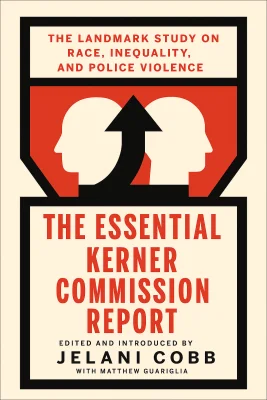
The Essential Kerner Commission Report
Categories
Nonfiction, History, Politics, Sociology, Social Justice, American History, Race, Grad School
Content Type
Book
Binding
Paperback
Year
2021
Publisher
Liveright
Language
English
ISBN13
9781631498923
File Download
PDF | EPUB
The Essential Kerner Commission Report Plot Summary
Introduction
In the sweltering summer of 1967, as flames consumed entire city blocks in Detroit and Newark, America confronted a harsh reality that many had long chosen to ignore. What began as routine police encounters—a raid on an after-hours club, the arrest of a cab driver—exploded into devastating uprisings that would leave dozens dead, thousands arrested, and millions of dollars in damage. Yet these disorders were not spontaneous eruptions of lawlessness, but rather the inevitable result of decades of systematic exclusion, discrimination, and neglect that had created two Americas: one white and prosperous, the other black and desperate. The commission tasked with understanding these events uncovered a profound truth that resonates powerfully today: the disorders were not caused by outside agitators or criminal elements, but by the accumulated weight of white racism and institutional failure. Through meticulous investigation of twenty-three cities, extensive interviews with residents, officials, and participants, the commissioners revealed how discrimination in housing, employment, and education had created urban ghettos where hope withered and anger flourished. Their findings challenged comfortable assumptions about American progress and exposed the dangerous illusion that legal victories alone could address centuries of systemic inequality. Most significantly, they warned that without massive, sustained national action, America was destined to become two societies, separate and unequal—a prophecy that would prove tragically prescient in the decades that followed.
Chapter 1: The Genesis of Civil Disorder: Historical Patterns
The urban explosions of 1967 did not emerge from a vacuum but represented the culmination of a pattern that had been building for decades across American cities. From the Detroit race riot of 1943 to the Watts uprising of 1965, each outbreak followed a remarkably consistent trajectory: a police incident in a predominantly black neighborhood, the rapid gathering of crowds, and the swift escalation from protest to property destruction. What changed over time was not the fundamental dynamic but the scale and intensity of the response, as growing populations of urban blacks faced increasingly stark contrasts between American promises and their daily reality. The immediate triggers were often mundane—a traffic stop, a raid on an illegal establishment, a dispute over police conduct. In Newark, it was the arrest and alleged beating of cab driver John Smith that drew residents of a housing project into the streets. In Detroit, a police raid on a blind pig celebrating the return of two Vietnam veterans became the spark that ignited five days of devastating disorder. Yet these incidents gained their explosive power from what the commission termed "a reservoir of underlying grievances" that had been accumulating for years in black communities across the nation. The pattern revealed a crucial truth about American urban life: police had become the primary point of contact between government and ghetto residents, not because they provided services, but because other institutions had failed or fled. Schools were segregated and underfunded, jobs were scarce and discriminatory, housing was substandard and overpriced. The police, therefore, came to symbolize not just law enforcement but the entire system of white authority that governed black lives. As one commission witness observed, when police stripped away a black man's dignity, they took "the one thing that he may have left—the question of being a man." The disorders followed predictable cycles, typically erupting in the evening when summer heat drove residents onto the streets, escalating through the night, and subsiding during daylight hours only to flare again after dark. Rock and bottle throwing gave way to window breaking, which led to looting, which eventually progressed to arson. The participants were not the criminal underclass that many assumed, but rather typical ghetto residents—young, proud of their race, better educated than their neighbors, yet trapped in unemployment or menial jobs they knew were beneath their abilities. They sought not to destroy America but to claim their rightful place within it.
Chapter 2: The Racial Ghetto: Formation and Social Disorganization
The concentration of America's black population in urban ghettos was neither accidental nor natural but the deliberate result of decades of discriminatory practices that systematically excluded African Americans from the prosperity and mobility that defined the postwar American dream. Between 1940 and 1970, over four million blacks migrated from the rural South to Northern and Western cities, seeking opportunities that mechanized agriculture and legal segregation had denied them. They arrived to find that while the law might guarantee their right to move freely, the reality of housing discrimination trapped them in the oldest, most deteriorated sections of the central cities. The ghetto was created and maintained by a complex web of exclusionary practices that operated with devastating efficiency. Real estate agents refused to show homes to black buyers in white neighborhoods. Banks denied mortgages to black applicants regardless of their creditworthiness. Restrictive covenants legally prohibited the sale of property to blacks in entire neighborhoods. When these formal barriers fell to legal challenges, white residents simply refused to live near blacks, creating a process of "massive racial transition" in which integrated neighborhoods quickly became all-black as whites moved out and were not replaced by other whites. This residential segregation created profound inequalities that extended far beyond housing itself. Black families paid higher rents for inferior housing while being excluded from the suburban communities where new schools, shopping centers, and jobs were increasingly located. In Detroit, for example, blacks earned seventy percent of white income despite often having similar education levels. The median income gap between whites and blacks actually widened during the prosperous 1960s, creating the bitter irony of growing absolute prosperity alongside increasing relative deprivation. The social consequences of this concentrated poverty were severe and self-reinforcing. Unemployment rates in ghetto areas often exceeded fifteen percent, while many of those who did work were trapped in low-paying service jobs that offered no path to advancement. Family structures, stressed by economic insecurity and limited opportunities for men to achieve stable employment, showed increasing instability. Crime rates soared as conventional paths to success remained blocked. By the mid-1960s, the ghetto had become what the commission called "a destructive environment totally unknown to most white Americans"—a place where institutional failure had created conditions ripe for the explosion that was to come.
Chapter 3: Police and Community: Mutual Hostility and Misunderstanding
The relationship between police and ghetto communities had deteriorated into one of mutual suspicion, fear, and hostility that made virtually any police action a potential catalyst for disorder. To many black residents, police represented not protection but oppression—the visible symbol of a white power structure that seemed more interested in containing blacks than serving them. Complaints of police brutality, verbal abuse, and discriminatory enforcement created a climate where routine police work became fraught with tension and the potential for violent confrontation. The problem was not simply one of individual prejudice, though the commission found disturbing evidence of racist attitudes among officers assigned to predominantly black precincts. In one city studied, three-quarters of white policemen expressed prejudiced attitudes toward blacks, with nearly half showing what researchers classified as "extreme prejudice" that described blacks "in terms of the animal kingdom." More fundamentally, police had been asked to manage the consequences of social problems they were powerless to solve. In communities where schools had failed, jobs had disappeared, and families had fractured under economic pressure, police became the institution of last resort—expected to maintain order in inherently disorderly circumstances. The aggressive patrol tactics employed in many ghetto areas further inflamed these tensions. Practices like "stop and frisk" and roving task forces that conducted indiscriminate street stops may have been intended to prevent crime, but they created the impression of an occupying army rather than a protective force. Young black men, who made up a disproportionate share of both riot participants and police contacts, were particularly affected by these practices. For them, encounters with police were not isolated incidents but part of a pattern of harassment that reinforced their sense of being viewed as inherently criminal. The commission found that blacks consistently complained not only about police misconduct but also about inadequate police protection. Many ghetto residents reported that police took longer to respond to calls for help in their neighborhoods and showed less concern for black victims of crime. This created the worst of both worlds: a police presence that felt oppressive and intrusive when it came to minor infractions, but absent and indifferent when genuine protection was needed. The result was a community that saw police as neither friend nor protector, but as an alien force whose primary purpose was maintaining white dominance rather than ensuring public safety.
Chapter 4: Media Coverage: Exaggeration and Failure to Communicate
The news media's coverage of the 1967 disorders revealed fundamental failures that extended far beyond the immediate crisis to encompass the broader challenge of reporting on race relations in America. While most news organizations made genuine efforts to provide balanced coverage, the overall effect was to exaggerate both the scale of violence and its character as a black-white confrontation. Early damage estimates that put Detroit's losses at up to five hundred million dollars—later revised to forty-five million—created lasting impressions of devastation far exceeding reality. Reports of widespread sniping, which investigation showed to be largely unfounded, contributed to an atmosphere of fear that justified increasingly militarized responses. The problem was not deliberate sensationalism but rather the media's structural limitations in covering a story that challenged fundamental assumptions about American society. Most newsrooms were overwhelmingly white and had few reliable contacts in black communities. Reporters typically accompanied police and relied heavily on official sources, inadvertently reinforcing the impression that the disorders were primarily a law enforcement problem rather than a symptom of deeper social failures. Television coverage, in particular, emphasized scenes of control and confrontation rather than the underlying conditions that had produced the crisis. More significantly, the commission found that the media had failed in their broader responsibility to help white Americans understand the reality of black life in urban ghettos. The daily degradation, the systematic exclusion from opportunities, the accumulated weight of discrimination—these had been largely invisible to mainstream media coverage until they exploded into violence. As the commissioners noted, the press had reported from "the standpoint of a white man's world," failing to communicate to their predominantly white audience "a sense of the degradation, misery, and hopelessness of living in the ghetto." This failure of communication had profound consequences beyond the immediate crisis. Many white Americans, learning about ghetto conditions primarily through riot coverage, came to associate black anger with criminality rather than recognizing it as a response to injustice. The media's emphasis on dramatic incidents rather than systematic problems made it easier for readers and viewers to dismiss the disorders as the work of agitators or criminals rather than confronting the need for fundamental social change. In failing to make black experiences visible and comprehensible to white audiences, the media had inadvertently contributed to the very polarization that made disorder more likely and reconciliation more difficult.
Chapter 5: Moving Beyond Crisis: Recommendations for National Action
Faced with the reality of two societies moving toward permanent separation, the commission outlined an ambitious program of national action that would require unprecedented commitment and resources. The central insight underlying all their recommendations was that piecemeal reform and good intentions were no longer adequate to address the scale of the crisis. Only a coordinated attack on the interconnected problems of employment, education, housing, and welfare could begin to close the gap between American ideals and American reality for the nation's black citizens. The employment recommendations called for creating two million new jobs over three years, half in the public sector and half in private industry, specifically targeted at the hard-core unemployed who formed the backbone of riot participation. This was not simply a jobs program but a recognition that meaningful work at decent wages was essential to rebuilding communities where young men had been systematically excluded from legitimate paths to success. The commission also called for aggressive action to eliminate discriminatory hiring practices and artificial barriers like arrest records or high school diploma requirements that excluded qualified candidates. In education, the commissioners endorsed integration as the preferred strategy while acknowledging the need to dramatically improve ghetto schools that would remain predominantly black for years to come. Their recommendations included substantial federal funding for early childhood education, year-round compensatory programs, and efforts to involve parents and communities in school governance. The welfare system, which they found designed "to save money instead of people," needed complete restructuring to provide adequate support while encouraging rather than discouraging work and family stability. Housing recommendations addressed both the immediate need for decent shelter and the broader goal of residential integration that was essential to breaking the cycle of ghettoization. The commission called for six million new and existing units of low and moderate-income housing over five years, along with a comprehensive fair housing law to eliminate discrimination in sales and rentals. But they recognized that housing alone could not solve the problem without addressing the economic inequalities that trapped blacks in poverty and the discriminatory practices that maintained residential segregation. The scope and cost of these recommendations reflected the commission's conclusion that the urban crisis could be resolved only through a commitment comparable to those America had made for World War II and the Cold War—a domestic Marshall Plan to rebuild the cities and integrate their excluded populations into the mainstream of American life.
Chapter 6: Two Societies: Separate, Unequal, and Unchanging
The commission's most haunting conclusion was that America was "moving toward two societies, one black, one white—separate and unequal." This was not merely a description of existing conditions but a warning about the trajectory of American society if fundamental changes were not made. The evidence was overwhelming: in every measure of social and economic well-being, blacks lagged dramatically behind whites, and in many cases the gaps were widening despite general prosperity and civil rights victories. The statistics painted a picture of systematic exclusion that belied American claims of progress toward equality. Black unemployment was twice that of whites at every education level. Black families earned barely sixty percent of white family income. In city after city, blacks were relegated to the worst housing, the most inferior schools, the least stable jobs. Even middle-class blacks found themselves trapped in increasingly isolated communities as white flight accelerated and federal programs failed to reach more than a fraction of those in need. Perhaps most ominously, the commission found that racial attitudes were hardening rather than softening. The riots had increased white fears and resentments while deepening black alienation from American institutions. Young blacks, who had once looked to integration as the path to equality, were increasingly attracted to separatist ideologies that rejected the goal of joining white society. White Americans, meanwhile, were retreating to suburban enclaves where they could maintain the illusion that racial problems were confined to distant inner cities. The commission's warning about two societies proved tragically prescient. In the decades that followed, despite important gains by individual blacks and the emergence of a larger black middle class, the fundamental pattern of racial separation and inequality persisted. School segregation increased as courts abandoned integration efforts. Residential segregation remained virtually unchanged. Mass incarceration created new forms of racial control that in many ways replicated the exclusions of the past. The opportunity that existed in 1968 for America to choose integration over separation was largely squandered, leaving the nation to grapple with the same basic problems that had produced the disorders of 1967—problems that continue to generate conflict and division today.
Summary
The urban disorders of 1967 were not random explosions of violence but the predictable result of a society that had systematically excluded its black citizens from the prosperity and opportunities that defined the American dream. Through decades of discriminatory practices in housing, employment, education, and law enforcement, America had created urban ghettos that concentrated poverty, despair, and rage in ways that made violent outbursts almost inevitable. The commission's investigation revealed that the fundamental problem was not black lawlessness but white racism—not individual prejudice alone, but the institutional structures and practices that maintained racial inequality generation after generation. The lessons of this history remain painfully relevant today, as many of the same patterns of exclusion and conflict continue to shape American cities. The path forward requires acknowledging that colorblind policies cannot address problems rooted in centuries of color-conscious discrimination. It demands massive investment in the institutions and communities that have been systematically undermined by racial bias. Most importantly, it requires the political will to choose integration over separation, equality over hierarchy, and genuine democracy over the hollow promises that have left so many Americans excluded from the nation's promise. Only by confronting honestly the ways that white racism has shaped American society can we begin to build the single, integrated nation that the commission envisioned but that remains painfully beyond our reach.
Best Quote
Review Summary
Strengths: The book is praised for its insightful and prescient analysis of the urban revolts/riots of the 1960s, with Jelani Cobb's introduction effectively connecting past issues to contemporary events like those surrounding George Floyd. It is considered an important and relevant document, providing valuable statistics and insights into the causes of the riots, particularly highlighting racial inequality. Weaknesses: The book is criticized for being repetitive, especially in the initial sections, which detracts from the reading experience. As a commission report, it is described as a "slog" and not particularly engaging, with some readers finding it difficult to follow. Overall: The general sentiment is that the book is a significant and timely read, despite its challenging format. It is recommended for its historical and social insights, though readers should be prepared for a dense and repetitive structure.
About Author

Jelani Cobb
Cobb interrogates the complexities of race, politics, and culture in America, weaving historical analysis with journalistic inquiry. His work frequently connects the legacy of African American history to contemporary social justice issues, offering readers a nuanced perspective on societal dynamics. By examining topics from the political implications of hip-hop culture to the influence of civil rights leaders, Cobb's writing invites audiences to consider the broader narratives that shape American life. His notable book, "The Substance of Hope: Barack Obama and the Paradox of Progress", explores the paradoxical nature of progress in the Obama era, highlighting how historical and cultural contexts intersect with political developments.\n\nCobb's analytical approach benefits readers who seek to understand the underlying forces shaping current events. His insightful columns in "The New Yorker", described as forming "almost a journalistic history of the Black Lives Matter era," provide a comprehensive view of the racial and cultural landscape in modern America. Through his contributions to anthologies and various prestigious publications, Cobb amplifies critical voices and stories that might otherwise go unheard. His accolades, including the Sidney Hillman Award for his incisive journalism on race and justice, underscore his impact as a writer and educator committed to fostering informed dialogue. This short bio underscores Cobb's influential role in engaging with and elucidating the complex narratives of American society.
Read moreDownload PDF & EPUB
To save this Black List summary for later, download the free PDF and EPUB. You can print it out, or read offline at your convenience.
The Essential Kerner Commission Report
by Jelani Cobb
