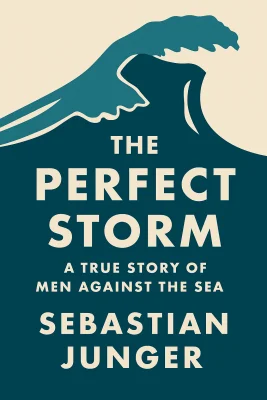
The Perfect Storm
A True Story of Men Against the Sea
Categories
Nonfiction, Science, Biography, History, Nature, Audiobook, Historical, Adventure, Survival, Nautical
Content Type
Book
Binding
Paperback
Year
2009
Publisher
W. W. Norton & Company
Language
English
ASIN
0393337014
ISBN
0393337014
ISBN13
9780393337013
File Download
PDF | EPUB
The Perfect Storm Plot Summary
Introduction
On a crisp October morning in 1991, Christina Cotter sat in her kitchen overlooking Ipswich Bay, cigarette after cigarette burning between her fingers as she watched dark clouds gather over the granite shores of Cape Ann. She had awakened from a terrifying dream where she was desperately searching for her boyfriend Bobby Shatford aboard a sinking fishing vessel, finding only his lifeless arm buried beneath slimy debris in the fish hold. Hours later, a knock at her door would confirm her worst fears—the Andrea Gail, carrying Bobby and five other fishermen, had vanished without a trace into what meteorologists would later call "the perfect storm." This haunting tale illuminates the profound courage and sacrifice that define those who make their living from the sea. Through meticulous research and compassionate storytelling, we encounter fishermen who risk everything for their families, Coast Guard rescuers who brave impossible conditions to save strangers, and communities that endure unimaginable loss with quiet dignity. The book reveals how ordinary people find extraordinary strength when confronted with nature's most violent forces, offering timeless lessons about resilience, love, and the unbreakable bonds that sustain us through our darkest storms.
Chapter 1: The Fishermen's Life: Danger, Dreams and Determination
Bobby Shatford never intended to become a swordfisherman. Like many young men in Gloucester, Massachusetts, he found himself at sea because he was broke and needed money fast. With child support payments mounting and few other options available, Bobby reluctantly accepted a position aboard the Andrea Gail, one of the most successful longline fishing vessels on the East Coast. The night before departure, he sat drinking with his girlfriend Christina at the Crow's Nest bar, nursing a black eye from their recent fight and openly expressing his reluctance to leave. "I don't want to do this," he confided. "I really don't." Yet economic necessity demanded that he venture into some of the most dangerous waters on earth, where forty-mile fishing lines baited with thousands of hooks stretched across the vast Atlantic. The world of commercial swordfishing operates on brutal mathematics: crews spend thirty days at sea chasing fish that might earn them five thousand dollars—or nothing at all. These modern-day hunters follow the swordfish population across thousands of miles of ocean, from the Caribbean in winter to the Grand Banks off Newfoundland in summer. Their workplace is a seventy-two-foot steel vessel that becomes both home and prison, where six men live in cramped quarters while battling exhaustion, seasickness, and the constant threat of injury from massive hooks and heavy machinery. The Andrea Gail carried forty miles of monofilament line worth twenty thousand dollars, along with sophisticated electronics that could pinpoint schools of fish hundreds of miles from shore. Dale Murphy, known as Murph to his crewmates, embodied the complex relationship between fear and financial necessity that drives men to sea. A gentle giant from Florida who openly adored his three-year-old son, Murph had already survived several near-death experiences: a mako shark attack that required helicopter evacuation, being dragged overboard by fishing gear, and a collision with a British submarine that crushed his bunk while he slept on deck. Despite these close calls, or perhaps because of them, Murph carried a fatalistic acceptance of his destiny. Weeks before joining the Andrea Gail's final voyage, he visited his mother and made an unusual request about his high school trophies: "Make sure you keep them for my son," he said quietly. "I'm going to die at sea." The economics of commercial fishing create a harsh cycle where desperation drives men to accept extraordinary risks for the chance of financial freedom. A single successful trip could earn a crew member enough money to pay off debts, support a family, or start fresh—dreams powerful enough to overcome the statistics showing that more people die in commercial fishing than in any other occupation in America. Yet beneath this brutal pragmatism lies a deeper truth about human nature: when faced with limited choices, ordinary people discover reserves of courage they never knew existed, finding meaning and brotherhood in their shared struggle against the indifferent sea.
Chapter 2: Brewing Disaster: The Meteorology Behind the Storm
In late October 1991, three massive weather systems began a deadly dance across the North Atlantic that would create what meteorologists call a "hundred-year storm." Hurricane Grace, a late-season tropical system, was grinding northward along the Eastern seaboard while a powerful cold front descended from the Canadian Arctic. Between them, a low-pressure system was intensifying over the Great Lakes, creating the perfect conditions for meteorological catastrophe. Senior meteorologist Bob Case watched satellite imagery from his office at the National Weather Service in Boston, observing with scientific fascination as these systems converged. "My God," he thought, "this is the perfect storm." The collision of Hurricane Grace with the cold front created what meteorologists call a "retrograde"—a freakish reversal that sent the storm system back toward the coast instead of following the normal west-to-east pattern. This atmospheric rebellion occurs perhaps once in a century, when the remnants of a hurricane and a Canadian high-pressure system act like massive gears, catching another storm between their teeth and grinding it westward. The result was a storm that drew energy from three different weather systems, creating a pressure gradient so steep that wind speeds exceeded anything recorded in the region's history. As the storm intensified, data buoys scattered across the North Atlantic began registering wave heights that challenged the limits of measurement. Buoy 44139, positioned near Sable Island, recorded seas climbing from twelve feet to seventy feet in a matter of hours, with individual waves reaching one hundred feet—among the highest ever measured anywhere in the world. These mountains of water moved with such violence that they literally shook the earth; seismographs thousands of miles away detected their impacts. The storm created its own weather patterns, spinning with such intensity that satellite photographs showed clouds swirling into the center like cream stirred into black coffee. The tragedy of the Andrea Gail lies not just in the loss of six lives, but in the reminder that despite all our technological advances, we remain vulnerable to forces beyond human control. Weather prediction has improved dramatically since the days when fishing vessels disappeared without warning, yet the atmosphere's complexity still defies complete understanding. The storm that claimed the Andrea Gail was so unprecedented that it forced meteorologists to reconsider their models of what was possible, teaching us that nature always reserves the right to exceed our expectations and humble our preparations.
Chapter 3: The Andrea Gail's Final Journey
Captain Billy Tyne had fished these waters for most of his adult life, earning a reputation as one of the most successful swordfishermen on the East Coast with an almost supernatural ability to locate fish. When he took command of the Andrea Gail in 1991, he brought with him years of experience and an intimate knowledge of the ocean's moods. Yet even Billy, with all his skill and intuition, could not have anticipated the meteorological monster that was gathering strength as his boat steamed homeward in late October, holds full of swordfish and the crew eager to return to port after more than a month at sea. The first signs of trouble appeared on October 27th when weather fax reports began showing Hurricane Grace moving northward while a massive low-pressure system developed over the Maritime provinces. Billy received increasingly ominous forecasts: "Dangerous storm moving east... forecast winds 50 to 65 knots and seas 22 to 32 feet." For a seventy-two-foot vessel loaded with forty thousand pounds of fish and running low on fuel, these were troubling numbers. Yet Billy faced the eternal dilemma of the commercial fisherman—turn back and lose valuable fishing time, or press forward and hope to outrun the weather. By the evening of October 28th, the Andrea Gail was experiencing conditions that would have challenged vessels twice her size. Tommy Barrie, captain of the Allison and one of the last people to speak with Billy, received a radio call that painted a grim picture: "It's blowin' fifty to eighty and the seas are thirty feet," Billy reported, his voice barely audible through the static. "She's comin' on boys, and she's comin' on strong." These would be among the last words ever heard from the Andrea Gail, transmitted into a night where waves were building to heights that no fishing vessel could survive. The final hours of the Andrea Gail remain a mystery wrapped in one hundred-foot seas and hurricane-force winds. What we know comes from the testimony of other vessels that survived the storm and the grim mathematics of naval architecture—the point at which wind and wave combine to create forces beyond any boat's ability to resist. The crew likely spent their last night fighting to keep their vessel pointed into mountainous waves, taking turns at the helm while their shipmates tried to rest in bunks that pitched and rolled with each passing sea. When the end came, it came quickly, leaving no time for distress calls or final messages home.
Chapter 4: When Seas Turn Deadly: Rescue Operations and Lost Souls
While the Andrea Gail battled for survival in waters no rescue helicopter could reach, another drama was unfolding closer to shore as Coast Guard crews launched into the teeth of the storm to save lives. The sailing vessel Satori, with three crew members aboard, had issued a mayday call fifty miles offshore as hurricane-force winds drove thirty-foot seas over her decks. What followed was one of the most remarkable rescue operations in Coast Guard history, as helicopters and cutters fought through conditions that pushed both men and machines to their absolute limits. Dave Moore, a twenty-five-year-old rescue swimmer, prepared for what would become the defining moment of his career as his H-3 helicopter hovered over the storm-tossed sailboat. The ocean below looked like a lunar landscape, cratered and deformed by wind, with waves so large they blocked the aircraft's anemometer and sent gusts approaching one hundred miles per hour. When Moore finally jumped from the helicopter door, he fell sixty feet into chaos, fracturing ribs and rupturing internal organs on impact. Yet somehow he managed to swim to the three survivors clinging to life in the water and guide them one by one into the rescue basket, saving all three lives in conditions that defied survival. The same storm that had swallowed the Andrea Gail also claimed an Air National Guard helicopter, forcing five highly trained pararescue jumpers to abandon their aircraft and fight for their own lives in mountainous seas. John Spillane, a veteran PJ with years of rescue experience, found himself broken and dying in the water after jumping from his crippled helicopter. "I realized my only chance of survival was to make it until the storm subsided," he later recalled. "But I knew I could not make it through the storm. I'm dying inside." Spillane's rescue by the Coast Guard cutter Tamaroa required seamanship and courage that bordered on the impossible, as the crew risked their own vessel to pull three men from seas that were washing over their deck. The storm's final toll included not just the six fishermen of the Andrea Gail, but dozens of vessels damaged or destroyed, hundreds of people rescued, and entire communities transformed by nature's raw power. Yet within this devastation emerged stories of extraordinary heroism—Coast Guard crews who risked everything to save strangers, ships' captains who defied common sense to help fellow mariners, and ordinary people who discovered reserves of courage they never knew they possessed. The storm reminded us that in our darkest moments, the finest qualities of human nature often shine brightest.
Chapter 5: The Aftermath: Communities Coping with Maritime Tragedy
The morning after the storm passed, Gloucester awakened to a transformed world. Thirty-foot waves had hurled lobster traps into downtown parking lots, filled swimming pools with ocean debris, and left beach stones embedded in house siding miles from shore. But the physical damage paled beside the emotional devastation that would unfold in the days ahead as families realized their loved ones were never coming home. Chris Cotter wandered the State Fish Pier in the weeks following the storm, waiting for the Andrea Gail to return, unable to accept that Bobby Shatford was gone forever. Ethel Shatford, Bobby's mother and a longtime bartender at the Crow's Nest, became the unofficial keeper of memories for all six lost crew members. The waterfront bar, which had served as a second home to generations of fishermen, transformed into a shrine where friends and family gathered to share stories and support each other through their grief. Photos of the Andrea Gail crew appeared on the walls alongside those of other Gloucester fishermen lost to the sea, part of a tradition stretching back centuries in a town that has sacrificed more men to the ocean than to all the nation's wars combined. Debra Murphy faced the impossible task of explaining to her three-year-old son that his father would never return from "fishing in heaven." Dale Junior struggled to understand this new geography where his father worked, asking when Daddy would come back and why heaven was so far away that phone calls were impossible. Months later, the boy woke screaming from nightmares, claiming his father had visited him to explain how he died—caught on a gaff hook as the boat rolled over, unable to free himself before being dragged under. These visitations, whether real or imagined, became part of the complex process by which families absorb unacceptable loss. The legal aftermath proved as painful as the emotional one, as families seeking compensation discovered the harsh realities of maritime law. The Death on the High Seas Act limited damages to "pecuniary loss"—the money the deceased had been earning for dependents—meaning that Ethel Shatford could not sue for the loss of her son since he provided her no financial support. Bob Brown, owner of the Andrea Gail, sent letters to families asking them to exonerate him from responsibility, a business precaution that deepened their pain and anger. Yet within this system of cold legal calculations, Gloucester's fishing community demonstrated the bonds that truly matter, caring for widows and children with a compassion no law could mandate or measure.
Chapter 6: Maritime Safety and Industry Realities
The Andrea Gail represented both the pinnacle of fishing boat technology and the economic pressures that push vessels beyond safe limits. Built in 1978 as a state-of-the-art longliner, she had been extensively modified in 1987 to increase her fishing capacity and range. Three feet were added to her stern, fuel tanks were enlarged, and the whaleback deck was loaded with additional equipment—modifications that raised her center of gravity and changed her stability characteristics. Yet no formal stability tests were performed, no marine architect consulted, reflecting an industry culture where boat owners rely on experience and intuition rather than engineering analysis. The sword fishing fleet operates under economic pressures that make safety a luxury few can afford. Boats that cost hundreds of thousands of dollars must generate revenue every day they're at sea to cover fuel, crew wages, insurance, and maintenance costs that can reach fifty thousand dollars per trip. With fish populations declining and competition increasing, captains face constant pressure to extend their seasons, work in marginal weather, and push their vessels to the limits of endurance. A boat that retreats to port every time bad weather threatens will quickly go bankrupt, while one that takes calculated risks might prosper—until the day the calculation proves wrong. The Coast Guard faces similar contradictions in their mission to protect commercial fishermen. Rescue resources are limited, and the vast distances involved in deep-sea fishing mean that help may be days away when disaster strikes. During the perfect storm, Coast Guard helicopters were unable to reach the Andrea Gail's last known position due to fuel limitations and extreme weather—a harsh reminder that rescue operations have limits that physics and geography impose. Even if a helicopter had reached the stricken vessel, the sea conditions were too severe to allow rescue operations, leaving six experienced mariners to face the storm alone. The tragedy of the Andrea Gail illustrates how good people making reasonable decisions can still encounter situations that exceed all preparation and training. Billy Tyne was an experienced captain operating a well-maintained vessel with a competent crew, yet they encountered weather conditions so extreme that no amount of skill could save them. This sobering reality forces us to acknowledge that while we can minimize risk through better equipment, training, and procedures, some dangers cannot be eliminated entirely—a truth that extends far beyond the fishing industry to every aspect of human endeavor where courage must overcome uncertainty.
Chapter 7: The Coast Guard: Heroes Against Impossible Odds
The men and women of the United States Coast Guard embody a unique form of heroism—one that requires running toward danger when everyone else flees to safety. During the perfect storm, Coast Guard crews launched into conditions that grounded commercial airlines and sent cargo ships fleeing for shelter, driven by an ethos that every life is worth saving regardless of risk or cost. The rescue of the Satori crew required pilot Claude Hessel to hold his helicopter in a sixty-foot hover while hurricane-force winds threatened to slam his aircraft into the sea, a feat of airmanship that pushed both man and machine beyond their design limits. The Coast Guard cutter Tamaroa performed one of the most remarkable rescue operations in maritime history when she diverted from her original mission to save four Air National Guard crew members floating in mountainous seas. Commander Lawrence Brudnicki made the agonizing decision to put his own crew at risk, positioning his 205-foot vessel broadside to waves that could have rolled her over and killed all eighty men aboard. "If I'd decided not to do the rescue, no one back home would've said a thing," Brudnicki later reflected. "But can you really make a conscious decision to say, 'I'm just going to watch those people in the water die?'" The rescue swimmers and helicopter crews who saved multiple lives during the storm trained for years to prepare for such moments, yet nothing could have fully prepared them for the reality they faced. Dave Ruvola, pilot of the Air National Guard helicopter that ditched during a rescue attempt, had to make split-second decisions that meant the difference between life and death for his entire crew. When his aircraft ran out of fuel in zero visibility, he executed a controlled ditching that saved four of his five crew members, though rescue swimmer Rick Smith was lost and never found despite an exhaustive nine-day search. The Coast Guard's response to the perfect storm demonstrates both the potential and limits of human courage in the face of natural disasters. While rescuers saved dozens of lives during the storm, they could not save everyone—a reminder that heroism, however great, cannot overcome every challenge nature presents. Yet their willingness to risk everything for strangers exemplifies the finest aspects of human nature, showing that even in our darkest moments, there are those who choose compassion over safety, service over self-preservation, and hope over despair.
Summary
The story of the Andrea Gail and the perfect storm reveals fundamental truths about courage, sacrifice, and the human spirit that transcend the specific tragedy of six fishermen lost at sea. Through the experiences of those who lived and died in that historic storm, we discover that heroism is not the absence of fear but the willingness to act despite it—whether you're a fisherman providing for your family, a Coast Guard swimmer jumping into mountainous seas, or a pilot making a desperate decision to save his crew. The perfect storm teaches us that preparation and skill, while essential, cannot eliminate all risks from life's most meaningful endeavors. Billy Tyne's expertise, the Andrea Gail's seaworthiness, and the crew's experience proved insufficient against forces beyond human control, yet their willingness to venture into dangerous waters reflected the same spirit that drives all human progress. When we pursue dreams that matter—whether in career, relationships, or personal growth—we accept uncertainty as the price of possibility, finding strength in our connections to others who share our struggles and support our journey. The legacy of those lost in the perfect storm lies not in their fate but in their courage to keep fishing, keep hoping, and keep believing that tomorrow's voyage might be the one that changes everything.
Best Quote
“How do men act on a sinking ship? Do they hold each other? Do they pass around the whisky? Do they cry?” ― Sebastian Junger, The Perfect Storm: A True Story of Men Against the Sea
Review Summary
Strengths: The reviewer provides a personal connection to the book's maritime themes, enhancing their understanding and empathy for the narrative. They offer detailed insights into the swordfishing industry, supported by their knowledge and experience, which adds depth to their analysis. The mention of Linda Greenlaw's exceptional achievements as a female captain highlights the book's portrayal of unique and compelling characters. Overall: The reader expresses a strong positive sentiment towards the book, appreciating its realistic depiction of maritime challenges and the intricacies of swordfishing. Their personal experiences and knowledge enrich their engagement with the book, suggesting a high level of recommendation for those interested in maritime adventures and the fishing industry.
About Author
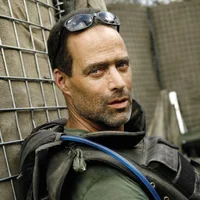
Sebastian Junger
Junger interrogates the complexities of human resilience and community through his work, revealing the often tumultuous nature of human experience. His writing consistently probes themes of brotherhood, trauma, and survival, often against the backdrop of conflict and adversity. In works like "The Perfect Storm," which brought him international fame, and "War," Junger blends journalistic precision with a narrative drive that captures the intricacies of human emotions and interactions. His exploration of societal impacts in "Tribe: On Homecoming and Belonging" further showcases his ability to weave poignant narratives from complex social issues, emphasizing the profound importance of community and belonging.\n\nSebastian Junger's method involves immersive, in-the-field reporting that draws on his background in anthropology, offering readers vivid and empathetic insights into the human condition. His contributions as an author and filmmaker, including the critically acclaimed documentary "Restrepo," highlight his commitment to depicting the raw truths of human courage and vulnerability. For readers and audiences, Junger’s works provide not just compelling stories but also a deeper understanding of the societal dynamics that bind individuals together. This narrative richness has earned him prestigious accolades like the National Magazine Award and solidified his position as a leading voice in contemporary nonfiction.\n\nFor those interested in a deeper exploration of human nature and society, Junger's bio reveals a career dedicated to these pursuits. His books and films are more than mere documentation; they offer a profound reflection on what it means to be part of a community, providing valuable insights for anyone curious about the human spirit's capacity to endure and connect.
Read moreDownload PDF & EPUB
To save this Black List summary for later, download the free PDF and EPUB. You can print it out, or read offline at your convenience.
The Perfect Storm
by Sebastian Junger
