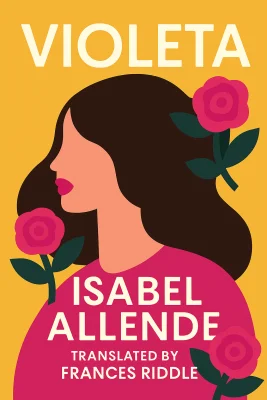
Violeta
Categories
Fiction, Audiobook, Feminism, Historical Fiction, Adult, Book Club, Historical, Contemporary, Magical Realism, Literary Fiction
Content Type
Book
Binding
Paperback
Year
2022
Publisher
Ballantine Books
Language
English
ASIN
0593496205
ISBN
0593496205
ISBN13
9780593496206
File Download
PDF | EPUB
Violeta Plot Summary
Introduction
# Violeta: A Century Between Storms The Spanish flu rages through the countryside as Violeta del Valle takes her first breath in 1920, born into a world already acquainted with death and upheaval. One hundred years later, as another pandemic locks down the globe, she sits in her childhood home typing letters to her grandson Camilo, a Jesuit priest working among the poorest souls. Her arthritic fingers dance across the keyboard with determined grace, knowing these may be her final words to the boy who became her redemption. Between these two pandemics lies a century of storms—political coups that shattered nations, passionate love affairs that destroyed families, and personal tragedies that would have crushed a lesser spirit. Violeta's story unfolds like a map of the twentieth century's brutalities and beauties, each chapter marked by her refusal to surrender to circumstances that demanded her submission. She learned early that survival requires not just endurance, but the courage to reinvent yourself when the ground shifts beneath your feet.
Chapter 1: Born in Ruins: Childhood Trauma and Family Exile
The earthquake splits the earth beneath their grand estate like a wound refusing to heal. Six-year-old Violeta watches from her bedroom window as wine cellars collapse and servants flee into the night. Her father retreats to his library with a bottle and his English revolver, the weight of bankruptcy and shame pressing down like the rubble of their crumbling world. She finds him on a gray morning, slumped over his mahogany desk with a neat hole in his temple. The coffee cup trembles in her small hands as she stares at the thin trickle of blood staining his silk robe. The Spanish flu has already claimed her youngest brother, and now financial ruin has claimed their patriarch. Her mother Nivea gathers the surviving children like a general marshaling troops for retreat. The train carries them south to exile, their once-proud family name now whispered with scandal and pity. José Antonio, barely sixteen, becomes the man of the house while their English governess Miss Taylor maintains the pretense of civilization with afternoon tea and proper grammar. But Violeta sees the fear in her mother's eyes as she counts coins by lamplight, calculating how long their meager savings might last. Santa Clara becomes their sanctuary—a modest wooden house on land belonging to the indigenous Rivas family, who welcome them with the quiet dignity of people who understand displacement. Here, surrounded by ancient trees and the whisper of wind through leaves, Violeta learns her first lesson in survival. When the world collapses, you learn to dance with the tremor rather than fight it. The Spanish flu circles their refuge like a predator, claiming neighbors and friends with methodical cruelty. Violeta helps tend the sick, her small hands steady as she holds water to fevered lips. Death becomes familiar, no longer the distant specter of her privileged childhood but a constant companion who might claim any of them at any moment. In this crucible of loss and adaptation, the frightened child begins her transformation into something harder, more resilient.
Chapter 2: The Awakening: From Duty to Dangerous Passion
The seaplane touches down on the lake's mirror surface like a silver bird, sending ripples across the perfect reflection of snow-capped mountains. From its cabin emerge Danish royalty and their entourage, but Violeta's eyes fix on their pilot—a man who radiates danger like heat from a flame. Julián Bravo sits on the hotel terrace with casual arrogance, cigarette in one hand, whiskey in the other, his athletic frame barely contained by his white shirt. At twenty-eight, Violeta has built a comfortable life with Fabian Schmidt-Engler, the earnest German veterinarian who adores her with puppy-like devotion. Their marriage is a study in respectability—successful, predictable, and utterly devoid of passion. She has convinced herself that contentment is enough, that the wild longings of youth were childish fantasies best forgotten. Then Julián's eyes meet hers across the garden, and her carefully constructed world explodes. This isn't the gentle courtship she knew with Fabian—this is recognition, primal and terrifying. When he stands and walks toward her with that rolling gait of a gunfighter, she knows her life is about to change forever. "We know each other, don't we?" he says, and without waiting for an answer, takes her hand and leads her down to the beach. The kiss that follows is nothing like the chaste embraces she shares with her husband—it's possession, claim, and surrender all at once. "It's inevitable that we love each other," he declares, and Violeta, lost in the vortex of desire, can only nod. The afternoon in his hotel room shatters every notion she has about her own body and desires. Julián's hands map territories of pleasure she never knew existed, his voice murmuring encouragements that make her forget everything beyond those four walls. When morning comes, the woman who shared Fabian's bed for three years is gone, replaced by someone who has tasted fire and can never again be satisfied with lukewarm water.
Chapter 3: Motherhood Under Fire: Love, Violence, and Survival
The pregnancy changes everything and nothing. Julián's initial rage at the news—his accusations that she has trapped him deliberately—gives way to reluctant acceptance when he sees her collapsed on the sofa, weeping with terror. The man who has never wanted to be tied down finds himself staring at the prospect of fatherhood with a mixture of wonder and panic that transforms his predatory confidence into something almost vulnerable. Juan Martín arrives during a thunderstorm, as if announcing his intention to bring turbulence into their lives. He is a serious baby who rarely cries but watches the world with ancient eyes that seem to see too much. Julián, expecting a miniature version of himself, is disappointed by his son's quiet intensity and obvious preference for his mother's arms over his father's rough handling. Three years later, Nieves explodes into existence like a firecracker. Where Juan Martín is contemplative, she is pure energy—climbing furniture before she can properly walk, charming everyone with her infectious laughter. She becomes the center of Julián's universe, the one person who can make him forget his carefully constructed armor of cynicism and violence. But Violeta's joy in her children is shadowed by the growing darkness in her marriage. Julián's business dealings become increasingly mysterious and dangerous. Men with cold eyes visit their home at odd hours, speaking in code about shipments and territories. When she presses for answers, Julián's response is swift and brutal—a backhand that leaves her ears ringing and her spirit crushed. The pattern becomes grimly familiar: violence followed by expensive gifts, threats followed by passionate reconciliation. Violeta learns to read the signs, to disappear with the children when Julián's mood turns dangerous. She tells herself she stays for their sake, but the truth is more complex—she is trapped not just by fear but by the intoxicating moments when Julián's mask slips and she glimpses the man who might have been, if the world had been kinder to whatever innocence he once possessed.
Chapter 4: Political Storms: A Nation's Upheaval and Personal Loss
The military coup arrives like a thunderclap on a clear day, shattering the illusion of democratic stability that has defined Violeta's adult life. Tanks roll through the capital's streets while fighter jets scream overhead, and suddenly the abstract concept of political upheaval becomes brutally personal. Juan Martín, now a university student and passionate leader of the student federation, disappears into the underground resistance with the fervor of youth convinced it can change the world. Violeta finds herself caught between her son's idealistic rebellion and her husband's enthusiastic support for the new regime. Julián's mysterious business connections suddenly make sense—he has been preparing for this moment, positioning himself as an asset to the military government. His small airplane becomes a tool of the dictatorship, ferrying passengers whose identities he refuses to discuss but whose presence fills their home with an atmosphere of menace. The night Juan Martín comes home bloodied and terrified, speaking in whispers about friends who have disappeared and torture chambers hidden in government buildings, Violeta understands that her family has crossed a line from which there can be no return. Her son's face bears the bruises of his first encounter with state violence, and his eyes hold the hollow look of someone who has seen the abyss and found it staring back. Julián's response is coldly pragmatic. Juan Martín has made his choice, and now he must face the consequences. When Violeta begs her husband to use his connections to protect their son, Julián's refusal is absolute. He will not risk his position for what he considers youthful foolishness, even if the fool is his own child. The man who once claimed to love her shows his true nature—loyalty extends only as far as personal advantage. The escape to Santa Clara becomes a desperate gamble. Violeta disguises Juan Martín as a female servant, relying on the military's casual sexism and class prejudice to get them through the checkpoints. Every mile feels like a lifetime as they navigate roads crawling with soldiers, her heart hammering against her ribs as guards examine their forged papers with suspicious eyes. When the indigenous guide Torito offers to lead Juan Martín across the border to safety, Violeta knows she may never see her son again.
Chapter 5: The Disappeared: Confronting Truth and Finding Purpose
The discovery of the mass grave changes everything. When Violeta stands in the converted military barracks, now a museum of horrors, staring at the pathetic remnants of the disappeared—scraps of clothing, worn shoes, personal effects that once belonged to human beings—she feels something fundamental shift inside her soul. Among the artifacts, she recognizes a wooden cross carved with her own childish hand, a gift she made for Torito decades ago. The cross belonged to the gentle giant who died helping her son escape, and its recovery becomes a moment of terrible clarity. For sixty-four years, Violeta has lived as a passenger in her own life, adapting to circumstances rather than shaping them. The sight of Torito's cross, polished smooth by years of faithful wearing, ignites a fury that burns away decades of careful compromise and strategic silence. She steals the cross from the display, pressing it against her heart like a talisman of transformation. The women she meets that day—mothers and wives who have spent years searching for their disappeared loved ones—become her teachers in a new kind of courage. They show her that what seems impossible for one person becomes achievable when people unite around a common purpose. The Fundación Nieves begins as a simple impulse to help these women, but under Violeta's guidance, it evolves into something larger: a systematic assault on the culture of violence that has poisoned their society for generations. Working alongside survivors of torture and families of the disappeared, she discovers a strength she never knew she possessed, a voice that can command attention in boardrooms and government offices. Her relationship with Harald Fiske, the Norwegian diplomat and bird enthusiast, brings unexpected joy to this period of awakening. He is everything Julián was not—gentle, honest, genuinely interested in her thoughts and feelings rather than her body or her compliance. Their love affair unfolds with the comfortable passion of mature hearts, free from the desperate intensity that had defined her youth and nearly destroyed her spirit.
Chapter 6: Building Legacy: The Foundation and Late-Life Love
The twenty-first century arrives with both promise and peril. Democracy has returned to their country, but the scars of dictatorship run deep, visible in the haunted eyes of survivors and the careful way people still speak about politics. Violeta's foundation has grown into a powerful force for change, creating safe houses for battered women, lobbying for legal reforms, and slowly beginning to change the conversation about domestic violence. Working with these women, Violeta discovers that courage is contagious, that the act of standing up to one bully gives others permission to confront their own oppressors. The foundation becomes more than an organization—it becomes a movement, spreading across the country like ripples from a stone thrown into still water. For the first time in her life, Violeta feels she is building something that will outlast her own mortality. Harald's presence transforms her daily existence in ways both large and small. He supports her work without trying to control it, celebrates her successes without jealousy, and introduces her to a world beyond the narrow confines of her traumatic past. Together, they travel from the frozen landscapes of Antarctica to the steamy jungles of the Amazon, collecting experiences like precious stones. But it is the quiet moments that matter most—mornings spent in Harald's rustic cabin in the Norwegian woods, evenings working side by side in their garden in Sacramento. For the first time in her life, Violeta understands what it means to be truly partnered with another human being, to build something together that is greater than the sum of its parts. Love, she discovers, doesn't have to hurt to be real. Camilo, her grandson born from tragedy, chooses the priesthood over the comfortable life she had envisioned for him. His decision to work among the poorest of the poor both breaks her heart and fills her with pride. In him, she sees the best qualities of all who came before—his uncle's idealism, his great-aunts' wisdom, and perhaps most importantly, a gentleness that neither his grandfather nor his father ever possessed.
Chapter 7: Full Circle: Final Reflections in a Time of Pandemic
Harald's sudden death at her ninety-fifth birthday party feels like cosmic injustice. One moment he is raising a champagne glass in toast to their love, the next he is collapsing into her arms, his heart simply stopping as if it has decided its work is done. The man who taught her that love could be gentle and sustaining is gone, leaving her to navigate the final chapters of her story alone but not empty-handed. The fall down the stairs at ninety-seven marks the beginning of the end. The broken pelvis heals, but something essential has shifted. For the first time in her life, Violeta feels truly old, her body finally betraying the indomitable spirit that has carried her through a century of upheaval. The wheelchair becomes both prison and, unexpectedly, liberation from the need to keep moving, keep fighting, keep proving her strength to a world that has never been kind to women who refuse to submit. Confined to her childhood home of Santa Clara, Violeta begins the work of remembering. She writes to Camilo, pouring a lifetime of experience into letters that become both confession and testament. The stories flow from her fingers like water from a spring—tales of love and loss, triumph and tragedy, the endless human capacity for both cruelty and grace that she has witnessed across ten decades of existence. The coronavirus pandemic that sweeps the world in 2020 feels like a bookend to her story. Born during the Spanish flu, facing death during COVID-19, Violeta sees the symmetry in her fate with the dark humor that has sustained her through every crisis. The world has changed beyond recognition since her birth, but human nature remains constant—capable of both breathtaking beauty and devastating destruction, often in the same moment. As her strength fades and the boundaries between life and death begin to blur, Violeta finds herself surrounded by the ghosts of her past. But these are not the haunting specters of regret—they are the loving presence of all who shaped her journey. In her final days, she understands that she has lived not one life but many, each crisis and loss and moment of joy a small death and rebirth that transformed her from frightened child into formidable woman.
Summary
In her final letters to Camilo, Violeta del Valle reveals the truth that has taken her a century to understand: survival is not about avoiding life's storms, but about learning to dance in the rain they bring. From the frightened child who discovered her father's suicide to the fierce advocate who built a foundation from the ashes of her own trauma, she has proven that even the most broken spirits can be rebuilt into something stronger and more beautiful than what came before. Her true legacy lies not in the institutions she created or the wealth she accumulated, but in the ripples of courage that will continue to spread long after her voice falls silent. Camilo carries forward her commitment to justice, serving the forgotten and marginalized with the same stubborn refusal to accept injustice as inevitable. The women her foundation helped will help others in turn, creating an endless chain of healing that transforms individual survival into collective strength. As the morphine clouds her vision and the century that began with pandemic and chaos draws to its close, Violeta del Valle faces the unknown with curiosity rather than fear, knowing she has lived fully, loved deeply, and left the world slightly better than she found it.
Best Quote
“Exert some independence; you're not a little girl. You can't let anyone else decide things for you. You have to take care of yourself in this world, she said. I've never forgotten those words.” ― Isabel Allende, Violeta
Review Summary
Strengths: The review highlights Isabel Allende's talent for storytelling, noting her ability to weave vibrant narratives filled with culture, tradition, and character depth. The book is described as an epic journey through Violeta's life, capturing significant historical and personal events. Weaknesses: The reviewer criticizes the narrative for lacking passion and urgency, describing it as cold and detached. The narrator, Violeta, is perceived as distant, making it difficult for readers to connect emotionally with the characters or their experiences. Overall: The review presents mixed sentiments. While acknowledging Allende's storytelling prowess, it expresses disappointment with the emotional engagement and narrative style of "Violeta," suggesting it may not meet the expectations set by her previous works.
About Author

Isabel Allende
Allende investigates the intricacies of human resilience through her compelling narratives, drawing from a rich tapestry of personal and cultural history. Born to Chilean parents in Peru, her upbringing amidst political turmoil profoundly influenced her storytelling approach. As an author, she deftly intertwines magical realism with stark realism to explore themes of love, loss, and identity. Her early career as a journalist in Chile during the politically volatile 1960s and 1970s laid the groundwork for her later fictional works, allowing her to engage deeply with social and political issues, which she critiques through her narrative style.\n\nHer body of work often delves into the strength and perseverance of women, crafting multidimensional characters who navigate patriarchal systems with tenacity. For instance, her book "The House of the Spirits" established her international reputation by blending the mythical with the historical, offering a vivid portrayal of family and societal struggles in Latin America. This commitment to highlighting women's experiences is further exemplified in "The Soul of a Woman", where she captures the essence of female empowerment. Allende’s exploration of such themes not only captivates readers but also inspires introspection about gender roles and cultural identity.\n\nReaders benefit from Allende’s bio and body of work, gaining insights into the complex interplay between personal experiences and broader social dynamics. Her narratives resonate deeply with audiences seeking stories that are both emotionally engaging and intellectually stimulating. With numerous accolades, including the Presidential Medal of Freedom, her impact on literature is undeniable, paving the way for future generations of writers, particularly women, who aspire to challenge and redefine narrative conventions.
Read moreDownload PDF & EPUB
To save this Black List summary for later, download the free PDF and EPUB. You can print it out, or read offline at your convenience.
Violeta
by Isabel Allende
