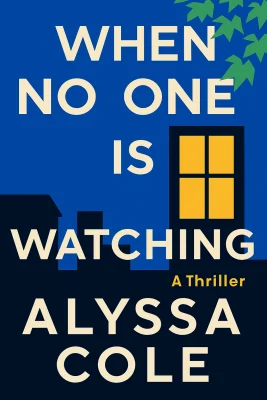
When No One Is Watching
Categories
Fiction, Audiobook, Horror, Mystery, Thriller, Adult, Book Club, Contemporary, Suspense, Mystery Thriller
Content Type
Book
Binding
Paperback
Year
2020
Publisher
William Morrow Paperbacks
Language
English
ASIN
0062982656
ISBN
0062982656
ISBN13
9780062982650
File Download
PDF | EPUB
When No One Is Watching Plot Summary
Introduction
Sydney Green returns to her childhood home in Brooklyn carrying the ashes of her failed marriage, only to find her beloved neighborhood transforming before her eyes. The tree-lined streets of Gifford Place, once filled with familiar faces and generational neighbors, now echo with construction noise and the voices of newcomers who speak of "revitalization" and "improvement." When Sydney's mother falls gravely ill, a predatory company tricks the elderly woman into signing away their family brownstone through a fraudulent debt relief scheme. But this personal tragedy is merely the surface of something far more sinister. As longtime residents mysteriously disappear and businesses suddenly change hands overnight, Sydney begins to suspect that the wave of gentrification sweeping through her community is not the organic market force it appears to be. Strange men appear at her door claiming to be utility workers. Her best friend Drea vanishes without explanation. The community garden where Sydney's mother poured her heart—and where she now rests in an unmarked grave—gets seized by a developer with a suspiciously convenient deed. What Sydney uncovers is a coordinated conspiracy reaching from pharmaceutical giants to real estate moguls, all designed to systematically strip away everything she holds dear.
Chapter 1: The Vanishing: When Neighbors Disappear Without a Trace
Sydney sits on her brownstone's front steps, nursing lukewarm coffee and watching her world dissolve. The August heat presses against her like a living thing as she counts the changes. Five families gone in less than a year. Miss Wanda's house now occupied by a family whose dog barks incessantly while the husband leers at teenage girls. The Payne house across the street bought by Kim and Theo, a couple who peer suspiciously through curtains at longtime residents. Her mother Yolanda lies dying upstairs, consumed by guilt over signing away their home to a company that promised to eliminate her tax debt. "Don't let them take my house," she whispers to Sydney with her final breaths. "Our house. No matter what happens to me." That night, Sydney wraps her mother in her favorite blanket and carries her to the community garden under cover of darkness, burying her beneath the sunflowers she loved. But the secret eats at Sydney like acid. She maintains the fiction that her mother is alive, taking calls from the predatory company and making excuses for why Yolanda cannot come to the phone. Sleep becomes impossible. Panic attacks strike without warning. The weight of deception and grief threatens to crush her as she tends her mother's garden plots, unable to tell anyone about the woman resting beneath the soil. When Theo, the white newcomer from across the street, approaches her during a neighborhood brownstone tour, Sydney bristles at his presence. He represents everything wrong with her changing community—another outsider drawn by cheap real estate, oblivious to the lives displaced by his arrival. She challenges the tour guide's sanitized version of history, demanding acknowledgment of the Black families who built this neighborhood. But Theo surprises her by listening, by asking genuine questions, by seeming to care about the stories being erased.
Chapter 2: Beneath the Surface: Uncovering Brooklyn's Hidden History
As Sydney reluctantly accepts Theo's help researching a historical walking tour of Gifford Place, she begins to see disturbing patterns in Brooklyn's past. Colonial mercenaries systematically murdered indigenous populations to claim their land. Laws prevented Black property owners from passing homes to their children. The thriving community of Weeksville was bulldozed to make way for Eastern Parkway, scattering its residents like dandelion seeds in the wind. The research reveals an endless cycle of displacement and dispossession, each generation of wealth builders finding new ways to strip resources from marginalized communities. Sydney traces the connections from Dutch slave traders to modern banking institutions, following the money as it flows through the same hands across centuries. What appears to be historical coincidence begins to feel like deliberate strategy. Theo proves surprisingly adept at uncovering corporate connections. He discovers that VerenTech Pharmaceuticals, recently awarded a massive contract to build their headquarters on the site of the old medical center, owns subsidiary companies throughout Brooklyn real estate. The same firm that tricked Sydney's mother into signing away her home operates under the VerenTech umbrella, along with banks, construction companies, and private prisons. The evidence mounts like storm clouds gathering overhead. Internal documents show VerenTech representatives describing the neighborhood's resources as "underutilized," its current residents as obstacles to be removed. The language mirrors colonial accounts from centuries earlier—the same dehumanizing rhetoric used to justify theft and violence across generations.
Chapter 3: Strange Alliances: Finding Trust in a World of Betrayal
Sydney's world contracts to a handful of people she can trust. Her best friend Drea has gone silent, not responding to increasingly frantic calls and texts. Mr. Perkins, the neighborhood's beloved unofficial mayor, supposedly left to visit family without telling anyone. Preston Jones, a college-bound teenager, gets arrested on drug charges that make no sense to anyone who knows him. Theo becomes an unlikely anchor in this sea of uncertainty. Despite Sydney's initial suspicion of him as another gentrifier, his genuine concern for the community's history and his willingness to dig into uncomfortable truths gradually earn her trust. When a fake utility worker tries to gain entry to her home, Theo appears at just the right moment to scare the intruder away. When Sydney has panic attacks, he sits with her without judgment. But trust comes hard to someone who has been systematically betrayed. Sydney's ex-husband Marcus had spent years undermining her sanity, convincing her that her perceptions were unreliable, her concerns unfounded. The pattern of gaslighting makes her question everything, especially when the evidence of conspiracy seems almost too large to believe. Is she connecting real dots or succumbing to paranoid delusion? The truth about her mother's death weighs on Sydney like a physical burden. She cannot share it with anyone, cannot seek comfort or advice, cannot properly grieve. The secret isolates her even from those who care about her, creating another layer of mistrust and fear. When Theo volunteers to help with her historical tour, she wonders if his interest is genuine or if he too is part of the web closing around her.
Chapter 4: The Garden's Secret: What Lies Buried in Plain Sight
The community garden represents everything good about Gifford Place—neighbors working together, creating beauty from neglected space, building something lasting for future generations. Sydney's mother had led the effort to transform an abandoned lot into a thriving oasis of vegetables, flowers, and gathering spaces. Now Sydney struggles to maintain what her mother built, her inexperience with gardening another painful reminder of loss. When a man with a suspicious deed appears with police backup to claim ownership of the garden, Sydney watches helplessly as years of community labor gets destroyed in minutes. Plants are ripped from the soil, benches and tool sheds piled into garbage heaps. The deed appears fraudulent, but the legal system treats it as legitimate. No amount of protest or evidence of prior ownership matters against the official paperwork. The garden's destruction serves a dual purpose for those orchestrating it. On the surface, it clears valuable real estate for development. But beneath the soil lies Sydney's mother, buried in an act of desperate love and defiance. If construction begins, if foundations are dug, the secret will be exposed and Sydney will face murder charges that will remove her from the fight entirely. Theo notices Sydney's particular anguish over the garden's loss and volunteers to investigate the site after dark. What he finds sends chills through both of them—the area where Sydney buried her mother is empty. Someone has moved the body, but who and why remain terrifyingly unclear. The discovery forces Sydney to confront the possibility that her secret has been discovered, that her mother's rest has been disturbed, that even death offers no sanctuary from those who view human beings as obstacles to profit.
Chapter 5: Underground Horrors: The True Cost of Rejuvenation
When police stage a violent raid on Gifford Place during a conveniently timed blackout, Sydney and Theo take shelter in the basement of the corner bodega. They discover hidden tunnels connecting to the old medical center, now revealed as an active VerenTech research facility despite supposedly being abandoned. The underground passages reek of antiseptic and human suffering. Behind soundproof glass, Sydney recognizes face after face of missing neighbors. Mrs. Payne, who supposedly moved away, lies strapped to a gurney with tubes in her arms. Mr. Perkins, the gentle man who looked after everyone on the block, shows signs of severe psychological trauma from whatever experiments have been conducted on him. Abdul, the friendly bodega owner who suddenly disappeared, monitors show his vital signs failing. The horror becomes personal when Sydney finds her best friend Drea's body in the servant's staircase of their own home. The phone clutched in Drea's dead hands shows an unsent message: "Luv u. Im sorrrrrrtttyyyyyyyyyyyyy." The fifty-thousand-dollar payment Sydney had discovered in Drea's belongings tells the story—targeted, pressured, and ultimately betrayed by people who saw her as disposable after she served her purpose as an informant. In the medical center's conference room, Sydney and Theo discover the scope of the conspiracy. VerenTech executives discuss their "rejuvenation" project with casual brutality, planning to clear entire neighborhoods through coordinated violence, fraudulent legal proceedings, and systematic disappearances. They speak of residents as test subjects, of homes as inventory, of communities as obstacles to be eliminated. The pharmaceutical company profits from creating addiction, then profits again from housing addicts in their private prisons while conducting illegal medical experiments.
Chapter 6: Resistance: When Elders Remember What Others Want Forgotten
Sydney's rage finally finds its target when she encounters the lawyer who strung her along for months, pretending to help recover her mother's house while working for the very company that stole it. The woman's callous dismissal of Yolanda Green as "ignorant" earns her a bullet through the brain. Sydney discovers that violence, when applied to those who deal in systematic violence, feels surprisingly natural. But she and Theo are not the only ones who have noticed the neighborhood's coordinated destruction. The elderly residents of Gifford Place have been watching, planning, remembering. Candace and her network of older neighbors have survived previous cycles of urban renewal and know the patterns by heart. They remember the strategies that worked before and have adapted them for a new generation of predators. Fitzroy arrives in the medical center's basement laboratory carrying his cricket bat, the same weapon he used to defend his home during the 1977 blackout. Gracie brings her knowledge of poisons, accumulated through five marriages that ended with convenient deaths. They move through the facility like avenging spirits, decades of experience translated into efficient violence against those who mistake age for vulnerability. The elders reveal they had relocated Sydney's mother's body to protect both the dead woman's dignity and her daughter's freedom. They had been monitoring the situation, gathering evidence, planning their own response. But Sydney's reckless courage forced their hand, accelerating a timeline they had hoped to control. "Bad things happen every minute of every day," Gracie explains. "We try to stop them when we can, how we can. We try to look out for one another."
Chapter 7: Cleansing Fire: Reclaiming What Was Almost Lost
The medical center burns against the night sky as Sydney and her neighbors watch from a safe distance. Paulette, whose seeming dementia had masked sharp intelligence, explains how transformer fires create the perfect cover for eliminating evidence. The blue-orange flames consume years of illegal research, torture chambers, and corporate documents that would have implicated officials throughout the city. VerenTech's stock price collapses overnight as news of the fire spreads. Without their secret research facility, their planned corporate headquarters becomes financially unfeasible. The gentrification pressure that seemed unstoppable suddenly reverses as the driving force behind it crumbles into ash and scandal. Other developers, spooked by the negative publicity and uncertain legal landscape, withdraw their offers and abandon their projects. But victory comes at a cost that will haunt Sydney forever. The bodies she left scattered through the medical center include researchers with children, security guards with families, professionals who convinced themselves they were just doing their jobs. The weight of necessary violence settles into her bones like radiation, changing her at a cellular level. She carries her mother's revolver everywhere now, understanding that some fights require permanent solutions. The neighborhood slowly begins to heal, but Sydney knows the cycles of displacement and resistance will continue. Capitalism demands expansion, and marginalized communities will always be targeted for extraction. The victory at Gifford Place sends ripples outward as other communities realize that coordinated resistance is possible, that the powerful are not invincible, that sometimes the only way forward is through fire.
Summary
Sydney Green learns that home is not just a place but a community worth fighting for, even when that fight demands everything you have and more than you thought you could give. Her transformation from grieving daughter to community defender illustrates how ordinary people can become extraordinary when pushed beyond their breaking points. The revelation that gentrification operates as systematic warfare rather than organic change empowers her neighbors to respond with matching force and coordination. The story's resolution offers no easy comfort or moral simplicity. Justice comes through violence, safety through vigilance, and community through shared secrets that bind survivors together in ways both beautiful and terrible. Sydney inherits not just her mother's house but her role as protector and avenger, understanding that each generation must choose whether to resist or collaborate with the forces that would erase them. In the end, the brownstones of Gifford Place stand as monuments to the truth that some things are worth any price to preserve.
Best Quote
“People bury the parts of history they don't like, pave it over like African cemeteries beneath Manhattan skyscrapers.” ― Alyssa Cole, When No One Is Watching
Review Summary
Strengths: The book's concept of linking gentrification with a thriller plot is praised as innovative. The characters, particularly Sydney, are engaging and easy to root for. The book successfully incorporates elements reminiscent of "Rear Window" and "Get Out," creating gripping moments. It is also noted for being thought-provoking, informative, and offering a unique historical perspective on Brooklyn. Weaknesses: The execution is critiqued for its jumpy pacing, especially in the final quarter. The transition from psychological tension to action is seen as less effective. The romance subplot is viewed as unnecessary and distracting from the main narrative. Overall: The reviewer appreciates Alyssa Cole's writing and is intrigued by her potential in the thriller genre, despite some execution flaws. The book is recommended for its unique take on gentrification and engaging storytelling.
About Author

Alyssa Cole
Cole delves into the intersection of diverse storytelling and complex social issues through a range of literary genres. Her books are known for their strong characterization and intricate narrative structures, which frequently incorporate themes such as espionage set during the American Civil War and contemporary romantic comedies. Her unique approach reflects her personal goal of creating characters who resemble her family and community, ensuring representation within her work.\n\nAlyssa Cole's literary repertoire includes historical romances, sci-fi narratives, and suspenseful thrillers, each carefully weaving in themes that address social issues like gentrification and dissociative identity disorder. With titles such as "An Extraordinary Union" and "When No One Is Watching," she has received significant acclaim, including the Edgar Award and the Strand Critics Award. Her method of integrating social commentary with engaging plots enriches the reading experience, making her works accessible and thought-provoking for a diverse audience.\n\nReaders are drawn to Cole's work for its dynamic storytelling and its ability to transcend traditional genre boundaries, offering more than just entertainment but also a nuanced examination of societal norms. By expanding her storytelling to include graphic novels and participating in various literary community activities, she continues to influence the contemporary genre fiction landscape. Her commitment to diversity and representation has garnered her critical acclaim and a respected position within the literary world.
Read moreDownload PDF & EPUB
To save this Black List summary for later, download the free PDF and EPUB. You can print it out, or read offline at your convenience.
When No One Is Watching
by Alyssa Cole
