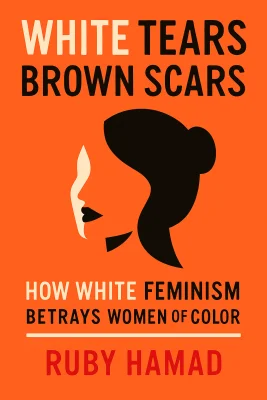
White Tears/Brown Scars
How White Feminism Betrays Women of Color
Categories
Nonfiction, History, Politics, Audiobook, Feminism, Sociology, Womens, Social Justice, Race, Anti Racist
Content Type
Book
Binding
Paperback
Year
2020
Publisher
Catapult
Language
English
ASIN
194822674X
ISBN
194822674X
ISBN13
9781948226745
File Download
PDF | EPUB
White Tears/Brown Scars Plot Summary
Introduction
The intersection of race and gender creates complex experiences that cannot be separated into distinct elements. When racism and sexism collide, women of color face unique forms of marginalization that differ fundamentally from the experiences of white women. This collision manifests most visibly in interpersonal conflicts between white women and women of color, where historical archetypes and social conditioning lead to predictable patterns of interaction. At the heart of these interactions lies the concept of strategic white womanhood—a behavior pattern where white women oscillate between their status as oppressed (based on gender) and oppressor (based on race). Through historical analysis and contemporary examples, this examination reveals how white women's distress, particularly when expressed through tears, functions as a powerful tool to silence women of color. By tracing these dynamics from colonial history to modern-day feminist movements, we gain insight into how white feminism has consistently prioritized the concerns of white, middle-class women while marginalizing women of color, whose oppression stems from both racism and sexism simultaneously.
Chapter 1: The Strategic Weaponization of White Women's Tears
When white women cry during conflicts with women of color, something transformative happens to the social dynamic. The tears are not merely expressions of emotion; they represent a power move that shifts focus from the substantive issue at hand to the white woman's emotional state. This weaponization of tears serves as a mechanism of racial control, effectively silencing women of color who attempt to address legitimate concerns or hold white women accountable. The pattern is remarkably consistent: when challenged by a woman of color, a white woman often leverages her racial privilege to invert the situation, positioning herself as the victim rather than the perpetrator. This strategic use of vulnerability draws sympathy and support toward the distressed white woman while alienating the woman of color, who suddenly appears as the aggressor regardless of the circumstances that initiated the conflict. For women of color, this creates an impossible situation—whether they approach the interaction calmly or emotionally, they are invariably perceived as threatening. Robin DiAngelo, who coined the term "white fragility," explains that white people have been socialized to expect racial comfort and have little tolerance for racial stress. When this comfort is challenged, they respond defensively: "I will lash out and do whatever I need to do to get you to stop challenging me. And if that's cry, I'll cry." These tears may be genuine, but they function effectively as a form of racial control, ensuring that white women remain unchallenged and women of color remain unheard. This dynamic is particularly evident in workplace settings, where women of color frequently find themselves unable to address conflicts with white female colleagues without becoming targets of retaliation. Many women of color report similar experiences: after attempting to address problematic behavior, they are labeled as "toxic," "bullies," or "hostile" and are often forced to apologize or risk losing their jobs. The emotional labor required to navigate these interactions is exhausting, leading many women of color to leave otherwise promising positions rather than continue battling against an unwinnable dynamic. White women's tears represent more than individual emotional responses; they are manifestations of historically constructed power dynamics that position white womanhood as inherently innocent and virtuous. This strategic deployment of vulnerability serves to maintain racial hierarchies while simultaneously denying white women's complicity in upholding those same structures of oppression.
Chapter 2: Historical Archetypes: Colonialism's Binary Trap for Women of Color
Colonialism created restrictive archetypes for women of color that continue to shape how they are perceived and treated today. These archetypes, far from being mere stereotypes, were deliberate constructions designed to justify imperial conquest and establish white supremacy as the natural order. By creating binary representations of colonized women, European powers effectively erased their humanity and agency. The hypersexualization of black women through the "Jezebel" archetype served as justification for their sexual exploitation during slavery. Black women were portrayed as lustful, animalistic creatures with insatiable sexual appetites, effectively rendering the concept of their rape impossible. This dehumanization was systematic: enslaved women were sold at markets with minimal clothing, their bodies prodded and examined to assess "breeding" potential, creating a stark contrast with the fully clothed white women who embodied sexual virtue and moral purity. As bell hooks explains, "The nakedness of the female slave served as a constant reminder of her sexual vulnerability." Similarly, Native American women were trapped in the binary of either the submissive, exotic "Princess Pocahontas" who willingly chooses white society over her own people, or the "Dumpy Squaw" – an unattractive, sexless drudge. Asian women were catalogued as either obedient "China Dolls" eager to please white men or manipulative "Dragon Ladies" using sexuality as a weapon. Arab and Middle Eastern women shifted from being portrayed as hypersexual harem inhabitants in earlier colonial discourse to oppressed, sexually repressed victims in contemporary narratives. These archetypes worked in concert to establish white women as the standard of true womanhood. Scientific racism of the nineteenth century positioned sex difference itself as a racial characteristic, claiming that only white Europeans had evolved to the point of having distinctly separate male and female dispositions. This supposed differentiation between the sexes was presented as evidence of white civilization's superiority over "primitive" societies where gender roles were supposedly less distinct. The enduring power of these archetypes is evident in contemporary media representation. When black girls like Amandla Stenberg were cast as innocent characters like Rue in "The Hunger Games," white audiences expressed outrage, unable to reconcile blackness with innocence. These representations are not merely fictional constructs; they have real consequences for women of color, who must navigate a world that sees them through these distorted lenses rather than as complex human beings.
Chapter 3: The Damsel in Distress: White Womanhood's Role in Racial Hierarchy
The construction of the white damsel in distress as an archetype worthy of protection and defense became central to upholding white supremacy in settler-colonial societies. This idealized figure of white feminine innocence and virtue was not merely a gender stereotype but a racial tool that simultaneously elevated white women above women of color while subordinating them to white men. The damsel required protection due to her inherent sexual vulnerability and moral purity—qualities explicitly denied to women of color. In colonial contexts, the specter of the white woman at risk became the justification for extreme racial violence. Southern Rhodesia's "Black Peril" panics of the early twentieth century exemplify this dynamic. White settlers, vastly outnumbered by the indigenous population, became obsessed with protecting white women from imagined sexual threats posed by black men. These moral panics led to the execution of dozens of black men and the imprisonment of hundreds more, often on minimal or fabricated evidence. The legal system vigorously protected white women who conformed to standards of sexual virtue, while dismissing claims from those who lived independently or whose sexual histories departed from Victorian norms. Similarly, in the post-Civil War American South, lynching became a ritualized form of terror justified through the protection of white womanhood. Between 1877 and 1950, over 4,000 black people were lynched, many on allegations of sexual crimes against white women. As anti-lynching crusader Ida B. Wells documented, these allegations were frequently false or exaggerated, functioning primarily as pretexts for racial violence and control. White women were active participants in this system, not merely passive beneficiaries. They attended lynchings, sometimes bringing children and picnic baskets, turning brutal murders into community spectacles. The damsel in distress archetype placed white women in a paradoxical position. While it elevated them above women of color, it simultaneously infantilized them, rendering them perpetually vulnerable and dependent on white male protection. Their protection served as justification for racial violence, creating a system where white men claimed ownership over both white women's bodies and the bodies of people of color. As black academic Hazel Carby succinctly observed, "white men used their ownership of the white female as a terrain on which to lynch the black male." This historical dynamic continues to reverberate in contemporary society. When white women call police on black people for minor or imagined infractions, they are invoking this history. The "BBQ Becky" phenomenon, where white women call authorities on black people engaged in ordinary activities, demonstrates how white women's distress still functions as a trigger for institutional control over black bodies. By positioning themselves as damsels in need of protection, white women activate a system designed to maintain racial hierarchies while denying their own complicity in perpetuating racial violence.
Chapter 4: Strategic White Womanhood: From Victim to Aggressor
Strategic white womanhood operates through a sophisticated oscillation between two positions: the innocent victim deserving protection and the righteous enforcer of social norms. This flexibility allows white women to move between positions of apparent powerlessness and positions of considerable authority, depending on what the situation demands. The genius of this strategy is how it masks power by presenting it as vulnerability, making it particularly difficult to challenge. In workplace settings, white women managers have been observed using tears when confronted by subordinates of color, effectively masking their institutional power and authority. As one woman of color described her experience: "Generally the experience is harder with people who are my superiors... the white tears come in full bloom there." By presenting themselves as emotionally wounded victims, white women in positions of authority can discipline those beneath them while appearing to be the injured party, making any challenge to their authority seem like bullying or aggression. This strategic deployment of white womanhood is particularly evident in political discourse. When television host Meghan McCain responded to criticisms of her comments about Representative Ilhan Omar, she immediately positioned herself as emotionally wounded: "I'm sorry if I'm getting emotional." Her tears shifted focus away from the substance of Omar's arguments about U.S.-Israel relations and onto McCain's emotional distress. Yet in other contexts, McCain readily switches to displays of entitled anger, slamming her hand on tables and raising her voice to assert authority. Similarly, Australian politician Pauline Hanson, known for her anti-immigrant and anti-Muslim rhetoric, adopts a speaking style characterized by a fragile quiver despite ruling her political party with what many describe as an iron fist. When caught in scandals, she presents herself as a victim of circumstance, crying on television about the "shit" she has to deal with from the men in her party—men she herself chooses to associate with. This performance of vulnerability masks her considerable political power and deflects attention from her xenophobic policy positions. This strategic alternation between vulnerability and authority is not merely manipulative behavior by individuals but a fundamental feature of how white supremacy maintains itself. White women's apparent innocence functions as the moral face of whiteness, allowing the system to present itself as virtuous and civilized even as it enacts violence against marginalized communities. By performing distress when challenged, white women ensure that their racial privilege remains unexamined while positioning those who question it as the real aggressors. The power of strategic white womanhood lies in its ability to make personal what is political. When white women respond to systemic critiques with personal distress, they effectively derail conversations about structural inequality and redirect focus to their individual feelings. This strategy ensures that whiteness itself remains unquestioned and unchallenged, with white women serving as its emotional guardians.
Chapter 5: Beyond Sisterhood: White Feminism's Complicity in Racial Oppression
The notion of universal sisterhood within feminism has persistently failed to materialize because white feminism has historically prioritized the advancement of white women, often at the expense of women of color. Rather than challenging the fundamental structures of white supremacy, white feminist movements have frequently sought only to improve white women's position within those structures, leaving racial hierarchies intact. This pattern of complicity dates back to the early suffrage movement. Despite their demands for equality, prominent white suffragettes frequently expressed racist views. Elizabeth Cady Stanton, furious that the Fifteenth Amendment would grant black men the vote before white women, asked, "What will we and our daughters suffer if these degraded black men are allowed to have the rights that would make them even worse than our Saxon fathers?" Black women activists like Frances Ellen Watkins Harper challenged white women's racism, declaring at the 1866 National Women's Rights Convention, "If there is any class of people who need to be lifted out of their airy nothings and selfishness, it is the white women of America." These critiques were largely ignored. White women's participation in colonialism extended beyond passive beneficiaries to active enforcers. In both Australia and the American West, white women played central roles in the removal of indigenous children from their families, justifying their actions through what historian Margaret D. Jacobs calls "maternal colonialism." Organizations like the Women's Christian Temperance Union appointed themselves spokespersons for indigenous mothers without seeking their input, claiming superior understanding of motherhood while disparaging indigenous maternal practices. The forced removal of children served both to "civilize" them according to white standards and to provide white families with free labor. In the American South, white women were not innocent bystanders to slavery but active participants in its maintenance. Stephanie Jones-Rogers' research reveals that white women vigorously defended their right to own human property, often taking legal action to protect their ownership of enslaved people from their husbands' interference. The diaries of female slave owners show their emotional devastation at Emancipation, with one lamenting that "slavery was done away with and my faith in God's Holy Book was terribly shaken." Contemporary white feminism continues this pattern of appropriating the language of inclusion while maintaining racial hierarchies. The concept of intersectionality, developed by Kimberlé Crenshaw to analyze how race and gender create compound forms of oppression, has been divorced from its roots in black feminist thought and transformed into a superficial identity marker. White women who identify as "intersectional feminists" often use this label as a shield against criticism rather than as a framework for addressing their own complicity in racism. This pattern persists in contemporary feminist discourse, where white feminists frequently center their own experiences as universal. During Hillary Clinton's 2016 presidential campaign, many white feminists dismissed legitimate concerns raised by Arab and Muslim women about Clinton's hawkish foreign policy positions, accusing them of dividing the feminist movement. Similarly, enthusiasm for fictional representations like "The Handmaid's Tale" often ignores that many of its dystopian elements reflect historical realities already experienced by women of color. As Aboriginal activist Celeste Liddle noted, the children of Aboriginal women are still being taken away by the state.
Chapter 6: The Pet or Threat Binary: Marginalization Tactics Against Women of Color
Women of color in predominantly white societies face a restrictive binary that limits their expression and advancement: they must either function as the non-threatening "pet" who confirms white people's self-perception as enlightened and tolerant, or they are labeled as the dangerous "threat" who must be contained and silenced. This binary operates across professional, political, and social spheres, creating a narrowly prescribed range of acceptable behavior that changes according to white comfort levels. In professional settings, women of color report being expected to perform emotional labor that their white colleagues are not. They must appear consistently pleasant, helpful, and grateful for opportunities, while carefully monitoring their tone and expression to avoid triggering white discomfort. As Billie, a Filipina-Anglo Australian community services worker, explained, she feels obligated to make her male colleagues comfortable through unfailing politeness and immediate responsiveness to their needs. If she fails to comply with this unspoken expectation—by not smiling enough or being insufficiently talkative—she is quickly labeled as aggressive and unfriendly, transforming "from being the helper to the aggressor." This dynamic is particularly pronounced in the nonprofit and social impact sectors, where white privilege often masquerades as humanitarian concern. Kristina Delgado, who worked in humanitarian NGOs serving Syrian and Palestinian refugees, described how a white female founder with no previous experience tokenized her to gain legitimacy with the community. When Kristina challenged the founder's approach of imposing Western solutions rather than empowering the community to identify their own needs, the founder "cried, called me a racist monster for calling her out, and left the room." This reaction transformed a legitimate critique into an attack on white innocence. The spirituality and wellness scene provides another revealing example of this binary. When women of color point out cultural appropriation or question white-dominated practices, they are frequently met with defensive reactions from white women who position themselves as victims. Sharyn Holmes, who writes about cultural appropriation in the wellness industry, found her social media posts reported and removed after white women claimed they were racist toward them. She observes that white women "infantilize themselves. They take on these childlike qualities of 'Oh, I'm being hurt by the big bad wolf' to mask their manipulation and their emotional and psychological abuse of women of color." The media industry similarly exploits women of color while limiting their advancement. Many women of color report being passed over for promotion in favor of less qualified white colleagues. Publications actively seek out content from women of color, particularly personal narratives of suffering or controversial "hot takes" designed to generate clicks, but provide little support when these pieces attract backlash. This creates a cycle where women of color take significant personal and professional risks to highlight racial inequities, only to be blamed for the resulting controversy. This pet/threat binary serves to maintain white dominance while creating the illusion of inclusion. Women of color are welcome as long as they remain in their assigned place, providing diversity without challenging the underlying power structure. The moment they step out of this role—by offering critique, asserting boundaries, or simply failing to perform the expected emotional labor—they are transformed from pets into threats and subjected to marginalization, gaslighting, and often removal from white spaces.
Chapter 7: Colourism and Passing: The Privilege and Peril of Proximity to Whiteness
Proximity to whiteness—whether through lighter skin, European features, or cultural assimilation—creates complex dynamics of privilege and vulnerability for people of color. Colourism, the discrimination against darker-skinned individuals within communities of color, demonstrates how white supremacy operates even in the absence of white people, creating hierarchies based on proximity to Western beauty standards and cultural norms. The global skin-whitening industry, worth approximately $4.5 billion in 2017 and projected to reach $8.5 billion by 2024, capitalizes on these hierarchies. In India, where 70 percent of both male and female respondents in one study expressed a preference for fair-skinned partners, skin-lightening products like Fair & Lovely are marketed as transformative not just of appearance but of life prospects. Advertisements suggest that lighter skin leads to better jobs, happier marriages, and more beautiful children. This preference for lighter skin is not rooted in pre-colonial caste hierarchies, as is often assumed, but emerged from colonization when European powers positioned themselves as superior and intelligent while characterizing darker-skinned Indians as inferior and primitive. The privilege of passing—being able to move through white society without immediately being identified as a person of color—comes with significant psychological costs. Arab-American comedian Dean Obeidallah captured this experience after 9/11: "On September 10th I went to bed a white guy; September 11th, I woke up an Arab." This demonstrates the conditional nature of whiteness; it can be extended or revoked based on changing social and political circumstances. People who can "pass" often find themselves caught between worlds, neither fully accepted by white society nor fully connected to their communities of origin. For mixed-race individuals, this liminality can be particularly challenging. In colonial contexts like Southern Rhodesia, "coloured" people of mixed European and African ancestry faced suspicion from both white and black communities. White society was so concerned about racial "passing" that white families known to associate with coloureds found their children barred from white schools. Today, Indigenous Australians report experiencing colourism from both non-Indigenous and Indigenous people who judge their Indigeneity based on skin color rather than heritage and community connection. The anti-blackness that drives colourism is not limited to white societies but exists across global communities of color. The Arab world, despite its own history of colonization, perpetuates anti-black racism, with the pejorative term for black person—abeed—being the same word used for slave. In Latin America, the complex racial categorizations established during Spanish colonization created hierarchies that privileged those with European ancestry. These systems demonstrate how whiteness functions as an ideology that can be internalized and perpetuated even by those who are themselves marginalized by it. The strategy of appealing to whiteness through assimilation often comes at the cost of solidarity with other marginalized groups. When immigrant communities distance themselves from Indigenous populations to gain white acceptance, they reinforce the racial hierarchies that ultimately harm all people of color. The conditional inclusion offered to those who can "pass" or who appear to assimilate is ultimately fragile, as it can be revoked whenever their racial difference becomes politically useful or threatening to white dominance. This complex interplay of privilege and vulnerability reveals how whiteness operates not merely as a skin color but as a system that rewards proximity to white aesthetic and cultural norms while maintaining the ultimate power to define who belongs and who does not.
Summary
The collision of racism and sexism creates a uniquely challenging landscape for women of color, who face marginalization through historically constructed archetypes that either hypersexualize or desexualize them. White womanhood, positioned as the standard of true femininity through colonial narratives, continues to function as both a shield and a weapon in maintaining racial hierarchies. When white women weaponize their tears and vulnerability, they participate in a system that silences women of color and maintains white supremacy, even as they themselves experience gender-based oppression. Liberation requires dismantling not only overt forms of discrimination but also confronting the subtle ways white feminism has prioritized advancement within existing power structures rather than challenging those structures entirely. For women of color, understanding these dynamics offers a framework for contextualizing personal experiences of marginalization and building solidarity across differences. For white women, it presents an opportunity to examine their complicity in racial oppression and make the crucial choice between continuing to uphold white supremacy or joining with women of color in the pursuit of genuine liberation for all. The path forward depends on recognizing that tears can function as weapons, that representation without power is merely tokenism, and that true feminism must challenge racial hierarchies as vigorously as it challenges patriarchy.
Best Quote
“White women can oscillate between their gender and their race, between being the oppressed and the oppressor. Women of color are never permitted to exist outside of these constraints: we are both women and people of color and we are always seen and treated as such.” ― Ruby Hamad, White Tears/Brown Scars: How White Feminism Betrays Women of Color
Review Summary
Strengths: The book is praised for its insightful, concise, and comprehensive discussion on race and feminism, particularly focusing on Indigenous and Middle Eastern women from a non-US perspective. It effectively blends historical context with modern examples and highlights the dual role of white women's vulnerability. The research on Indigenous and Middle Eastern women is notably strong, with numerous examples and compelling arguments. Weaknesses: Some chapters lack consistency and depth compared to others. The book's exploration of racial stereotypes is uneven, and certain comparisons, such as the Dragon Lady stereotype to the "To All the Boys" franchise, are seen as a stretch. The historical focus in some chapters may not align with all readers' expectations. Overall: The reader appreciates the book's existence and its potential to inform discussions with white feminists, though they find it not entirely groundbreaking. The book is solid, with valuable insights, particularly on Indigenous and Middle Eastern women, but could benefit from more focused content.
About Author

Ruby Hamad
Murakami interrogates the complexities of human nature and the surreal dimensions of reality through a blend of enigmatic narratives and rich symbolism. His works often delve into themes of isolation, identity, and the subconscious, offering readers a deep exploration of inner worlds. Murakami's method involves weaving dreamlike sequences with mundane realities, therefore creating a unique literary tapestry that challenges readers to reconsider the boundaries between the ordinary and the fantastical.\n\nReaders drawn to Murakami's books gain an appreciation for the depth of human experience, as his narratives often encourage introspection and self-discovery. For instance, his intricate plots and multidimensional characters invite readers to reflect on their own lives, questioning the nature of reality and their place within it. While his stories cater to a wide audience, they particularly resonate with those seeking to understand the intricacies of the mind and the subtleties of existence.\n\nAmong Murakami's notable titles, his ability to craft vivid, immersive worlds sets his work apart, influencing contemporary literature and inspiring a global readership. The author's dedication to exploring profound themes through accessible storytelling ensures his bio remains a source of insight and inspiration for readers and writers alike.
Read moreDownload PDF & EPUB
To save this Black List summary for later, download the free PDF and EPUB. You can print it out, or read offline at your convenience.
White Tears/Brown Scars
by Ruby Hamad
