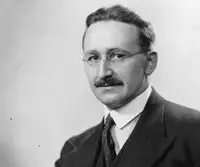
Friedrich A. Hayek
Hayek interrogates the intricate balance between economic freedom and government intervention, fundamentally questioning how central planning can impede individual liberty. His exploration into the dynamics of economic systems is deeply informed by his belief that overreliance on government control can lead to a path of diminishing personal freedoms. By presenting this argument in "The Road to Serfdom," he captured the essence of wartime anxieties about totalitarianism, which remains relevant for modern discussions about the role of the state versus individual rights.\n\nEmphasizing themes of spontaneous order and decentralized knowledge, Hayek's methods challenge the prevailing orthodoxy that endorses central economic planning. His arguments are constructed with a blend of economic analysis and philosophical insights, as seen in works like "The Constitution of Liberty" and "The Sensory Order." By asserting that societal progress is best achieved when individuals are free to act within a framework of laws rather than being directed by central authorities, Hayek offers a compelling case for classical liberalism. Meanwhile, his critique of social justice as an unrealistic pursuit further underscores his dedication to individual freedoms.\n\nFor readers seeking to understand the philosophical underpinnings of free-market economics and its implications for societal structures, Hayek's work is indispensable. His contributions resonate with economists, political theorists, and those engaged in policy-making, providing a robust foundation for examining the consequences of government intervention. Moreover, his recognition with the Nobel Memorial Prize in Economic Sciences highlights the enduring impact of his ideas on contemporary economic and political thought. Through his books, Hayek remains a pivotal figure whose ideas continue to shape debates about the nature of freedom and the limits of government authority.
Books by Friedrich A. Hayek

The Constitution of Liberty
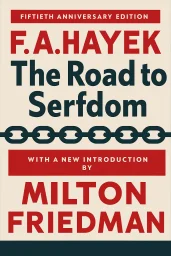
The Road to Serfdom
Popular Authors

Robin Sharma
5 books

James Clear
2 books

Sarah Knight
4 books

Daniel Goleman
9 books

Stanley D. Rosenberg
1 books

Anthony Scaramucci
1 books

Niall Kishtainy
1 books

J. Richard Gott
1 books

Trevor Moawad
2 books

Mark McNeilly
1 books

Lara Love Hardin
4 books
