
Jack Lindsay
Lindsay synthesizes historical depth and political insight, crafting works that bridge the past with contemporary socio-political critique. His writing purposefully engages with themes such as Marxism, class struggles, and classical antiquity, reflecting a lifelong commitment to revolutionary politics. As the eldest son of artist Norman Lindsay, Jack Lindsay's creative path was initially marked by poetry, including his early book "Fauns and Ladies". His move to the UK in 1926 expanded his influence, where he became a prolific author recognized for his extensive literary output, marked by historical novels and scholarly biographies. A committed communist from 1936, his political convictions profoundly shaped his works, integrating history, mythology, and psychoanalysis into a unique literary style.\n\nLindsay's bio highlights a multifaceted career that spans poetry, novels, and translations, making his work particularly significant for readers interested in the intersection of history and political ideology. His psychoanalytic study "John Bunyan, Maker of Myths" exemplifies his ability to explore complex psychological and societal themes. Meanwhile, his translation of classical texts and historical novels like "1649: A Novel of a Year" contribute to a richer understanding of revolutionary periods and classical antiquity. Therefore, his books offer valuable insights for those intrigued by the nuanced relationships between past events and modern ideologies, especially within the realm of Marxist thought. The award of the Australian Literary Society’s gold medal in 1960 underscores his impact, honoring his diverse contributions to literature and culture.
Books by Jack Lindsay
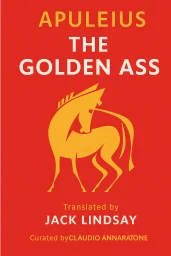
The Golden Ass
Popular Authors

Robin Sharma
5 books

James Clear
2 books

Sarah Knight
4 books

Daniel Goleman
9 books
Stanley D. Rosenberg
1 books

Anthony Scaramucci
1 books

Niall Kishtainy
1 books

J. Richard Gott
1 books

Trevor Moawad
2 books

Mark McNeilly
1 books

Lara Love Hardin
4 books
