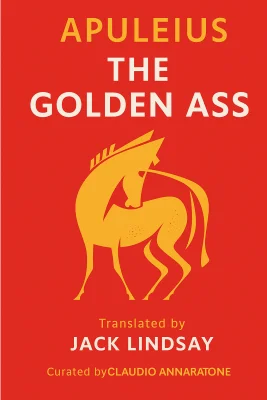
The Golden Ass
Categories
Fiction, Classics, Fantasy, Literature, Mythology, Humor, Novels, Ancient History, Ancient, Roman
Content Type
Book
Binding
Paperback
Year
2005
Publisher
Indiana University Press
Language
English
ASIN
0253200369
ISBN
0253200369
ISBN13
9780253200365
File Download
PDF | EPUB
The Golden Ass Plot Summary
Introduction
# The Golden Ass: A Journey from Folly to Divine Grace The oil lamp flickered as Lucius pressed his eye to the crack in the door, watching the naked sorceress anoint her pale skin with mysterious unguents. Pamphile's arms began to sprout feathers, her nose hardened into a curved beak, and within moments she had transformed into an owl, soaring through the window into the Thessalian night. His heart hammered against his ribs. This was real magic, not the parlor tricks he had expected to find in this land of witches and wonder. Young, wealthy, and fatally curious, Lucius had come to Thessaly seeking forbidden knowledge. Now, having witnessed true transformation, his desire burned beyond reason. He would steal that enchanted ointment and experience the miracle himself. But magic demands payment in coin far more precious than gold. What began as a quest for supernatural thrills would become a harrowing descent through the darkest corners of human nature, where an ass's hide would shield him from horrors while teaching him the true meaning of divine mercy.
Chapter 1: The Seeker's Arrival: Curiosity Awakened in the Land of Magic
The dusty road to Hypata stretched before Lucius like an invitation written in ancient stone. His white horse picked its way carefully through the mountain passes while fellow travelers shared tales that made his blood quicken with anticipation. One story seized his imagination completely. A merchant named Aristomenes spoke of his friend Socrates, murdered by the witch Meroe who slit his throat, removed his heart, and sealed the wound with a sponge. Only when the walking corpse bent to drink from a stream did the sponge fall out, his borrowed life finally ending as it should have days before. Lucius arrived in Hypata with gold in his purse and hunger in his soul. His host Milo proved to be a notorious miser whose house stood like a fortress against generosity, but the young Roman's attention was already captured by something far more dangerous. Photis, the household's only servant, moved through the cramped quarters with knowing grace. Her dark eyes sparkled with secrets as she served their meager supper, and when she smiled, Lucius felt the first stirrings of an appetite that would prove his undoing. The warnings came swiftly from Byrrhena, a family friend who welcomed him with genuine warmth but spoke in hushed tones of Milo's wife Pamphile. The woman was a sorceress of considerable power, she whispered, capable of pulling down the moon and turning men into beasts. But Lucius heard only what he wished to hear. Here was the magic he had traveled so far to witness, and sweet Photis would be his key to unlocking its secrets. That very night, returning from dinner, Lucius encountered three shadowy figures attacking his lodging. Drawing his sword, he fought with desperate courage, striking down all three assailants. Their bodies lay motionless in the moonlight, and he retreated to his room, certain he had saved the household from robbery and murder. The taste of victory was sweet on his tongue, but morning would bring a different flavor entirely.
Chapter 2: The Fateful Transformation: From Man to Beast Through Forbidden Arts
Dawn brought not praise but prosecution. Magistrates dragged Lucius before a jeering crowd in the theater, accusing him of triple murder. The entire city seemed to mock his plight as prosecutors demanded his blood while he pleaded innocence, claiming he had acted only to defend his host's property. When the supposed victims' bodies were unveiled, three deflated wineskins lay before the assembly, slashed exactly where he remembered striking his attackers. The crowd erupted in hysterical laughter. The entire affair had been an elaborate joke for the Festival of Laughter, with Lucius as the unwitting star. Humiliation burned in his chest like acid as magistrates offered him honors for his participation. That night, Photis revealed the truth as they lay entwined in passion. Her mistress had attempted to enchant a young lover using hair clippings, but Photis had mistakenly gathered goat hair instead. The spell had animated three goatskin bags, which Lucius had destroyed in his confusion. The revelation only intensified his hunger to witness real magic. His opportunity came when Photis warned him that Pamphile planned to transform herself into an owl. Hidden behind a door, Lucius watched the witch anoint herself with mysterious oils. Before his amazed eyes, feathers sprouted from her arms, her nose hardened into a beak, and she took flight through the window. Mad with desire to experience such power, he begged Photis for the same ointment. The stolen unguent felt warm between his eager fingers as he smeared it across his skin, mimicking Pamphile's ritual. He flapped his arms expectantly, waiting for feathers to sprout. Instead, his body began changing in ways that filled him with mounting horror. His hair grew coarse and shaggy, his skin hardened into thick hide, his fingers and toes merged into hooves. Where he had expected the gift of flight, he found himself trapped in the body of an ass. Photis screamed when she saw what he had become, realizing she had grabbed the wrong jar. The antidote was simple roses, but none bloomed in the winter darkness.
Chapter 3: Captive Among Thieves: Witnessing Cruelty Through Bestial Eyes
Robbers burst through the doors like a tide of violence, their torches turning night into a hellscape of dancing shadows and gleaming steel. They moved with practiced efficiency, loading Lucius and the other animals with stolen treasure before driving them from the ransacked house into the mountain wilderness. His back broke under the weight of Milo's gold while his captors showed no mercy to their newest beast of burden. Their mountain stronghold perched like an eagle's nest among jagged peaks, surrounded by treacherous ravines. An ancient crone served as their housekeeper, cursing them for their lateness while preparing their feast. Lucius watched from the shadows as they celebrated their successful raid, boasting of exploits and mourning fallen comrades. The robbers' tales painted a world where courage meant nothing and cunning everything. Soon the bandits returned with a new prize. Charite, a young noblewoman torn from her wedding ceremony, huddled in the corner like a broken bird. Her beauty shone even through her tears, and her noble bearing spoke of a life of privilege now brutally ended. The old crone attempted to comfort her with an ancient tale of love and betrayal, of Princess Psyche whose beauty rivaled Venus herself. As night deepened around the robbers' lair, the story unfolded like a flower blooming in darkness. Psyche's trials, her jealous sisters' manipulations, her forbidden glimpse of Cupid's true form, and her desperate quests to win back her divine husband mirrored themes of curiosity punished and redemption earned through suffering. Even Lucius, trapped in his bestial form, found himself drawn into the tale's magic, not yet understanding that it was a mirror held up to his own fate.
Chapter 4: The Endless Servitude: Passed from Master to Master in Degradation
A mysterious newcomer arrived at the cave, claiming to be Haemus, a notorious Thracian bandit. Tall and powerful despite his ragged disguise, he spun tales of criminal exploits and offered gold to join their brotherhood. The robbers welcomed him as their new leader, unaware that he was actually Tlepolemus, Charite's betrothed, come to rescue his bride. The false Haemus drugged the entire band during a celebration feast. As the robbers collapsed into unconsciousness, he revealed his true identity to Charite and loaded her onto Lucius's back. Together they fled through the night toward the city, where crowds gathered to witness their miraculous return. Charite proclaimed Lucius her savior and promised him a life of ease, but her gratitude proved as fleeting as morning mist. Sent to pasture with the horses, Lucius found himself attacked viciously by the stallions who saw the ass as a threat to their bloodline. Battered and bleeding, he was reassigned to a mill where his true sufferings began. Blindfolded and harnessed to massive grinding stones, he walked endless circles while his hooves wore grooves in the stone floor. His fellow beasts were broken creatures, their bodies scarred and emaciated, their spirits crushed by relentless labor. The miller's wife embodied every vice Lucius had witnessed in human form. Cruel and lustful, she persecuted him with particular venom while entertaining a young lover behind her husband's back. Through his enhanced hearing, Lucius discovered her adultery and watched the frantic scramble to hide the paramour when the miller returned unexpectedly. When the husband's discovery led to brutal retribution, the woman's revenge proved more terrible than her crimes, arranging his death through supernatural means.
Chapter 5: The Depths of Shame: Approaching the Ultimate Humiliation
After the miller's mysterious death, Lucius passed from owner to owner like a cursed object. The priests of the Syrian goddess worked him mercilessly while practicing religious fraud, using him to carry their sacred image while they begged for donations and performed fake miracles. When their crimes were discovered, he was sold to a market gardener who worked him beyond endurance while feeding him nothing but thorns and thistles. His final owner, a wealthy Corinthian named Thiasus, discovered that Lucius possessed almost human intelligence. The ass could eat delicate pastries, drink wine, and even respond to music. This discovery led to Lucius being trained as a circus performer, his unnatural abilities drawing crowds who marveled at the educated beast. The applause of the masses rang hollow in his ears, for he knew himself to be nothing more than a freak show. But worse humiliations awaited. A wealthy woman of Corinth, inflamed by unnatural lust, paid handsomely for a night of degrading passion with the performing ass. The encounter filled Lucius with such revulsion that he could barely comprehend how far he had fallen from his former life as a respected young Roman. Yet even this degradation paled beside what Thiasus had planned for his grand finale. The condemned woman brought before Lucius was a creature of such evil that her crimes defied belief. She had murdered her husband, stepson, daughter, and countless others with poison, weaving a web of death that finally brought her before the governor's judgment. Now she was to be Lucius's bride in a grotesque public spectacle, their coupling to be followed by her execution at the claws of wild beasts. As the day of the games approached, death began to appear preferable to the shame that awaited him.
Chapter 6: Divine Redemption: Isis's Mercy and the Soul's Restoration
The full moon hung brilliant over the harbor at Cenchreae as Lucius, having fled the amphitheater in desperation, collapsed on the sandy shore. Alone beneath the star-scattered sky, he felt something stir within him that he had not experienced in all his months of suffering. The waves lapped gently at the beach, and in their rhythm he heard something like a divine whisper calling him to prayer. Seven times he plunged his head beneath the salt water, purifying himself as ancient wisdom prescribed. Then he lifted his voice in supplication to the greatest of all goddesses, calling upon her by every name he knew. Ceres, Venus, Diana, Proserpine, he begged her to look with mercy upon his plight and restore him to human form. If he had offended some divine power beyond forgiveness, then let him die rather than continue in bestial shame. Sleep brought a vision that would transform not just his body but his very soul. The goddess rose from the sea before him, her beauty terrible and wonderful beyond mortal comprehension. Her hair flowed like dark water, crowned with flowers and the crescent moon. Her robes shimmered with starlight, and in her hands she carried the sistrum and sacred pitcher that marked her as Isis, Queen of Heaven, Mother of the Universe. Her voice carried the authority of creation itself. She was the one goddess behind all goddesses, worshipped throughout the world under many names but known in her truest form only to the Egyptians. She had heard his prayers and would grant his deliverance, but at a price. The remainder of his life must be dedicated to her service. Tomorrow, during her sacred festival, her priest would carry roses in the procession. Lucius must approach without fear, take the flowers in his mouth, and his transformation would be complete. The Festival of Isis burst upon Cenchreae like a tide of joy and color. At the heart of the procession walked the high priest Mithras, carrying a garland of fresh roses exactly as the goddess had promised. Lucius felt no fear as he approached through the parting crowd. The priest held out the roses without hesitation, and as Lucius took them in his mouth, the transformation began. His coarse hair fell away like a discarded cloak, his muzzle shortened, his hooves split into fingers and toes. In moments he stood naked and human before the amazed multitude. But restoration to human form was only the beginning. The priest clothed him and spoke words that burned into his memory. Fortune had tested him with suffering, but now he was under the protection of divine Providence. The initiation that followed transformed his very soul. Led into the innermost sanctuary, he underwent mysteries that brought him face to face with death itself, traversing all elements and seeing the sun shine at midnight. When he emerged at dawn, crowned with palm leaves like rays of the sun, he was no longer the foolish young man who had once sought magic in Thessaly. He had become a servant of the divine, a living testament to redemption through suffering and grace.
Summary
The transformation of Lucius from curious young Roman to beast of burden and finally to initiated priest represents more than magical metamorphosis. His journey through the darkest corners of human experience, witnessing murder, betrayal, and every form of cruelty mortals can devise, strips away the comfortable illusions that once defined his existence. Only when he has lost everything, including his very humanity, can he begin to understand what true wisdom means. The roses that restore his human form are not merely magical flowers, but symbols of divine grace offered to those who have learned, through suffering, to seek something greater than themselves. The goddess Isis, rising from the sea in terrible beauty, offers not just physical restoration but spiritual rebirth. Lucius's final initiations represent the culmination of a journey that began with idle curiosity and ended with profound understanding. He has learned that true pleasure lies not in gratifying base desires, but in service to the divine. His story stands as testament to the possibility of redemption, even for those who have fallen furthest from grace, and a reminder that sometimes we must lose ourselves completely before we can discover who we were truly meant to be.
Best Quote
“I besprinkled their faces with my liquid dung and forced them to leave off.” ― Apuleius, The Golden Ass
Review Summary
Strengths: The review highlights the book's rich and diverse content, including elements of comedy, drama, and fantasy. It praises the novel's ability to weave multiple tales with a sense of unity through its overarching theme of personal transformation and spiritual regeneration. The vivid depiction of Roman excess and the picaresque narrative style are also noted as strengths. Overall: The review conveys a positive sentiment, appreciating the novel's complexity and entertainment value. It suggests that "The Golden Ass" is a captivating read for those interested in a blend of humor, adventure, and philosophical depth, making it a recommended choice for readers seeking a multifaceted literary experience.
About Author

Apuleius
Apuleius interrogates the nature of transformation through his diverse literary and philosophical works, aiming to blend entertainment with profound insights. Best known for his novel "The Golden Ass," Apuleius explores themes of metamorphosis, using the narrative of a man turned into a donkey as a metaphor for personal change and redemption. His writings are marked by an eclectic style that crosses literary genres and employs a grandiose vocabulary, which reflects his deep intellectual roots in Platonic philosophy and mastery of various disciplines such as natural history, astronomy, and forensic oratory.\n\nAs a multifaceted scholar and philosopher, Apuleius extends his narrative techniques beyond fiction into poetic, philosophical, and scientific domains. This versatility benefits readers seeking a rich tapestry of literary devices and thematic depth, inviting them to engage with both the entertainment value and the philosophical underpinnings of his work. Apuleius's intricate weaving of classical references and neologisms provides a challenging yet rewarding experience, encouraging a deeper appreciation of Latin prose. His influence on Western literature endures, particularly in establishing a new direction for prose romance that combines stylistic experimentation with philosophical discourse. This bio underscores his role as a pivotal figure in literary history, whose methods and themes continue to resonate.
Read moreDownload PDF & EPUB
To save this Black List summary for later, download the free PDF and EPUB. You can print it out, or read offline at your convenience.
The Golden Ass
by Apuleius
