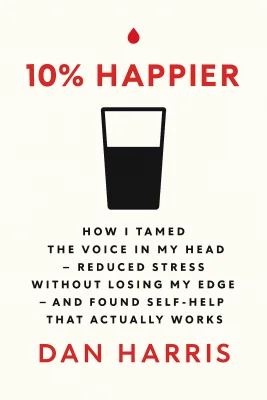
10% Happier
Categories
Nonfiction, Self Help, Psychology, Philosophy, Health, Memoir, Spirituality, Audiobook, Personal Development, Meditation
Content Type
Book
Binding
Hardcover
Year
2014
Publisher
It Books
Language
English
ASIN
0062265423
ISBN
0062265423
ISBN13
9780062265425
File Download
PDF | EPUB
10% Happier Plot Summary
Introduction
Picture a news anchor, sitting at a familiar desk, the cameras rolling as millions of viewers tune in for their morning update. Everything appears normal until suddenly, inexplicably, panic strikes. The carefully constructed professional facade crumbles as anxiety floods through every cell, leaving the anchor gasping for breath, stumbling over words, and desperately seeking an escape from what should have been routine. This moment of public vulnerability would become the catalyst for an extraordinary transformation. This isn't just another story about career success or professional achievement. It's an intimate exploration of what happens when someone accustomed to projecting confidence and control discovers that their greatest enemy isn't external criticism or professional competition, but the relentless voice inside their own head. Through a series of unexpected encounters with meditation teachers, Buddhist philosophy, and the emerging science of mindfulness, one person's journey reveals how ancient wisdom can address thoroughly modern problems. What unfolds is a practical roadmap for anyone seeking to quiet their inner critic, reduce stress without sacrificing ambition, and find genuine happiness in an increasingly chaotic world.
Chapter 1: The On-Air Meltdown That Changed Everything
The date was June 7, 2004, and according to Nielsen ratings, 5.019 million people witnessed what would become the most humiliating moment of a promising television career. Sitting at the Good Morning America news desk, filling in for a colleague, everything started normally. The familiar routine of reading news updates had been mastered through years of practice. But then, without warning, terror struck like lightning. The panic began as a stabbing sensation in the brain, followed by a paralytic wave that rolled up through the shoulders and melted down the face. The universe seemed to collapse inward as the heart began galloping and the mouth dried completely. With four more stories left to read and nowhere to hide, the situation became a battle against an internal hurricane while millions watched. Words became impossible to form properly, leading to embarrassing stumbles like referring to "cancer production" instead of cancer prevention. The only escape was an unprecedented move, cutting the newscast short and fleeing to the safety of a commercial break. This wasn't an isolated incident but rather the culmination of years of mindless behavior driven by ambition and adrenaline addiction. The path to this moment had been paved with war zone reporting, where the thrill of danger became intoxicating, followed by attempts to replace that high with drugs when regular life felt insufficient. The panic attack was simply the final bill coming due for years of ignoring the body's warning signals and pushing beyond sustainable limits. What seemed like a career-ending catastrophe would eventually reveal itself as the beginning of a profound awakening. Sometimes our greatest breakdowns become breakthroughs, forcing us to confront the unsustainable patterns that have been driving us toward destruction, opening doorways to wisdom we never knew we needed.
Chapter 2: Searching for Solutions Beyond Self-Help
The search for answers led through the trendy landscape of modern self-help, where promises of transformation came wrapped in expensive seminars and miraculous claims. From The Secret's law of attraction to James Arthur Ray's deadly sweat lodge ceremonies, the self-help industry revealed itself as a carnival of exploitation preying on human desperation. Gurus promised instant happiness and unlimited wealth through positive thinking alone, while their own lives often reflected the opposite of their teachings. One particularly revealing encounter involved Joe Vitale, a former homeless man turned multimillionaire self-help guru, who offered "Rolls-Royce Phantom Mastermind" sessions for thousands of dollars. When pressed about whether positive thinking alone could manifest desires like diamond necklaces, Vitale quickly backpedaled, admitting that action was also required. This revealed the fundamental emptiness at the heart of magical thinking, where complex life challenges were reduced to simple formulas that inevitably failed when confronted with reality. The tragic end of James Arthur Ray's story provided the starkest illustration of the self-help world's dangers. His sweat lodge ceremony, designed as a "rebirthing exercise" costing participants nearly ten thousand dollars each, resulted in three deaths. When arrested, the man who had taught others to treat the universe like Aladdin's lamp couldn't even afford his own bail. Investigation revealed that his apparently supernatural health and vitality came not from spiritual practices but from a suitcase full of diet supplements and prescribed steroids. The journey through self-help's wasteland served an important purpose, revealing what genuine wisdom was not. True transformation couldn't be purchased in weekend seminars or achieved through wishful thinking alone. The search would need to go deeper, toward practices with millennia of testing behind them rather than the latest marketing-driven miracle cure.
Chapter 3: Discovering Meditation and Buddhist Wisdom
The introduction to Buddhism came through an unexpected source, a friend's casual book recommendation about a psychiatrist who combined Western psychology with Eastern wisdom. Dr. Mark Epstein's writings revealed that many of the insights attributed to modern self-help gurus had actually been discovered by the Buddha 2,500 years earlier. Here was a systematic exploration of the mind's habitual patterns, complete with practical methods for working with them, free from the grandiose promises and commercial exploitation of contemporary alternatives. Buddhism offered a radically different perspective on human suffering, suggesting that our constant dissatisfaction stemmed from clinging to things that inevitably change. The Buddha's diagnosis was precise: we suffer not because life is inherently painful, but because we resist the fundamental truth of impermanence. Every pleasure fades, every achievement becomes routine, every relationship eventually ends, yet we continue believing that the next acquisition or accomplishment will finally provide lasting satisfaction. This ancient framework provided startling clarity about modern anxieties. The career worries, the comparing mind that constantly measured success against others, the restless searching for the next goal, all revealed themselves as variations on timeless human patterns. The Buddha had mapped these territories of the psyche with scientific precision, offering not just diagnosis but practical remedies through meditation and mindfulness practices. The psychiatrist Mark Epstein became a crucial bridge between worlds, demonstrating that one could embrace Buddhist insights without abandoning rationality or professional effectiveness. His calm confidence and easy humor suggested that inner peace and worldly competence weren't mutually exclusive, pointing toward a middle path between spiritual bypassing and unconscious drivenness that would prove essential for navigating modern life.
Chapter 4: The Silent Retreat and Mindfulness Breakthrough
Ten days of silence in a meditation center initially felt like the worst possible way to spend a vacation. Surrounded by earnest practitioners moving in slow motion, following rigid schedules of sitting and walking meditation, every instinct screamed for escape. The mind, accustomed to constant stimulation and distraction, rebelled against the enforced stillness with waves of boredom, physical pain, and desperate fantasies of fleeing back to familiar comforts. For the first several days, meditation felt like torture. The simple instruction to watch the breath became an impossible task as thoughts cascaded uncontrollably, the body screamed with discomfort, and time stretched into seeming eternity. Each session brought fresh humiliation as concentration lasted mere seconds before dissolving into mental chaos. The retreat's silence amplified every internal struggle, making it impossible to escape into conversation or activity when emotions became overwhelming. Then, unexpectedly, everything shifted. On the fifth day, sitting quietly on a dormitory balcony, something clicked into place. Instead of fighting the constant stream of mental activity, observation became effortless and natural. Thoughts, sensations, and emotions arose and passed away like weather patterns, witnessed with clear awareness but without getting swept away by their content. This was what the teachers called "choiceless awareness," a state where mindfulness flowed spontaneously from moment to moment. The breakthrough continued during compassion meditation, where attempting to send loving-kindness to family members triggered an unexpected flood of tears. Not tears of sadness, but of recognition, as if seeing clearly for the first time how much love had always been present beneath the surface of busy, distracted daily life. This glimpse of open-hearted awareness suggested possibilities that no amount of reading could have conveyed, proving that some discoveries can only be made through direct experience.
Chapter 5: Corporate Zen: Balancing Ambition with Inner Peace
Returning to the competitive world of television news with a meditation practice created unexpected challenges. Colleagues began noticing changes, commenting on increased calmness and decreased reactivity, but some interpreted these qualities as weakness in an environment that rewarded aggressive self-promotion. The question became how to maintain professional effectiveness while embodying mindfulness principles, walking the razor's edge between compassionate awareness and strategic career management. The solution emerged as "hiding the Zen," learning to be inwardly peaceful while outwardly displaying the energy and assertiveness that professional success demanded. This wasn't about being dishonest or manipulative, but rather about skillfully adapting to different contexts without abandoning core principles. Meditation provided a stable foundation from which to engage with workplace politics and competitive pressures without being controlled by them. A crucial insight came from the concept of "nonattachment to results," working diligently toward goals while releasing obsessive worry about outcomes beyond one's control. This paradoxical approach actually enhanced performance by eliminating the energy drain of constant anxiety and allowing complete focus on factors that could be influenced. Rather than making one passive, this perspective enabled more effective action by removing the paralysis of overthinking and the distraction of premature celebration or devastation. The integration of contemplative wisdom with professional ambition required constant calibration, learning when to assert and when to yield, when to compete and when to collaborate. The practice became an ongoing experiment in conscious living, demonstrating that spiritual principles could enhance rather than diminish worldly effectiveness when applied with intelligence and skill.
Chapter 6: The Science of Being 10% Happier
Modern neuroscience began validating what contemplatives had known for centuries, providing concrete evidence that meditation literally reshapes the brain. MRI studies showed that regular practice increased gray matter in regions associated with learning, memory, and emotional regulation, while decreasing activity in the brain's fear centers. This wasn't just stress reduction or relaxation, but actual structural changes that enhanced human potential in measurable ways. The research revealed that happiness, compassion, and emotional resilience weren't fixed personality traits but skills that could be developed through training. Like physical exercise builds muscle strength, mental exercise could build psychological fitness. Studies found that even brief meditation programs improved focus, creativity, and job performance while reducing stress hormones and strengthening immune function. The brain's neuroplasticity meant that positive changes could occur at any age with consistent practice. Perhaps most importantly, the science showed that meditation benefits extended far beyond individual well-being to improve relationships, leadership effectiveness, and overall life satisfaction. Practitioners became more empathetic, less reactive, and better able to maintain perspective during challenging situations. They slept better, got sick less often, and reported greater overall happiness despite unchanged external circumstances. The promise wasn't perfection but significant improvement, a modest but meaningful upgrade in the human operating system. This empirical validation helped meditation shed its association with exotic mysticism and enter mainstream acceptance. From corporate boardrooms to military training programs, practical mindfulness applications began spreading as pragmatic leaders recognized the competitive advantages of mental training. The ancient wisdom was finding new expression in thoroughly modern contexts, proving its continued relevance for contemporary challenges.
Summary
The journey from panic-stricken news anchor to mindful practitioner illuminates a path available to anyone struggling with the relentless demands of modern life. Rather than requiring dramatic lifestyle changes or spiritual conversion, transformation began with simple recognition that the mind's habitual patterns were creating unnecessary suffering. Through patient practice of paying attention to present-moment experience, the tyranny of anxious thoughts gradually loosened its grip, creating space for more conscious responses to life's inevitable challenges. The wisdom discovered along this journey offers practical hope for others caught between ambition and peace, success and sanity. Meditation doesn't require abandoning goals or accepting mediocrity, but rather learning to pursue objectives with greater skill and less suffering. By developing the capacity to respond thoughtfully rather than react automatically, we gain access to intelligence and creativity that anxiety typically obscures. The promise isn't perfection or permanent bliss, but a measurable improvement in the quality of our daily experience, a ten percent increase in happiness that compounds over time into genuine transformation. In a world that often feels overwhelming and out of control, the power to train our own minds represents perhaps the most practical and radical act of all.
Best Quote
“Make the present moment your friend rather than your enemy. Because many people live habitually as if the present moment were an obstacle that they need to overcome in order to get to the next moment. And imagine living your whole life like that, where always this moment is never quite right, not good enough because you need to get to the next one. That is continuous stress.” ― Dan Harris, 10% Happier
Review Summary
Strengths: The review highlights the book's humor, particularly in interactions with Eckhart Tolle and Deepak Chopra, and appreciates the skeptical approach to mindfulness. It also notes the book's accessibility and timeliness on the topic of self-development and meditation. Weaknesses: The review criticizes the book for excessive internal monologues, perceived narcissism, and superficial treatment of mindfulness, meditation, and Buddhism. It also mentions too much name-dropping and questions the depth of skepticism regarding mindfulness science. Overall: The reader finds the book enjoyable and easy to read but not exceptional due to its flaws. The book is recommended for those interested in self-development and meditation, though with reservations about its depth and focus.
About Author

Dan Harris
Harris probes the intersection of mindfulness and personal development, merging rigorous journalism with practical spirituality to challenge conventional self-help paradigms. His seminal book, "10% Happier," combines memoir and self-help to candidly explore his journey toward mindfulness following a panic attack on live television. This unexpected turning point led him to meditation, shaping his philosophy that mindfulness can be integrated into the lives of skeptical, ambitious individuals. Harris extends these themes in "Meditation for Fidgety Skeptics," offering tangible strategies for stress reduction and mental well-being.\n\nBy situating meditation as accessible rather than esoteric, Harris empowers readers to enhance their mental health without sacrificing professional ambition. His works resonate with individuals navigating the chaos of modern life, underscoring the idea that practical spirituality can coexist with everyday challenges. Beyond books, Harris curates content from science and ancient wisdom through his "10% Happier" podcast and other platforms, promoting human flourishing in areas like work and relationships. His bio reflects a journey from broadcasting to becoming a transformative figure in contemporary self-help literature, inspiring a mindful approach to life's challenges.
Read moreDownload PDF & EPUB
To save this Black List summary for later, download the free PDF and EPUB. You can print it out, or read offline at your convenience.
10% Happier
by Dan Harris
