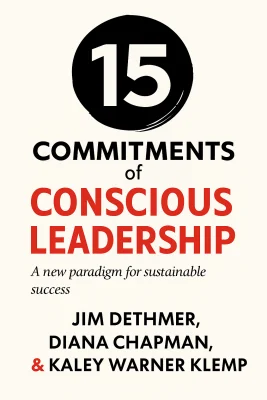
15 Commitments of Conscious Leadership
Categories
Business, Nonfiction, Self Help, Psychology, Communication, Leadership, Audiobook, Management, Personal Development, Buisness
Content Type
Book
Binding
Unknown Binding
Year
0
Publisher
Language
English
ASIN
B0DTVVLS4H
File Download
PDF | EPUB
15 Commitments of Conscious Leadership Plot Summary
Introduction
In boardrooms across the globe, leaders are experiencing a quiet crisis. Despite achieving impressive financial metrics and career milestones, many find themselves trapped in cycles of stress, burnout, and disconnection. They've mastered the art of external success while their internal worlds remain chaotic, their relationships suffer, and their teams operate from fear rather than inspiration. This crisis isn't about competence or intelligence—it's about consciousness. The difference between surviving and thriving as a leader comes down to a fundamental shift in perspective. While unconscious leaders react to circumstances, blame external factors, and operate from scarcity, conscious leaders take radical responsibility, embrace curiosity over being right, and create environments where everyone can flourish. This transformation isn't just about becoming a better leader; it's about becoming a more authentic, fulfilled human being who inspires others to do the same.
Chapter 1: Taking Radical Responsibility for Your Reality
At the heart of conscious leadership lies a revolutionary concept that challenges everything we've been taught about success and failure. Radical responsibility means taking complete ownership of your circumstances, your emotional state, your relationships, and your results—without exception. This isn't about blame or self-criticism; it's about recognizing that you are the primary creative force in your life experience. Most leaders operate from what researchers call the "victim-villain-hero" triangle. Consider the executive team at Common Corp, facing disappointing quarterly results. The VP of sales blamed manufacturing for missing deadlines, while the VP of manufacturing pointed fingers at unrealistic timelines and faulty vendor parts. The president blamed both departments for poor teamwork, and the HR leader blamed himself for not implementing communication training. This blame fest, while common, creates a toxic environment where energy is wasted on finger-pointing rather than solutions. The magic happens when leaders step out of this triangle and ask different questions. Instead of "Who's to blame?" they ask "What can I learn from this?" Instead of "Why is this happening to me?" they wonder "How am I creating or contributing to this situation?" The sales and manufacturing VPs could have explored how their own communication patterns, assumptions, or planning processes contributed to the missed deadline. This shift from external blame to internal inquiry opens up possibilities that simply don't exist in victim consciousness. To practice radical responsibility, start by identifying current complaints or frustrations in your work or personal life. For each situation, complete this sentence multiple times: "I keep this issue going by..." Notice what emerges. Perhaps you keep communication problems alive by avoiding difficult conversations, or you perpetuate team dysfunction by not setting clear expectations. This isn't about self-blame—it's about recognizing your power to influence outcomes. The most transformative aspect of radical responsibility is its impact on energy and creativity. When you stop spending mental and emotional resources on blame, resentment, and victimhood, that energy becomes available for innovation, connection, and solutions. Teams practicing this commitment report dramatic improvements in collaboration, problem-solving speed, and workplace satisfaction. Remember that taking radical responsibility is a practice, not a destination. You'll still catch yourself in blame or victim consciousness—the key is developing the awareness to notice quickly and shift. Start small, be patient with yourself, and watch as this single commitment transforms not just your leadership effectiveness, but your entire relationship with life's challenges.
Chapter 2: Embracing Curiosity Over Being Right
The most expensive addiction in corporate America isn't drugs or alcohol—it's being right. Leaders spend enormous amounts of energy defending their positions, proving their points, and maintaining their image of competence. While this might feel necessary for survival, it actually creates the very problems it seeks to avoid. The commitment to curiosity over righteousness represents a fundamental shift from ego-protection to genuine learning. Sarah, a brilliant Yale graduate and Harvard MBA who had built a Fortune-listed technology startup, exemplified this challenge during a leadership retreat. Despite her impressive credentials, she approached every piece of feedback with defensive arguments and dismissive attitudes. When group members offered observations about her lack of openness, she brushed them aside. As the day progressed, her passive-aggressive responses and eventual departure from the session revealed how her need to be right was actually limiting her effectiveness and alienating potential allies. Sarah's pattern illustrates what happens when intelligent, capable people become prisoners of their own expertise. Her defensive reactions weren't really about the feedback itself—they were about protecting an identity built on being the smartest person in the room. This attachment to being right creates a closed system where new information is filtered out and learning stops. The irony is that the very behaviors intended to maintain credibility actually undermine it. The shift to curiosity begins with a simple recognition: being right and wanting to be right are completely different experiences. When you truly know something, like basic arithmetic, you don't need to defend it or fight for it. The equation "2+2=4" doesn't require your advocacy. It's when we're uncertain that we become attached to our positions and defensive about our perspectives. This attachment reveals not confidence, but insecurity. Conscious leaders practice what we call "wonder questions"—open-ended inquiries that expand possibility rather than narrow it. Instead of asking "How can I prove my point?" they might wonder "What would outrageous customer service look like?" or "How could we create more value with less effort?" These questions shift brain chemistry from defensive hyperarousal to creative openness, accessing the innovation and collaboration essential for complex problem-solving. Developing this curiosity muscle requires daily practice. Start by noticing when you feel the urge to be right or prove a point. Take a conscious breath, change your physical posture, and ask yourself: "What could I learn here that I don't currently know?" This simple shift from knowing to wondering opens up possibilities that defensive positioning simply cannot access.
Chapter 3: Moving Through Emotions to Completion
In the sterile conference rooms of corporate America, emotions are often treated like unwelcome intruders. Yet neuroscience research consistently shows that emotional intelligence is as crucial to leadership success as cognitive ability. The commitment to feeling all feelings isn't about becoming more "touchy-feely"—it's about accessing a critical source of information and energy that most leaders systematically ignore or suppress. During a crucial board meeting at a billion-dollar organization, thirty senior leaders gathered to discuss cost-cutting recommendations from a prestigious consulting firm. Despite spreadsheets full of data and compelling PowerPoint presentations, the discussion remained stuck and unproductive. The breakthrough came when they paused to acknowledge what they were actually feeling about the proposed changes. Most reported combinations of fear, sadness, and anger—emotions that contained vital intelligence about the situation. The CEO, a former Marine with a reputation for toughness, led by example. He allowed himself to feel and express his anger about the situation by growling and pounding the table—without words, blame, or explanation. This wasn't an emotional outburst; it was conscious emotional expression that released blocked energy. As other leaders followed suit, the room's atmosphere transformed. The stagnant energy cleared, and they could access wisdom that pure analytical thinking had missed. Understanding emotions begins with a simple definition: emotion is "energy in motion." Every feeling you experience is actually a physical sensation in your body. Anger shows up as heat in your back, shoulders, and jaw. Fear manifests as butterflies or knots in your belly. Sadness appears as tightness in your chest and throat. Joy rises as effervescence through your core. Sexual feelings create tingling in erogenous zones and throughout the body, signaling creative life force and the desire to create something new. Each emotion carries specific wisdom. Anger tells you something needs to change or be destroyed to make way for something better. Fear alerts you to pay attention and learn something important. Sadness signals it's time to let go and move forward. Joy points toward celebration and appreciation. Sexual feelings indicate creative energy wanting to birth new ideas or innovations. Without access to this emotional intelligence, leaders make decisions with incomplete information. The key to emotional mastery lies in allowing feelings to complete their natural cycle. Emotions last approximately ninety seconds when allowed to flow naturally, like waves on the ocean. Problems arise when we either repress feelings (denying they exist) or recycle them (getting stuck in mental loops that keep emotions churning). Both approaches block the natural flow and create physical, psychological, and relational issues. To practice emotional completion, start by asking yourself throughout the day: "What am I feeling right now?" Answer with one of the five core emotions: angry, scared, sad, joyful, or sexual. Then locate the sensation in your body, breathe deeply, and allow whatever movement or sound wants to emerge. This isn't about having emotional outbursts at work—it's about acknowledging and releasing emotional energy so it doesn't accumulate and create problems later.
Chapter 4: Speaking Candidly and Eliminating Gossip
The foundation of high-performing teams isn't talent, strategy, or resources—it's truth. Organizations that see reality most clearly consistently outperform those that operate on outdated information, hidden agendas, and selective honesty. Yet most workplaces are built on a complex web of withholds, where crucial information remains unspoken and real thoughts go unexpressed. This commitment to candor represents a radical departure from business as usual. Candor goes beyond simply not lying. It encompasses three overlapping circles: truth, openness, and awareness. While truthfulness means accuracy in what you say, openness addresses completeness. You might truthfully tell your boss you had lunch with a friend from high school without mentioning that friend is now a recruiter discussing opportunities at competing companies. Awareness adds the dimension of self-knowledge—recognizing your own blind spots, projections, and unconscious motivations that color your perspective. The most powerful form of candor involves speaking "unarguably"—sharing your internal experience in ways that others cannot debate or challenge. Instead of saying "We need better leadership" (highly arguable), you might say "I'm having the thought that we could benefit from different leadership approaches" (unarguable—you're simply reporting that the thought occurred). This subtle shift eliminates defensiveness and opens space for genuine dialogue and discovery. Jason Hsu, a brilliant researcher and significant shareholder at Research Affiliates, exemplified this commitment when he requested real-time feedback from his team. Despite his position of authority, he invited colleagues to share their thoughts, opinions, and judgments without needing to be "right" about them. Initially cautious, team members gradually became more candid as Jason demonstrated genuine openness and curiosity. They told him he traveled too much, showed favoritism, and sometimes dismissed non-investment professionals. Rather than becoming defensive, Jason used this information to increase his self-awareness and effectiveness. Gossip represents the shadow side of communication—sharing information about others that you wouldn't say directly to them, usually with negative intent. While some argue gossip serves useful functions like venting pressure and sharing information, it actually creates more problems than it solves. Gossip drains creative energy, destroys trust, and prevents real issues from being addressed directly. Organizations with strong gossip cultures consistently underperform those committed to direct communication. Eliminating gossip requires both individual and collective commitment. If you've been gossiping about someone, clean it up by telling both the people you gossiped with and the person you gossiped about. Use the clearing model: share the facts of what happened, acknowledge your story or interpretation, express your feelings, own your part in creating the situation, and make specific requests for moving forward. This process often resolves in minutes what might otherwise fester for months or years. The commitment to candor must be balanced with conscious listening—creating space for others to share their truth without judgment, advice-giving, or problem-solving. Most people listen through filters like fixing, correcting, or defending rather than simply receiving what's being offered. True listening involves hearing not just words, but emotions and underlying desires. When both speaking and listening happen consciously, teams access collective intelligence that transforms their capacity for innovation and collaboration.
Chapter 5: Finding Your Zone of Genius
Most successful leaders are trapped in excellence. They've developed sophisticated skills that earn recognition, compensation, and advancement, yet they feel increasingly drained and unfulfilled. Excellence, while rewarding externally, often becomes a golden cage that prevents access to your true gifts. The zone of genius—where your unique talents intersect with deep satisfaction—remains unexplored because excellence feels safer and more familiar. Consider Joe, a successful COO who has lost his passion for work despite achieving impressive results. He can perform his role competently, even excellently, but dreams of teaching history to high school students. The thought of leaving his well-compensated position to pursue his true calling feels impractical and risky. Like many leaders, Joe has confused what he can do with what he's meant to do, settling for competence over calling. The four zones of work and life create a hierarchy of energy and fulfillment. The zone of incompetence drains energy—tasks you neither enjoy nor perform well. The zone of competence feels adequate but uninspiring—work others could do equally well or better. The zone of excellence brings external success but internal emptiness—skills you've mastered but that don't energize you. Only the zone of genius provides both effectiveness and fulfillment—activities that feel effortless and energizing while creating exceptional value for others. James Sabry, Senior Vice President at Genentech Partnering, exemplifies genius-focused leadership. Rather than managing through control and direction, James invested time understanding each team member's unique genius qualities. When assessment revealed one employee's genius for extended periods of creative solitary thought, James trusted him to work from home as needed rather than forcing compliance with traditional office schedules. This commitment to fostering genius rather than following conventional rules dramatically increased both individual creativity and team performance. Identifying your zone of genius requires external perspective since genius often feels so natural that you assume everyone can do it easily. The "Genius Email" exercise involves asking thirty to fifty people from different areas of your life to reflect on when they've seen you most energized and effective. Their responses reveal patterns invisible to you—perhaps your ability to synthesize complex information, create connection between diverse people, or envision possibilities others miss. The shift to genius requires confronting what Gay Hendricks calls the "Upper Limits Problem"—unconscious beliefs that limit how much success, happiness, or fulfillment you allow yourself to experience. These might include feeling fundamentally flawed, fearing abandonment if you outshine others, believing success creates burdens, or worrying about disloyalty to your background. These fears guard the transition from excellence to genius, requiring conscious attention and gradual expansion. Moving more time into your zone of genius starts with honest assessment of how different activities affect your energy. Review your recent calendar and mark each activity with an arrow: up for energizing, horizontal for neutral, down for draining. Then ask what you can delegate, eliminate, or redesign to spend more time in energy-increasing activities. This isn't about perfection—even ten to twenty percent more time in your genius zone creates dramatic improvements in both performance and satisfaction. The ultimate goal isn't just personal fulfillment but organizational transformation. Teams where everyone operates primarily in their zone of genius accomplish extraordinary results with seemingly effortless flow. They combine individual brilliance with collective synergy, creating value that far exceeds the sum of their parts.
Chapter 6: Creating Win-for-All Solutions
Traditional problem-solving operates from a scarcity mindset that assumes limited resources and zero-sum outcomes. Someone wins, someone loses, or everyone compromises and nobody gets what they really want. This either/or thinking severely limits creative possibilities and often leaves underlying tensions unresolved. Win-for-all solutions require a fundamental shift from competition and compromise to collaboration and creativity. The Conscious Leadership Group faced this challenge when differing visions for the partnership's future emerged. Jim and Diana felt passionate about expanding their collaborative work, while Kaley wanted to focus more time at home with her new daughter. From a traditional perspective, this created an obvious conflict: either Kaley would sacrifice her desires for the group's growth, or the group would sacrifice growth potential to accommodate Kaley's preferences. Both options represented classic win-lose thinking. The breakthrough came through applying multiple conscious leadership commitments simultaneously. First, complete candor—each person shared their authentic thoughts, feelings, and desires without blame or judgment. Jim expressed his vision and concerns directly to Kaley, who reciprocated with equal honesty about her changing priorities. This transparency eliminated the hidden agendas and assumptions that often derail collaborative problem-solving. Second, they approached the situation from sufficiency rather than scarcity. Instead of believing there wasn't enough opportunity, time, or support for everyone's desires, they operated from the assumption that all their visions could be fulfilled. The content they'd created could serve everyone's future work. Their individual consulting practices had abundant support and opportunity. This abundance mindset opened creative possibilities invisible from scarcity consciousness. Third, they committed to seeing each other as allies in each person's highest development rather than obstacles to overcome. Kaley's changing priorities weren't a problem to solve but an invitation for everyone to explore new possibilities. Jim and Diana's expansion vision wasn't pressure on Kaley but an opportunity to clarify her own authentic desires. This supportive perspective transformed potential conflict into collaborative exploration. Finally, they remained deeply curious rather than rushing toward quick solutions. Most win-lose outcomes result from premature closure—settling for obvious answers rather than staying open to creative alternatives. Their willingness to wonder and explore led to a solution none of them could have imagined initially: dissolving the partnership in its current form to allow new configurations to emerge organically. The key to win-for-all solutions lies in expanding beyond individual positions to explore underlying interests and needs. Positions are what people want; interests are why they want it. A sales team demanding faster product development (position) might actually need predictable delivery timelines to maintain client relationships (interest). A product team insisting on longer development cycles (position) might need quality standards that protect the company's reputation (interest). Win-for-all solutions address everyone's core interests even when positions seem incompatible. This approach requires patience and faith in creative process. Win-for-all solutions rarely emerge immediately and often seem impossible initially. They require willingness to stay in uncertainty while new possibilities gestate. Teams committed to this process consistently discover options that serve everyone's highest interests while creating value impossible through traditional competitive approaches.
Chapter 7: Being the Resolution You Seek
Many successful leaders reach a crossroads where external achievements no longer provide satisfaction or meaning. Having accomplished their major goals—financial security, professional recognition, family milestones—they find themselves responding to the world's challenges with either apathy or resentment. This represents a crucial choice point: retreat into cynical detachment or step forward into conscious contribution. The commitment to being the resolution transforms leaders from passive complainers into active creators of positive change. David exemplifies this crossroads perfectly. At fifty-two, he had achieved everything on his ambitious list: early retirement, substantial wealth, successful children, and peak physical condition. Yet our conversation revealed a man oscillating between highlighting his achievements and criticizing everything wrong with the world—politics, economics, education, sports teams. His energy swung between disengaged indifference and bitter resentment, reflecting the classic pattern of former heroes who've burned out on caring too much and swung toward caring too little. This pattern often emerges after years of overfunctioning—taking excessive responsibility for others' problems and outcomes while operating from deep needs for approval, control, and security. When these efforts inevitably fail to create lasting change or satisfaction, the pendulum swings dramatically toward withdrawal and blame. Former champions become cynics, former optimists become pessimists, former believers become skeptics. They've tried caring intensely; now they'll try not caring at all. The conscious alternative begins with seeing what's missing rather than what's wrong. This subtle shift transforms everything. Instead of identifying problems to be fixed, you recognize possibilities to be fulfilled. A team lacking clear communication isn't broken—it's incomplete. A community without adequate youth programs isn't failing—it's awaiting fuller expression. This perspective eliminates the victim-villain-hero drama that keeps leaders trapped in reactive patterns. Being the resolution means receiving life's invitations to become what's needed. When you notice something missing in your world—whether improved collaboration, clearer communication, greater innovation, or more appreciation—you hear an invitation to embody those qualities yourself. This isn't about fixing others or changing systems through force. It's about becoming the change you wish to see, trusting that your authentic embodiment of desired qualities will naturally inspire and influence others. The process begins with genuine willingness—not obligation, responsibility, or "should," but authentic desire to contribute. Without a whole-body yes to the invitation, any action becomes effortful and unsustainable. With genuine willingness, you ask being questions: "What would clarity look like in this moment?" "How would I embody appreciation right now?" "What would collaboration feel like in my body?" These questions shift attention from doing to being, from action to presence. From this state of conscious being, appropriate action emerges naturally. You might pick up literal trash while embodying impeccability, or you might have courageous conversations while embodying honesty, or you might create new systems while embodying innovation. The specific actions matter less than the consciousness from which they arise. Apple trees don't struggle to produce apples—fruit emerges naturally from their essential nature. This commitment combines mastery of all other conscious leadership principles. You take radical responsibility for what you see, remain curious about possibilities, feel whatever emotions arise, speak candidly about your observations, eliminate gossip and blame, maintain integrity between values and actions, appreciate what already exists, operate from your zone of genius, approach challenges playfully, explore alternative perspectives, source approval and security internally, operate from abundance, treat circumstances as allies, and create win-for-all solutions. Being the resolution integrates these commitments into a coherent way of engaging with life's infinite invitations for conscious contribution.
Summary
The journey from unconscious to conscious leadership represents far more than professional development—it's a fundamental transformation in how you relate to yourself, others, and life itself. As the research consistently shows, "The team that sees reality the best wins." Conscious leadership provides the clarity, authenticity, and creativity necessary to see reality clearly and respond wisely. When leaders commit to radical responsibility, embrace curiosity over being right, honor emotional intelligence, communicate with candor, eliminate toxic patterns, maintain integrity, generate appreciation, express their unique genius, approach challenges playfully, explore multiple perspectives, source security internally, operate from abundance, treat everyone as allies, create solutions that serve all parties, and become the change they seek to see, they create conditions where both individual fulfillment and collective success flourish naturally. The transformation isn't always comfortable—consciousness requires releasing familiar patterns and stepping into unknown territory. Yet leaders who make this commitment discover that sustainable success flows from alignment with their deepest values and authentic nature rather than from force, manipulation, or fear-based motivation. Start today by choosing just one commitment that resonates most strongly, practice it consistently for thirty days, and notice how this single shift begins transforming every aspect of your leadership and life. The world needs leaders who can navigate complexity with wisdom, create connection across differences, and inspire others to express their highest potential—and that leader can be you.
Best Quote
“Experts say that the nervous system needs to be reprogrammed to allow for greater happiness, fulfillment, and relational connectedness. The good news is that the nervous system is highly receptive to new programming. In fact, it is somewhat capable of reprogramming itself if we provide support. To create the space and allow the nervous system to develop this new capacity, we encourage leaders to integrate just after they experience a new high. For example, you close the deal you never thought you’d be able to close; you get the promotion you’ve always wanted; you have a great weekend away with your partner and experience a new level of closeness. At these moments, we suggest leaders integrate by doing things that are grounding, ordinary, mindless, soothing, mundane, and/or repetitive. This could be going for a walk, mowing the lawn, sweeping the floor, washing the car, making a meal, flipping through a favorite hobby magazine, or taking a little longer shower. This allows for the gentle raising of old Upper Limits (the reprogramming of the nervous system), without forcefully blowing past them in a way that actually causes a big crash.” ― Jim Dethmer, The 15 Commitments of Conscious Leadership: A New Paradigm for Sustainable Success
Review Summary
Strengths: The review provides a detailed breakdown of the book's core concepts, particularly the distinctions between "leading from below the line" and "leading from above the line." It effectively summarizes the initial chapters and explains the four states of leadership, offering insights into the book's approach to conscious leadership. Weaknesses: The review lacks a critical evaluation of the book's effectiveness or writing style. It does not provide personal opinions or reflections on the book's impact or readability, which could help potential readers gauge its value. Overall: The review is informative, outlining the book's framework and key ideas. It serves as a useful guide for readers interested in exploring conscious leadership, though it lacks subjective analysis or a definitive recommendation.
About Author

Jim Dethmer
McCarthy probes the intricacies of human nature through complex narratives that challenge conventional storytelling. He employs themes of morality and redemption, often exploring the thin line between civilization and chaos. By using sparse dialogue and vivid imagery, McCarthy delves into the human psyche, questioning what drives individuals toward or away from societal norms. Readers therefore gain insights into the existential dilemmas that define the human condition.\n\nFocusing on the moral complexities within his narratives, McCarthy utilizes contrasting settings and character dynamics. This method enables him to juxtapose hope with despair, and violence with compassion, providing a nuanced look at humanity's struggles. Such exploration is evident in his book, where the stark portrayal of survival and ethical choices invites readers to reflect on their values and the impact of their decisions. Consequently, McCarthy’s work resonates deeply with those interested in philosophical and moral inquiries.\n\nFor those seeking a deeper understanding of existential themes, McCarthy’s writing offers a profound exploration of life's fundamental questions. His ability to weave intricate narratives ensures that his audience, ranging from literary enthusiasts to philosophy scholars, finds both intellectual and emotional engagement. This author’s unique storytelling approach has cemented his place in contemporary literature, encouraging readers to confront and ponder the essence of human existence.
Read moreDownload PDF & EPUB
To save this Black List summary for later, download the free PDF and EPUB. You can print it out, or read offline at your convenience.
15 Commitments of Conscious Leadership
by Jim Dethmer
