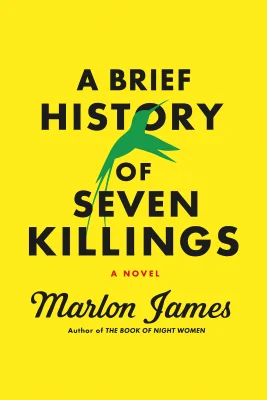
A Brief History of Seven Killings
Categories
Fiction, Audiobook, Mystery, Historical Fiction, Literature, Book Club, Historical, Novels, Crime, Literary Fiction
Content Type
Book
Binding
Hardcover
Year
2014
Publisher
Riverhead Books
Language
English
ASIN
159448600X
ISBN
159448600X
ISBN13
9781594486005
File Download
PDF | EPUB
A Brief History of Seven Killings Plot Summary
Introduction
# A Brief History of Seven Killings: Jamaica's Dance with Violence December 3rd, 1976. The lime green scooter circles 56 Hope Road twice before disappearing into Kingston's maze of concrete and zinc. Inside the mansion, Bob Marley—the Singer to those who know—rehearses for tomorrow's peace concert, unaware that eight gunmen are loading their weapons in a railway shack across town. The bullets meant for his heart will miss by inches, but the violence they unleash will consume Jamaica for decades. This is the story of how a failed assassination attempt became the opening movement in a symphony of destruction that would stretch from Kingston's ghettos to New York's crack houses. In the shadow of that December night, dons and gunmen, politicians and CIA operatives, survivors and ghosts would dance their deadly ballet across two nations. The Singer wanted to bring peace to Jamaica. Instead, he became the catalyst for a war that would export the island's violence to foreign shores, leaving a trail of bodies that would span continents and generations.
Chapter 1: The Singer's Shadow: December 1976 and the Failed Assassination
The white Datsun rolls through the gates of 56 Hope Road like death itself, carrying eight young killers whose names will be whispered in Kingston's streets for years to come. Bam-Bam, barely fifteen, grips his M16 with hands that shake from cocaine and terror. Beside him, Weeper adjusts his glasses and checks his weapon with the methodical precision of a scholar preparing for an exam. They've been training in the Blue Mountains under a Cuban exile who calls himself Doctor Love, learning to kill with military efficiency. The Singer stands in his kitchen, sharing a grapefruit with his manager Don Taylor when the first shots shatter the evening calm. What sounds like firecrackers quickly becomes a symphony of destruction as automatic weapons tear through walls and windows. Taylor throws himself forward, taking four bullets meant for another, while the Singer staggers backward, blood blooming across his chest. But something goes wrong with the plan. The bullets find flesh but miss the heart, and Jamaica's most powerful voice survives what should have been his execution. In the chaos that follows, the gunmen scatter like roaches when lights come on. Some flee to the Garbagelands where Kingston's refuse creates mountains of hiding places. Others disappear into the hills, all of them marked men now. The failed assassination becomes legend before the blood dries on the concrete. The Singer's survival transforms him from entertainer to prophet, while his would-be killers find themselves hunted by forces they never understood. The peace concert will proceed, but the violence unleashed that night will consume Jamaica long after the last song fades into silence.
Chapter 2: Blood Treaty: The Rise and Fall of Jamaica's Peace Movement
Papa-Lo sits in his jail cell, feeling the weight of sixteen years as don of Copenhagen City pressing down on his shoulders. The police swept through his territory hours before the Hope Road shooting, arresting him and dozens of his soldiers in a coordinated operation that reeks of inside knowledge. In the cell beside him, Shotta Sheriff from the rival Eight Lanes faces the same predicament, two kings removed from their chessboard just as the game reaches its climax. For years, these men have been proxies in Jamaica's political war, Papa-Lo serving the conservative JLP while Sheriff backs the socialist PNP. Their soldiers have died by the hundreds in service of politicians who view them as expendable weapons. But something shifts in the darkness of the lockup. When Papa-Lo's lieutenant tries to cut a PNP soldier, Papa-Lo himself drives a knife through the boy's throat. The message is clear: this war serves no one but Babylon. Eighteen months later, the two dons emerge from prison as unlikely allies, their shared revelation spreading through the ghettos like wildfire. The peace treaty they sign becomes the foundation for something unprecedented—enemies becoming brothers in the face of forces that would consume them all. The Singer, returned from exile, agrees to perform at a concert that will bring together Jamaica's warring factions under the banner of One Love. At National Heroes Park, forty thousand Jamaicans gather under blazing lights as Third World warms up the crowd. When the Singer finally appears, wearing black like a prophet of judgment, he calls Jamaica's political leaders onto the stage. Prime Minister Michael Manley and opposition leader Edward Seaga reluctantly join hands above the Singer's head in a gesture of unity that photographers capture for posterity. But in the crowd, some of the original gunmen watch with haunted eyes, knowing that peace is a luxury their world cannot afford.
Chapter 3: Empire of Exile: Jamaican Violence Crosses the Ocean
The peace treaty dies one bullet at a time, each death carefully orchestrated to look like random violence or police justice. Copper, the ranking gunman from Wareika Hills, makes the mistake of believing in the new world they're trying to build. He comes down from his mountain sanctuary, drawn by promises of fried fish and festival at Fort Clarence Beach. The police are waiting with fifty-six bullets, the same number that failed to kill the Singer. Papa-Lo receives the news like a physical blow, understanding finally that the peace was always an illusion. Shotta Sheriff sees the writing on the wall and flees to New York, but even there the long arm of Jamaican politics reaches out to claim him. A gunman tracks him to the Starlight Ballroom in Brooklyn, where he dies among strangers, his blood mixing with spilled drinks on a dance floor that will never be clean again. One by one, the architects of peace are eliminated. The Peace Council becomes a ghost organization, its offices empty, its dreams buried with its leaders. But the violence doesn't remain contained within Jamaica's shores. The same gunmen who once fought for political parties now flee to American cities, carrying their weapons and their grudges across oceans. In the Bronx and Brooklyn, in Miami and Los Angeles, Jamaican posses establish territories with the same brutal efficiency they learned in Kingston's political wars. The crack epidemic that follows is not just an American tragedy but a Jamaican export, violence packaged and shipped across continents. The peace treaty's failure has unleashed something far more destructive than political warfare—a criminal diaspora that will plague multiple nations for generations.
Chapter 4: Crack Kingdom: Building an Empire on American Streets
Josey Wales stands in a Bushwick crack house, surveying his American empire with the cold satisfaction of a general reviewing conquered territory. The former enforcer from Copenhagen City has transformed himself into something unprecedented—a Third World don operating on First World soil. The mansion around him, once home to Gilded Age millionaires, now serves as a monument to American decay and Jamaican ambition. The crack cocaine that flows through his operation represents the perfect fusion of Colombian supply and Caribbean distribution networks. Josey's soldiers work with military precision: spotters on corners, runners moving product, dealers protected by gunmen who think nothing of spraying entire city blocks with automatic weapons fire. The old Italian families watch in horror as these new players rewrite the rules of organized crime. Weeper, Josey's lieutenant and one of the original Hope Road shooters, struggles with his own demons in this new world. The peace treaty's collapse has left him adrift, caught between loyalty to his don and addiction to the very product he's supposed to sell. His operation crumbles as dealers become users, runners disappear, and rival posses move in like sharks sensing blood in the water. The violence that follows makes headlines across New York. Bodies drop on street corners from Queens to Miami as old feuds find new expression. The Ranking Dons, Storm Posse, and Hot Steppers carve up American cities with the same brutality they once reserved for Kingston's ghettos. The NYPD, unprepared for this level of organization and ruthlessness, watches helplessly as Jamaican gunmen transform quiet neighborhoods into war zones.
Chapter 5: Ghosts and Witnesses: The Price of Survival
The crack house massacre of 1985 sends shockwaves through New York's underworld. Eleven people die that night in Bushwick, their bodies scattered through the ruins of what was once a symbol of American prosperity. Among the victims is a pregnant addict who chose the wrong night to score one last hit before getting clean, her death a reminder that in Josey Wales's world, innocence offers no protection. Josey moves through the carnage like an avenging angel, his twin pistols speaking judgment on users and dealers alike. The massacre isn't random violence—it's a message written in blood and gunpowder. His American operations have grown sloppy, compromised by addiction and rival gangs. The killings announce the Jamaican posses' presence with unprecedented brutality, forcing law enforcement to confront an enemy unlike any they've encountered. Nina Burgess, now calling herself Millicent Segree, tends to the wounded survivors in a Bronx hospital emergency room. The middle-class Jamaican woman who once stood outside the Singer's gate seeking salvation has reinvented herself as a nurse, but the violence of her homeland follows her like a shadow. She recognizes the gunshot patterns, understands the street politics that create such carnage, carries her own scars from a war that has no boundaries. The ghosts multiply with each killing. Demus, one of the original Hope Road shooters, sees them everywhere—blue-flamed spirits with shark teeth, whispering secrets about the men who sent them to kill the Singer. The cocaine that once made him feel invincible now opens doors in his mind that can never be closed. He wanders Kingston's streets like a specter himself, jumping at car backfires and seeing the Singer's face in every crowd.
Chapter 6: The Journalist's Burden: Uncovering Dangerous Truths
Alex Pierce thought he understood Jamaica when he first arrived in 1976, notebook in hand and head full of romantic notions about reggae music and revolutionary politics. The white journalist from Rolling Stone had come to write about the island's music scene, but instead found himself documenting a war zone where musicians became targets and violence was currency. His interview with the Singer months after the assassination attempt revealed a crucial detail that would haunt Pierce for years. The bullets had missed the reggae star's heart by mere millimeters—information known only to the doctor, the Singer himself, and Pierce. When he later interviewed various players in Jamaica's underworld, casual mentions of the shooting's precision sent chills down his spine. Someone couldn't have known such details unless they had been there. Years later, safely ensconced in New York and writing for The New Yorker, Pierce believes he can finally tell the story. His series would expose the connections between Jamaica's political violence and America's crack epidemic, revealing how Cold War politics had transformed a Caribbean island into a laboratory for destabilization. But some secrets refuse to stay buried, and some ghosts never stop hunting. The realization that he possesses evidence linking specific individuals to the century's most significant assassination attempt in Jamaica makes Pierce a marked man. When enforcers appear at his Washington Heights apartment, he understands that the past has finally caught up with him. The story he thought he could tell from the safety of exile becomes his death sentence, as the same forces that tried to kill the Singer turn their attention to the journalist who knows too much.
Chapter 7: Final Reckoning: The Death of Kings and the Dance's End
The prison cell in Spanish Town is supposed to be the safest place in Jamaica for Josey Wales. Awaiting extradition to face American justice, the don of Copenhagen City has bought protection from guards and inmates alike. But some contracts cannot be broken, and some debts must be paid in blood. The same networks that created him have grown tired of his inconvenient memories and loose tongue. Doctor Love arrives like a ghost from Josey's past, his silver hair and expensive suit marking him as something other than the usual prison visitors. The Cuban exile who once trained young killers in the Blue Mountains has evolved into something more dangerous—a facilitator of coups and assassinations, a man who connects Third World violence to First World interests. Their final conversation is a reckoning fifteen years in the making. The pills that Doctor Love offers are presented as mercy—a painless exit from a world that has grown tired of Josey Wales and his threats to expose the network that used Jamaica as a Cold War battleground. As the don of Copenhagen City drifts into his final sleep, the empire he built begins to crumble. His son Benjy, gunned down on a Kingston street corner, will never inherit the throne. The Singer himself has been dead for years, cancer claiming what bullets could not. His final concerts were performed with dreadlocks falling out from radiation treatments, his body betrayed by the same cells that had once carried his revolutionary message. In Germany's Bavarian forests, in a clinic that promised miracles but delivered only prolonged suffering, Jamaica's most powerful voice was finally silenced. But the echoes of that December night in 1976 continue to reverberate, the violence he tried to stop spreading like ripples across oceans and decades.
Summary
The assassination attempt that failed to kill Bob Marley in 1976 succeeded in killing something far more precious—Jamaica's hope for peace. What followed was a cascade of violence that transformed a small Caribbean island into an exporter of brutality, its lessons carried to American cities where crack cocaine would claim a generation. The peace treaty that briefly united Kingston's warring factions became a beautiful lie that revealed ugly truths about power, politics, and the price of survival in a world where violence is the only constant. The ghosts that haunt these killing fields are not just the dead, but the living who carry their wounds across oceans and decades. From the gunmen who pulled triggers in 1976 to the nurses who tend their victims' children in Bronx hospitals, from the journalists who uncover dangerous truths to the dons who export their wars to foreign shores—all are casualties of a conflict that began with music and ended with silence. In the end, the only victor was violence itself, feeding on dreams and ambitions until nothing remained but the echo of gunshots and the bitter taste of ash on the wind.
Best Quote
“Killing don’t need no reason. This is ghetto. Reason is for rich people. We have madness.” ― Marlon James, A Brief History of Seven Killings
Review Summary
Strengths: The book offers a rewarding experience for those who persist through its initial challenges. It provides a comprehensive immersion into Jamaica's political and social climate over three decades, effectively painting a broad picture. The narrative includes multiple voices and perspectives, which enriches the storytelling. Weaknesses: The beginning of the book can be disorienting, with chapters lacking clear context and connections between characters. The initial complexity may be exacerbated by the use of dialect and the introduction of numerous characters and settings. Overall: The reviewer expresses a positive sentiment, recommending the book for its depth and rewarding narrative, despite its challenging start. The book is particularly suited for readers interested in a detailed exploration of Jamaican history and culture.
About Author

Marlon James
James situates his narratives within the rich tapestry of Jamaican history, intricately weaving themes of political struggle, identity, and resistance. His writing often explores the legacies of colonialism and the social struggles that define Jamaica. Through works like "A Brief History of Seven Killings," which fictionalizes the attempted assassination of Bob Marley, and "The Book of Night Women," which investigates a slave revolt, James employs a multifaceted narrative style. His method of blending genres, from historical fiction to speculative fantasy, allows him to address complex social themes through vivid storytelling and bold ambition.\n\nFor readers interested in multifaceted perspectives and cultural narratives, James's books offer a profound exploration of Jamaican society and history. His work is notable for its detailed characterization and the use of multiple narrators, providing an immersive experience. "Black Leopard, Red Wolf," part of his Dark Star trilogy, extends his exploration into the fantasy genre, incorporating African myths and legends. This blend of elements invites readers to engage with narratives that are as entertaining as they are enlightening. Meanwhile, his role as an educator at Macalester College reflects his commitment to literature beyond just writing, contributing to his impact on both readers and students.\n\nJames's achievements, including winning the 2015 Man Booker Prize, underscore his status as a prominent figure in contemporary literature. His books not only captivate with their storytelling but also provoke thought and dialogue about societal issues. The author’s bio highlights his journey from Kingston, Jamaica, to gaining international recognition, showcasing a career that inspires both emerging writers and readers alike. Through his novels, James connects with audiences by challenging them to reflect on historical and contemporary themes, making his work a significant contribution to global literary discourse.
Read moreDownload PDF & EPUB
To save this Black List summary for later, download the free PDF and EPUB. You can print it out, or read offline at your convenience.
A Brief History of Seven Killings
by Marlon James
