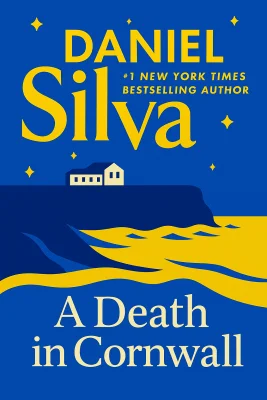
A Death in Cornwall
Categories
Fiction, Art, Audiobook, Mystery, Thriller, Suspense, Crime, Espionage, Mystery Thriller, Spy Thriller
Content Type
Book
Binding
Kindle Edition
Year
2024
Publisher
Harper
Language
English
ASIN
B0CL72PR7B
ISBN
0063384248
ISBN13
9780063384248
File Download
PDF | EPUB
A Death in Cornwall Plot Summary
Introduction
# Shadows in the Freeport: Art, Murder, and Hidden Fortunes Dawn broke cold over the Cornish coast when Vera Hobbs noticed the light still burning in Professor Charlotte Blake's cottage window. The Oxford art historian never wasted electricity, never left lights on through the night. By afternoon, Blake's body would be found in a hedgerow near Land's End, her skull split by hatchet blows, her mobile phone missing. The police called it another victim of the serial killer terrorizing Cornwall. They were wrong. Blake had been hunting something far more dangerous than a madman with an axe. Her final investigation traced a stolen Picasso through the shadowy world of offshore finance, where billionaires laundered fortunes through art sales and shell companies protected the guilty. When Gabriel Allon, the legendary Israeli spy turned art restorer, arrived to examine the crime scene, he found fragments of a conspiracy that reached from Nazi-looted paintings to the highest levels of British government. In a world where masterpieces served as currency for the corrupt elite, Charlotte Blake had discovered secrets worth killing for.
Chapter 1: The Professor's Final Investigation
Gabriel stood in Blake's cottage kitchen, studying the scattered papers that mapped her last days alive. The Oxford professor had been methodical in her research, following the provenance of an untitled Picasso portrait through decades of deception. The painting measured 94 by 66 centimeters, oil on canvas, created in 1937 when Europe teetered on the edge of war. The trail began with Bernard Lévy, a Parisian businessman who purchased the portrait from Galerie Paul Rosenberg before the Nazi occupation. In 1942, as deportation trains filled with Jewish families, Lévy entrusted his collection to his lawyer and went into hiding. Neither he nor his family survived Auschwitz, but the painting endured, surfacing decades later at Christie's auction house in London. Blake's notes revealed the buyer: OOC Group Limited, a shell company registered in the British Virgin Islands. Three letters that had cost her life. The professor had spent months trying to penetrate the corporate veil, following a paper trail that led through offshore banks and anonymous trusts. Her breakthrough came through Leonard Bradley, a wealthy trader who lived near the murder scene, connecting her with powerful figures in London's financial district. Detective Sergeant Timothy Peel, the young Cornwall policeman who had grown up in these windswept villages, sensed something different about this killing. The Chopper's other victims were random, opportunistic. Blake's murder showed planning, precision, rage. Someone had watched her progress, measured the threat she posed, then eliminated her with surgical efficiency.
Chapter 2: Following the Stolen Picasso's Trail
The Geneva Freeport sprawled across industrial wasteland like a fortress of secrets, its climate-controlled warehouses holding over a million artworks worth hundreds of billions. Gabriel arrived to find Edmond Ricard's gallery sealed behind police tape, the art dealer's blood still staining his office carpet. Three bullets to the chest, execution style, professional and final. Swiss intelligence officer Bittel walked Gabriel through the crime scene, explaining how the Freeport had become a playground for the ultra-wealthy. Inside these walls, paintings could be bought and sold repeatedly without tax implications, ownership transferred between anonymous shell companies while the artworks never saw daylight. It was the perfect money laundering machine, turning dirty cash into clean assets with each transaction. Ricard had been more than a dealer. He was a facilitator in an elaborate scheme that used high-value art to move wealth offshore. Wealthy clients would purchase paintings at auction, immediately shipping them to the Freeport to avoid taxes. Within the facility's walls, the same artworks would be sold again to other shell companies controlled by the same clients, the money flowing between offshore accounts like digital ghosts. The Picasso was just one piece in a vast collection owned by Harris Weber & Company, a law firm specializing in corporate secrecy and offshore finance. They created the shell companies, managed the anonymous accounts, and eliminated anyone who threatened to expose their clients. When Professor Blake's investigation came too close to the truth, they had ordered her death.
Chapter 3: Inside the Geneva Freeport Conspiracy
Philippe Lambert lived in the digital shadows, his Cannes apartment a fortress of encrypted servers and multiple identities. The hacker had penetrated the Geneva Freeport's security systems on orders from Harris Weber, thinking it was routine corporate espionage. Instead, he had become an accessory to murder, his skills used to cover the tracks of killers. Lambert revealed the conspiracy's scope to Gabriel and Ingrid Johansen, the Danish master thief who had become an unlikely ally. Harris Weber wasn't just laundering money through art sales. They were architects of a global network that helped dictators, oligarchs, and corrupt politicians hide their wealth from tax authorities and law enforcement agencies. The firm's client list read like a roster of the world's most wanted criminals. Russian oligarchs close to the Kremlin, Middle Eastern potentates, European industrialists, and British politicians. They used anonymous shell companies to purchase everything from superyachts to London real estate, their true ownership hidden behind layers of legal protection. Trevor Robinson, the firm's head of security and former MI5 officer, had orchestrated Charlotte Blake's elimination. He used Klaus Müller, a German assassin, to make her death appear the work of Cornwall's serial killer. The professor's murder was meant to end the investigation into the Picasso, but Gabriel's involvement had complicated their plans. Now Robinson faced a choice between buying silence or eliminating more witnesses.
Chapter 4: The Offshore Money Laundering Network
The attack came without warning in a London car park. Gabriel and Ingrid were seized by professional killers and transported to a remote Somerset estate, their captor the same Trevor Robinson who had ordered Blake's death. The former spy offered Gabriel twenty million pounds to sign a non-disclosure agreement and disappear. The alternative was death for both prisoners. The estate belonged to Valentin Federov, a Russian oligarch whose recent political donation had triggered a scandal in British politics. The contribution was designed to bring down Prime Minister Hillary Edwards, whose government was planning strict anti-money laundering laws that would threaten the London Laundromat, the nickname for Britain's role in global financial corruption. Robinson explained the stakes with cold precision. Harris Weber's clients had hundreds of billions hidden in offshore accounts, protected by shell companies and corrupt lawyers. The firm earned massive fees helping the world's elite avoid taxes and hide criminal proceeds. When governments threatened their operations, they bought politicians or destroyed careers through carefully orchestrated scandals. But Gabriel had survived too many such encounters to be intimidated by threats. He had allies Robinson didn't know about, including Christopher Keller, the former SAS assassin turned MI6 operative who was already tracking their location. The rescue would be swift and brutal, leaving Robinson's hired killers dead in the Somerset countryside.
Chapter 5: Deadly Confrontation with the Truth
Christopher Keller moved through darkness like a predator, his military training evident in every silent step. The former assassin had tracked Gabriel's phone signal to the Somerset estate, bringing Detective Sergeant Timothy Peel, the young Cornwall policeman whose investigation had started everything. The rescue was swift and merciless. Robinson's killers were professionals, but they faced opponents with superior training and motivation. When the gunfire ended, five men lay dead, including Robinson himself. The conspiracy's enforcer had been eliminated, but the network he served remained intact, its tentacles reaching into the highest levels of British society. Documents recovered from the estate revealed Harris Weber's full operations. Client lists, banking records, and communications that implicated some of the world's most powerful individuals. Among them was evidence of the plot against Prime Minister Edwards, orchestrated by wealthy clients who feared her anti-corruption agenda. The conspiracy reached into Westminster itself. Lucinda Graves, a prominent wealth manager married to rising Conservative politician Hugh Graves, had been feeding information to Harris Weber about government plans. Her husband was positioning himself to replace Edwards as Prime Minister, backed by offshore money and corrupt oligarchs who needed political protection for their criminal enterprises.
Chapter 6: Political Corruption at the Highest Levels
The evidence against Lucinda Graves was damning but circumstantial. Gabriel needed proof of her direct involvement, something that would prevent her husband from reaching Downing Street. The answer lay in her own words, recorded during conversations with Lord Michael Radcliff, the Conservative Party treasurer who had accepted Federov's tainted donation. Samantha Cooke, the Telegraph journalist who had broken the original scandal, became Gabriel's unwitting ally. Presented with bank records showing Radcliff had received ten million pounds from Federov after resigning in disgrace, she confronted the disgraced peer. Faced with exposure and criminal charges, Radcliff revealed the broader conspiracy in exchange for partial immunity. The story broke just as Hugh Graves was traveling to Buckingham Palace to meet the King and form a new government. The revelation that his wife had orchestrated the plot against Edwards sent shockwaves through Westminster. Political careers built over decades crumbled in minutes as the full scope of the corruption became clear. Graves's motorcade turned around before reaching the Palace, his political career ending with a phone call from party headquarters. The Conservative Party, faced with the collapse of their chosen leader, turned to former Prime Minister Jonathan Lancaster in desperation. Within hours, Lancaster was back in Downing Street, promising to clean up the corruption that had nearly destroyed British democracy.
Chapter 7: Justice in the Shadows
The Chopper's reign of terror ended not with dramatic confrontation but routine police work. Detective Sergeant Timothy Peel had noticed an inconsistency in a burglary case, a theft never reported to authorities. The victim lived in Falmouth and worked as a lorry driver, giving him perfect cover to hunt across Cornwall and Devon. Miles Lennox answered his door with the face of death itself. Peel's instincts, sharpened by recent experiences with Gabriel, told him he was facing the serial killer who had terrorized the region for months. The arrest was anticlimactic, the monster proving to be just another inadequate man with a taste for violence. Gabriel's promise to his young friend had been kept. The real killer of Charlotte Blake would never be found because he lay dead in a Somerset manor, but the Chopper's capture would give Cornwall the closure it needed. The professor's death had been avenged in ways the public would never know. The Picasso remained missing, likely hidden in some offshore vault where it would gather dust while its true owners remained ignorant of their inheritance. But the network that had killed for it was broken, its architects dead or in hiding. Sometimes justice came not through courts and trials, but through the actions of those willing to operate in the shadows where law and morality intersected.
Summary
The Picasso Papers scandal sent shockwaves around the world as leaked documents exposed a global elite that had placed itself above the law. Protesters filled London streets demanding justice for the billions hidden offshore while ordinary citizens struggled with austerity. Harris Weber's clients faced investigations and asset freezes, some paying with their lives as angry associates settled scores with bullets. Others fled to non-extradition countries, their reputations destroyed but offshore fortunes intact. Gabriel returned to his quiet life in Venice, but the cottage he purchased in Cornwall would draw him back to the windswept peninsula where everything began. Charlotte Blake's investigation had pulled back the curtain on a shadow economy that touched every corner of the globe, revealing how art and money flowed together in rivers of hidden wealth. Her death had not been in vain, even if justice remained incomplete in a world where corruption ran deeper than any single conspiracy.
Best Quote
“Mémorial de la Shoah.” ― Daniel Silva, A Death in Cornwall
Review Summary
Strengths: The book is described as elegant and suspenseful, expertly combining fact and fiction. It features a compelling narrative involving international intrigue, art restoration, and historical elements related to Nazi-looted art. The protagonist, Gabriel Allon, is a well-liked character, and the series is noted for its entertainment value and relevance to current events. Weaknesses: The review mentions that the series has become less engaging over time, with the first half of the book criticized for excessive name-dropping and a thin plot. The reader feels the newer novels do not match the quality of earlier ones. Overall: The reader enjoys the series, particularly the character of Gabriel Allon, and continues to read it as a tradition, despite perceiving a decline in quality. The book is recommended for its engaging plot and connection to historical art intrigue.
About Author

Daniel Silva
Silva investigates the complexities of international espionage through his intricate plots and richly detailed settings, drawing readers into a world where history and current affairs intersect. His writing purposefully integrates themes of political conflict and historical memory, particularly focusing on World War II and the Holocaust. By weaving together personal and collective traumas, his stories often highlight the enduring impact of past events on present-day identities and geopolitics. This thematic depth is exemplified in the Gabriel Allon series, where the protagonist's dual role as an Israeli intelligence officer and art restorer serves as a metaphor for the restoration of history and justice.\n\nSilva's method involves leveraging his background as a journalist, having covered significant events like the Iran-Iraq war, to infuse his novels with a sense of authenticity and urgency. His clear prose and emotionally resonant narratives ensure that complex historical and political themes remain accessible to readers. For instance, "The Unlikely Spy," his debut book, effectively situates a World War II narrative within a larger discussion of espionage and trust. This combination of factual precision and engaging storytelling captivates a wide audience, from history enthusiasts to thriller aficionados.\n\nReaders benefit from Silva's deep exploration of global affairs, gaining insights into the moral ambiguities and ethical dilemmas faced by those involved in espionage. His books, consistently recognized as New York Times bestsellers and translated into numerous languages, resonate worldwide, underscoring their universal appeal and relevance. Silva's service on the United States Holocaust Memorial Council further enhances the credibility of his work, reinforcing the importance of historical remembrance in his storytelling. Through this engaging narrative style, Silva has firmly established himself as a leading author in the thriller genre.
Read moreDownload PDF & EPUB
To save this Black List summary for later, download the free PDF and EPUB. You can print it out, or read offline at your convenience.
A Death in Cornwall
by Daniel Silva
