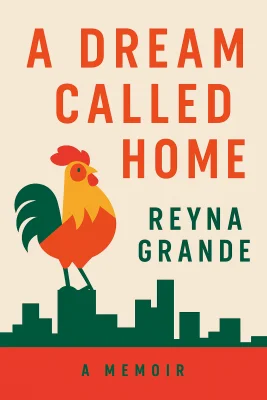
A Dream Called Home
Categories
Nonfiction, Biography, Memoir, Audiobook, Adult, Womens, Autobiography, Biography Memoir, The United States Of America, Latinx
Content Type
Book
Binding
Hardcover
Year
2018
Publisher
Atria Books
Language
English
ISBN13
9781501171420
File Download
PDF | EPUB
A Dream Called Home Plot Summary
Introduction
In the summer of 1996, a young Mexican immigrant woman sat in a car driving north on Interstate 5, watching Los Angeles disappear into the smog behind her. At twenty-one, Reyna Grande was leaving everything familiar to pursue what seemed an impossible dream—becoming the first person in her family to earn a university degree. Half of her wanted to turn back to fight for her fractured family relationships, while the other half faced forward with determination, despite overwhelming fears about her future. Grande's story illuminates the complex journey of transformation that defines the immigrant experience in America. From her early childhood in poverty-stricken Mexico to her eventual success as an award-winning author, her path reveals both the profound costs and extraordinary possibilities of pursuing the American Dream. Through her experiences, readers discover the resilience required to navigate between two worlds, the courage needed to forge an identity when caught between cultures, and the power of education and storytelling to create bridges across divides. Her journey demonstrates how home is not merely a physical place, but something that must be consciously built from dreams, determination, and the stories we tell ourselves about who we are meant to become.
Chapter 1: Childhood in Mexico and Border Crossing
Reyna Grande's earliest years unfolded in Iguala, Guerrero, a Mexican city rich in history but impoverished in opportunity. Born in a shack of sticks and cardboard, she experienced the devastating effects of family separation when her father left for the United States in search of work, followed two years later by her mother. By age five, Reyna had lost both parents to the border that promised prosperity but delivered prolonged anguish. Left in the care of her paternal grandmother, Abuela Evila, Reyna and her siblings endured years of neglect and abuse. Her grandmother's cruelty was matched only by her bitterness, often telling the children they might not even be her real grandchildren. The money their parents sent was largely spent on other things, leaving the children dressed in rags, suffering from lice and tapeworm, subsisting on beans and tortillas while dreaming of parents who seemed increasingly distant and possibly replaceable. The fear that haunted Reyna most was not hunger or physical hardship, but the terror that her parents might forget her entirely. When her mother returned from the United States with a new American-born daughter, hopes for family reunion were quickly dashed as she abandoned her older children again in pursuit of a new husband. The dream of having parents became a recurring nightmare of abandonment that would shape Reyna's understanding of love, loyalty, and belonging for years to come. At age nine, Reyna finally got her chance to cross the border when her father returned to bring his older children to the United States. The dangerous journey required three attempts, with Border Patrol catching and sending them back to Tijuana twice. The crossing itself was harrowing—a nine-year-old girl was too small for such a treacherous journey, requiring her father to carry her on his back through the desert darkness. This piggyback ride became her first real physical contact with her father in years, a moment of connection forged in desperation and hope. The successful crossing marked not just a geographical transition but a psychological transformation. Reyna had survived the borderland between childhood and premature adulthood, between Mexican identity and American possibility. Yet crossing the physical border was only the beginning of a much longer journey toward finding a place where she truly belonged.
Chapter 2: Finding Mentors at UCSC
The transition to university life at UC Santa Cruz represented both liberation and profound disorientation for Reyna. Arriving at the campus surrounded by towering redwoods and overlooking Monterey Bay, she felt simultaneously awed by the natural beauty and intimidated by her own foreignness. The pristine environment seemed almost magical compared to the urban landscape of Los Angeles, yet the predominantly white student body made her hyper-aware of her status as an outsider. Her early academic struggles reflected the broader challenge of navigating unfamiliar territory. In literature classes with over a hundred students, professors mispronounced her name, calling her "Renée Grand" instead of Reyna Grande. The reading list featured European authors she had never encountered, and her fellow students seemed to possess cultural knowledge she lacked. Yet these challenges also revealed her determination—she refused to let her name be anglicized, correcting professors and claiming her identity even when it would have been easier to blend in. The discovery of supportive mentors transformed Reyna's university experience. Professors like Marta Navarro introduced her to Chicano literature and helped her understand that her bilingual, bicultural identity made her not less than others, but more than she had been. Through Spanish for Spanish Speakers classes, she learned that there were many valid ways to speak her native language, and that shame about her family's working-class dialect was misplaced. These mentors didn't just teach academic subjects—they taught her to value her own experiences and perspectives. Most crucially, her writing teachers recognized her talent and encouraged her to develop her voice. When professors criticized her stories about Mexico as "over-the-top" or "too flowery," mentors like Marta compared her work to that of Juan Rulfo, validating her storytelling approach and cultural perspective. They helped her understand that the experiences she wrote about weren't melodrama but truth, and that her responsibility as a writer was to honor that truth. The support system she found at UCSC extended beyond academics to personal growth. Through programs like Los Mejicas folklórico dance group, she connected with her Mexican heritage in new ways while building community with other Latino students. These mentors and communities taught her that success wasn't about abandoning her past but about integrating all parts of herself into a stronger whole.
Chapter 3: Discovering Her Writer's Voice
The journey to finding her authentic voice as a writer proved both painful and revelatory. Initially, Reyna struggled with the vulnerability required to tell her own story, even in fictional form. The wounds of childhood abandonment and family dysfunction were too raw to examine directly, so she began by creating characters who could experience her pain at a safe distance. Fiction became her shield, allowing her to explore traumatic experiences without fully exposing herself to judgment or emotional overwhelm. Her breakthrough came through understanding the power of specificity and cultural authenticity. While classmates wrote about familiar middle-class experiences, Reyna's stories emerged from a world of poverty, immigration, and family separation that few of her peers could imagine. Teachers who dismissed her work as unrealistic were simply unfamiliar with the harsh realities she depicted. The key was finding readers and mentors who understood that her "wild imagination" was actually careful documentation of a different American experience. The development of her voice accelerated when she began to see her multilingual, multicultural identity as an asset rather than a deficit. Her Spanish teacher's insight that she was "twice the girl I used to be" helped her reframe her internal conflicts about belonging. Instead of feeling split between Mexican and American identities, she began to understand herself as someone who could bridge both worlds through storytelling. Writing became her method of survival and resistance. Through words, she could create a home that existed independent of geography or family dysfunction. Her stories preserved memories of Mexico while making sense of American experiences, creating a third space where she could fully exist. The page became neutral territory where she could explore questions of identity, belonging, and family without having to choose sides. The realization that her stories mattered to others beyond herself marked a crucial turning point. When readers responded to her work with recognition and gratitude, she understood that her individual experiences connected to larger patterns of immigration, family trauma, and cultural survival. Her voice wasn't just personal expression—it was a form of testimony that could help others feel less alone in their own struggles with belonging and identity.
Chapter 4: Teaching, Motherhood, and Identity Struggles
The transition from university graduate to working professional brought unexpected challenges that tested every assumption Reyna had about success and fulfillment. Her first teaching position at a middle school in South Central Los Angeles revealed the gap between her academic preparation and the reality of working with traumatized, disengaged students. The emergency credential program had given her one week of training to manage classrooms filled with teenagers who had already defeated five substitute teachers. Her students immediately sensed her inexperience and fear, nicknaming her "Ms. Chiquita" instead of respecting her authority. The irony wasn't lost on her—she was trying to inspire Latino youth to value education while struggling to maintain basic classroom order. Many of her students were recent immigrants like herself, but their shared background didn't automatically create connection. Instead, she found herself overwhelmed by behavior management issues that no amount of academic knowledge had prepared her to handle. The decision to become a mother while navigating professional challenges added another layer of complexity to her identity formation. Her relationship with Francisco, though ultimately destructive, reflected her pattern of seeking father figures who could never provide the stability she craved. When she became pregnant, she recognized that she was repeating familiar patterns—hoping a baby would solve problems of loneliness and rootlessness that needed different solutions. Single motherhood brought both profound joy and overwhelming responsibility. Nathan's birth filled the emotional void she had carried since childhood, yet also intensified her awareness of the stakes involved in every decision. Unlike her own parents, she would never leave her child, but she also refused to sacrifice her dreams entirely for motherhood. The tension between ambition and maternal duty forced her to find new ways of defining success and home. Her eventual transition to adult education teaching marked a turning point where her personal experiences finally aligned with professional purpose. Teaching immigrant adults who reminded her of her parents allowed her to honor her family's struggles while using her skills meaningfully. These students wanted to be there, worked hard despite exhaustion, and treated education as the precious opportunity it was. In their faces, she saw reflections of her younger self and found ways to bridge her two worlds productively.
Chapter 5: Publishing Journey and Family Reconciliation
The path to publication tested Reyna's resolve in ways she hadn't anticipated. After completing her novel through the Emerging Voices program, she faced the brutal reality of an industry that claimed to want diverse voices while often demanding they conform to comfortable expectations. The editor who wanted to publish her work only if she changed her immigrant protagonist to a U.S.-born Latina forced her to choose between opportunity and artistic integrity. The rejection stung particularly because it came from a Latino editor who told her "no one is going to care about the story of an immigrant girl looking for her missing father." This dismissal of her core narrative—the very experiences that had shaped her understanding of family, loss, and belonging—felt like a rejection of her entire identity. Yet it also clarified her purpose as a writer: to prove that immigrant stories matter precisely because they reveal universal human experiences of love, separation, and the search for home. Her persistence paid off when she found an editor who understood and valued her vision. Malaika Adero at Atria Books recognized the power in Reyna's authentic voice and published Across a Hundred Mountains essentially as written. The novel's success validated her decision to resist pressure to make her work more "mainstream" or less ethnically specific. Critics praised the book's emotional honesty and cultural authenticity, proving that readers were hungry for stories that respected rather than sanitized the immigrant experience. The publication of her first book began a process of family healing that had seemed impossible during her college years. Her father's pride in her achievement—his first real recognition of her accomplishments—opened doors to conversations they had never been able to have. When he spent weeks building a pergola in her backyard, their shared time working on the project created space for understanding across generational and cultural divides. Her mother's gradual engagement with her writing career, including attending readings and asking questions about her work, represented another form of reconciliation. Though their relationship remained complicated, her success as an author gave them a new language for connection. The books became bridges that allowed family members to understand experiences they had shared but never been able to discuss openly. The recognition that came with publication—awards, speaking engagements, media attention—validated not just her individual journey but the broader value of immigrant narratives in American literature. Her success created opportunities for other writers from similar backgrounds and demonstrated that stories rooted in specific cultural experiences could resonate with universal audiences.
Chapter 6: Building a Home Through Words
The metaphor of home as something constructed rather than discovered became central to Reyna's understanding of her own journey. Unlike those who inherit stable family structures and cultural belonging, she had to consciously build a sense of home from the materials of memory, imagination, and determination. Writing became both the blueprint and the construction process for creating a space where she could fully belong. Her relationship with Cory represented another form of home-building, but one that required integrating rather than abandoning her complex identity. His willingness to travel to Mexico and see her origins firsthand demonstrated the kind of acceptance she had always sought—recognition of all parts of herself rather than pressure to become someone different. Their partnership modeled the possibility of love that didn't require self-denial or cultural erasure. The physical homes she created also reflected her evolving understanding of belonging. From her student apartment among the redwoods to her house in South Central Los Angeles, each space became a laboratory for practicing domesticity and stability. The house she bought through the Teacher Next Door program, despite its challenges, represented her first real stake in American society—a place that legally belonged to her rather than existing at someone else's discretion. Her writing career created a portable form of home that could travel with her wherever she went. Books became containers for preserving memories, relationships, and cultural knowledge that might otherwise be lost. Through storytelling, she could carry Mexico with her to California, bring her childhood forward into adulthood, and create connections between past and future selves that trauma had fragmented. The realization that home could be built from words and stories rather than inherited from family or geography proved liberating. It meant that belonging was not something she had to wait for others to grant her, but something she could actively create through her own choices and efforts. Each book, each story, each act of cultural preservation became another room in the house she was building for herself and others who shared similar experiences. Most importantly, this understanding of home as creation rather than inheritance allowed her to offer the same possibility to her children. By building something stable and beautiful from her own struggles, she could give them the foundation she had never received while also modeling the resilience and creativity required to thrive in a complex world.
Chapter 7: Creating Bridges Between Cultures
Reyna's evolution from isolated immigrant student to bridge-building author represents one of the most significant aspects of her journey. Her early years were marked by feeling perpetually caught between worlds—too American for Mexico, too Mexican for America. This liminal space initially felt like exile, but gradually became a source of strength and unique perspective that allowed her to serve as translator between communities that often misunderstood each other. Her teaching career, particularly her work with adult immigrants, demonstrated how personal experience could inform professional purpose. In her ESL classes, she saw reflections of her own parents—hardworking people whose limited English didn't reflect their intelligence, dignity, or complex inner lives. Teaching these students allowed her to honor her family's struggles while using her bilingual skills and cultural knowledge to help others navigate systems that often seemed designed to exclude them. Through her writing, she began creating literary bridges that allowed readers from all backgrounds to understand experiences they might never have directly encountered. Her books offered intimate access to immigrant psychology—the constant calculations about safety and belonging, the complex relationships with homeland and new country, the intergenerational conflicts that arise when families adapt to change at different rates. These stories humanized policy debates by focusing on emotional rather than political dimensions of immigration. Her speaking engagements and school visits extended this bridge-building work into direct community engagement. When she spoke at universities and high schools, particularly to Latino students, she offered proof that their stories mattered and their dreams were achievable. Her presence on stages and panels where Latino voices had been rare helped normalize diverse perspectives in literary conversations that had long been dominated by other experiences. The success of her work also created opportunities for other writers and stories that might not otherwise have found publishers or audiences. Each book that succeeded made space for more diverse voices, gradually expanding American literature's understanding of whose stories counted as worth telling. Her advocacy extended beyond her own career to supporting programs and initiatives that developed emerging writers from underrepresented communities. Perhaps most importantly, her work demonstrated that cultural specificity could achieve universal resonance. By writing deeply and honestly about Mexican immigrant experiences, she created stories that spoke to anyone who had ever felt displaced, misunderstood, or caught between competing loyalties. The bridges she built weren't just between Mexico and America, but between particular experiences and universal human emotions.
Summary
Reyna Grande's journey from abandoned child in Mexico to celebrated American author illustrates the profound truth that belonging is not inherited but created through courage, persistence, and the willingness to honor one's authentic story. Her life demonstrates that the most meaningful homes are not those we are born into, but those we consciously build from the materials of our experiences, dreams, and determination to create something better than what we inherited. Her story offers powerful lessons for anyone navigating questions of identity and belonging in an increasingly complex world. She shows us that our deepest wounds can become our greatest sources of strength when we refuse to let them define our limitations, and that the stories we tell about our experiences have the power to transform not only our own understanding but also the world's perception of what constitutes valuable human experience. For readers seeking inspiration to pursue their own dreams despite obstacles, or hoping to better understand the immigrant experience in America, Grande's memoir provides both practical wisdom and emotional sustenance for the ongoing work of building lives that honor both where we come from and where we choose to go.
Best Quote
“immigrants are artists because they create a life, a future, from nothing but a dream.” ― Reyna Grande, A Dream Called Home
Review Summary
Strengths: The review highlights the memoir's timely relevance, offering a personal perspective on immigration issues. It praises the author's honest and candid storytelling, detailing her journey of overcoming adversity and striving for success. The narrative is described as heartfelt and relatable, providing insight into the immigrant experience and the challenges of cultural identity. Overall: The reader expresses a positive sentiment towards the memoir, appreciating its emotional depth and the author's resilience. The review suggests that readers will admire the author's determination and find the story both interesting and inspiring, making it a recommended read for those interested in personal narratives about immigration and cultural identity.
About Author

Reyna Grande
Grande interrogates the nuanced experiences of immigration and identity through her compelling body of work. Her writing is anchored in her own life story, particularly her journey from Mexico to the United States as an undocumented child, which she explores in her memoir, "The Distance Between Us." This book offers an intimate look at the challenges of family separation and the pursuit of the American Dream, themes that resonate deeply in her audience. Meanwhile, her novels such as "Across a Hundred Mountains" and "A Ballad of Love and Glory" blend autobiographical elements with fiction, illustrating the emotional and cultural complexities faced by immigrants.\n\nGrande's method involves a blend of autobiographical storytelling with fictional nuances, allowing readers to engage deeply with the emotional realities of her characters. Her narratives focus on themes such as language trauma, resilience, and the pursuit of educational and personal aspirations. For readers interested in understanding the intricacies of immigration and identity, her work provides both a personal and communal perspective, shedding light on the often underrepresented voices in American literature.\n\nThe impact of Grande's work is significant, not only in literary circles but also in educational settings where her books are used to foster discussions on immigration and identity. Her accolades, including the American Book Award and recognition from the National Book Critics Circle, underscore her contributions to literature. As an author, Grande continues to be a vital voice in promoting Latino literature and immigrant narratives, offering insights that are both poignant and transformative. This bio of her work highlights the depth and importance of her contributions to these essential discussions.
Read moreDownload PDF & EPUB
To save this Black List summary for later, download the free PDF and EPUB. You can print it out, or read offline at your convenience.
A Dream Called Home
by Reyna Grande
