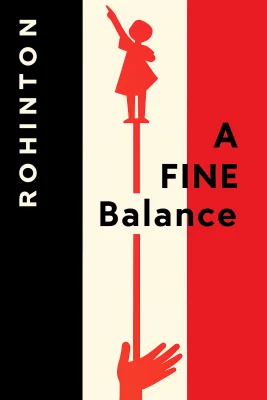
A Fine Balance
Categories
Fiction, Historical Fiction, India, Asia, Book Club, Historical, Novels, Indian Literature, Literary Fiction, Canada
Content Type
Book
Binding
Paperback
Year
1996
Publisher
Vintage
Language
English
ASIN
140003065X
ISBN
140003065X
ISBN13
9781400030651
File Download
PDF | EPUB
A Fine Balance Plot Summary
Introduction
# A Fine Balance: Threads of Dignity in an Unraveling World The morning train wheezed into the station, disgorging its human cargo onto the platform like dice spilled from a cup. Among the passengers, three strangers clutched their meager possessions—textbooks, sewing machines, and dreams that had already begun to fray at the edges. Maneck Kohlah, eighteen and hollow-eyed from months of hostel cruelties, stumbled into Ishvar and Om, uncle and nephew tailors fleeing the ashes of their village where upper-caste landlords had strung their family from banyan trees for the crime of demanding dignity. They were bound for the same address, though none knew it yet—a cramped apartment where Dina Dalal, a widowed Parsi woman, fought her daily battle against dependence and despair. At forty-two, she had learned to mask poverty behind pressed saris and careful makeup, but her independence hung by threads as thin as the ones her hired tailors would soon work with. As Indira Gandhi's Emergency descended like a shroud over India, these four souls would discover that survival required more than skill or determination—it demanded the courage to trust strangers with the fragments of their broken lives.
Chapter 1: Convergence of Strangers: Four Lives Seek Shelter in the Storm
The collision happened in the train compartment, textbooks crashing into Om's spine as the express lurched forward. Maneck stammered apologies while Ishvar laughed it off with the easy grace of men who had learned to find humor in small disasters. The scarred cheek that gave the older tailor a permanent half-smile told its own story of survival, while his nephew's sullen defiance spoke of youth that had seen too much too soon. They emerged together into the chaos of the platform, where beggars lined the walls like broken dolls and the conductor explained the delay with weary indifference—another body on the tracks, nothing more. The city assaulted their senses with diesel fumes and desperate cries, a machine that devoured the weak and fed the strong with mechanical precision. Dina waited in her flat, calculating rent money she didn't have. Twelve years of widowhood had taught her to navigate treacherous waters through sheer stubborn will, but the export company contract was her last lifeline. She needed tailors desperate enough to work in her back room for wages that barely covered survival. When Ishvar and Om appeared at her door, she saw their hunger immediately—perfect, she thought, desperate people worked hard and asked few questions. The arrangement suited everyone's brutal needs. The tailors had steady work and shelter from streets where police rounded up the homeless like cattle. Dina had her export orders filled without straining her failing eyesight. And Maneck, fleeing his hostel's casual cruelties, found refuge where sewing machines provided rhythm to his troubled thoughts. None imagined this transaction born of necessity would become something resembling family. The apartment filled with the percussion of needles and whispered conversations. Dina established rules with military precision—no smoking inside, separate cups for the tailors, locked doors when she left. But beneath her stern facade lay loneliness that had grown too heavy to carry alone, and despite herself, she found comfort in voices that brought life to rooms grown too quiet.
Chapter 2: Weaving Bonds: The Formation of an Unlikely Family
The morning ritual of tea became their first shared ceremony, steam rising from cups as stories mixed like spices in the air. Maneck spoke of mountain peaks that seemed eternal until progress scarred them with roads and tourist trash. The tailors shared memories of their village by the river, where Ishvar's father had broken centuries of caste bondage by sending his sons to learn tailoring instead of inheriting the stench of leather work. Their transformation from cobblers to tailors had begun with Ashraf Chacha, the Muslim craftsman who taught them that fingers destined to scrape rotting flesh from animal hides could instead dance across fabric with the precision of artists. But the village elders had not forgotten or forgiven this defiance of natural order. When Narayan, Om's father, dared to mark his own ballot instead of letting landlords fill it out, his body joined two others swaying from the banyan tree at Thakur Dharamsi's farm. The work itself created rhythm in their shared space. Dina cut patterns while the tailors bent over their Singers, transforming bolts of cloth into elegant dresses for American boutiques. The export manager Mrs. Gupta praised their quality and promised bigger orders, but Dina hovered like a nervous general, checking seams and counting profits that meant the difference between independence and surrender. Food became their common language. Om's irreverent humor gradually wore down Dina's defenses as he taught her village recipes that filled the apartment with unfamiliar spices. Maneck contributed his mother's mountain specialties, while Ishvar's gentle wisdom reminded Dina of the father she had lost too young. They discovered that hunger and satisfaction were universal experiences that transcended boundaries of caste and class. When Om fell ill with fever, Dina nursed him with fierce protectiveness that surprised them all. The woman who had maintained rigid boundaries between employer and worker found herself checking on him through the night, her careful rules dissolving in the face of simple human need. They were becoming something none had planned—a family of choice, bound not by blood but by the recognition that survival required more than individual strength.
Chapter 3: Threats and Protection: Navigating the City's Hidden Powers
The rent collector Ibrahim arrived like a harbinger of doom, his white beard trembling as he delivered the landlord's ultimatum. Commercial activity in a residential flat was forbidden. The tailors had to go, or Dina would face eviction. But she had learned to fight during her years of widowhood, meeting Ibrahim's threats with claims that the tailors were family members and the dresses her personal wardrobe. The siege began when Ibrahim returned with two thugs whose cold smiles promised violence. They moved through the apartment like a plague, smashing sewing machines and shredding finished dresses with casual brutality. When Maneck tried to defend the tailors with his umbrella, they bloodied his face without breaking stride. The message was clear—submit or be destroyed. Then Beggarmaster appeared, a man whose very name whispered of the city's hidden hierarchies. He commanded respect through fear and influence, his briefcase chained to his wrist speaking of serious business conducted outside the law. Within hours, the landlord's thugs had suffered mysterious accidents, their broken fingers serving as eloquent testimony to his reach. The apartment was restored, damages paid, threats neutralized. But protection came with a price that bound them to their savior as surely as chains. Weekly payments flowed to Beggarmaster, who ruled his empire of beggars and street performers with corporate efficiency and medieval ruthlessness. Each had their place, their purpose, their quota to fulfill in his shadow economy that operated parallel to the official world. The tailors learned these rules through necessity, trading one form of bondage for another that at least delivered on its promises. Beggarmaster's network extended into police stations and government offices, brothels and temples. He was both parasite and symbiont, feeding off the city's misery while providing the only stability available to its most vulnerable citizens. The moral complexity weighed heavily on all of them. They were complicit in a system they despised yet dependent on it for survival. The city had taught them its hardest lesson—sometimes there was no choice between right and wrong, only between different degrees of compromise that allowed them to continue breathing.
Chapter 4: Separation and Journey: Hope Leads Back to Danger
Ishvar's obsession with finding Om a wife began as whisper and grew into a roar that dominated every conversation. The older man carried tradition's weight on his shoulders, feeling responsible for his nephew's future in ways that transcended mere survival. Marriage was the foundation upon which a man built his life, the anchor that prevented him from drifting into purposelessness. Om resisted with youth's fury confronting unwanted destiny. At eighteen, he felt himself barely formed, still discovering who he might become. The idea of binding himself to a stranger filled him with panic, his arguments with his uncle growing increasingly bitter and threatening to tear apart their fragile peace. The correspondence with Ashraf Chacha brought abstract debate into sharp focus. Four families had expressed interest in Om as a potential son-in-law—young, skilled, employed in the city. But they wanted quick decisions, unwilling to wait while other suitors circled their daughters like vultures around carrion. Maneck's college closed due to student unrest, sending him back to the mountains and his parents' anxious embrace. The separation felt like amputation, leaving the apartment strangely hollow despite the continued presence of Dina and the tailors. They made promises to write, to return quickly, to resume their life together as if nothing had changed. The night before the tailors' departure, the three remaining members of their improvised family sat together in lamplight, each aware that something precious was ending. Dina had grown to depend on their presence more than she cared to admit, while Ishvar and Om faced the prospect of returning to a place where their very existence was considered an affront to natural order. As they loaded their trunk onto a taxi bound for the railway station, none could foresee the horror that awaited in the place they still called home. Promises are fragile things, easily broken by forces beyond human control, and the Emergency had transformed their homeland into a landscape where survival itself had become a crime punishable by mutilation.
Chapter 5: State Violence: Bodies and Dreams Broken by Emergency
The journey home began with hope but ended in nightmare. Ishvar and Om arrived in their native region to find it transformed by the Emergency's brutal efficiency. Family planning had become a weapon of state terror, with sterilization quotas enforced through violence and coercion that turned medical procedures into instruments of political control. At the local market, police surrounded crowds like hunters cornering prey. Men, women, and children were herded into trucks with the casual brutality of a livestock roundup. The tailors found themselves swept up in this human harvest, their protests ignored by officers who had quotas to fill and bonuses to earn from each body delivered to the sterilization camps. The procedures were performed with assembly-line efficiency in canvas tents that reeked of fear and disinfectant. Ishvar underwent the standard vasectomy, but Om faced a different fate. A local strongman who remembered their family's earlier defiance had marked the young man for special punishment. Under the guise of medical necessity, Om was castrated, his manhood stolen along with any hope of the family Ishvar had dreamed of creating. Physical wounds were only the beginning of their suffering. Infection set in, turning Ishvar's legs black with gangrene that spread like poison through his body. The same medical system that had mutilated them now offered only indifference to their agony, treating their pain as an inconvenience rather than a consequence of state-sanctioned brutality. Days passed in delirium as the gangrene consumed Ishvar's flesh, requiring the amputation of both legs to save his life. Their friend Ashraf Chacha, the Muslim tailor who had trained them in their youth, lay dead from police violence, killed during the same roundup that had claimed them. The world they had known was gone, replaced by a landscape of cruelty where the powerful preyed upon the weak with complete impunity. They were no longer the skilled craftsmen who had left the city with such hope, but broken remnants of their former selves. The Emergency had revealed the machinery of oppression that lurked beneath civilization's surface, grinding human dignity into statistics that justified the unjustifiable in the name of national progress.
Chapter 6: Displacement and Loss: Independence Crumbles Under Pressure
Months passed before the tailors were strong enough to travel, and when they finally returned to the city, they found their world transformed once again. Dina's flat had been seized by her landlord, her possessions scattered to the streets like debris from a demolished building. The independence she had fought so hard to maintain had crumbled under the weight of circumstances beyond her control. Maneck had vanished from their lives, swept away by opportunities in the Gulf that promised wealth but delivered only emptiness. His letters grew infrequent and then stopped altogether, leaving behind only the echo of laughter that had once filled their shared spaces. The family they had created through love and necessity had been scattered to the winds of change. Dina found herself back in her brother Nusswan's house, her pride swallowed along with her freedom. She became a dependent once again, trading her autonomy for the security of a roof over her head. The woman who had once commanded her own domain now moved through her childhood home like a ghost, her presence tolerated rather than welcomed. The tailors faced an even harsher reality. Ishvar's missing legs and Om's castration had rendered them unemployable in their chosen profession. The skills that had once provided dignity and purpose were useless to men whose bodies had been broken by state violence. They joined the ranks of the city's beggars, Ishvar rolling on a makeshift platform while Om pulled him through the streets with a rope. Their transformation was complete and terrible. The proud craftsmen who had once created beauty from raw cloth now survived on the charity of strangers. Ishvar's gentle wisdom remained, but it was housed in a body that had shrunk to almost nothing. Om's youthful irreverence had curdled into bitter acceptance, his frame swollen by hormonal changes that followed his mutilation. They had become living reminders of what the powerful could do to the powerless when mercy died and cruelty became policy. The city that had once promised opportunity now revealed its true nature—a machine that devoured the weak and fed the strong, grinding human dignity into the dust of progress.
Chapter 7: Recognition and Endings: Confronting What Cannot Be Restored
Eight years later, Maneck returned from his exile in Dubai, drawn home by his father's death and the weight of accumulated regret. The mountains of his childhood seemed smaller somehow, diminished by time and his own disillusionment. His mother's joy at his return was tempered by recognition that her son had become a stranger, hollowed out by years of meaningless work in sterile landscapes. The funeral rites became a ritual of his own awakening. Scattering ashes on the mountainside where his father had walked, Maneck felt the full weight of all the conversations they had never had, all the understanding lost to pride and distance. The rain that fell seemed to carry away more than just the physical remains of the dead. Driven by guilt and desperate need for connection, Maneck sought out the remnants of his chosen family. He found Dina first, aged beyond her years and nearly blind, living in her brother's house like a pensioner dependent on charity. The woman who had once commanded her own domain with fierce independence now moved through the world with the careful steps of someone who had learned not to expect too much from life. When Dina told him about the tailors' fate, Maneck felt something break inside him. The men who had been like family, who had shared dreams and fears in the lamplight of their shared evenings, had been reduced to beggars by the machinery of state violence. The knowledge was almost too much to bear, a weight that pressed down on his chest like a physical thing. Standing outside Dina's brother's house, Maneck watched as two beggars approached along the street. One sat on a rolling platform, legless and shrunken, while the other pulled him forward with a rope. They were unrecognizable as the skilled craftsmen he had once known, transformed by suffering into something that barely resembled their former selves. When they asked him for coins, he could not find his voice to answer, paralyzed by the magnitude of what had been lost. At a railway station crowded with the evening rush of commuters, Maneck stepped in front of an express train, carrying with him the chess set that had belonged to his murdered friend Avinash. It was an ending that seemed to confirm his long-held belief that everything ended badly, that hope was just another form of cruelty designed to make suffering more exquisite.
Summary
The threads of their lives created a pattern both beautiful and heartbreaking, a testament to the human capacity for cruelty and love existing in the same breath. The Emergency that had promised order and progress delivered only chaos and suffering, breaking bodies and spirits with equal efficiency. Yet within that darkness, moments of grace persisted like stars in a clouded sky, reminding them that dignity could survive even the most systematic attempts to destroy it. Dina continued her secret acts of charity, feeding Ishvar and Om from her brother's kitchen while maintaining the pretense of indifference. The tailors adapted to their new reality with the resilience of those who had already lost everything that mattered, finding dignity in the simple act of survival itself. Their story became a reminder that while the powerful may control the machinery of state, they cannot entirely destroy the capacity for love and connection that makes us human. In a world designed to separate and diminish them, they had found ways to remain bound together by invisible threads of compassion and memory, proving that some bonds transcend the scissors of fate that cut without warning in the darkness.
Best Quote
“The human face has limited space. If you fill it with laughter there will be no room for crying.” ― Rohinton Mistry, A Fine Balance
Review Summary
Strengths: The review highlights the book's compelling climax and emotional depth, describing it as "unputdownable" and "magnificent." The narrative is praised for its ability to evoke strong emotions, with the reader forming a deep connection with the characters. The story's exploration of themes such as friendship, struggle, and societal issues like caste and poverty is noted as impactful and thought-provoking. Overall: The reader expresses a highly positive sentiment, describing the book as life-changing and emotionally moving. The recommendation is strong, with the reviewer expressing regret for anyone who might miss the opportunity to read it.
About Author

Rohinton Mistry
Mistry reflects on the complex interplay of family dynamics and societal pressures in his literature, crafting stories that reflect the Parsi community's experiences in India. His narratives, infused with rich detail and humor, interrogate themes such as poverty, discrimination, and the effects of political and social change. Mistry’s purpose lies in shedding light on the human condition, particularly as it unfolds in postcolonial India, where personal identities are often challenged by external forces.\n\nThrough novels like "Such a Long Journey" and "A Fine Balance," Mistry connects readers to the intimate struggles of his characters, providing insight into the immigrant experience and cultural identity. While his style is marked by nostalgia and critical social examination, Mistry also employs a deeply personal approach, revealing the emotional landscapes of his characters. This method allows readers to empathize with the complexities of family and friendship in a changing world. The author's ability to blend personal narrative with broader social commentary makes his work both relatable and thought-provoking.\n\nReaders who appreciate narratives exploring cultural identity and societal issues will find Mistry’s books compelling. His achievements, including the Neustadt International Prize for Literature, underscore his impact in contemporary literature. By engaging with Mistry’s work, audiences gain a deeper understanding of not just the Parsi community but also the broader human experiences of loss, resilience, and hope. This brief bio highlights how Mistry's storytelling resonates with readers, offering them a window into the nuanced reality of life in India and beyond.
Read moreDownload PDF & EPUB
To save this Black List summary for later, download the free PDF and EPUB. You can print it out, or read offline at your convenience.
A Fine Balance
by Rohinton Mistry
