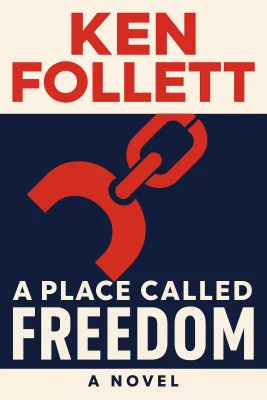
A Place Called Freedom
Categories
Fiction, Audiobook, Mystery, Historical Fiction, Romance, Thriller, Historical, Novels, Adventure, Scotland
Content Type
Book
Binding
Mass Market Paperback
Year
1996
Publisher
Ballantine Books
Language
English
File Download
PDF | EPUB
A Place Called Freedom Plot Summary
Introduction
# Chains of Coal, Wings of Freedom The iron collar bit deep into Malachi McAsh's neck as he swung his pickaxe in the suffocating darkness of Scotland's Heugh coal mine. In 1767, miners were property, bound to their masters like medieval serfs. But when a lawyer's letter arrived claiming Mack was legally free, everything changed. The twenty-two-year-old Scotsman with startling green eyes had spent his life crawling through tunnels black as sin, hauling coal carts that would have broken lesser men. Now he faced a choice that would echo across continents: submit to slavery or fight for freedom at any cost. What followed was a journey that would span from the coal-stained hills of Scotland to the tobacco fields of colonial Virginia. Mack's rebellion would entangle his fate with Elizabeth Hallim, the spirited daughter of a bankrupt lord, and Jay Jamisson, heir to a coal fortune built on human bondage. Their collision course would test the very meaning of liberty as revolution stirred on both sides of the Atlantic, and the price of freedom proved higher than any of them could imagine.
Chapter 1: The Iron Collar's Rebellion: Scottish Mines and the Seeds of Defiance
The explosion warning came too late. Mack pressed his ear against the coal seam, listening for the mountain's deadly whispers. As the pit's fireman, he could read the signs that spelled death in the darkness. Firedamp gas had claimed his father and countless others, but today young Wullie had fallen asleep during his fifteen-hour shift, trapped in the tunnel as Mack's burning torch raced toward accumulated death. Mack abandoned his safety trench and plunged back into hell. He found the boy, wrapped him in a sodden blanket, and ran as the mountain's breath caught fire behind them. The blast threw them into the drainage pool, but they lived. Above ground, the miners sang hymns in defiance of their masters, celebrating not just survival but the courage of a man who risked everything for a child. Sir George Jamisson watched from his carriage with cold calculation. Beside him sat his sons: Robert, the methodical heir, and Jay, the restless younger son who dreamed of Virginia plantations. They had come to witness Mack's submission on his twenty-second birthday, the day he would either claim his freedom or lose it forever. The church service became a battlefield. Mack rose to his feet, the lawyer's letter crackling in his hands like a weapon. His voice cut through the Highland cold as he read the words that could shatter their world: the payment of arles was meaningless, a child cannot be enslaved, men pledged as children could leave at twenty-one. The miners stirred like a waking beast as hope flickered in eyes that had known only darkness. Robert Jamisson tore the letter to pieces, scattering the fragments like snow. The miners walked out in silent protest, following Mack into the churchyard where winter wind cut through their thin clothes. That night, they made him go the round, tied to a horse at the pithead, forced to run backward in circles until his legs gave out. The iron collar around his neck marked him as property, but as dawn broke over the glen, Mack knew what he had to do. He broke into the smithy, shattered his collar with hammer and chisel, and fled toward the river, carrying with him the broken metal and a burning promise: never to forget, never to forgive.
Chapter 2: Crossing Dark Waters: From Newgate Prison to Virginia Shores
London swallowed men whole, but Mack refused to disappear. The great city sprawled along the Thames like a wounded beast, its streets choked with desperate souls fleeing failed harvests and vanished trades. He found work among the coal heavers, men who bent their backs to feed London's endless hunger for fuel. But when he challenged the system of theft that bound these workers as surely as iron collars, every undertaker on the Thames blacklisted his gang. Newgate Prison squatted like a cancerous growth in the heart of the metropolis. Inside, Mack found himself thrown together with the dregs of English society, waiting for their turn at the gallows or the transport ships. Here he met Cora Higgins, a flame-haired thief with quick fingers and a quicker tongue, and Peg Knapp, barely thirteen years old, with the sharp eyes of a child who had grown up too fast. The three formed an unlikely family bound together by shared desperation. The judge barely looked up from his papers as he condemned them to seven years transportation. Seven years of their lives signed away with the scratch of a quill pen. As they were led back to their cells to await the next transport ship, Mack felt the weight of invisible chains and wondered if he would live to see Scotland again. The Rosebud was a floating hell. Two hundred convicts were crammed into a space barely five feet high, chained together in pairs, lying so close they could feel each other's breath. The stench hit like a physical blow: unwashed bodies, vomit, human waste, and the sickly-sweet smell of death. Disease swept through the hold like wildfire. Mack watched his chain partner waste away, his ravings growing quieter each day until finally he fell silent forever. Twenty-five prisoners died during the crossing, their bodies thrown overboard with no more ceremony than disposing of spoiled cargo. But there were moments of unexpected humanity. Lizzie Jamisson, now married to Jay and traveling to Virginia in luxury, somehow arranged for better food to reach the convicts. When the cry of land finally echoed through the ship, Mack felt tears on his cheeks. They had survived the crossing, but their real ordeal was just beginning.
Chapter 3: Mockjack Hall: New World Bondage and Old World Cruelty
The tobacco fields of Mockjack Hall stretched toward the horizon like a green sea under the merciless Virginia sun. Mack stood in the slave quarters, his legs still unsteady after eight weeks at sea, trying to comprehend his new reality. The plantation was a world unto itself, with its grand house overlooking the Rappahannock River and the collection of rough cabins where forty souls lived and worked for Jay Jamisson's profit. Kobe Tambala became Mack's guide to this strange new world. The African had been stolen from his homeland forty years earlier, and time had taught him the bitter wisdom of survival under the lash. He showed Mack how to strip tobacco leaves without damaging them, how to avoid the overseer's attention, and how to find moments of rest in the endless cycle of labor that stretched from dawn to midnight during harvest season. Sidney Lennox ruled the plantation with a whip and a sneer. The former London tavern keeper who had orchestrated Mack's downfall now wore the clothes of a Virginia gentleman, his cruel smile unchanged. When the previous overseer mysteriously disappeared owing Lennox gambling debts, the tavern keeper stepped smoothly into the role. His first act was to demonstrate his authority with the whip, moving through the fields like a predator, his eyes always seeking Mack's face in the crowd. The confrontation came when Lennox's boot found the ribs of young Bess, a fifteen-year-old girl who had collapsed from exhaustion in the wheat field. Mack stepped between the overseer and the fallen girl, taking a lash across his face that opened the skin to the bone. What happened next took only seconds but changed everything. Mack's fist connected with Lennox's jaw with the sound of an axe biting wood. The overseer hit the ground hard, his whip spinning away into the dirt. Elizabeth Jamisson appeared before Lennox could recover his authority, pulling Mack from the fields and installing him in the main house as a handyman. She had watched Lennox's rise to power with growing alarm, and now she acted on instinct to save the man who had dared to stand up to cruelty. In the grand rooms of Mockjack Hall, away from Lennox's immediate reach, Mack might survive long enough to see another sunrise.
Chapter 4: Forbidden Hearts: Love and Danger in the Tobacco Fields
The nursery took shape under Mack's skilled hands, its walls bright with fresh paint and hope for Lizzie's coming child. Working in the main house felt like luxury after the fields, but it came with its own perils. Lizzie visited daily, ostensibly to check his progress, but their conversations ranged far beyond paint colors and furniture placement. She told him about her mother's remarriage to the village pastor, how it felt to be cut adrift from everything she'd known. He spoke of his twin sister Esther, killed in a mine collapse while he crossed the ocean in chains. They were two people torn from their roots, trying to grow in alien soil, and in their shared displacement they found an intimacy that had nothing to do with their stations in life. The danger came not from what they said but from what they didn't say. When Lizzie's hand lingered on his as she examined his work, when her eyes followed the movement of his muscles as he lifted heavy furniture, when she found excuses to brush past him in the narrow doorway. The air between them crackled with unspoken possibilities that could destroy them both. Lennox watched from the shadows, his calculating eyes missing nothing. He had lost face when Mack humiliated him in the fields, and now he saw opportunity in the growing closeness between the pregnant mistress and her handsome handyman. In Virginia, a white woman's honor was worth a black man's life, and a convict's life was worth even less. The breaking point came during Lizzie's attempt to throw a party for the field hands. She had planned it as a gesture of goodwill, a brief respite from their endless labor. But Lennox sent the workers to a distant part of the plantation, leaving her with tables of untouched food and the bitter taste of defeat. When Mack found her crying in the drawing room, his arms went around her as naturally as breathing. For a moment, she let herself be held, let herself imagine a different life. Then reality crashed back, and she pushed him away, horrified by her own desires. The stillborn baby changed everything. Mack held the tiny, lifeless form in his hands while Lizzie wept, and he felt something fundamental shift in the world around them. Jay's reaction was coldly practical: a daughter was worthless to him anyway. But for Lizzie, the loss opened a chasm of grief that threatened to swallow her whole. When Mack found her in the empty nursery, tears streaming down her face, he made a decision that would change both their lives forever. He took her in his arms, and for the first time, the barriers between mistress and servant crumbled away.
Chapter 5: Breaking Chains: The Price of Striking Back
Their love affair was conducted in stolen moments and whispered conversations. In the painted nursery, in the shadows of the tobacco sheds, wherever they could find privacy from the watching eyes of the plantation. Mack knew the danger they courted with every touch, every kiss. A white woman and a convict servant caught together would mean death for him and disgrace for her. But the connection between them had grown too strong to deny. The final betrayal came when Lizzie discovered Jay with Felia, a young African woman whose beauty had caught his eye. She found them in a slave cabin, her husband rutting with his property like an animal. The sight finally shattered the last of Lizzie's illusions about her marriage. That night, when Jay tried to force his way into her locked bedroom, she met him with a loaded pistol and the cold fury of a woman who had endured too much. The confrontation that had been building all summer finally erupted on a sweltering August morning. Lennox had been drinking heavily, and his temper was shorter than usual as he prowled the tobacco fields. When he found Bess moving too slowly for his liking, his whip fell across her shoulders with vicious precision. Mack was working nearby, close enough to hear the girl's cry of pain. He had promised himself he would keep his head down, avoid trouble, survive until he could escape. But when Lennox raised his whip again, something snapped inside him. The months of humiliation, the memory of his sister's death, the weight of promises he couldn't keep, all of it crystallized into a moment of pure rage. He was across the field before conscious thought could stop him, his hand closing on Lennox's wrist as the whip descended. They faced each other in the blazing sun, master and slave, oppressor and oppressed, their hatred finally naked between them. Lennox's free hand went to the knife at his belt, but Mack was faster. His fist caught the overseer in the solar plexus, doubling him over, and a second blow to the jaw sent him sprawling in the dirt. Mack stood over Lennox's prone form, the broken pieces of the whip in his hands, and felt a moment of pure satisfaction. Then reality crashed back. He had struck a white man, had humiliated him before witnesses. In Virginia, that was a killing offense.
Chapter 6: Flight to the Mountains: Pursuit Through the Wilderness
The wagon rolled west through the Virginia wilderness in the dead of night, carrying everything they owned and everyone they loved toward an uncertain future. Mack drove while Lizzie rode beside him, both transformed by their decision to flee. She had cut her hair short and dressed in men's clothing, while he had shed the deferential manner of a servant for the confident bearing of a free man. Behind them, Peg Knapp completed their unlikely family, the thirteen-year-old thief who had attached herself to them with fierce loyalty. They had found Peg by chance in Fredericksburg, sold to soul drivers who herded human cargo to the frontier settlements. Mack's promise to find her had driven him to search every tavern and market town until he tracked down the men who had bought her from the ship. The reunion was bittersweet, the girl aged beyond her years by months of abuse, but her spirit remained unbroken. The journey tested them in ways they had never imagined. They followed ancient Indian trails through mountain passes where a single misstep could send them tumbling into rocky gorges. They forded rivers swollen with spring runoff, hunted deer and wild turkey for food, and slept under stars that seemed close enough to touch. Jay pursued them with the relentless fury of a man who had lost everything that mattered to his pride, but the wilderness was vast and the trails were many. The Cherokee watched them with growing interest. These mountains were their hunting grounds, and the white intruders moved through them like clumsy children, leaving signs that any warrior could read. When Jay's party captured and tortured a young Cherokee guide to learn their route, they sealed their own fate. The warriors who emerged from the forest carried bows and tomahawks, and their justice was as swift as it was final. The confrontation came in a mountain valley, swift and brutal. Jay died with an arrow through his throat, while Lennox paid for his cruelty with his life. In the end, it was a Cherokee boy named Fish who led them through the final mountain pass to the valley they would call home. As they made camp beneath a spreading oak tree, Mack looked at Lizzie and Peg and felt something he had never experienced before: the knowledge that he was truly free.
Chapter 7: Beyond the Cumberland Gap: Freedom Forged in Mountain Valleys
The valley they claimed lay beyond the reach of sheriffs and slave catchers, beyond the authority of kings and the cruelty of overseers. Here, in the shadow of the Cumberland Mountains, Mack built a cabin with his own hands while Lizzie learned to cure meat and Peg discovered she had a gift for tending the vegetable garden they carved from the wilderness. It was a hard life, but it was their life, shaped by their choices rather than the whims of masters. The seasons turned, and their small community grew. Fish stayed with them, drawn by his feelings for Peg and his fascination with these strange white people who treated him as an equal. Other refugees found their way to the valley: runaway slaves, indentured servants who had completed their terms, Cherokee outcasts, and white settlers fleeing debts or failed dreams. They built a settlement where a person's worth was measured by their willingness to work and their loyalty to the community. Mack kept the broken iron collar as a reminder of how far they had traveled, not just in miles but in spirit. Sometimes, in the evening light, he would take it from its place on the mantel and run his fingers over the cold metal, remembering the weight of it around his neck and the taste of despair it had brought. But now it served a different purpose: a symbol not of bondage but of liberation, proof that even the strongest chains could be broken by those with the courage to try. The first winter tested them severely. Snow fell deeper than any of them had ever seen, and the cold bit through their cabin walls like a living thing. They survived on stored corn and dried meat, huddled around their fire while wolves howled in the darkness beyond their door. But they survived together, and when spring finally came, melting the snow and bringing green life back to the valley, they knew they had found something more precious than gold or tobacco. Lizzie gave birth to their son in the cabin Mack had built, with Peg acting as midwife and Fish standing guard outside. The boy came into the world with his father's green eyes and his mother's stubborn chin, and as Mack held him for the first time, he made a silent promise. This child would never know the weight of chains, would never bow his head to any master, would grow up free in a land where freedom was more than just a word whispered in the darkness.
Summary
In this valley beyond the mountains, they had found something that neither Scotland's coal mines nor Virginia's tobacco fields could offer: the freedom to be truly human. Mack McAsh, who had begun his journey as property in the depths of a Scottish mine, had become the founder of a community where the color of a person's skin mattered less than the content of their character. The iron collar that had once marked him as a slave now served as a reminder that even the strongest chains could be broken by those with the courage to try. The wilderness had tested them all, stripping away the false distinctions of the civilized world and revealing the essential truth that all people, regardless of their birth or circumstances, deserved the chance to shape their own destiny. In their mountain valley, former slaves worked alongside Cherokee warriors, indentured servants stood equal with free men, and children grew up believing that freedom was their birthright rather than a privilege to be earned. The chains of coal had been transformed into wings of freedom, carrying them beyond the reach of those who would make property of human souls.
Best Quote
“Behold, a man in anguish bendingMarked by pain and lossYonder stony hill ascendingCarrying a cross” ― Ken Follett, A Place Called Freedom
Review Summary
Strengths: The review highlights Ken Follett's ability to create vivid, immersive worlds with rich textures and emotions. The character development, particularly of Mac McAsh and Lizzie Hallim, is praised, with Lizzie being noted for her daring and tomboyish nature. The novel's exploration of themes such as freedom and servitude is also appreciated. Weaknesses: The review points out that the characters are portrayed in overly simplistic terms, being either entirely virtuous or completely villainous, which detracts from their believability. Additionally, it suggests that the book does not reach the same level of excellence as Follett's other works, such as "Pillars of the Earth." Overall: The general sentiment is positive, with the book being recommended for its engaging narrative and thematic depth, though it is noted as not being Follett's best work.
About Author

Ken Follett
Follett synthesizes historical narratives with thrilling plots, weaving intricate tales that resonate with readers worldwide. His work, notably characterized by a deep understanding of history and human nature, explores themes such as conflict, ambition, and the resilience of communities. With a background in philosophy from University College, London, Follett channels his analytical skills into crafting novels that are not only entertaining but also thought-provoking. His breakout book, "Eye of the Needle," exemplifies this approach with its gripping World War II setting and rich character development, while "The Pillars of the Earth" transports readers to medieval times, focusing on the ambitious construction of a cathedral.\n\nIn his writing, Follett utilizes meticulous research and complex narratives to immerse readers in different eras, thereby offering them a profound understanding of the past. This method allows readers to gain insights into the socio-political dynamics of various historical periods, enhancing their appreciation for how history shapes the present. "The Evening and the Morning," a prequel to "The Pillars of the Earth," further illustrates this by setting the stage for Kingsbridge's transformation during the Anglo-Saxon era. Readers who enjoy detailed historical contexts and intricate storylines find Follett's work particularly rewarding, as it not only entertains but also educates.\n\nFollett's contributions extend beyond his literary achievements. He has played a significant role in literacy advocacy, having been the president of Dyslexia Action and chair of the National Year of Reading. His involvement in these initiatives underscores his commitment to education and community service. Meanwhile, his recognition as a Fellow of University College, London, and his impact on readers highlight his influence both as an author and as a public figure dedicated to promoting literacy and learning.
Read moreDownload PDF & EPUB
To save this Black List summary for later, download the free PDF and EPUB. You can print it out, or read offline at your convenience.
A Place Called Freedom
by Ken Follett
