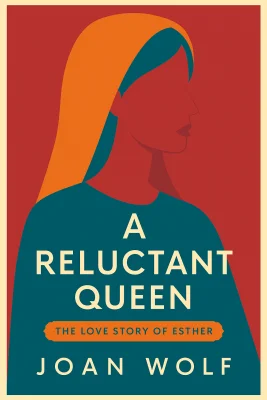
A Reluctant Queen
The Love Story of Esther
Categories
Fiction, Christian, Historical Fiction, Romance, Historical Romance, Adult, Historical, Christian Fiction, Biblical Fiction, Biblical
Content Type
Book
Binding
Paperback
Year
2011
Publisher
Thomas Nelson
Language
English
ISBN13
9781595548764
File Download
PDF | EPUB
A Reluctant Queen Plot Summary
Introduction
In the golden halls of Susa, capital of the Persian Empire, a young Jewish woman named Esther stared at her reflection in polished bronze. Tomorrow, she would meet the Great King Ahasuerus—not as herself, but as a carefully crafted lie. Her uncle Mordecai had orchestrated this deception, convinced by prophetic dreams that their people faced annihilation. The king needed a queen, and the Jews needed a voice in the palace. What Mordecai hadn't anticipated was love blooming in the shadow of such calculated betrayal. As Esther prepared to enter the royal harem, she couldn't know that her greatest enemy was already there—Haman the Edomite, the king's trusted advisor, whose hatred for her people would soon explode into genocidal fury. The stage was set for a deadly game of palace intrigue, where one woman's courage would determine whether an entire race lived or died. In this ancient world of absolute power and hidden daggers, truth itself had become the most dangerous weapon of all.
Chapter 1: The Reluctant Candidate: Mordecai's Vision and Esther's Sacrifice
The dream came to Mordecai like a hammer blow in the dead of night. He bolted upright in his narrow bed, sweat streaming down his face as the visions burned behind his eyes—two massive dragons locked in mortal combat while the earth shook beneath them. In that apocalyptic landscape, he had seen his people scattered like dust, their blood staining foreign soil. Then came the healing river, the breaking dawn, salvation flowing from an impossible source. His niece Esther found him trembling in the courtyard at sunrise, his thin frame hunched over the morning bread. At fifteen, she possessed a rare beauty that even her rough work clothes couldn't diminish—dark eyes that seemed to hold starlight, olive skin touched with gold from the Persian sun. She had grown up in his modest house after her Persian father died in battle, her Jewish mother following soon after. Now she was his only family, his greatest treasure. "Uncle, you look terrible," she said, kneeling beside him with genuine concern. Mordecai studied her face—the high cheekbones, the intelligent eyes, the unconscious grace in her movements. The dream's meaning crystallized with devastating clarity. King Ahasuerus had just divorced Queen Vashti for defying him at a banquet. A contest was announced—beautiful virgins from across the empire would compete for the crown. But only those of noble Persian blood could enter. "Your father was an Achaemenid," he whispered, almost to himself. "You could be a candidate." Esther's laughter died as she saw his expression. Her uncle explained his vision, his certainty that God had chosen her as their people's salvation. The king's new advisor, Haman the Edomite, posed a growing threat to Jewish interests. They needed someone in the palace, someone with the king's ear. "You're asking me to live as a lie," Esther protested, her voice breaking. "To hide everything I am." Mordecai's weathered hands gripped hers. "I'm asking you to trust in the Lord's plan. Your beauty was given for a purpose, child. This is that purpose."
Chapter 2: From Jewish Maiden to Persian Queen: A Hidden Identity
The harem doors clanged shut behind Esther like the gates of a tomb. Hegai, the Chief Eunuch, examined her with the dispassionate eye of a horse trader, cataloging her flaws with clinical precision. Her hair was too straight, her skin too sun-darkened, her hands too rough from honest work. She wasn't like the pampered Persian noblewomen who arrived in silk-draped litters, already perfected by years of luxury. "You have potential," Hegai finally conceded, "but it will take considerable effort." The next months blurred into an endless cycle of beauty treatments. They soaked her in milk baths, rubbed her skin with exotic oils, plucked and painted and primped until she barely recognized herself. The other candidates treated her with polite disdain—she was clearly beneath them, the daughter of some minor cavalry officer and a Babylonian merchant's girl. Esther learned to move like liquid silk, to speak in the cultured tones of the court, to pour wine with ritualistic grace. But at night, alone in her windowless cell, she would whisper the Shema, the ancient prayer of her people. "Hear, O Israel, the Lord our God is one." The words were her only anchor in this sea of deception. Months passed. Girls came and went, summoned to meet the king and returning either triumphant or broken. The palace hummed with gossip—Ahasuerus was proving impossibly selective, rejecting even the most exquisite candidates after brief audiences. Then came the day Hegai called her name. As the servants arrayed her in pearl-sewn silk and wove jewels through her dark hair, Esther felt the weight of destiny settling on her shoulders. She was no longer just Mordecai's niece or even Esther the Jew. She was about to become either a queen or another discarded flower in the harem's garden of broken dreams.
Chapter 3: The Heart of the King: Love Blossoms in the Palace
Ahasuerus rose from his golden throne as she entered the rose garden, and Esther's breath caught. The gossips were right—he was devastatingly handsome, with bronze-touched hair and eyes like winter sky. But there was something else, a loneliness that seemed to radiate from him despite all his royal splendor. "So you are Esther," he said, his voice carrying the slight drawl of the nobility. She had rehearsed the proper prostration countless times, but he waved it away with casual grace. Instead, they walked together through the garden, talking as naturally as old friends. He asked about her supposed Babylonian heritage, her hopes and fears. She found herself laughing at his dry humor, charmed by moments when the mask of kingship slipped to reveal the man beneath. "Your skin and your hair can be repaired," Hegai had told her months ago, "but bones cannot be changed. And your bones are already beautiful." Now, seeing how Ahasuerus's eyes followed the curve of her cheek, the line of her throat, Esther understood what the eunuch had meant. Beauty was more than surface perfection—it was the soul shining through mortal flesh. Their hour together passed like minutes. When Hegai finally came to escort her back to the harem, the king's eyes never left her face. That night, lying on her narrow cot, Esther dared to hope she had found something she hadn't even known she was seeking—not just a crown, but perhaps something far more precious. The summons came at dawn. Hegai's face was radiant with triumph as he bowed low before her. "Congratulations, my lady. The Great King has chosen you to be his queen."
Chapter 4: Shadows in the Court: Haman's Rise and Mordecai's Defiance
Success bred its own dangers. As Queen Esther settled into her gilded cage, learning the intricate rituals of Persian court life, darker currents swirled through the palace corridors. Haman the Palestinian had risen to become the king's most trusted advisor, appointed Grand Vizier after the previous holder's execution for treason. The man was a study in contradictions—handsome in a sharp-featured way, intelligent, utterly devoted to Ahasuerus. But Esther sensed something serpentine beneath his polished surface, a hunger that had nothing to do with power and everything to do with possession. He wanted to be the sun in the king's universe, the single source of light and warmth. That hunger curdled into poison when he encountered Mordecai in the Treasury offices. Her uncle had been promoted to Head Treasurer, a position that brought him into regular contact with the king. The two men faced each other across centuries of tribal hatred—Jew and Edomite, ancient enemies whose peoples had spilled each other's blood since the time of Abraham. "You will bow to me," Haman hissed when Mordecai remained upright as he passed. "I do not bow to Edomites," Mordecai replied with calm dignity. The exchange might have ended there, a minor slight between minor men. But Haman was not minor, and his pride had been wounded before witnesses. Worse, he saw how Ahasuerus smiled when speaking of the honest Jewish treasurer, how the king sought Mordecai's counsel on matters of state. Jealousy took root in Haman's heart like a cancer, feeding on every perceived slight, every moment when the king's attention wandered from him to others. He began to watch, to wait, to plan. If he couldn't destroy Mordecai's influence through conventional means, perhaps he could find another way. The seeds of genocide were planted in the bitter soil of one man's wounded ego.
Chapter 5: The Deadly Decree: Genocide Authorized Under the Royal Seal
Ahasuerus departed for a military campaign against the Mardian brigands who controlled the mountain passes. Before leaving, he entrusted his Royal Seal to Haman—a gesture of supreme confidence that nearly broke the Palestinian's twisted heart with joy. At last, he held the symbol of absolute power, the authority to speak with the king's own voice. The temptation proved irresistible. Using the legal fiction of Mordecai's supposed embezzlement, Haman crafted a decree of breathtaking evil. He wrote it in the king's name, sealed it with the royal authority, and sent it racing to every corner of the empire on the fastest horses. The proclamation was a masterpiece of bureaucratic brutality, cloaked in the language of administrative necessity. It spoke of "one tribe of bad will" that threatened imperial unity, of aliens whose customs made them enemies of the state. The solution was final and absolute—every Jew in the Persian Empire, from India to Egypt, was to be killed. Men, women, children, all were to be "utterly destroyed by the swords of their enemies." The date was set for the fourteenth day of Adar, still months away. Time enough for the decree to reach the farthest provinces, time enough for local officials to make their preparations. Time enough for an entire people to contemplate their doom. When word reached the Jewish quarter of Susa, the reaction was instantaneous and devastating. Fathers clutched their sons, mothers wept over sleeping daughters. The ancient nightmare had returned—once again, a foreign king had decreed their extinction. But this time, there was nowhere to run, no neighboring kingdom to offer sanctuary. The Persian Empire was the known world, and in that world, there would be no place for the children of Abraham. Only one voice might still speak for them—but that voice belonged to a woman who had spent two years hiding her very identity.
Chapter 6: A Queen Unveiled: Risking Life to Save a People
The news shattered Esther's carefully constructed world. Her grandfather Arses brought her a copy of the decree, his aristocratic features twisted with disgust. "This Palestinian dog has used the king's name for his own racist hatred," he snarled. "Ahasuerus knows nothing of this abomination." But the king was still days away, campaigning in the mountains. Every hour of delay brought the machinery of genocide closer to its terrible culmination. Local governors were already preparing for the slaughter, sharpening swords and making lists. Time was hemorrhaging away like blood from a mortal wound. Esther faced an impossible choice. Persian law demanded death for anyone who approached the king unbidden—even queens could be executed for such presumption. But worse than the legal danger was the personal cost. To save her people, she would have to reveal her true identity, confessing to two years of lies. Ahasuerus, who worshipped truth above all things, would never forgive such deception. She spent three days in fasting and prayer, preparing herself for sacrifice. When the king returned for the spring festival, she would violate every law of god and man by entering the sacred banquet hall. She would stand before him unveiled, revealed at last as the Jew who had deceived him. The night before her desperate gambit, she made her peace with God and mortality. She was only one woman, but sometimes one voice could change the world's fate. Tomorrow, she would discover if hers was that voice—or if she would die in the attempt, leaving her people defenseless against annihilation. The festival torches burned bright in the palace courtyard, but for Esther, the darkness had never seemed deeper.
Chapter 7: Redemption and Reconciliation: Truth, Justice and Love Prevail
The banquet hall fell silent as Esther appeared in its doorway, unveiled and radiant in pearl-sewn silk. Five hundred of the empire's most powerful men stared in shock as the queen violated every law of propriety and religion. The air crackled with tension—would the king extend his golden scepter in mercy, or would she die where she stood? Ahasuerus rose slowly, his face a mask of fury and confusion. But his hand lifted the scepter toward her, sparing her life even as his eyes blazed with questions. When she swayed with exhaustion from days of fasting, he caught her in his arms, carrying her to safety behind silken curtains. "Tomorrow," she whispered when he demanded explanations. "Come to me tomorrow with Haman, and I will tell you everything." That night was the longest of her life. When dawn came, she served them wine with steady hands, then spoke the words that would either save or damn her people. She revealed the decree, Mordecai's true identity as her uncle, and finally—most devastating of all—her own Jewish blood. The silence stretched like a blade between them. Then Ahasuerus turned to Haman with a look that could have frozen rivers. "Is this your doing?" The broken man could only nod, his grand design crumbling around him. He had meant it as an act of devotion, eliminating those who stood between him and his beloved king. But love twisted by jealousy had birthed only hatred and betrayal. Within hours, couriers galloped from the palace bearing new decrees—the slaughter was canceled, the Jews reprieved. Haman swung from the very scaffold he had built for Mordecai, justice served with brutal symmetry. But for Esther and Ahasuerus, the hardest trial still lay ahead. "You let me believe you were someone else," he said when they were alone, his voice hollow with hurt. She knelt before him, tears streaming down her face. "I was afraid to lose you. I loved you too much to risk the truth." He pulled her up, his hands gentle despite his pain. "The truth is all we have, Esther. Everything else is just shadows and lies." But as she pressed against him, feeling their child move in her womb, forgiveness began its slow work. They had both been victims of deception—hers born of love, Haman's of obsession. In choosing truth over comfortable lies, they might yet build something lasting from the ruins of betrayal.
Summary
In the golden halls of ancient Persia, a Jewish girl named Esther discovered that sometimes the greatest courage lies not in wielding a sword, but in speaking truth to power. Her journey from reluctant bride to savior of her people revealed the terrible weight of deception—how lies meant to protect can become chains that bind us to darkness. When genocidal fury threatened to devour an entire race, one woman's willingness to risk everything transformed hatred into justice, death into deliverance. The story echoes across centuries as a reminder that evil often wears the mask of devotion, that jealousy can poison even the purest love into something monstrous. Yet it also whispers hope—that courage can bloom in the most unlikely hearts, that truth spoken in love has power to heal what hatred has torn apart. In a world where the powerful prey upon the helpless, Esther's legacy endures: sometimes salvation comes not through strength, but through the simple, terrifying act of removing our masks and showing the world exactly who we are.
Best Quote
Review Summary
Strengths: The book is praised for its engaging storytelling, with a well-executed love story that captivates readers. The narrative is described as beautifully written, with strong secondary characters and a satisfactory conclusion. The retelling brings the story of Esther to life, making it hard to put down, and it is recommended for fans of historical or biblical fiction. Weaknesses: The book diverges significantly from the original biblical story, which may discomfort some readers. The prose is considered functional but not compelling, with some dialogue criticized for being unsubtle and unrealistic. The story's authenticity is questioned, with elements feeling artificial. Overall: The book receives mixed reviews, with appreciation for its storytelling and character development, but criticism for its deviation from the biblical narrative and lack of subtlety in dialogue. It is recommended for those interested in historical fiction, though it may not appeal to purists.
About Author

Joan Wolf
Wolf reframes historical romance by combining intricate historical research with emotionally rich narratives, focusing on themes of cultural identity and resilience. Her writing journey began as she balanced motherhood, crafting her debut novel, "The Counterfeit Marriage", during her son's naps. This launch into Regency romance earned her national recognition and the status of a USA TODAY bestselling author. Joan Wolf’s admiration for Georgette Heyer and preference for the Regency period allowed her to explore historical settings with precision and depth, leading to acclaimed works like "The Guardian" and "A London Season".\n\nBeyond Regency romances, Wolf extends her literary repertoire into historical fiction with books like "Runs with Courage", which illuminates the struggles of a young Lakota girl in a Christian residential school, highlighting themes of cultural survival and assimilation. Her diverse oeuvre also includes biblical historical romance, as seen in "A Reluctant Queen", and her "Dark Ages" trilogy, which blends history and legend. Readers benefit from Wolf’s well-researched settings and strong characterizations that provide both entertainment and a deep understanding of historical contexts.\n\nWhile no major awards are listed, Joan Wolf’s enduring career, with over 50 novels published, showcases her sustained success in the historical romance genre. Her ability to weave romantic and emotional depth into historical narratives makes her works appealing to a wide readership interested in history and romance. This brief bio captures her journey from a young girl with a love for reading in the Bronx to a celebrated author residing in Connecticut, continuing to impact readers with her distinctive blend of historical detail and romantic storytelling.
Read moreDownload PDF & EPUB
To save this Black List summary for later, download the free PDF and EPUB. You can print it out, or read offline at your convenience.
A Reluctant Queen
by Joan Wolf
