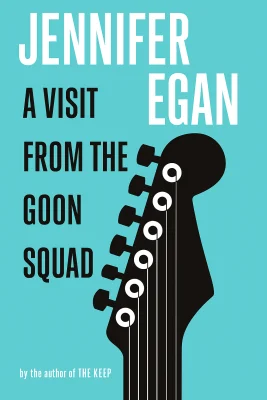
A Visit from the Goon Squad
Categories
Fiction, Short Stories, Audiobook, Music, Literature, Book Club, Contemporary, Novels, Adult Fiction, Literary Fiction
Content Type
Book
Binding
Hardcover
Year
2010
Publisher
Knopf
Language
English
ASIN
0307592839
ISBN
0307592839
ISBN13
9780307592835
File Download
PDF | EPUB
A Visit from the Goon Squad Plot Summary
Introduction
In a Tribeca hotel bathroom, Sasha stares at herself in the mirror while adjusting yellow eye shadow. Next to the sink sits an abandoned purse, its pale green wallet visible through the opening. The woman inside the stall trusts the world enough to leave her belongings unguarded. But Sasha has learned not to trust anything, least of all herself. Her fingers close around the wallet with practiced ease, another theft to add to her growing collection of stolen objects that fill her Lower East Side apartment like trophies of some inexplicable war. This moment of impulse will ripple through decades, connecting lives across the music industry's dying landscape. From punk rock clubs in 1970s San Francisco to the digital wasteland of a post-authentic future, characters chase dreams that music once promised but can no longer deliver. Record producers, assistants, musicians, and hangers-on all orbit around the same gravitational pull of desire and disappointment, their paths crossing and recrossing as time strips away their illusions one by one.
Chapter 1: The Stolen Moments: Sasha's Battle with Her Demons
Sasha returns the wallet to its owner in that hotel bathroom, confessing her compulsion to steal. The woman, shaken but sympathetic, agrees to keep the incident secret. This small act of mercy feels like redemption, but Sasha knows better. At thirty-five, she works as an assistant to Bennie Salazar, once-famous founder of Sow's Ear Records, now reduced to sprinkling gold flakes in his coffee as an aphrodisiac while his empire crumbles around him. Her therapist Coz listens from behind his blue leather couch as Sasha recounts her conquests. Eighty-five pens, twenty-eight bars of soap, countless pairs of sunglasses. Each theft provides momentary relief from a deeper ache she cannot name. The objects pile up in her apartment like evidence of some crime she cannot remember committing. In her sparse bedroom, Sasha lies awake thinking about the plumber who once crawled under her bathtub. She had stolen his beautiful orange-handled screwdriver, watching his soft white back exposed as he worked. The theft transformed her pity into blessed indifference, but the relief never lasts. Each stolen object becomes ordinary the moment she possesses it, forcing her to search for the next target, the next moment of electric transgression. The wallet incident haunts her sessions with Coz. They are writing a story together, he says, one with a predetermined ending where she gets well. But Sasha fears the story they are really writing, the one where her compulsion consumes everything she touches, leaving only emptiness behind.
Chapter 2: Glory Days: Bennie Salazar's Rise in the Punk Scene
Twenty years earlier, Bennie was seventeen and playing bass for the Flaming Dildos in Reagan-era San Francisco. His bandmates were Scotty Hausmann on slide guitar, along with Rhea and Jocelyn, two teenage girls who wrote lyrics and sang backup. They practiced in Scotty's garage in the Sunset District, transforming their suburban rage into three-chord anthems about alienation and nuclear dread. Jocelyn was the wild one, all black hair and dangerous eyes. She hitchhiked with older men and spoke casually of needles and sex, shocking even her punk rock friends. When she met Lou, a music producer with a red Mercedes and an apartment full of gold records, she disappeared into his world of cocaine and exploitation. Lou was magnetic and predatory, the kind of man who collected damaged girls like trophies. The band's big break came at the Mabuhay Gardens, San Francisco's legendary punk club. They opened for the Cramps, facing a hostile crowd that pelted them with garbage. But Scotty transformed under the assault, whipping off his beer-soaked shirt and snapping it at hecklers like a weapon. His magnetic rage pulled the audience in, turning chaos into communion. In Lou's high-rise apartment after the show, Jocelyn knelt before her producer in plain sight while Bennie watched from across the room. The music played loud enough to mask the sound of innocence dying. Rhea stood frozen beside them, understanding that this moment would define everything that came after. Some lines, once crossed, remake the entire landscape of a life.
Chapter 3: The Power Broker: Lou's Magnetic Pull on Young Lives
Lou was a collector of beautiful, broken things. His Tribeca penthouse showcased both gold records and teenage girls with equal pride. When Jocelyn arrived, seventeen and hungry for danger, she became his latest acquisition. He fed her cocaine and promises while photographing her degradation for his private collection. But Jocelyn's friend Rhea saw through Lou's charm to the predator beneath. She watched him manipulate her best friend with a mixture of horror and fascination, recognizing the terrible power that wealth and age held over youth and desperation. Lou treated the girls like exotic pets, amusing diversions from his real business of manufacturing dreams and selling them to the masses. The relationship between Lou and Jocelyn was a perfect parasitic symbiosis. She provided him with the illusion of capturing youth and rebellion, while he gave her access to a world of drugs and rock stars that felt like the center of the universe. Neither understood the true cost of their transaction until much later, when the bills came due in ways neither could have imagined. Years passed. Lou accumulated more gold records, more penthouses, more damaged girls. Jocelyn became one of many stories he told at parties, her name forgotten even as her face haunted his dreams. The music industry that had made him rich began its long decline into digital irrelevance, leaving him stranded in a world that no longer valued what he sold.
Chapter 4: Falling Stars: The Price of Fame and Failure
Decades later, Lou lies dying in his mansion, attended by nurses and machines that cannot ease his deepest pain. His son Rolph, once his pride and closest companion, died by suicide at twenty-eight after years of estrangement. The boy had loved his father completely, but that love curdled into shame as he witnessed Lou's exploitation of vulnerable young women. Jocelyn returns to visit the dying man, now middle-aged and battle-scarred by addiction. She finds Lou diminished, his legendary charisma reduced to the feeble manipulations of a frightened old man. The power he once wielded so casually has evaporated, leaving only regret and the hollow echo of choices that cannot be undone. They sit together by his pool, remembering better times that now seem impossibly distant. The California sun beats down on water that reflects nothing but emptiness. Jocelyn feels the urge to push his hospital bed into the pool, to drown him in the same luxury that once dazzled her teenage eyes. Instead, she simply holds his hand and waits for time to finish what it started. Lou's final words are about the weight of memory, how the past becomes heavier as the future grows lighter. He speaks of Rolph with tears streaming down his face, understanding finally that his greatest sin was not the girls he corrupted, but the son he failed to protect from his own example. Some wounds, once inflicted, echo through generations like songs that never fade.
Chapter 5: Lost Connections: Relationships Fractured by Time
Bennie's marriage to Stephanie crumbles under the weight of his infidelities and her discovery of a bobby pin in their bedroom that belongs to her tennis partner. The mundane object becomes a symbol of betrayal, proof that even their suburban sanctuary cannot protect them from the corrosive effects of desire and deception. Their divorce proceeds with lawyers and custody battles, transforming love into legal strategy. Bennie moves into a bachelor apartment and begins dating much younger women, trying to recapture something he lost without ever understanding what it was. Stephanie retreats into work and motherhood, her own dreams deferred until they become unrecognizable. Sasha continues stealing, her collection growing like a tumor in her small apartment. Each object represents a moment of connection severed, a relationship reduced to possession. She dates men casually, never allowing them close enough to discover her secret shame. The therapy with Coz continues, their sessions becoming a ritual without progress or resolution. The music industry transforms around them all, becoming something unrecognizable from the world that first brought them together. Digital downloads replace physical albums, algorithms replace human taste, and authenticity becomes another marketing category. The passionate chaos of punk rock gives way to focus-grouped precision, leaving no room for the beautiful disasters that once defined their generation.
Chapter 6: Digital Resurrection: Music in a Post-Authentic World
In a near-future New York, babies control the music industry through handheld devices, their random pointing determining commercial success. Alex, a struggling music lover with a young daughter, finds himself working for an aged Bennie Salazar on a desperate scheme to manufacture authentic buzz for Scotty Hausmann's comeback concert. Scotty, once the magnetic guitarist of the Flaming Dildos, has become a hermit living under bridges, his talent preserved but his spirit broken by decades of irrelevance. Bennie discovers him fishing in the East River, still carrying his handmade slide guitar like a holy relic from a vanished world. Alex recruits fifty "parrots" to spread word-of-mouth enthusiasm for the concert, each one paid to express genuine-seeming excitement about an artist they have never heard. The line between authentic and manufactured emotion disappears completely, leaving only the hollow mechanics of viral marketing disguised as grassroots passion. Yet something magical happens when Scotty finally takes the stage before thousands of people drawn by artificial hype. His music, raw and uncompromising, cuts through the digital noise to touch something real in the crowd. For a brief moment, the authentic and the manufactured become indistinguishable, creating an experience that transcends its origins in deception.
Chapter 7: Future Perfect: Finding Meaning in What Remains
The concert becomes legendary, launching Scotty into the fame he never wanted and could never have imagined. His songs about paranoia and disconnection speak perfectly to a generation raised on surveillance and social media. The very authenticity that made him unemployable in the old system makes him invaluable in the new one. Sasha, now in her forties, has finally overcome her compulsion to steal. She works as a travel agent, married with children, the wild girl of her youth transformed into suburban respectability. The objects that once defined her sit gathering dust in storage, their power over her finally broken by time and circumstance. Bennie finds success again through Scotty's resurrection, but the victory feels hollow. The music industry he helped create has become something alien, driven by algorithms and infant taste-makers rather than passion and rebellion. Still, he takes satisfaction in nurturing real talent, even in a world that increasingly values simulation over substance.
Summary
Time moves through these lives like a vandal, stealing youth and dreams while offering wisdom that arrives too late to matter. The characters age and change, their connections to each other stretching and snapping across the decades. Some find redemption in work or family, others in the simple act of survival. But the music plays on, transformed by each generation into something that reflects their hopes and fears. The golden age of rock and roll becomes a memory, then a myth, then a marketing category. Yet something essential survives the transformation, some quality of human yearning that no amount of digital manipulation can entirely erase. In their various ways, all these damaged people reach toward that quality, grasping for connection in a world that seems designed to keep them apart. Whether they succeed or fail, the reaching itself becomes a form of grace, a rebellion against the relentless entropy that governs all mortal things.
Best Quote
“I'm always happy," Sasha said. "Sometimes I just forget.” ― Jennifer Egan, A Visit from the Goon Squad
Review Summary
Strengths: The review highlights the book's exploration of time and memory, its beautiful and clever narrative style, and its smart commentary on technology. The interconnected stories of various characters in the music industry are praised for their depth and emotional resonance. The use of innovative storytelling techniques, such as a chapter in PowerPoint, is noted as a standout feature. Overall: The reviewer expresses high praise for the book, describing it as the best read of the year. It is recommended for its insightful and speculative take on the future, its emotional depth, and its clever narrative structure. The book is seen as both beautiful and a little heartbreaking.
About Author

Jennifer Egan
Egan delves into the intersections of identity, memory, and interconnectedness, crafting narratives that blend innovative structures with profound thematic depth. Her work often interrogates the impact of time and technology on human experience. For instance, "A Visit from the Goon Squad" uses interwoven stories to explore cultural shifts, while its companion book, "The Candy House," delves into technology's role in memory sharing. Her debut, "The Invisible Circus," and the acclaimed "Manhattan Beach," highlight her range in tackling both personal and historical narratives. Egan's writing pushes readers to reflect on their own realities, urging an examination of how societal and technological changes shape personal identity.\n\nThrough a method that often incorporates diverse narrative styles, Egan's stories appeal to readers interested in the complexities of contemporary life. Her recognition, such as the Pulitzer Prize for "A Visit from the Goon Squad" and the Andrew Carnegie Medal for "Manhattan Beach," underscores her influence in modern literature. Additionally, Egan’s journalistic endeavors, including work for The New York Times Magazine, complement her fiction, offering insightful perspectives on consumerism and reality. This blend of journalistic precision and fictional creativity makes her bio rich in literary achievements, while also providing a platform for discussing broader societal issues.\n\nReaders who engage with Egan’s books find a thoughtful exploration of how we connect with the past and envision the future, appealing to those who appreciate narratives that challenge conventional storytelling. Her contributions extend beyond fiction, as evidenced by her leadership as former President of PEN America and her role as Artist-in-Residence at the University of Pennsylvania, thus broadening her impact on both the literary and academic communities.
Read moreDownload PDF & EPUB
To save this Black List summary for later, download the free PDF and EPUB. You can print it out, or read offline at your convenience.

A Visit from the Goon Squad
by Jennifer Egan
