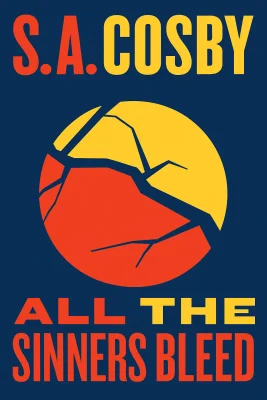
All the Sinners Bleed
Categories
Fiction, Audiobook, Mystery, Thriller, Adult, Book Club, Contemporary, Suspense, Crime, Mystery Thriller
Content Type
Book
Binding
Hardcover
Year
2023
Publisher
Flatiron Books
Language
English
ISBN13
9781250831910
File Download
PDF | EPUB
All the Sinners Bleed Plot Summary
Introduction
# Shadows Beneath the Weeping Willow: A Charon County Mystery The morning mist clung to Charon County like a burial shroud when Sheriff Titus Crown received the call that would shatter his small Virginia town forever. What began as a school shooting at Jefferson Davis High quickly morphed into something far more sinister when the smoke cleared and the bodies were counted. Jeff Spearman, the beloved geography teacher, lay dead in his classroom, killed by former student Latrell Macdonald in what seemed like senseless violence. But as Titus gunned down the disturbed young man on the school steps, he had no idea he was witnessing only the opening act of a horror that would expose the rotting heart of his community. Hidden beneath the weeping willow tree on Tank Billups's property lay the bodies of seven murdered children, their remains bearing witness to unspeakable acts of torture and depravity. The respected teacher wasn't a victim of random violence, but rather a predator whose death had silenced only one voice in a chorus of evil. Now Titus must hunt a killer who wears the mask of respectability while orchestrating a campaign of terror that reaches into the very foundations of Charon County's power structure. The shadows beneath the ancient tree hold secrets that will forever change everyone who dares to uncover them.
Chapter 1: The School Shooting: When Angels Fall
The emergency call crackled through Titus Crown's radio at 7:30 AM, shattering what had begun as an ordinary October morning. Active shooter at Jefferson Davis High School. As the first Black sheriff in Charon County's history, Titus had faced skepticism and hostility, but nothing had prepared him for the chaos spilling across the school parking lot. Students and teachers poured from every exit like water through a broken dam, their faces etched with terror. Through the mayhem, Titus spotted Latrell Macdonald emerging from the front doors, carrying a .30-30 rifle and wearing the hollow expression of a man already dead inside. The young man's words would echo in Titus's mind long after the gunshots faded. "He said he was the Black Angel. Angel of Death," Latrell mumbled, tears streaming down his bruised face. "But that wasn't true either. He was just a sick motherfucker, just like Mr. Spearman." When Latrell charged toward the deputies screaming "I HAVE BECOME DEATH," Deputy Roger Simmons's shotgun blast turned half his head into red mist while Tom Sadler's .357 punched five holes through his chest. Inside the classroom, they found Jeff Spearman slumped in his chair, a dime-sized hole in his cheek and his brains decorating the blackboard behind him. For thirty years, Spearman had been Charon County's most beloved teacher, the man who stood with students against prejudice and wrote college recommendation letters for kids like Titus. Now he sat in eternal repose, his gray mullet spilling over his collar, his familiar coffee-stained tie askew. The community would mourn a hero's death, but Titus sensed something darker lurking beneath the surface. Latrell's cryptic words about angels and suffering suggested this wasn't random violence, but something calculated and sinister. The young man had died trying to tell them something, and Titus intended to listen.
Chapter 2: Unmasking the Monster: Spearman's Dark Secret
The truth began to unravel when Titus used the dead teacher's thumb to unlock his cell phone at Maynard Funeral Home. What he discovered in the device's hidden folders would haunt him for the rest of his life. Dozens of photographs and videos documented acts of unspeakable cruelty against children, with Spearman himself as one of the primary perpetrators. The images revealed a horrific pattern. Spearman, Latrell, and a third figure who never removed his wolf mask had systematically tortured and murdered young victims in what appeared to be a soundproofed outbuilding. The masked figure, whom Titus dubbed "the Last Wolf," seemed to be the dominant personality, orchestrating elaborate rituals that combined sexual violence with twisted religious symbolism. A search of Spearman's modest ranch house yielded more evidence of his double life. Hidden behind a section of baseboard molding, investigators found another wolf mask, external hard drives containing thousands more images, and a rolled canvas painting of a forest clearing dominated by a massive weeping willow tree. Scrawled across the bottom in Spearman's handwriting were the words "The Secret Garden." The videos painted a picture of systematic predation spanning years. While Spearman and the Last Wolf committed the actual violence, Latrell appeared to serve as both cameraman and bait, his presence helping the two white men gain access to vulnerable Black and brown teenagers. The youngest victims appeared to be around thirteen, the oldest no more than seventeen. Dr. Julie Kim at the state medical examiner's office confirmed Titus's worst fears. The children hadn't just been abused; they had been tortured with methodical precision, their bodies carved with biblical phrases like "Cursed be Canaan" and "Our salvation is his suffering." Seven of the videos ended with the victims' deaths, their final moments preserved as trophies for their killers' twisted gratification. Latrell hadn't committed murder in cold blood. He'd executed justice in the only way he knew how.
Chapter 3: The Weeping Willow's Burden: Seven Graves Revealed
Recognition struck Titus like lightning when he studied Spearman's painting of the secret garden. The massive weeping willow depicted in the artwork stood on Tank Billups's seventy-five-acre hunting preserve, a tree so distinctive that anyone who had ever tracked deer through those woods would remember it. Titus had seen it himself as an eleven-year-old boy, when he'd killed his first buck just two hundred yards from its drooping branches. The excavation began at dawn, with volunteers from the fire department and rescue squad joining Titus's small team of deputies. What they found beneath the ancient tree's canopy would transform Charon County forever. Seven graves arranged in a rough circle around the willow's massive trunk, each containing the remains of a murdered child. The bodies told their own story of horror. Invasive willow roots had wrapped around the skeletal remains like anacondas, with one root threading through a victim's eye socket in a grotesque parody of life reclaiming death. Personal effects scattered among the bones spoke to lives cut short and dreams destroyed. A tortoiseshell hair clip here, fragments of clothing there, each item a testament to innocence lost. As work lights illuminated the grim scene and red survey flags marked each grave site, Titus felt the weight of failure pressing down on his shoulders. These children had been missing for years, their disappearances either unreported or ignored by a system that valued some lives more than others. They were Black children, brown children, the kind of victims whose faces rarely appeared on milk cartons or evening news broadcasts. The discovery shattered any remaining illusions about Charon County's innocence. This wasn't some distant evil that had invaded their community; it was homegrown horror, cultivated in the shadows by men who wore masks of respectability while feeding their darkest appetites. The weeping willow had kept their secret for years, its roots drinking deep from soil watered with innocent blood. Now the Last Wolf remained free, a phantom predator who could be anyone in their small community.
Chapter 4: Hunt for the Last Wolf: A Predator Among Us
With Spearman and Latrell dead, the Last Wolf remained free, a phantom predator who could be anyone in Charon County's small community. Titus's investigation revealed a killer who was methodical, organized, and intimately familiar with the local terrain. The choice of burial ground, the soundproofed killing chamber, the ability to transport bodies undetected all pointed to someone with deep roots in the community. The breakthrough came through tragedy. Cole Marshall, a local man who had called the sheriff's office with cryptic information about helping someone build a structure with angel paintings on the walls, was found murdered in a pine grove off Ten Devil's Hop Road. His body had been strung between two trees in a grotesque parody of crucifixion, his face peeled away like fruit rind, his lungs pulled through slits in his back to create bloody wings. The killer had carved "URIEL" into Marshall's chest, naming him after the archangel of wisdom and knowledge. It was a message. Marshall had known too much, and his death served as both punishment and warning. The ritualistic nature of the murder, complete with a crown of blackberry thorns, revealed the Last Wolf's obsession with religious symbolism and his growing need to taunt law enforcement. When Marshall's severed face was delivered to the sheriff's station in a shoebox, carried by drug addict Darnell Posey who claimed someone had paid him five hundred dollars for the delivery, Titus knew the killer was escalating. The Last Wolf wasn't content to hide in shadows anymore; he wanted recognition, wanted to prove his superiority over the forces trying to stop him. The investigation revealed disturbing connections between the victims and local businesses where both Latrell and Marshall had worked. Someone with access to employee records, someone trusted by the community, someone who could move freely without suspicion was using their position to identify and groom potential victims. The killer was hiding in plain sight, wearing the mask of respectability while orchestrating campaigns of terror.
Chapter 5: Sins of the Fathers: Corruption Runs Deep
The investigation took a darker turn when multiple sources suggested corruption within the sheriff's department itself. Darnell Posey's revelation that Latrell had overheard local bar owner Jasper Sanderson bragging about having a deputy in his pocket sent shockwaves through Titus's small team. The implications were staggering. Someone wearing a badge had been protecting criminal enterprises, possibly including the murder ring. Jasper Sanderson emerged as a central figure in Charon County's criminal underworld, using his bar as a front for drug distribution while maintaining the facade of a legitimate businessman. The Watering Hole's suspicious prosperity, the cluster of overdoses in its vicinity, and the mysterious disappearance of witnesses all pointed to a sophisticated operation with law enforcement protection. The corruption extended beyond simple drug dealing. If Jasper had a deputy feeding him information about police operations, it would explain how Spearman and his accomplices had operated undetected for so long. Every raid that came up empty, every investigation that stalled, every witness who disappeared might have been orchestrated from within the sheriff's department itself. Titus found himself in the impossible position of investigating his own people while hunting a serial killer. Trust, the foundation of effective law enforcement, crumbled as he wondered which of his deputies might be feeding information to criminals. The badge that should have represented justice had become a symbol of betrayal, worn by someone who had sworn to protect and serve while enabling the worst kind of evil. The revelation that corruption reached into the highest levels of county government added political pressure to an already volatile situation. Scott Cunningham, chairman of the Board of Supervisors, made thinly veiled threats about recall elections and budget cuts, more concerned with protecting the county's tourist revenue than seeking justice for murdered children. The same families who had built their wealth on the backs of enslaved people continued to profit from human suffering, whether through exploitative labor practices or criminal enterprises.
Chapter 6: Blood and Reckoning: The Final Confrontation
The killer's identity finally emerged from the poisoned soil of Charon County's past. Royce Lazare had been hiding in plain sight as a school bus driver, using his position to identify potential victims while maintaining the facade of a trusted community member. Born Gabriel Hillington, he was a mixed-race child who had endured years of abuse at the hands of racist pastor Elias Hillington, treated as less than human because of his heritage. The final confrontation came in a bunker beneath Royce's farmhouse, a hidden chamber decorated with angel imagery and equipped with the tools of torture. Titus descended into the killer's lair with Deputy Tom Sadler, a disgraced officer seeking redemption for his own sins. The underground chamber was a shrine to perverted faith, its walls covered with paintings of angels bearing witness to unspeakable acts. Royce held Lavon Macdonald, Latrell's younger brother, with a knife to his throat. The boy had been taken as bait, a final gambit to draw Titus into the killer's web. But Lavon proved braver than anyone expected, producing a paring knife he'd hidden in his pocket and driving it into his captor's arm. The distraction gave Titus the opening he needed. The fight was brutal and desperate, two men grappling for survival in a chamber built for death. Royce's strength was inhuman, fueled by years of rage and religious mania. But Titus carried his own darkness, his own capacity for violence honed by years of hunting monsters. When Royce's hands closed around his throat, Titus reached for the knife hidden in his belt buckle, a gift from his brother that became an instrument of justice. The blade found its mark, and the Last Wolf finally fell silent. Tom Sadler had died in the bunker, his head blown apart by Royce's shotgun as he tried to protect his former boss. The cost of justice had been almost unbearable, but the season of pain was finally ending.
Chapter 7: After the Storm: Justice and Redemption
The scars would mark Charon County forever. Titus stood in the hospital, his throat damaged and his voice forever changed by his encounter with evil. The killer was dead, the conspiracy exposed, but the cost had been almost unbearable. Tom Sadler's sacrifice had saved both Titus and Lavon, proving that redemption was possible even for those who had lost their way. In the aftermath, Titus made a decision that surprised everyone, including himself. He resigned as sheriff, passing his badge to Deputy Carla Moore and accepting a teaching position at a college in Louisiana. The job of holding Charon County together had nearly destroyed him, and he recognized that some burdens were too heavy for one man to carry alone. He'd saved Lavon Macdonald and exposed the truth about the murdered children, but the price had been a piece of his own soul. As he prepared to leave town, Titus made one final gesture of defiance. Under cover of darkness, he used his Jeep to pull down the Confederate statue that had stood in the courthouse square for over a century. The monument to slavery and oppression crashed to the pavement with a sound like breaking chains, its bronze arm bouncing down the street in a shower of sparks. The gesture was small but significant, a symbol that change was possible even in places where hatred had taken root. The children buried beneath the weeping willow tree had received justice, their killer brought to account for his crimes. Their names would be remembered, their lives honored, their deaths not in vain.
Summary
The shadows beneath Charon County's weeping willow tree held secrets that forever changed a small Virginia community. Sheriff Titus Crown's investigation into what appeared to be a simple school shooting unveiled a network of corruption, predation, and murder that reached into the highest levels of local society. The beloved teacher Jeff Spearman, the troubled young man Latrell Macdonald, and the mysterious Last Wolf had orchestrated years of systematic torture and murder, their victims chosen from society's most vulnerable members. The case exposed the rot at the heart of American small-town life, where respectability masked unspeakable evil and badges could be bought like any other commodity. Seven children had paid the ultimate price for a community's willful blindness, their bodies feeding the roots of a tree that had become a monument to human cruelty. As Titus faced the Last Wolf in final confrontation, he carried the weight of every failure, every missed opportunity, every moment when justice had been denied. The weeping willow would continue to mourn, its branches heavy with the memory of innocence lost and the knowledge that in places like Charon County, evil often wore a familiar face. But sometimes small victories were enough to light the way forward through the darkness, and the fallen Confederate statue served as proof that even the deepest shadows could be pushed back by those willing to stand against them.
Best Quote
“We all choose to be skeptics when the truth is inconvenient.” ― S.A. Cosby, All the Sinners Bleed
Review Summary
Strengths: The novel is praised for its intense and gritty narrative, with a compelling protagonist, Titus, who serves as the moral center. The book effectively tackles complex themes such as race and societal issues, adding depth to the story. The action is described as nonstop, and the author is commended for bringing the story to life with a visceral and layered approach. Weaknesses: Criticisms include a rushed and underdeveloped ending, with certain plot points lacking exploration, particularly regarding the school shooting incident. Some readers found the storyline initially engaging but lost interest as it progressed, citing a lack of connection with the narrative. Overall: The book receives mixed reviews, with some readers appreciating its intensity and thematic depth, while others found it unsatisfying and disconnected. It is recommended for those interested in gritty crime fiction, though it may not appeal to everyone.
About Author

S.A. Cosby
Cosby interrogates the intricate intersections of race, identity, and redemption through his Southern noir narratives, crafting stories that resonate with authenticity and emotional depth. His crime novels, set against the backdrop of Virginia's rural landscapes, draw from his own experiences growing up in a deeply religious community. This unique perspective allows him to explore societal issues such as racism, homophobia, and the pursuit of personal redemption, infusing his work with a raw, poetic cadence. By addressing these themes, Cosby creates narratives that challenge readers to reflect on the moral complexities of modern American life.\n\nCosby's distinctive approach to crime fiction involves melding high-octane action with profound social commentary, exemplified in books like "Razorblade Tears" and "Blacktop Wasteland." These works highlight his ability to maintain a balance between gripping plots and insightful explorations of familial bonds and justice. His method of developing synopses for groups of chapters before writing them allows for a cohesive yet dynamic narrative flow, while his reliance on feedback ensures his stories remain sharp and engaging. Readers who appreciate multifaceted characters and suspenseful storytelling will find his novels both thought-provoking and thrilling.\n\nThe impact of Cosby's work is further validated by his recognition within the literary community, including the Anthony Award for his short story "The Grass Beneath My Feet." This accolade underscores his status as a formidable talent in contemporary crime fiction. For those interested in narratives that expand beyond traditional genre boundaries, this short bio of Cosby illustrates his dedication to storytelling that entertains while prompting introspection, positioning him as a leading voice in American literature.
Read moreDownload PDF & EPUB
To save this Black List summary for later, download the free PDF and EPUB. You can print it out, or read offline at your convenience.
All the Sinners Bleed
by S.A. Cosby
