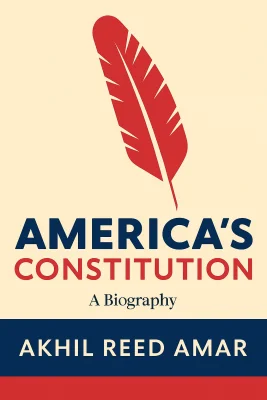
America's Constitution
A Biography
Categories
Nonfiction, Philosophy, Biography, History, Politics, Law, Political Science, American, American History, Government
Content Type
Book
Binding
Hardcover
Year
2005
Publisher
Random House
Language
English
ISBN13
9781400062621
File Download
PDF | EPUB
America's Constitution Plot Summary
Introduction
# America's Constitution: From Revolutionary Experiment to Living Democracy In the sweltering summer of 1787, fifty-five men gathered behind closed doors in Philadelphia's Independence Hall, ostensibly to repair the failing Articles of Confederation. What emerged from their secret deliberations was something far more audacious: a complete reimagining of how a nation could govern itself. The document they crafted began with three revolutionary words—"We the People"—that would echo through centuries as both promise and challenge, declaring that ordinary citizens, not kings or nobles, would be the ultimate source of political authority in America. Yet this founding moment was riddled with profound contradictions that would shape the nation's destiny. The same Constitution that proclaimed liberty and justice also protected slavery through carefully crafted compromises, giving Southern states additional political power based on their enslaved populations. The framers who championed democracy also feared it, creating an intricate system of checks and balances designed to prevent any single faction from gaining control. These tensions between idealism and pragmatism, between unity and division, between freedom and bondage, would drive American political development for generations. Understanding how these contradictions emerged, evolved, and were gradually resolved reveals not just the story of America's founding, but the ongoing struggle to fulfill the Constitution's promise of forming "a more perfect Union."
Chapter 1: The Constitutional Moment: Creating a New Republic (1787-1788)
The Constitutional Convention emerged from a crisis that threatened to tear apart the American experiment before it could truly begin. Under the Articles of Confederation, the national government possessed neither the power to tax nor the authority to regulate commerce between states. Economic chaos reigned as states imposed tariffs on each other's goods, printed worthless currencies, and ignored treaties made by Congress. Foreign powers viewed America with contempt, refusing to negotiate seriously with a government that could not guarantee its own survival or pay its debts. The breaking point came with events like Shays' Rebellion in Massachusetts, where debt-ridden farmers took up arms against state authorities attempting to foreclose on their properties. This uprising terrified the propertied classes and convinced many that stronger national government was essential to prevent complete social breakdown. George Washington, reluctantly emerging from retirement at Mount Vernon, lent his immense prestige to the Philadelphia Convention, signaling to the nation that this gathering would address fundamental questions about America's political future. What made the Constitutional Convention truly revolutionary was not just its rejection of the Articles, but its bold embrace of popular sovereignty as the foundation of legitimate government. The delegates proposed that their new Constitution be ratified not by state legislatures, but by specially elected conventions representing "We the People" directly. This was democracy on a scale never before attempted in human history, rejecting the conventional wisdom that republics could only survive in small, homogeneous city-states where citizens could gather in person to debate and vote. The ratification process that followed became an extraordinary continental conversation about the nature of government and human liberty. In taverns and town squares, in newspapers and pamphlets, ordinary Americans argued passionately about whether this new Constitution would secure their freedoms or destroy them. Federalists like Alexander Hamilton and James Madison defended the proposed system, while Anti-Federalists like Patrick Henry and George Clinton warned of the dangers of distant, powerful government. The narrow victories in key states like Massachusetts, Virginia, and New York demonstrated that the American people were deeply divided about their political future, establishing a pattern of constitutional debate that continues to this day.
Chapter 2: Early Tensions: Federalism, Rights, and Democratic Expansion (1789-1850)
The Constitution's first decades witnessed the transformation of theoretical principles into practical governance, revealing both the document's flexibility and its inherent tensions. George Washington's presidency established crucial precedents that would define the office for centuries, from the peaceful transfer of power to the president's role as both head of state and party leader. The Bill of Rights, ratified in 1791 to fulfill promises made during the ratification debates, established fundamental protections for individual liberty while also acknowledging that the enumeration of certain rights did not deny others retained by the people. The early republic quickly discovered that the Constitution's carefully crafted system would operate in ways the framers never anticipated. The rise of political parties, which most founders had hoped to avoid, created new dynamics in American politics that tested the system's capacity for peaceful competition. Thomas Jefferson's election in 1800 marked the first transfer of power between opposing parties, proving that the Constitution could survive even bitter partisan divisions. His subsequent purchase of Louisiana demonstrated how constitutional interpretation could expand to meet national needs, even when the document's text provided no explicit authorization for such actions. John Marshall's Supreme Court played a crucial role in strengthening federal authority while establishing the judiciary as a co-equal branch of government. In landmark cases like Marbury v. Madison and McCulloch v. Maryland, Marshall's Court asserted the principle of judicial review and broadly interpreted federal powers, creating lasting tensions between state and national authority. These decisions helped forge a truly national economy while protecting federal institutions from state interference, though they also sparked ongoing debates about the proper balance between local autonomy and national unity. The period also witnessed a dramatic expansion of democratic participation that transformed American politics. Property qualifications for voting gradually disappeared in most states, opening the franchise to virtually all white men. The rise of Andrew Jackson symbolized this democratic revolution—a self-made man from the frontier who championed the common people against established elites. Yet this expansion of democracy for white men coincided with the systematic exclusion of others, as Native Americans faced forced removal from their ancestral lands and free blacks found their rights increasingly restricted even in Northern states. The slavery question, carefully avoided in the original Constitution through euphemism and compromise, increasingly dominated American politics as the nation expanded westward.
Chapter 3: Crisis and Transformation: Civil War Tests Constitutional Limits (1850-1865)
The 1850s brought a series of escalating crises that pushed the constitutional system to its breaking point. The Compromise of 1850 temporarily eased sectional tensions by admitting California as a free state while strengthening the Fugitive Slave Act, but it satisfied neither North nor South completely. The Kansas-Nebraska Act of 1854 repealed the Missouri Compromise and opened the possibility of slavery in previously free territories, leading to violent conflict in "Bleeding Kansas" that previewed the larger war to come. The Supreme Court's Dred Scott decision in 1857 represented a catastrophic failure of constitutional interpretation, declaring that Congress had no power to prohibit slavery in the territories and that African Americans could never be citizens of the United States. Chief Justice Roger Taney's majority opinion attempted to settle the slavery question through judicial decree, but instead it inflamed sectional tensions and convinced many Northerners that a "slave power conspiracy" controlled the federal government. The decision demonstrated how constitutional interpretation could become a weapon in political warfare rather than a source of national unity. Abraham Lincoln's election in 1860 on a platform of preventing slavery's expansion triggered the secession crisis that the Constitution's framers had hoped their careful compromises would prevent. Seven Deep South states left the Union before Lincoln even took office, forming the Confederate States of America and claiming the right to withdraw from a compact they argued had been violated by Northern aggression. Lincoln faced an impossible dilemma: how to preserve the Union without either provoking war or appearing to acquiesce in the destruction of constitutional government. The attack on Fort Sumter in April 1861 resolved Lincoln's dilemma by forcing him to choose between Union and peace. His response revealed how the Constitution could be stretched to meet existential threats while still maintaining its essential character. Lincoln exercised unprecedented presidential powers during the war's early months, suspending habeas corpus, blockading Southern ports, and expanding the army without congressional authorization. He justified these extraordinary measures as necessary to preserve the Constitution itself, arguing that it would be absurd to lose the nation by a scrupulous adherence to the Constitution while those seeking to destroy it ignored all constitutional restraints.
Chapter 4: Reconstruction Revolution: Redefining Citizenship and Federal Power (1865-1877)
The Civil War's end brought the most dramatic constitutional transformation in American history through the Reconstruction Amendments, which fundamentally redefined the relationship between federal and state governments while expanding the meaning of American citizenship. The Thirteenth Amendment's abolition of slavery throughout the United States ended the moral contradiction that had plagued the nation since its founding, marking the first time the Constitution was amended not to refine governmental structure but to guarantee individual rights against both state and private action. The Fourteenth Amendment went even further, establishing birthright citizenship and prohibiting states from denying equal protection of the laws to any person within their jurisdiction. This revolutionary provision overturned the Dred Scott decision while creating new federal powers to protect civil rights against state violations. The amendment's opening declaration that "all persons born or naturalized in the United States" are citizens repudiated the exclusionary vision of American nationality that had prevailed before the war, establishing the principle that citizenship was a national rather than state-determined status. The Fifteenth Amendment's prohibition of racial discrimination in voting rights represented the culmination of Reconstruction's effort to create a truly biracial democracy in the South. African American men gained not only freedom and citizenship but also political participation, electing hundreds of black officials to local, state, and federal office during the Reconstruction years. This represented a stunning reversal of antebellum racial hierarchies and demonstrated the Constitution's capacity for revolutionary change when political will existed to enforce its provisions. Yet the promise of Reconstruction was only partially fulfilled, as the Compromise of 1877 effectively ended federal protection for African American rights in exchange for resolving the disputed presidential election of 1876. The Supreme Court's narrow interpretation of the Reconstruction Amendments in cases like the Civil Rights Cases and Plessy v. Ferguson showed how constitutional text could be undermined by hostile judicial interpretation and lack of political will for enforcement. The amendments remained on the books, however, providing the legal foundation for the civil rights movement that would eventually redeem their promise nearly a century later.
Chapter 5: Progressive Reforms: Expanding Democracy and Modern Governance (1900-1940)
The dawn of the twentieth century brought new challenges that tested the Constitution's adaptability to modern industrial society. Rapid urbanization, massive immigration, and the concentration of economic power in giant corporations created problems the framers could never have anticipated. The Progressive movement's response included the first wave of constitutional amendments since Reconstruction, each addressing specific defects in the original design while reflecting broader changes in American democracy and governance. The Sixteenth Amendment's authorization of the federal income tax overturned the Supreme Court's decision in Pollock v. Farmers' Loan & Trust Co., demonstrating how constitutional amendment could reverse judicial interpretations that blocked necessary reforms. This new revenue source proved crucial for funding the modern administrative state and America's emergence as a world power, enabling the federal government to take on responsibilities that would have been impossible under the limited revenue system of the nineteenth century. The Seventeenth Amendment's provision for direct election of senators reflected growing demands for democratic accountability and an end to the corruption that had plagued the system of legislative selection. State legislatures had often deadlocked over Senate elections or chosen candidates based on their willingness to pay bribes rather than their qualifications for office. Direct election made senators more responsive to popular will while reducing the influence of special interests and party bosses who had manipulated the old system. The Nineteenth Amendment's guarantee of women's suffrage culminated decades of struggle and represented a fundamental expansion of democratic participation that doubled the size of the electorate. Women's enfranchisement began to transform American politics, though full equality would require continued struggle through subsequent generations. The amendment's ratification demonstrated how sustained social movements could successfully pressure the constitutional system to live up to its democratic ideals, providing a model for later civil rights campaigns. The Eighteenth Amendment's prohibition of alcohol, later repealed by the Twenty-first Amendment, taught important lessons about the proper scope of constitutional law versus ordinary policymaking and the dangers of using constitutional amendment for moral crusades better left to democratic debate.
Chapter 6: Civil Rights Era: Fulfilling Constitutional Promises (1950-1970)
The mid-twentieth century witnessed a constitutional transformation as dramatic as Reconstruction itself, as the federal judiciary finally began to enforce the promises of the Fourteenth and Fifteenth Amendments that had been ignored for nearly a century. The Supreme Court's unanimous decision in Brown v. Board of Education used the equal protection clause to dismantle legal segregation in public education, overturning the "separate but equal" doctrine that had provided constitutional cover for racial apartheid since 1896. The civil rights movement's genius lay in its ability to combine grassroots organizing with constitutional litigation, forcing America to confront the gap between its democratic ideals and discriminatory practices. The Twenty-fourth Amendment's elimination of poll taxes in federal elections removed one of the barriers that had prevented poor Americans of all races from participating in democratic governance. The Voting Rights Act of 1965 provided the federal enforcement mechanisms that made the Fifteenth Amendment's promise finally meaningful, demonstrating how constitutional rights require not just legal recognition but political will for implementation. The period also saw important clarifications of presidential power and succession through the Twenty-fifth Amendment, which addressed questions that had become urgent in the nuclear age when any uncertainty about executive authority could have catastrophic consequences. The amendment's provisions for handling presidential disability, tested during various incidents from Eisenhower's heart attack to Reagan's surgery, showed how constitutional foresight could prevent potential crises in an era when the presidency had become the focal point of American government. These developments revealed both the Constitution's capacity for growth and the importance of sustained political mobilization in making constitutional promises reality. The same document that had once accommodated slavery now served as the foundation for the most comprehensive civil rights legislation in American history. The key was recognizing that constitutional principles must be applied consistently and that formal equality requires substantive action to become meaningful in the lives of ordinary citizens.
Chapter 7: Contemporary Challenges: Adapting Eighteenth-Century Principles to Modern America (1970-Present)
Recent decades have brought new constitutional challenges that test the framers' system of separated powers and federalism in an interconnected world. The growth of presidential power, the expansion of the administrative state, and America's role as a global superpower have all strained the careful balance between governmental branches that the Constitution established. Modern presidents wield authorities that would have astonished the framers, from commanding nuclear weapons to conducting surveillance operations to launching military interventions without explicit congressional approval. The Twenty-sixth Amendment's extension of voting rights to eighteen-year-olds, driven by the Vietnam War's draft of young Americans who had no voice in selecting their leaders, continued the pattern of expanding democratic participation that has characterized American constitutional development since the founding. The amendment's rapid ratification demonstrated how external pressures could accelerate constitutional change when the injustice of existing arrangements became undeniable to the American people. The Twenty-seventh Amendment's belated ratification in 1992, more than two centuries after James Madison first proposed it, showed that the formal amendment process remains viable even as it has become increasingly difficult to use. The amendment's prohibition on congressional pay raises taking effect until after an intervening election reflected continuing concerns about legislative self-dealing and the need for democratic accountability in representative government. Perhaps most significantly, the Constitution must now operate in a globalized world where national borders are increasingly porous and where threats can emerge from anywhere on the planet. The challenge for contemporary Americans is adapting eighteenth-century institutions to twenty-first-century realities while preserving the core principles of limited government, separation of powers, and individual rights that have made American constitutionalism a model for democratic movements worldwide. This requires both fidelity to constitutional text and structure and creative interpretation that addresses contemporary needs without abandoning the fundamental commitment to popular sovereignty and the rule of law.
Summary
America's constitutional journey reveals a central paradox that has driven the nation's development from its founding to the present day: a document created through compromise and contradiction gradually became an instrument of liberation and democratic expansion. The framers' vision of limited government and individual liberty evolved through crisis and conflict into a more inclusive understanding of who counts as "We the People" and what rights they possess. The Constitution's greatest early failure—its accommodation of slavery—ultimately became the catalyst for its most profound transformation through the Reconstruction Amendments that redefined American citizenship and federal power. This historical arc offers crucial lessons for contemporary Americans grappling with their own constitutional challenges. The Constitution's enduring strength lies not in its perfection but in its capacity for growth through both formal amendment and evolving interpretation guided by democratic participation. Each generation has faced the task of making the promise of self-governance more inclusive and meaningful, whether through abolishing slavery, extending voting rights, or protecting civil liberties. Understanding this history reminds us that constitutional democracy is not a finished product but an ongoing project that requires constant vigilance, active citizenship, and willingness to hold our representatives accountable for governing within constitutional limits while addressing the nation's pressing challenges. The framers gave us not a perfect system, but a framework capable of perfectibility through the sustained efforts of engaged citizens committed to forming a more perfect Union.
Best Quote
“The people may change the constitutions whenever and however they please,” explained Wilson. “It is a power paramount to every constitution, inalienable in its nature.” ― Akhil Reed Amar, America's Constitution: A Biography
Review Summary
Strengths: The book is praised for its clarity and accessibility, making it suitable for readers with a high school education. It is recognized for its depth and comprehensive historical context, covering the Constitution from the Preamble to the 28th Amendment. The author, Amar, is noted for his authoritative writing and serious constitutional scholarship. Weaknesses: The review highlights a lack of focus on Congress's enumerated powers, particularly the commerce clause, which could have been explored more given the current political climate. The book is described as a "slog" in parts, indicating it may be dense and challenging to read continuously. Overall: The reader finds the book to be a definitive and informative work on the Constitution, recommending it highly despite its occasional density. It is considered a significant contribution to constitutional interpretation and history.
About Author

Akhil Reed Amar
Amar delves into the complex interplay between constitutional interpretation and modern legal practice, offering insights into how foundational texts shape contemporary society. His work is characterized by a focus on both originalism and the living Constitution, providing a comprehensive understanding of American legal principles. By teaching constitutional law at Yale University, he molds the minds of future policymakers and legal scholars, underscoring the importance of rigorous analysis and clear communication.\n\nThrough his notable books like "The Bill of Rights: Creation and Reconstruction" and "America’s Constitution: A Biography", Amar delves into the historical and philosophical underpinnings of the U.S. Constitution, which resonate widely among academics and legal practitioners. His method of combining historical context with modern interpretation offers readers a nuanced perspective on legal precedents. This approach is particularly beneficial for those in academia and law, as it bridges theoretical concepts with real-world applications, allowing for a deeper understanding of the Constitution's role in current legal challenges.\n\nAmar's scholarship has been recognized with prestigious awards such as the American Bar Association’s Silver Gavel Award, reflecting his influence in the legal field. His contributions extend beyond academia; he has testified before Congress and his work has been cited in numerous U.S. Supreme Court cases, demonstrating its impact on both policy and jurisprudence. As an esteemed member of the American Academy of Arts and Sciences, Amar continues to contribute significantly to discussions about constitutional law, making his body of work essential for anyone interested in the dynamics of American legal and political systems.
Read moreDownload PDF & EPUB
To save this Black List summary for later, download the free PDF and EPUB. You can print it out, or read offline at your convenience.
America's Constitution
by Akhil Reed Amar
