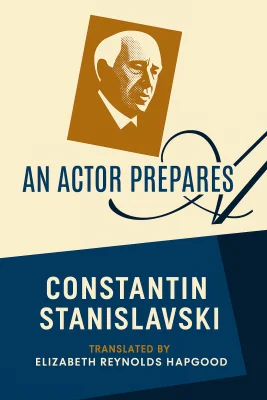
An Actor Prepares
Categories
Nonfiction, Art, Writing, Classics, Plays, Theory, Russia, Film, Drama, Theatre
Content Type
Book
Binding
Paperback
Year
1989
Publisher
Routledge
Language
English
ASIN
0878309837
ISBN
0878309837
ISBN13
9780878309832
File Download
PDF | EPUB
An Actor Prepares Plot Summary
Introduction
# Awaken Your Authentic Creative Power Have you ever stood at the threshold of a creative moment, feeling the electric tension between your deepest truth and the fear of exposing it to the world? Whether you're stepping onto a stage, entering a crucial conversation, or pursuing any meaningful creative endeavor, that moment reveals something profound about human potential. The gap between who we truly are and how we express ourselves in the world represents one of life's greatest challenges and opportunities. This transformative journey explores how authentic creative power emerges not from forcing effects or copying external forms, but from learning to live truthfully within any circumstances life presents. Through systematic development of your natural creative faculties, you can bridge that gap between inner truth and outer expression, unlocking a power that serves not only your own fulfillment but touches everyone around you with genuine human connection.
Chapter 1: Create Your Inner Creative State
The foundation of all authentic expression begins with establishing what master teachers call the "inner creative state" - a harmonious condition where all your creative faculties work together naturally. Think of it as tuning an orchestra before a performance; every instrument must be properly adjusted before beautiful music can emerge. This isn't mystical theory but practical preparation that transforms mechanical effort into organic creation. During one memorable lesson, a student named Kostya struggled with an exercise about burnt money, initially approaching it mechanically without genuine feeling. His teacher guided him to relax his muscles completely and concentrate his attention inward. As Kostya began to truly imagine the circumstances - the responsibility of supporting his family, the terror of financial ruin - something remarkable happened. His whole being became engaged, and the artificial barriers between himself and the character dissolved completely. The transformation was immediate and profound. Kostya's movements became natural, his emotions genuine, and his attention completely absorbed in the imagined reality. He was no longer "acting" but truly living in the given circumstances. The other students watched in amazement as mechanical performance transformed into authentic human experience, demonstrating the power of properly established creative conditions. To create your own inner creative state, begin with physical relaxation by releasing unnecessary tension from your muscles, allowing your body to settle into natural comfort. Then direct your attention to specific circumstances, engaging your imagination to make them vivid and real. The key is approaching this work with the same seriousness you would bring to any important life situation, creating proper conditions rather than forcing results. Practice this daily foundation work, starting with simple exercises and gradually building your capacity for sustained creative attention. Remember that this state cannot be manufactured through willpower alone but emerges naturally when you create the right conditions and trust your innate creative instincts. The inner creative state becomes your foundation for all authentic expression, whether in performance or daily life. When properly established, it allows your true self to emerge naturally, creating genuine connection with others and meaningful impact in everything you undertake.
Chapter 2: Build Emotional Memory for Authentic Expression
Emotional memory serves as the wellspring from which all authentic expression flows, preserving not just facts or events but the essence of feelings and sensations. This capacity transforms mechanical performance into living truth by allowing you to access genuine emotions when needed. Unlike simple recall, emotional memory retains the inner life of experience, making past feelings available for present creative use. A master teacher demonstrated this principle through the story of two travelers caught by rising tide on rocks. After rescue, one remembered every physical detail - where they climbed, how they moved, what they did. The other remembered only the emotions - the progression from delight through apprehension, fear, hope, doubt, and finally panic. The second traveler possessed true emotional memory, the ability to retain and recall the inner texture of experience rather than just external facts. Student Dasha provided a vivid example during a scene involving a foundling child. Having recently lost her own infant, she brought such genuine emotion to the exercise that tears streamed down her face as she transformed a simple stick wrapped in cloth into a living baby. Her emotional memory allowed her to access authentic feelings that created a deeply moving performance. However, when she tried to repeat the scene mechanically, the truth disappeared, replaced by empty technique that convinced no one. To develop your emotional memory, begin by paying attention to your daily emotional experiences, noticing not just what happens but how you feel about what happens. Observe the subtle progressions of emotion, the way feelings change and develop over time. Practice recalling not just events but the emotional texture of those events, building your capacity to access authentic feelings when needed. Create a personal archive of emotional experiences by regularly reflecting on meaningful moments in your life, focusing on the feelings themselves rather than external circumstances. This practice builds your ability to draw upon the full spectrum of human emotion in service of authentic expression and genuine connection with others. Use your emotional memory responsibly and with respect for your own well-being. The goal is not to relive trauma or pain but to access your complete emotional range in service of truthful expression that serves both your creative work and meaningful relationships.
Chapter 3: Master the Art of Communion and Adaptation
True communion between human beings requires more than words or gestures - it demands genuine exchange of thoughts, feelings, and spiritual energy. This invisible current of connection forms the foundation of all meaningful interaction, creating the difference between empty social performance and authentic human contact. Without this real exchange, we remain isolated islands, going through motions of communication without achieving genuine understanding. A master teacher illustrated this principle by observing students during simple conversation, noticing that when they were genuinely engaged with each other, invisible currents seemed to flow between them. Their eyes became alive, their attention focused, and their whole beings participated in the exchange. But when they became self-conscious or distracted, these currents disappeared, leaving only empty forms of interaction that satisfied no one. During one exercise, student Vanya demonstrated remarkable adaptation when asked to find a way to leave class early. Instead of simply requesting permission, he began to feign illness with such conviction that he actually convinced himself he was in pain. His adaptation was so complete that when he suddenly revealed the deception by dancing, everyone applauded his creative solution. He had found the perfect means to achieve his objective while remaining truthful to his own creative process. To develop your capacity for communion, practice genuine attention to others by listening not just to their words but to their underlying feelings and intentions. Allow yourself to be affected by what you receive from them, and respond from your authentic self rather than from social convention or expected responses. Learn to adapt your communication to serve your genuine objectives, which doesn't mean manipulation or deception but rather finding the most effective and truthful way to share what you truly want to express. Sometimes this requires boldness, sometimes delicacy, sometimes humor, sometimes directness - the key is matching your approach to your authentic purpose. The art of communion and adaptation transforms ordinary interaction into meaningful exchange that serves both your needs and those of others. When mastered, it allows you to touch hearts and minds while remaining true to your own authentic nature, creating connections that enrich everyone involved.
Chapter 4: Navigate the Threshold of the Subconscious
The threshold of the subconscious represents the gateway between conscious technique and inspired creation, where calculated effort gives way to organic expression and the deepest truths of human experience find their voice. Beyond this threshold lies the realm where true artistry emerges naturally, making understanding how to approach and cross this boundary essential for authentic creative expression. A teacher shared a personal experience that illuminated this mysterious realm. At a party, friends decided to perform a mock operation on him as entertainment, arranging tables, gathering surgical instruments, and blindfolding him on the operating table. As the "doctors" worked with serious intensity, his uncertainty and fear grew. He felt actual pain, heard every whisper and rattle of instruments, and experienced genuine terror about what might happen, even knowing it was just a game. The remarkable aspect was how his emotions wavered between belief and doubt, reality and illusion. At moments, he was completely convinced of the danger; at others, he remembered it was entertainment. Yet the feelings were real enough to leave lasting impressions. This state of creative belief, where truth and verisimilitude alternate, represents the threshold where authentic creation occurs naturally. When Kostya later demonstrated this principle in his burnt money exercise, he began with conscious technique - relaxing muscles, concentrating attention, engaging imagination. But as he pushed each element to its fullest development, something shifted. His conscious efforts gave way to natural, organic response. He was no longer working to create the character's reality; he was living it completely. To approach this threshold yourself, begin with thorough conscious preparation by mastering technical elements of your craft, whether in performance, communication, or any creative endeavor. But don't stop at technique - push each element to its absolute limit of truthfulness and belief. Create proper conditions through relaxation, concentration, and imaginative engagement, then allow your natural creative instincts to take over. The key is learning when to work and when to trust, when to control and when to surrender to the organic process of creation that emerges from your subconscious wisdom.
Chapter 5: Align Your Actions with Your Super-Objective
Every meaningful life and powerful performance is driven by a central purpose that gives direction and meaning to all smaller actions, serving as the magnetic north of your creative compass. This super-objective draws all your energies toward a unified goal, creating the difference between scattered effort and focused power. Without this central purpose, even the most skilled techniques remain fragmented and ineffective. A master teacher illustrated this through the story of a gifted actress who had studied systematic methods for years but lost her former success when she returned to the stage. Her performances had become dry and mechanical, filled with naturalistic detail but lacking the inspiring spark that had once captivated audiences. She had mastered individual techniques but failed to understand how they must serve a larger, compelling purpose. When the teacher worked with her to identify the super-objective of her role, everything changed dramatically. Instead of performing isolated exercises, she began to pour all her creative energy toward a single, compelling goal. Each gesture, each word, each moment of silence served this larger purpose. The transformation was miraculous - her former power returned, enhanced by her new technical mastery serving unified intention. The actress wept with joy as the audience responded with overwhelming enthusiasm. She had discovered that technique without purpose is lifeless, but technique in service of a compelling objective becomes the vehicle for inspired creation. Her individual skills had been absorbed into a unified through-line of action that carried her naturally into authentic expression. To discover your own super-objective, look beyond immediate goals to the deeper purpose that drives your actions. What do you ultimately want to achieve through your work, relationships, and creative expression? This purpose must be both personally meaningful and worthy of your full commitment, inspiring your best efforts naturally. Test your super-objective by examining whether your daily actions serve this larger purpose. If they do, you'll find natural energy and direction in your work. If they don't, either adjust your actions or reconsider your objective until you achieve alignment between your deepest purpose and your daily choices. Remember that a true super-objective engages not just your mind but your emotions and will, inspiring and challenging you while drawing out your best efforts naturally and consistently across all areas of your life.
Chapter 6: Maintain an Unbroken Line of Truth and Belief
The continuity of authentic expression requires maintaining an unbroken line of truth that flows from beginning to end of any creative endeavor, like a river that draws its power from continuous flow. Your creative work gains strength and conviction through sustained truthfulness, while breaks in this line weaken the entire structure and disconnect you from your authentic power. A teacher demonstrated this principle using electric lights to represent the flow of attention and belief. When lights moved smoothly from object to object on stage, representing genuine engagement with creative work, the effect was powerful and convincing. But when lights kept jumping to the auditorium, representing attention scattered to external concerns, the line was broken and creative power dissipated completely. During exercises, students often began with genuine engagement but gradually allowed their attention to wander from internal truth to external self-consciousness. They would start by truly listening to scene partners but become distracted by thoughts of how they appeared to observers. This shift broke their creative line and replaced authentic expression with artificial performance that served no one. The challenge becomes even greater in sustained work, where maintaining truth over extended periods requires both technical skill and spiritual discipline. Like a musician who must maintain perfect pitch throughout an entire symphony, the creative artist must sustain authentic engagement from beginning to end of their work, regardless of external pressures or internal doubts. To maintain your unbroken line, develop the habit of constant self-monitoring without self-judgment by noticing when your attention drifts from genuine engagement to external concerns, then gently redirecting it back to your authentic objectives. This requires practice and patience, as the tendency to perform for others rather than live truthfully is deeply ingrained in most people. Create strong enough objectives and circumstances that they naturally hold your attention, making maintenance of the line easier because you genuinely want to stay engaged with what you're doing. Build your capacity gradually, starting with shorter periods of sustained truth and extending them like developing physical endurance through consistent practice. The unbroken line of truth becomes your pathway to sustained authentic expression, allowing your genuine self to emerge consistently regardless of external circumstances or internal resistance.
Chapter 7: Transform Technical Elements into Organic Creation
The ultimate goal of all creative training is transforming conscious technique into unconscious artistry, where learned skills become so integrated they operate naturally and spontaneously. This transformation represents the difference between mechanical craft and living art, between calculated effect and genuine inspiration that moves both creator and audience. Throughout systematic training, students learn numerous technical elements - muscle relaxation, concentration of attention, imagination, emotion memory, communion, and adaptation. Initially, each element requires conscious effort and deliberate practice, with students carefully working through exercises while monitoring progress and adjusting technique. This stage, while necessary, often feels artificial and effortful rather than natural. But as Kostya demonstrated in his final exercise with burnt money, something miraculous occurs when technical elements are pushed to their absolute limit. His conscious preparation - relaxing muscles, concentrating attention, engaging imagination - gradually gave way to organic response. The techniques didn't disappear; they became invisible, operating naturally in service of authentic expression rather than as ends in themselves. The transformation happened when Kostya stopped trying to perform the exercise and began living it completely. His technical preparation had created proper conditions, but the actual creative work emerged from his subconscious response to genuine circumstances. He was no longer demonstrating relaxation, concentration, and imagination - he was simply being a man facing financial ruin, with all technical elements operating naturally to support this reality. To achieve this transformation in your own work, master each technical element thoroughly through conscious practice, but don't stop at competence. Push each skill to its absolute limit of development, because only when technique is so thoroughly integrated that it operates without conscious effort can it serve authentic expression effectively. Practice regularly while avoiding mechanical repetition by bringing fresh attention and genuine purpose to each exercise. The goal is not perfect execution of technique but authentic response to real circumstances, allowing your skills to serve truth rather than becoming obstacles to natural expression. Trust the organic process of integration that occurs through consistent, purposeful practice. As you continue working with genuine engagement, your technical skills will gradually become unconscious tools that serve your authentic creative expression, operating naturally in service of truth rather than drawing attention to themselves.
Summary
The journey through these principles reveals a fundamental truth about human creative capacity: authentic expression emerges not from artificial technique but from the integration of conscious skill with unconscious artistry. As one master teacher wisely observed, "Our conscious mind arranges, and puts a certain amount of order into, the phenomena of the external world that surround us, but our consciousness often indicates the direction in which our subconscious continues to work." This understanding transforms how we approach any creative endeavor, whether artistic performance or authentic living. The techniques and principles outlined here serve not as rigid rules but as pathways to natural expression that disappear into the background when properly developed, allowing your authentic self to emerge with power and conviction. Begin today by choosing one principle that resonates most strongly with you and commit to exploring it deeply, whether developing emotional memory, practicing genuine communion with others, or discovering your personal super-objective. Your creative truth awaits your commitment to this transformative journey of authentic self-expression.
Best Quote
“You can kill the King without a sword, and you can light the fire without a match. What needs to burn is your imagination.” ― Constantin Stanislavski, An Actor Prepares
Review Summary
Strengths: The review highlights the book's timeless relevance and comprehensive coverage of acting principles. It praises "An Actor Prepares" for addressing major themes in theater and acting, often predating other experts' insights. The narrative fiction style, featuring characters that represent Stanislavski's own experiences, is noted as a unique and engaging approach. Overall: The reviewer expresses a strong positive sentiment, initially skeptical but ultimately impressed by the book's depth and relevance. They recommend it highly, suggesting it as an essential read for anyone interested in acting, regardless of prior exposure to other texts.
About Author

Constantin Stanislavski
Stanislavski reframes modern acting through his innovative "Stanislavski System," emphasizing psychological realism and emotional truth. By synthesizing influences such as naturalism, symbolism, and Russian formalism, Stanislavski created a comprehensive approach to performance that focuses on the internal motivations and emotional lives of characters. His method encourages actors to draw on personal experiences and emotional memories to portray authentic and believable characters, integrating techniques like "given circumstances" and character objectives. This multifaceted approach stands in contrast to the American Method, which focuses more exclusively on psychological techniques.\n\nBeyond transforming acting methods, Stanislavski's work significantly impacted theater as a medium for social and political change. Through the Moscow Art Theatre, he advanced socially conscious dramatic works that interrogated cultural norms and political issues. This alignment of theater with social transformation attracted global attention and laid the foundation for socially engaged performances. As a result, Stanislavski's system became central to acting training worldwide, influencing both European and American theater practices.\n\nThe benefits of Stanislavski's techniques are evident for actors seeking depth and authenticity in their performances. His book "An Actor Prepares" remains a seminal text, offering a detailed exploration of his system for actors worldwide. Although Stanislavski's legacy is not marked by formal awards, his profound influence is recognized in the enduring global impact of his methods, including the honor of the Bolshoi Opera Studio being named after him. This bio reflects how his pioneering efforts continue to shape the landscape of theater and performance arts.
Read moreDownload PDF & EPUB
To save this Black List summary for later, download the free PDF and EPUB. You can print it out, or read offline at your convenience.

An Actor Prepares
by Constantin Stanislavski
