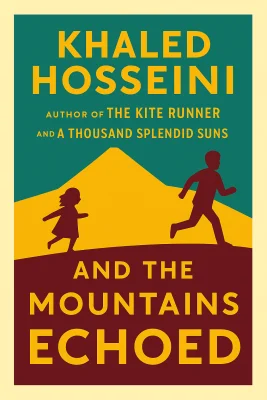
And the Mountains Echoed
Categories
Fiction, Historical Fiction, Adult, Book Club, Historical, Contemporary, Novels, Adult Fiction, Literary Fiction, Middle East
Content Type
Book
Binding
Hardcover
Year
2013
Publisher
Riverhead Books
Language
English
ASIN
159463176X
ISBN
159463176X
ISBN13
9781594631764
File Download
PDF | EPUB
And the Mountains Echoed Plot Summary
Introduction
# And the Mountains Echoed: A Story of Severed Bonds and Enduring Love In the dusty village of Shadbagh, Afghanistan, a father tells his children a bedtime story about sacrifice. Ten-year-old Abdullah listens while his three-year-old sister Pari sleeps against his shoulder, her small fist clutching a peacock feather he traded his shoes to get her. The tale speaks of a farmer named Baba Ayub who lost his beloved son to a div—a demon that demanded tribute from the village. What Abdullah doesn't realize is that by morning, they will be living this story. The year is 1952. Drought has strangled the land for three consecutive seasons, and families like theirs hover on the edge of starvation. When a wealthy couple from Kabul arrives seeking to adopt a child, Saboor faces an impossible choice between watching his family starve or selling his daughter to strangers. The decision will tear through generations like shrapnel, scattering lives across continents and decades. Some wounds never heal, but love—love finds ways to endure even when memory fails and recognition fades. This is the story of how a single moment of separation echoes across mountains and years, binding strangers together while tearing families apart.
Chapter 1: The Separation: A Father's Impossible Choice in Shadbagh
The morning arrives with the sound of an engine cutting through the desert silence. Abdullah wakes to find his father Saboor standing rigid in the doorway, watching a blue truck approach their mud-brick house. The vehicle stops in a cloud of dust, and three figures emerge: a tall, elegant man in a pressed suit, a beautiful young woman with painted lips, and their driver—a handsome man with careful eyes. Suleiman Wahdati speaks in the measured tones of education and wealth. His wife Nila kneels before Pari with practiced grace, offering sweets and speaking in gentle whispers. The little girl hides behind Abdullah's legs, sensing something wrong in the adults' forced smiles and hushed conversations. Their stepmother Parwana stands in the shadows, her face carved from stone and resignation. The negotiation unfolds in the front room while Abdullah strains to hear through the thin walls. Money changes hands—enough to keep the family alive through winter, perhaps longer. When Saboor finally speaks the words, his voice cracks like breaking pottery. Pari will go with the kind people to live in their big house in Kabul. She will have food, education, a future beyond the crushing poverty that has claimed so many village children. Abdullah feels something fundamental tear inside his chest. He watches his father's shoulders sag under an invisible weight, sees the way Nila's eyes brighten with triumph disguised as compassion. When they reach for Pari, she clings to Abdullah with desperate strength, her small fingers digging into his shirt like claws. The separation happens with brutal efficiency. Strange hands pry Pari from her brother's arms as her screams pierce the morning air. Abdullah lunges forward, but Saboor's iron grip holds him back. The last thing he sees is Pari's face pressed against the truck's rear window, her mouth open in a silent wail as the vehicle disappears into the desert's shimmering heat. The dust settles, but the echo of her cries lingers in the air like a curse that will follow them all.
Chapter 2: Parallel Worlds: Growing Apart Across Continents and Classes
Pari's new world unfolds like a fever dream of marble floors and crystal chandeliers. The Wahdati mansion sprawls across manicured grounds in Kabul's wealthy district, its rooms filled with European furniture that costs more than most villagers earn in a lifetime. Nila, her new mother, is a poet whose beauty masks a restless melancholy. She dresses Pari in silk and teaches her French nursery rhymes, but her attention drifts like smoke, leaving the child grasping at shadows. The household's delicate balance shatters when Suleiman suffers a massive stroke. The elegant man who once moved through rooms like a dancer now sits trapped in a wheelchair, his body betraying him with cruel precision. Nila cannot bear the sight of him drooling, struggling to form words, his once-graceful hands now clumsy and weak. She speaks of Paris, of artistic opportunities, of escaping the suffocating traditions that bind Afghan women. Meanwhile, in Shadbagh, Abdullah grows into adolescence haunted by phantom limbs. He feels Pari's absence like a missing piece of his soul, an ache that never dulls despite the family's improved fortunes. They have food now, even small luxuries bought with his sister's price, but Abdullah cannot forgive his father's choice. The money tastes of betrayal, every meal seasoned with the salt of his tears. When Soviet tanks roll into Afghanistan, the Wahdatis flee to Paris. Pari, now six, speaks French as fluently as Dari, her memories of Shadbagh fading like watercolors in rain. She remembers fragments—a brother's protective embrace, the taste of mulberries, a lullaby about a sad fairy beneath a paper tree. But these memories feel more like dreams than reality, disconnected from her new identity as a French schoolgirl navigating the boulevards of the City of Light. Abdullah's path leads to Pakistan's refugee camps, where millions of Afghans huddle in tents and mud huts, waiting for a war to end. He marries young, fathers children, works whatever jobs he can find in the sprawling camps that stretch beyond the horizon. But at night, he still dreams of Pari—dreams so vivid he wakes expecting to find her sleeping beside him, her small hand reaching for his across the darkness.
Chapter 3: Guardians of Memory: Those Who Carry the Weight of Truth
Nabi, the Wahdati family's devoted cook and driver, carries the heaviest burden of all—the complete truth about Pari's origins. For decades, he watches her grow up unaware of her Afghan roots, her French identity layering over her past like paint over canvas. He knows about Abdullah's anguish, about the family left behind in Shadbagh, but his loyalty to the Wahdatis keeps him silent even as the weight of secrets accumulates like stones in his chest. The truth is more complex than anyone realizes. Nabi orchestrated the adoption not just for money, but from his own tangled feelings for the beautiful, troubled Nila. He thought bringing her a child might earn her love, might fill the hollow spaces in the Wahdati marriage. Instead, he became complicit in a transaction that would haunt them all, bound by duty to a paralyzed man whose gratitude was wordless but profound. In California, Abdullah's American-born daughter Pari becomes the keeper of her father's memories. She listens to his stories about the sister he lost, memorizing every detail as if she might somehow will that lost woman back into existence. She becomes fluent in her father's grief, translating his pain into her own language of love and devotion. When she marries and has children of her own, she names them after the aunt they will never meet, keeping alive the ghost that haunts their family. As Abdullah begins showing signs of dementia, his daughter realizes she is racing against time. His memories fragment like broken glass, the stories becoming confused, details shifting like sand in wind. She writes down everything she can remember him telling her, creating an archive of loss that spans generations. The cruel irony cuts deep—as Abdullah's memory fails, his longing for Pari only intensifies. He forgets recent events but remembers with crystalline clarity the morning he lost his sister. Nabi, now elderly and facing his own mortality, finally decides the truth must be told. He writes a letter confessing everything—the real circumstances of Pari's adoption, the family she left behind, the brother who never stopped searching for her. But death comes before he can deliver it, leaving the confession in the hands of a Greek doctor who must decide whether some truths are too dangerous to reveal, or too important to keep buried.
Chapter 4: Ripples Through Time: How One Loss Shapes Multiple Lives
Dr. Markos Varvaris arrives in Kabul as a plastic surgeon, drawn by his own need to repair what has been broken. He inherits Nabi's letter along with the Wahdati house, becoming an unwitting guardian of secrets that span decades. The confession burns in his hands like a live coal—he knows it contains the power to heal or destroy, to reunite a family or shatter the carefully constructed life of a woman who has no idea she was ever lost. The letter reveals not just Pari's true origins, but the web of hidden motivations that led to her adoption. Suleiman Wahdati had loved his chauffeur Nabi with a passion that 1950s Afghanistan could never acknowledge, expressing his feelings only through secret sketches drawn in the privacy of his study. Nila's desperate hunger for motherhood had blinded her to her husband's true nature, just as Nabi's unrequited love had made him complicit in a transaction that would echo across generations. After much deliberation, Markos tracks down Pari in Paris. She is now in her sixties, a retired mathematics professor living quietly in a small apartment filled with books and the ghosts of equations. When he calls her, speaking her name in accented English, something deep within her recognizes the sound of her own identity being returned to her. The revelation shatters and rebuilds her simultaneously—everything clicks into place like tumblers in a lock finally turning. Meanwhile, in California, Abdullah's condition deteriorates rapidly. His daughter Pari watches helplessly as her father disappears into the labyrinth of his failing mind. He still calls for his sister, but now he sometimes mistakes his daughter for her, creating moments of heartbreaking confusion where past and present collapse into each other. The man who spent sixty years searching for his lost sister can no longer remember what he had for breakfast, yet her name remains carved into his heart like a prayer that outlasts reason. When the call comes from France—a woman speaking her name, claiming to be the sister her father lost—Pari feels the world tilt on its axis. The voice carries an accent that sounds like home, though she has never been to France. They talk for hours, two women named for the same lost child, bridging decades of separation with words that feel both foreign and familiar, building a bridge across an ocean of time and loss.
Chapter 5: The Revelation: Secrets Unveiled After Decades of Silence
The phone conversations between the two Paris stretch across weeks, each call peeling back another layer of buried truth. Pari Wahdati speaks of her life in France—her marriage to Eric, her three children, her career in mathematics where she found solace in equations that never lied or abandoned their solutions. She describes the persistent hollow feeling that has shadowed her entire life, the inexplicable sadness that would overwhelm her when she heard certain melodies or smelled cardamom and lamb. Abdullah's daughter listens with growing amazement as this elegant French stranger describes dreams that mirror her father's stories—a boy's face calling across vast distances, the taste of mulberries, the feeling of being utterly safe in someone's arms. She realizes she has been living with the ghost of this woman her entire life, shaped by her father's love for someone who existed only in memory and longing. The revelation transforms both women's understanding of their own lives. Pari Wahdati finally comprehends why her adoptive mother Nila had been so evasive about their past, why certain questions about Afghanistan had been met with tears or silence. The depression that had plagued her youth, the sense of being incomplete despite her successful life—all of it suddenly makes terrible sense. She had been mourning a loss she couldn't remember, grieving for a family that lived in her blood but not her memory. For Abdullah's daughter, the discovery brings both joy and a strange sense of displacement. The defining purpose of her life—caring for a father shaped by loss—suddenly has a resolution she never expected. The phantom aunt who haunted their family dinners and bedtime stories has materialized into a real woman with her own children and grandchildren, an entire branch of their family tree that had been severed and grown in foreign soil. Pari Wahdati makes the decision to travel to California, carrying with her a lifetime of questions and a heart full of hope. She brings photographs of her life in France—Abdullah's family, extended across the world in ways he never imagined. She also brings the fragments of memory she has managed to preserve: a lullaby about a fairy, the taste of mulberries, the feeling of being utterly safe in someone's arms. Most importantly, she brings the love that has survived sixty years of separation, waiting patiently for recognition.
Chapter 6: Reunion: When Love Transcends Time and Failing Memory
The meeting takes place in a California nursing home where Abdullah sits by the window, his mind drifting between past and present like a boat unmoored from time. Pari Wahdati enters the room carrying sixty years of questions and finds a man whose body she doesn't recognize but whose eyes still hold traces of the brother who once protected her from the world's cruelties. Abdullah's response to her presence bypasses conscious recognition. Something deeper than memory stirs when she speaks his name in Dari, when she sings the lullaby he taught her as a child. The melody unlocks doors in his mind that have been sealed for years, and he weeps without understanding why. His arthritic hands reach for hers with the muscle memory of love that transcends the failures of his aging brain. The reunion extends beyond the two siblings to encompass their children and grandchildren. Pari Wahdati's family travels from France to meet their American relatives, creating a gathering that spans languages and cultures. Around the dinner table, French mingles with English and fragments of Dari as cousins who share blood but not history find common ground in laughter and stories that need no translation. Abdullah's daughter watches this convergence with a mixture of joy and sorrow. She sees her father's peace in his sister's presence, the way his agitation calms when Pari Wahdati holds his hand. But she also recognizes that she is witnessing the end of something—the completion of a circle that has defined her entire existence. The search that shaped her family's identity is finally over, leaving them to discover who they are when the central wound has been healed. The conversations are heartbreaking in their one-sidedness. Abdullah responds to his sister's voice, smiles at her touch, but the man who searched for her across decades is no longer fully present. Yet in quiet moments, she glimpses the brother who protected her, who sang her to sleep, who never stopped loving her even when memory began to fail. Love, she discovers, is more durable than recognition, stronger than time, capable of bridging any distance the world might create between two hearts that once beat in perfect synchrony.
Chapter 7: Inheritance: What Passes Between Generations
When Pari Wahdati returns to France, she carries with her not just photographs and memories, but a sense of completion that has eluded her entire life. The hollow space inside her has been filled, not with the brother she lost, but with the understanding of how much she was loved. She begins writing letters to Abdullah, knowing he cannot read them, but needing to bridge the distance with words that carry her love across the ocean like messages in bottles cast upon an endless sea. The inheritance is complex and flows in multiple directions. Abdullah's daughter must learn to live without the defining purpose that has shaped her existence, while Pari Wahdati must integrate a new identity that includes not just her French life but her Afghan origins. Both women become guardians of a love story that began with separation but ends with recognition, carrying forward the memory of a bond that refused to break despite decades of silence. The grandchildren—Abdullah's and Pari's—grow up knowing they are part of a larger story, connected to cousins across oceans, inheritors of a love that transcended time and distance. They learn that family is not just about blood, but about the stories we tell, the memories we preserve, and the love we choose to carry forward even when its origins are forgotten. The photographs from their reunion become treasured artifacts, proof that some journeys take a lifetime to complete but are worth every step of the long road home. Abdullah dies peacefully two years later, his sister's name on his lips and her photograph clutched in his failing hands. At his funeral, two families mourn together—one American, one French, united by the love of a man who never stopped believing that what was lost could be found again. The service is conducted in three languages, prayers rising like smoke toward mountains that echo with more than wind, carrying the voices of all those who refuse to let love die even when memory fails. The final inheritance passes to the children who will carry these stories forward. They learn that some bonds transcend geography and time, that love is patient enough to wait for recognition and strong enough to survive separation. In a world marked by displacement and loss, the human heart's refusal to forget becomes both burden and blessing, proving that what matters most cannot be stolen, only temporarily misplaced.
Summary
In the end, the story reveals itself as a meditation on the invisible threads that bind us across impossible distances. Abdullah and Pari, separated by their father's desperate choice, spend their lives feeling incomplete, searching for something they cannot name. Their reunion, when it finally comes, transcends the limitations of memory and time, proving that love is more durable than recognition and stronger than the forces that seek to tear families apart. The mountains that echo through the title are both literal and metaphorical—the peaks of Afghanistan where the story begins, and the emotional landscapes that characters must traverse to find their way back to each other. Some journeys take a lifetime to complete, but the human heart is patient enough to wait, strong enough to endure, and generous enough to bless not just those who feel its power, but all those who witness its enduring grace. In a world where families are scattered like seeds on the wind, love becomes the gravity that eventually pulls them back together, proving that what is truly lost can always be found again by those brave enough to keep searching.
Best Quote
“I suspect the truth is that we are waiting, all of us, against insurmountable odds, for something extraordinary to happen to us.” ― Khaled Hosseini, And the Mountains Echoed
Review Summary
Strengths: The review highlights the book's rich writing, which effectively immerses the reader in the story and evokes strong emotional responses. The reviewer felt invested in the characters and the setting, indicating a high level of engagement with the narrative. Weaknesses: The reviewer struggled with comparing this book to Khaled Hosseini's previous works, which they found to be amazing. This comparison initially hindered their ability to appreciate the book on its own merits. Overall: The reader expresses a positive sentiment towards the book, acknowledging its incredible nature despite initial comparisons to the author's past works. The review suggests a strong recommendation for those who appreciate emotionally engaging and well-written narratives.
About Author
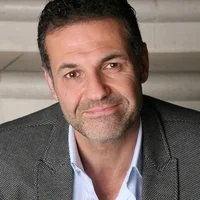
Khaled Hosseini
Hosseini probes the themes of displacement and identity through a deeply personal lens, reflecting his own journey from Afghanistan to the United States. As a former physician, his transition to a full-time author brought a profound understanding of human emotions, which is vividly portrayed in his novels. His early life, marked by his family's asylum-seeking experience due to political turmoil, heavily influences his literary focus on the emotional complexities of Afghan culture and the impact of conflict.\n\nIn his renowned book, "The Kite Runner," Hosseini delves into the tumultuous landscape of friendship and betrayal against the backdrop of war-torn Afghanistan. This debut novel catapulted him to international acclaim, capturing readers' empathy and understanding. Subsequent works like "A Thousand Splendid Suns" and "And the Mountains Echoed" explore familial bonds and the resilience of the Afghan spirit, further cementing his status as a master storyteller. Beyond literature, Hosseini extends his impact through humanitarian efforts, such as his role as a Goodwill Envoy for the UNHCR and his foundation, which aids Afghan refugees.\n\nReaders of Hosseini's work benefit from his unique ability to intertwine deeply personal narratives with universal themes. His bio reveals a life dedicated to portraying the struggles and triumphs of his homeland, offering insights into the human condition. Through his storytelling, he not only informs but also inspires, inviting readers to reflect on themes of redemption and resilience that transcend cultural boundaries.
Read moreDownload PDF & EPUB
To save this Black List summary for later, download the free PDF and EPUB. You can print it out, or read offline at your convenience.

And the Mountains Echoed
by Khaled Hosseini
