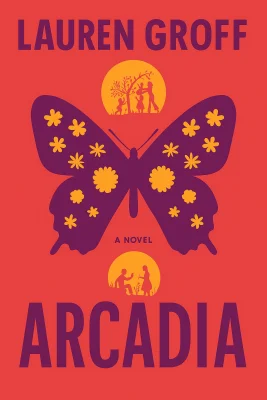
Arcadia
Categories
Fiction, Historical Fiction, Adult, Book Club, Historical, Contemporary, Novels, Coming Of Age, Adult Fiction, Literary Fiction
Content Type
Book
Binding
Hardcover
Year
2012
Publisher
Voice
Language
English
ISBN13
9781401340872
File Download
PDF | EPUB
Arcadia Plot Summary
Introduction
# Arcadia Lost: From Commune Child to Keeper of Dreams The boy they call Bit weighs three pounds on a produce scale in 1968, born into a world that doesn't yet exist. His parents, Hannah and Abe, are among the founding dreamers of Arcadia, a utopian commune carved from six hundred acres of abandoned farmland in upstate New York. Here, nearly a thousand souls will attempt to build paradise on earth, sharing labor, love, and the radical belief that humanity can transcend its violent nature through collective will. But paradise carries the seeds of its own destruction. As Bit grows from a fragile child into a man haunted by memory, he witnesses the golden age and inevitable collapse of America's last great commune. The idealism that birthed Arcadia collides with human nature, economic reality, and the relentless intrusion of the outside world. Through his eyes, we see how the most beautiful dreams often prove the most vulnerable, and how the children of utopia must learn to find meaning in the fragments that remain when paradise crumbles beneath their feet.
Chapter 1: Paradise Born: Childhood in the Garden of Arcadia
Five-year-old Bit moves through the commune like a small ghost, his oversized eyes absorbing everything in the ramshackle collection of buses and lean-tos they call home. Winter grips Ersatz Arcadia with brutal fingers, but inside the communal meetings, Handy's voice rises over the assembled believers, preaching gentleness and the eternal spark in all beings. Bit watches from his father's arms as the Dartful Codger, Midge's ancient father, sits motionless in his wheelchair nearby. The old man's eyes stop blinking. His nose stops breathing steam in the frigid air. Purple spreads across his lips like spilled wine. Death has come quietly to paradise, and Bit is perhaps the only one who sees it happen. When Midge discovers her father's body, the community rallies around her grief, but something deeper shifts in the boy's understanding. He has glimpsed the fragility beneath Arcadia's surface, the way life can slip away even in the midst of spiritual communion. Hannah breaks down crying, not just for the old man but for her own father dying far away in Louisville, for the weight of secrets she carries. The winter presses hard on everyone. Food runs low, the cold seeps through every crack, and people whisper about mysterious plans while Handy tours with his band to raise money. Bit learns to tend the fire, to make himself small and useful, to carry adult sorrows he cannot yet understand. Spring arrives with backbreaking labor as Abe emerges as a leader among those left behind, organizing crews to transform the derelict Arcadia House into a home for hundreds. The mansion looms over them with broken windows like dead eyes, its roof collapsed to show patches of sky. But Abe sees possibility where others see ruin, his engineering mind solving the puzzle of pipes and plaster, beams and wiring. Bit explores the dangerous corridors, discovering rooms thick with dust and decay. In one forgotten chamber, he finds a book of Grimm fairy tales filled with dark forests and terrible transformations. The stories speak to something in his young mind, a recognition that even the most beautiful places harbor shadows. He hides the book like treasure, reading by candlelight about children lost in woods, about the price of wishing for more than what you have. The renovation becomes a race against time and weather. Slowly, impossibly, the ruin transforms into something resembling home. But Bit has learned that paradise is fragile, that even in Eden, death waits in the shadows, patient and inevitable.
Chapter 2: Cracks in Eden: The Commune's Golden Age and Growing Shadows
By age fourteen, Bit has grown into Arcadia's contradictions. The community now houses nine hundred people, but abundance has bred its own problems. Handy, once the charismatic leader who could inspire devotion with a smile, has withdrawn to his room, emerging mainly to sleep with young women barely older than his own daughter. The Council of Nine struggles to govern a population that includes not just true believers but runaways, drug addicts, and drifters seeking free food and shelter. Bit finds himself caught between childhood and something darker. His best friends Cole, Dylan, and Ike navigate the same treacherous waters, their innocence eroding as they witness adult hypocrisies. They form a secret gang called the Sowers of Destruction, playing pranks that reveal their growing cynicism. When they stage an elaborate fairy visitation for younger children, Bit realizes too late they've crushed butterfly wings in a window, teaching the little ones that even magic dies. Helle, Handy's daughter, returns from the outside world transformed. No longer the vulnerable girl Bit remembers, she's become angular and hungry, her body marked by experiences she won't discuss. She introduces Bit to pills and marijuana, to the dizzy pleasure of her mouth on his, to the confusion of desire mixed with something that feels like danger. Their relationship becomes a dance of approach and retreat, tenderness shadowed by manipulation. The community's financial crisis deepens like a wound that won't heal. Desperate for money, Abe and Hannah secretly plant high-grade marijuana in the woods, hoping to sell it and save Arcadia from bankruptcy. They recruit Bit as their lookout, making him complicit in their illegal scheme. The boy who once believed in Arcadia's purity now finds himself lying to friends, keeping secrets from the community, watching his parents compromise their principles for survival. The careful balance between individual freedom and collective responsibility begins to collapse under the weight of numbers. Newcomers arrive daily, overwhelming systems the founders created for a smaller, more committed population. The original vision of a tight-knit family dissolves into something more chaotic and impersonal, while Handy's leadership grows more erratic and self-serving.
Chapter 3: The Fall: Cockaigne Day and the Collapse of Utopia
Cockaigne Day arrives like a fever dream, what should be Arcadia's annual celebration becoming a nightmare of overcrowding and chaos. Hundreds of strangers descend on the commune, drawn by underground publications advertising free love and drugs. The carefully maintained balance shatters under the weight of gatecrashers who consume resources without contributing labor, who bring violence and exploitation to a place built on gentleness. Bit, high on LSD for the first time, witnesses horrors through the fractured lens of his altered consciousness. In the dark woods beyond the party, he sees Helle with two leather-jacketed men, a scene that burns itself into his memory with acid clarity. He cannot process what he's witnessing, cannot find words for the violation, cannot reconcile the girl he loves with the broken figure stumbling through the trees. The next morning brings catastrophe swift and merciless. A young man lies dead in the tomato patch, his body trampled into the mud. Police helicopters circle like mechanical vultures before descending in force. They arrest over a hundred people, including Handy, who faces charges ranging from drug possession to criminally negligent manslaughter. The marijuana plot Bit's parents tended so carefully is discovered and confiscated, their hopes for financial salvation withering like the plants themselves. The raids shatter Arcadia's population like glass hitting concrete. Families flee in the night, loading possessions into whatever vehicles they can find. The Pregnant Ladies strip naked in final defiance before police cameras. Children are separated from parents, lovers from each other, the community's bonds severed by handcuffs and fear. Bit watches his world dissolve, understanding for the first time that paradise was always temporary, always fragile, always doomed to end. Handy disappears rather than face trial, abandoning his followers to deal with the legal and financial wreckage. The dream that sustained hundreds of people for over a decade dies in a single violent morning, leaving only scattered refugees and the bitter taste of idealism betrayed.
Chapter 4: Exile from Paradise: Learning to Live in the Outside World
The exodus begins before dawn. Hannah wakes Bit in darkness, and they slip away like thieves, leaving behind everything they've known for fourteen years. Abe sits silent in the passenger seat, his wheelchair strapped to their battered car's trunk. They stop only once, at Verda's cottage, where the old hermit woman gives Bit a bundle containing money, papers, and a piece of scrimshaw carved with a woman's face. It's a talisman for the journey ahead, a reminder that love endures beyond loss. The outside world assaults Bit's senses with alien strangeness. Having never left Arcadia, he struggles to comprehend the scale and complexity of normal American life. Cities loom like hostile landscapes, their glass towers and concrete rivers bearing no resemblance to the pastoral world of his childhood. Simple interactions become fraught with confusion as he learns unspoken rules of a society built on competition rather than cooperation. Their cramped Queens apartment feels like a cage after the open spaces of the commune. Hannah, stripped of her role as earth mother and community leader, sinks into a depression that leaves her barely functional. Abe circles their reduced circumstances like a trapped animal, his engineering mind finding no outlet in their urban exile. The marriage that survived Arcadia's chaos begins showing cracks that will never fully heal. Years pass in a blur of adaptation and education. Bit attends public school, where his gentle nature and unusual background make him an object of curiosity and sometimes cruelty. He learns to hide his origins, to speak of his childhood in vague terms that won't invite mockery or pity. Photography becomes his refuge, a way of capturing beauty in a world that often seems harsh and disconnected from natural rhythms he once knew. The boy who once roamed freely through forests now finds himself trapped in concrete and steel, his connection to the natural world severed as completely as if he'd been transported to another planet. In the red glow of his makeshift darkroom, watching pictures emerge from blank paper, he finds the only peace available to him in this strange new world.
Chapter 5: Fractured Love: Adult Life, Marriage, and Abandonment
Twenty years later, Bit has carved out a modest life as a photography professor, his art a bridge between idealistic past and pragmatic present. He has learned to navigate the urban world that once seemed so alien, finding beauty in unexpected places and building relationships with people who share none of his unusual background. His apartment fills with quiet academic rhythms, punctuated by gallery openings and the gentle demands of teaching students who have never known a world without technology. Then Helle reappears, the wild girl from his childhood now a woman scarred by decades of hard living. Her beauty remains, but it's brittle now, worn thin by addiction, failed relationships, and the weight of choices that led her far from the innocent child who once danced naked in Arcadia's pond. Their reunion ignites something in both of them, a recognition of shared wounds and the possibility of healing through connection to someone who understands their unique history. They retreat to a farmhouse in the country for a year, trying to recreate something of their lost paradise in miniature. For a brief, shining moment, it works. Helle grows healthy and strong, her body filling out as she finds peace in simple rural rhythms. When she becomes pregnant with their daughter Grete, it seems like a miracle, a chance to give their child the stability and love they both lacked in their chaotic upbringings. But the city calls them back with promises of opportunity and culture. They return to Bit's apartment, and for several years build something resembling normal family life. Grete grows into a bright, curious child who knows nothing of communes or utopian dreams, her world bounded by school, friends, and comfortable middle-class routines. The fragile peace shatters when Helle disappears one night, walking out into the city and never returning. No note, no explanation, no trace of where she might have gone or why she left. The night before, she had come to their bed cold and desperate, her hands urgent on his body, her lovemaking fierce with unspoken goodbye. Bit is left to raise their daughter alone, haunted by questions that have no answers and the terrible suspicion that some wounds from childhood never fully heal.
Chapter 6: The Return: Death, Memory, and the Weight of Legacy
The call comes in the middle of the night, shattering Bit's carefully constructed urban existence. His father Abe is dead, and his mother Hannah is dying, her body ravaged by ALS while her mind remains cruelly intact. The disease that will eventually steal her ability to speak, swallow, and breathe has already begun its relentless advance, forcing Bit to confront the mortality of the woman who once seemed as eternal as the earth itself. He returns to Arcadia with teenage Grete, now a sophisticated city girl who views the rural landscape with the same bewilderment Bit once felt toward urban life. The commune is long gone, replaced by a corporate retreat center where tennis courts occupy spaces where vegetables once grew. Only the forest remains unchanged, the hills and trees that witnessed both the community's birth and its death. Hannah's decline forces Bit into the role of caregiver, a responsibility that strips away the comfortable distance he has maintained from his past. He must feed her when she can no longer swallow, clean her when she loses control, and watch helplessly as the vibrant woman who raised him disappears piece by piece into the prison of her failing flesh. The process is both heartbreaking and oddly healing, allowing them to finally address wounds left by her depression during his childhood. As Hannah's condition worsens, the community of women who once shared the commune's dreams rallies around her. Astrid, the midwife who delivered Bit decades earlier, returns to oversee Hannah's final passage with the same fierce competence she once brought to births. Their presence transforms the house into something resembling the collective care that once defined Arcadia, proving that some aspects of their utopian vision survived the commune's collapse. The vigil becomes a meditation on the meaning of the life they all shared, the dreams they pursued, and the price they paid for trying to live according to their deepest values. In caring for his dying mother, Bit finally understands that the commune's failure does not negate its beauty, that the attempt to create something better was worthy even if it could not be sustained.
Chapter 7: Between Worlds: Finding Home in an Uncertain Future
Hannah's death releases Bit from immediate caregiving demands but leaves him suspended between two possible futures. He could return to the city with Grete, resuming their comfortable urban life and leaving the past buried in the forest. Or he could stay in Arcadia, tending the land his parents loved and trying to preserve something of their vision for future generations. The choice becomes more urgent as reports of a pandemic spreading across the globe suggest the world itself may be entering a period of profound transformation. The disease, known as SARI, kills with terrifying speed and efficiency, overwhelming hospitals and forcing governments to impose quarantines that bring normal life to a halt. In their rural isolation, Bit and Grete are relatively safe, but the crisis forces them to confront fundamental questions about how they want to live and what kind of world they want to inhabit. The collapse of global systems and failure of technological solutions echo themes that drove the original commune members to seek alternatives to mainstream society. Grete, now fifteen and shaped by both worlds, begins to understand the complexity of her inheritance. She has her mother's restless energy and her father's contemplative nature, her grandmother's fierce intelligence and her grandfather's practical skills. The girl who once scorned her family's hippie past now sees its relevance to a world that seems increasingly unstable and unsustainable. As they prepare to leave Arcadia for what may be the final time, Bit takes his daughter on a walk through the forest to the ruins of Verda's cottage, where the mysterious old woman once provided him with wisdom and comfort during his childhood. The structure has been reclaimed by nature, trees growing through its roof and vines covering its walls, but something of its magic remains. In this place where past and present converge, father and daughter find a moment of perfect understanding. The novel ends not with resolution but with acceptance of uncertainty. Bit paints murals of Arcadia on his daughter's bedroom wall, bringing back to life a world that existed fully only in the hearts of those who lived it. The act becomes more than decoration; it's resurrection, a way of passing on the best of what the commune offered while learning from its failures.
Summary
Bit Stone stands as the keeper of Arcadia's memory, a man shaped by paradise lost who must find meaning in the fragments that remain. His journey from sheltered commune child to wounded adult to protective father traces the arc of a generation that dared to imagine a better world, failed to achieve it, but never stopped believing in the possibility of transformation. The commune that raised him was flawed and ultimately unsustainable, but it was also beautiful and necessary, a reminder that human beings are capable of dreaming beyond their circumstances. In the end, perhaps that's enough: to carry the light forward, to plant seeds in new soil, to trust that somewhere, somehow, the dream of Eden might bloom again. The pandemic that threatens the world as the story closes serves as both literal crisis and metaphor for broader catastrophes facing humanity, making the commune's emphasis on sustainability and community appear not as naive idealism but as prescient wisdom. Bit's daughter Grete represents hope renewed, inheriting not a place or philosophy but a capacity for hope tempered by experience, the ability to find beauty and meaning even in the midst of loss and uncertainty.
Best Quote
“They sit here in the darkness, trusting. That the coffee will be hot and unpoisoned. That no raging madman will come in with a gun or bomb.It leaves him breathless at times, how much faith people put in one another. So fragile, the social contract: we will all stand by the rules, move with care and gentleness, invest in the infrastructure, agree with the penalties of failure. That this man driving his truck down the street won't, on a whim, angle into the plate glass and end things. That the president won't let his hand hover over the red button and, in moment of rage or weakness, explode the world. The invisible tissue of civilization: so thin, so easily rendable. It's a miracle that it exists at all.” ― Lauren Groff, Arcadia
About Author

Lauren Groff
Groff reframes the literary landscape with her compelling exploration of identity, community, and history. Her purpose as an author centers on probing the psychological depths and emotional intensities of her characters, offering readers a chance to engage with themes of love, loss, and transformation. Her writing, evident in works like "The Monsters of Templeton" and "Fates and Furies", combines lyrical prose with innovative narrative structures, inviting readers to consider the complex interplay between individual desires and societal expectations.\n\nGroff's method often involves blending historical and speculative elements, as seen in "Matrix" and "The Vaster Wilds", where imaginative reconstructions provide fresh perspectives on the past. This approach not only enriches the reading experience but also challenges the audience to rethink conventional narratives. Her stories, published in esteemed outlets such as "The Atlantic" and "Ploughshares", showcase her ability to intertwine rich imagery with rhythmic language, appealing to readers who appreciate detailed and evocative storytelling.\n\nGroff's impact extends beyond her books, as she has received significant recognition, including being named one of the 100 most influential people by "TIME" magazine in 2024. Her contributions to literature have been acknowledged through numerous awards, reflecting her status as a critical voice in contemporary American literature. For those interested in a nuanced examination of human experiences, Groff's work offers a profound and resonant exploration of life's complexities.
Read moreDownload PDF & EPUB
To save this Black List summary for later, download the free PDF and EPUB. You can print it out, or read offline at your convenience.
Arcadia
by Lauren Groff
