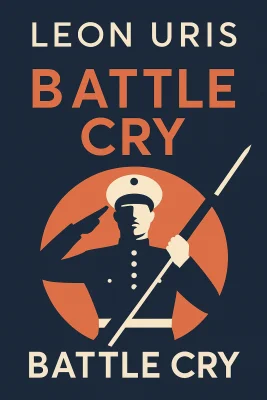
Battle Cry
Categories
Fiction, Historical Fiction, Military Fiction, Book Club, Historical, Novels, World War II, Adventure, War, Drama
Content Type
Book
Binding
Mass Market Paperback
Year
2005
Publisher
Avon
Language
English
ASIN
006075186X
ISBN
006075186X
ISBN13
9780060751869
File Download
PDF | EPUB
Battle Cry Plot Summary
Introduction
# Forged in Fire: From Boys to Marines in the Pacific War The drill instructor's voice cut through the California morning like a blade through flesh. "You maggots aren't human beings anymore!" Sergeant Beller's words echoed across the parade ground at Marine Corps Recruit Depot San Diego, where Danny Forrester stood among a hundred other terrified boys, their civilian clothes already stripped away, their heads shaved to stubble. It was 1942, and America was bleeding from Pearl Harbor's wounds. Danny had walked away from everything—his football scholarship, his girl Kathy back in Baltimore, a future mapped out in comfortable certainties. Now he stood naked under the merciless sun, watching other recruits crumble under Beller's assault. Ski Zvonski, a scrappy Polish kid from Philadelphia, trembled beside him. L.Q. Jones, fat and sweating, looked ready to bolt. Marion Hodgkiss clutched his philosophy books like a shield. These broken boys would either shatter completely or emerge as something harder than the steel of their rifles. The Marine Corps had three months to forge warriors from this raw material, because the Pacific was calling, and the Japanese weren't waiting.
Chapter 1: Answering the Call: From Civilians to Recruits
The transformation began with violence. Sergeant Beller moved through the ranks like a predator, his fists finding soft bellies and weak spines. Danny watched L.Q. Jones collapse during the first physical training session, his round body folding like wet cardboard. The Texas boy had lied about everything—his weight, his fitness, his ability to survive what was coming. "Get up, you worthless piece of shit!" Beller's boot found Jones's ribs. "The Japs won't wait for you to catch your breath!" Ski Zvonski proved tougher than his slight frame suggested. The Polish kid had grown up fighting in Philadelphia's streets, and he absorbed punishment like a sponge absorbs water. When Beller tried to break him with extra duty and verbal abuse, Ski just stared back with eyes that had already seen too much poverty and loss. Marion Hodgkiss surprised everyone. The quiet intellectual who read Plato in his spare time transformed into a natural leader when the pressure mounted. During a brutal night march through the California hills, when half the platoon was ready to quit, Marion stepped forward and organized them with calm efficiency. His voice cut through the chaos, assigning tasks and coordinating their movements until they functioned as a unit. Danny discovered his own gift during weapons training. The M1 Garand felt natural in his hands, and when he squeezed the trigger, the rifle sang. His shots punched neat holes in the target's center, earning grudging approval from the range instructors. "Forrester's got the touch," one sergeant muttered. "Kid could put five rounds through a dime at three hundred yards." The weeks blurred together in a haze of pain and exhaustion. They learned to march in perfect unison, their boots striking the asphalt like thunder. They practiced bayonet fighting until their hands bled, screaming like demons as they drove steel into straw dummies. Slowly, impossibly, the collection of misfits began to move as one organism, their individual weaknesses absorbed into collective strength.
Chapter 2: The Crucible: Boot Camp and the Breaking Point
The night infiltration course stretched before them like a vision of hell. Barbed wire gleamed in the darkness, and machine guns chattered overhead, their tracers painting deadly patterns in the air. Danny crawled forward on his belly, his rifle clutched against his chest, mud filling his mouth and nostrils. Beside him, Ski Zvonski was breaking down. The little Pole had reached his limit, his body wracked with exhaustion and despair. Sobs shook his frame as he lay paralyzed in the mud, unable to move forward or back. The machine guns kept firing, and the wire seemed to stretch forever. "I can't do it," Ski whispered, his voice barely audible over the gunfire. "I can't fucking do it anymore." Danny reached out in the darkness, his hand finding Ski's shoulder. "Yes, you can," he said, his voice steady despite the fear clawing at his throat. "We do this together, or we don't do it at all." Something fundamental shifted in that moment. They were no longer individuals struggling alone, but brothers bound by shared suffering. Danny pulled Ski forward, whispering encouragement as they crawled through the wire. Behind them, Marion organized the stragglers, his calm voice cutting through their panic. Even L.Q. Jones found reserves of strength he didn't know he possessed. They emerged from the course covered in mud and blood, but they emerged together. Sergeant Beller waited at the finish line, his face unreadable in the darkness. For a long moment, he studied the exhausted recruits, then nodded slowly. "You might just make Marines after all," he said, and those words carried more weight than any medal. The final weeks of training passed in a blur of advanced tactics and weapons instruction. They learned to work radios under fire, to call in artillery strikes, to coordinate complex maneuvers. Danny found himself assigned to communications, his steady hands and clear voice making him valuable in the chaos of simulated combat. Graduation day arrived with California sunshine and dress blue uniforms. The boys who had stumbled off buses three months earlier were gone, replaced by United States Marines. They stood at attention as the band played and officers made speeches, but their eyes were already looking west, toward the Pacific and the war that waited beyond the horizon.
Chapter 3: Distant Shores: Finding Brotherhood in New Zealand
The troopship Bobo wallowed through Pacific swells like a dying whale, carrying the newly formed Second Battalion toward an uncertain destiny. Danny lay in his canvas bunk, stacked seven high in the fetid hold, trying not to think about the weeks of misery that stretched ahead. The ship reeked of diesel fuel, unwashed bodies, and fear. Lieutenant Colonel Sam Huxley commanded the battalion with iron discipline and relentless demands. Tall, angular, and harder than coffin nails, he drove his Marines through endless drills even aboard ship. "You will be ready," he told them, his voice carrying absolute authority. "When we hit those beaches, you will be the finest fighting force in the Pacific, or you will be dead." New Zealand appeared on the horizon like a promise of redemption. Wellington Harbor opened before them, its calm waters reflecting Victorian buildings that climbed the surrounding hills. The New Zealanders welcomed them with desperate enthusiasm, grateful for protection against the advancing Japanese Empire. Danny found himself billeted with the Patterson family in a suburb that reminded him of Baltimore. Mrs. Patterson treated him like the son she'd sent off to war, cooking elaborate meals and pressing his uniforms with maternal care. For precious hours each evening, he could almost forget he was a warrior preparing for battle. The training continued with renewed intensity. Huxley pushed them through forced marches across the North Island, brutal exercises that left men collapsing from exhaustion. They practiced amphibious landings in Wellington Harbor, struggling with cargo nets that swayed treacherously over landing craft. The equipment was old and unreliable—their Reising submachine guns jammed constantly, their radios worked sporadically—but they learned to make do. Andy Hookans, a massive Swedish-American lumberjack, discovered something more precious than military training. At a dance in Wellington, he met Pat Rogers, a nurse whose brother had died at Crete. She was beautiful in a quiet way, with dark hair and eyes that had seen too much sorrow. Their courtship was swift and intense, conducted against the backdrop of a world at war where tomorrow was never guaranteed. The news from Guadalcanal filtered through official channels and whispered rumors. The First Marine Division was locked in desperate struggle for Henderson Field, and casualties were mounting. Among the names on the casualty lists, Danny found one that hit him like a physical blow: Norton, Milton, Pfc., Philadelphia, Penn. Someone they'd known in training was dead, killed in fighting on Tulagi. The war had claimed its first victim from their circle, and suddenly the abstract concept of combat became terrifyingly real. As winter turned to spring in the Southern Hemisphere, their time in New Zealand drew to a close. Andy and Pat were married in a small ceremony that brought together Marines and Kiwis in celebration of love defying war's darkness. But even as they exchanged vows, everyone knew separation was inevitable. The call would come soon, and Huxley's Marines would sail north toward their baptism of fire.
Chapter 4: Baptism by Fire: First Combat in the Pacific
The jungle breathed around them like a living thing, hot and humid and filled with the promise of death. Guadalcanal was nothing like the travel posters—it was a green hell where every shadow might hide a Japanese sniper and every stream could carry disease. The Second Battalion had landed expecting quick victory, but the enemy had other plans. Danny crouched in his foxhole, sweat streaming down his face as he adjusted the radio frequency. Static crackled with urgent voices calling for ammunition, medical supplies, and reinforcements that might never come. Around him, the Marines were learning harsh realities of jungle warfare. The Japanese were skilled fighters who used terrain to their advantage, appearing like ghosts to strike before melting back into the green maze. The enemy came at night, screaming "Banzai!" as they charged the Marine perimeter. Danny's first kill came during one of these attacks—a Japanese soldier who materialized from darkness with a bayonet aimed at his heart. The radio operator's rifle bucked in his hands, and the enemy soldier crumpled. There was no time to think about what he'd done; more shapes were moving in the jungle, and battle raged until dawn. Marion Hodgkiss proved himself a natural leader, taking charge when his platoon commander was wounded. His quiet intelligence served him well in combat's chaos, as he coordinated defensive positions and called in artillery strikes with deadly precision. The bookish intellectual had found his calling in war's crucible. Andy Hookans fought with berserker fury, his massive frame allowing him to carry wounded comrades to safety under fire. But quiet moments tested him most—times when he would stare at Pat's photograph and wonder if he would ever see New Zealand again. Letters from home became lifelines, connecting the Marines to a world beyond the jungle's green embrace. The campaign stretched on for months, a grinding war of attrition that consumed men and material at appalling rates. Disease was as deadly as enemy bullets—malaria, dysentery, and jungle rot claimed victims daily. The Marines learned to live with constant discomfort, sleeping in mud, eating cold rations, and fighting an enemy who seemed to materialize from the jungle itself. Ski Zvonski volunteered for a patrol that everyone knew was a death sentence. Trapped behind enemy lines with a shattered knee, the tough Philadelphia kid made the hardest choice a Marine can make. He stayed behind to hold off the Japanese while his squadmates escaped, clutching a rosary and whispering prayers as enemy voices called out in darkness. His sacrifice bought precious time and saved lives, earning him a Navy Cross that would be shipped home to a sister who would never understand heroism's price.
Chapter 5: Islands of Death: The Bloody Campaign Trail
The coral atoll of Tarawa looked deceptively peaceful from the transport ship, a thin strip of white sand and palm trees barely visible above Pacific swells. But intelligence reports painted a different picture—five thousand Japanese defenders dug into concrete bunkers and prepared to fight to the death. The Second Marine Division would have the honor of taking this strategic stepping stone toward Japan. Danny checked his radio equipment one final time as landing craft circled in the lagoon. Around him, Marines made final preparations—cleaning weapons, checking ammunition, writing last letters home. Naval bombardment had been thundering for hours, but everyone knew the Japanese had learned to build their fortifications deep and strong. The assault began at dawn with thunderous barrage from battleships and cruisers. Dive bombers screamed down from the sky, adding explosive cargo to the maelstrom. But as first waves of Marines approached the beach in amphibious tractors, enemy fire began—devastating crossfire that turned the shallow lagoon into a killing field. Danny's landing craft took a direct hit from a Japanese gun, the explosion throwing him into blood-warm water of the lagoon. He struggled to keep his radio dry as he waded through chest-deep water toward the beach, bullets whining around him like angry hornets. Men were falling everywhere, their bodies floating in the tide or sprawled on coral sand. The Marines who reached the beach found themselves pinned behind a low seawall, unable to advance against interlocking fields of fire from Japanese bunkers. The enemy had turned every palm tree, every pile of coral, into a fortress. Machine guns chattered from concealed positions, and mortars dropped deadly cargo with mathematical precision. Marion Hodgkiss was among the first to go down, a sniper's bullet finding him as he tried to establish communication with the command post. Danny crawled to his friend's position, but it was too late—the quiet intellectual from Kansas would never again discuss philosophy or write letters to his girl back home. His death was just one among hundreds as Marines paid a terrible price for each yard of coral sand. The battle raged for three days, a grinding nightmare of close-quarters combat where Marines and Japanese fought with rifles, bayonets, and bare hands. Flame-throwers roasted defenders from their bunkers, while grenades exploded in confined spaces with devastating effect. The smell of death hung over the atoll like a shroud. When the last resistance was finally crushed, Marines counted their losses—over a thousand dead and wounded for a piece of coral barely three miles long.
Chapter 6: Bonds Beyond Blood: Love and Loss in Wartime
The hospital ship Solace rolled gently in swells off Tarawa, its white hull carrying wounded survivors back toward healing. Danny lay in a narrow bunk, his body mending from shrapnel wounds while his mind struggled to process the transformation he had undergone since walking into that Marine recruiting office in Baltimore. Andy Hookans occupied the bunk beside him, his left leg encased in plaster and his face bearing scars of close combat. The big Swede stared at the ceiling, clutching a letter from Pat that had reached him just before battle. She was pregnant, carrying the child they had created during their brief honeymoon in New Zealand. Knowledge that he might never see his son or daughter filled him with desperate urgency to survive. The ship's corridors echoed with sounds of suffering—men crying out in sleep, steady rhythm of medical equipment, quiet conversations of doctors and nurses who had seen too much. Some Marines would recover and return to duty, while others would carry their wounds home to an America only beginning to understand victory's true cost in the Pacific. Danny found himself appointed to a new position when he recovered—communications chief for the battalion's headquarters company. The promotion came with additional responsibilities and knowledge that he would be even more deeply involved in planning and executing future operations. He accepted the role with grim understanding that each battle brought them closer to Japan and final reckoning. The battalion was rebuilt with fresh replacements from the States—young Marines who looked impossibly clean and eager compared to hollow-eyed veterans of Guadalcanal and Tarawa. Danny watched them with mixture of pity and envy, remembering his own innocence before jungle and coral beaches had burned it away. These new men would learn soon enough what war really meant. Letters from home became lifelines to sanity. Danny treasured each word from Kathy, his girl in Baltimore who had promised to wait no matter how long the war lasted. Her letters spoke of a world that seemed increasingly distant—baseball games, movies, family dinners—simple pleasures that had once defined his existence but now felt like memories from another life. Lieutenant Colonel Huxley drove the rebuilt battalion harder than ever, knowing the next operation would be even more challenging than what they had already endured. His tall frame moved among the men like an avenging angel, his presence inspiring them to feats of courage that defied human understanding. The harsh training that had once seemed cruel now revealed its purpose—it was keeping them alive.
Chapter 7: The Price of Victory: Survival and Sacrifice
The island of Saipan rose from the Pacific like a fortress, its volcanic peaks shrouded in morning mist as the invasion fleet took position offshore. This was different from previous operations—Saipan was part of Japan's inner defensive ring, heavily fortified and defended by seasoned troops who knew defeat here would bring American bombers within range of the Japanese homeland. Danny crouched in the landing craft as it circled with hundreds of others, waiting for the signal to begin assault. Radio chatter in his headphones painted a picture of massive preparation—battleships positioning for preliminary bombardment, dive bombers warming up on carrier decks, thousands of Marines making final equipment checks. But beneath professional calm, everyone sensed this would be the bloodiest battle yet. The bombardment began with sound like thunder that never ended. Sixteen-inch guns from battleships hurled shells the size of automobiles into Japanese positions, while smaller warships added their firepower to the devastating barrage. The island disappeared behind a curtain of smoke and flame, but Marines knew from bitter experience that some defenders would survive even this apocalyptic preparation. Lieutenant Colonel Huxley stood in the command boat, his tall frame silhouetted against the burning island. He had pushed his men through two campaigns, forging them into one of the finest fighting units in the Pacific. Now he would lead them into their greatest test, knowing many would not survive to see another dawn. The landing craft hit the beach running, their ramps dropping to disgorge Marines into hell of machine gun fire and mortar explosions. Danny splashed through surf with his radio pack, desperately trying to establish communication with ships offshore while bullets cracked around him like deadly hail. The Japanese had learned from previous defeats, positioning weapons to create interlocking fields of fire that turned the beach into a killing ground. Andy Hookans charged forward with his rifle company, his massive frame making him a natural target for enemy snipers. He thought of Pat and their unborn child with each step, drawing strength from knowledge that he was fighting for their future. A Japanese machine gun opened up from a concealed position, cutting down Marines like wheat before a scythe. The battle for Saipan became a grinding war of attrition, with both sides feeding men into combat's meat grinder. Marines pushed inland yard by bloody yard, clearing caves and bunkers with flame-throwers and explosives. The Japanese fought with fanatical determination, launching desperate counterattacks that sometimes broke through American lines before being contained. When dawn broke after the final Japanese assault, the attack had been shattered, but victory's price was written in the survivors' faces.
Chapter 8: Homeward Bound: Changed Men in a Changed World
The hospital ship Repose cut through Pacific swells toward California, its white hull carrying wounded survivors of Saipan back to an America that had changed as much as they had. Danny lay in his bunk, body healing from wounds that would leave permanent scars, while his mind struggled to process the transformation he had undergone since that day he first walked into the Marine recruiting office. Around him, other wounded Marines faced their own reckonings with war's cost. Some would recover fully and return to civilian life, while others carried injuries that would mark them forever. Andy Hookans stared at the ceiling, his left leg gone below the knee and his face bearing scars of close combat. The letter from Pat announcing their son's birth lay crumpled in his hand, a reminder of life waiting if he could find strength to embrace it. The ship's corridors echoed with conversations about home—families that had aged in their absence, sweethearts who had waited or moved on, and a country struggling to understand what its young men had endured in the Pacific. The Marines had left as boys and were returning as men, but transformation had come at a price that would never fully heal. Danny thought about friends who wouldn't be making this journey home. Marion Hodgkiss, the quiet intellectual who had found his courage in combat's crucible. Ski Zvonski, the tough Philadelphia kid who had died holding off the Japanese so his squadmates could escape. Their absence was a weight the survivors would carry forever. Lieutenant Colonel Huxley had not survived Saipan, falling in the final Japanese counterattack while rallying his men for one last stand. His death marked the end of an era for the Second Battalion, but his legacy lived on in the Marines he had trained and led through three campaigns. They had become the warriors he had envisioned, tempered by combat and bound together by shared sacrifice. As the California coast appeared on the horizon, Danny felt mixture of relief and apprehension. He was going home to Kathy and the life they had planned together, but he was also carrying memories of friends who would never return. The boy from Baltimore who had enlisted with such enthusiasm was gone forever, replaced by a man who understood freedom's true cost. The war in the Pacific continued without them. New Marines were landing on other beaches, fighting their own battles against an enemy that refused to surrender. But for these survivors, the fighting was over. They had done their part, paid their price, and earned the right to go home.
Summary
The war had taken everything from them and given back something else entirely—a brotherhood forged in combat's crucible that would endure long after the last shots were fired. Danny Forrester returned to Baltimore and married Kathy, building a quiet life that honored the memory of those who hadn't come home. Andy Hookans learned to walk again and sailed back to New Zealand, where Pat and their son waited with the patience of those who truly understand love's cost. The Second Battalion of the Sixth Marines had written its name in blood across the Pacific, from Guadalcanal's jungles to Tarawa's coral beaches to Saipan's volcanic slopes. They had proven that ordinary young men could accomplish extraordinary things when tested by fire and bound together by duty. Their story became part of the larger narrative of American victory in World War II, but for those who lived it, the war would never truly end. It lived on in quiet moments of remembrance, in bonds between survivors, and in understanding that freedom's price is always paid by those willing to stand between civilization and chaos. The echoes of their valor would resonate through generations, a testament to the courage of young Americans who answered their country's call when the world hung in the balance.
Best Quote
“Huxley: "Tell me something Bryce, do you know the difference between a Jersey, a Guernsey, a Holstein, and an Ayershire?"Bryce: "No."Huxley: "Seabags Brown does."Bryce: "I don't see what that has to do..."Huxley: "What do you know about Gaelic history?"Bryce: "Not much."Huxley: "Then why don't you sit down one day with Gunner McQuade. He is an expert. Speaks the language, too."Bryce: "I don't..."Huxley: " What do you know about astronomy?"Bryce: "A little."Huxley: "Discuss it with Wellman, he held a fellowship." Bryce: "This is most puzzling."Huxley: "What about Homer, ever read Homer?"Bryce: "Of course I've read Homer."Huxley: "In the original Greek?"Bryce: "No"Huxley: "Then chat with Pfc. Hodgkiss. Loves to read the ancient Greek."Bryce: "Would you kindly get to the point?"Huxley: "The point is this, Bryce. What makes you think you are so goddam superior? Who gave you the bright idea that you had a corner on the world's knowledge? There are privates in this battalion who can piss more brains down a slit trench then you'll ever have. You're the most pretentious, egotistical individual I've ever encountered. Your superiority complex reeks. I've seen the way you treat men, like a big strutting peacock. Why, you've had them do everything but wipe your ass.” ― Leon Uris, Battle Cry
Review Summary
Strengths: The book is praised for its fast-paced narrative and engaging characters. It is considered a classic war story, respected enough to be issued in military training programs. The story provides a sensitive and realistic portrayal of Marines' experiences, from boot camp to combat, and is noted for its humor and emotional depth. Weaknesses: Criticisms include the book's lack of psychological complexity and its dated attitudes. Some readers found the writing style poor and the characters overly sentimental. The absence of combat scenes until the end was also a point of contention. Overall: The general sentiment is mixed. While some readers find it engrossing and a valuable depiction of Marine life during WWII, others criticize its writing and outdated perspectives. It's recommended for those interested in military stories, though opinions on its literary merit vary.
About Author

Leon Uris
Uris delves into the complexities of historical and cultural conflicts, with a focus on Jewish history and identity post-World War II. His novels often delve into intricate ethnic, religious, and political themes, as seen in his seminal work, "Exodus," which explores the founding of Israel through thorough research and thousands of interviews. This book, alongside others like "Trinity," an epic about Ireland's struggle for independence, underscores Uris's commitment to providing a detailed narrative that is both immersive and enlightening for readers.\n\nUsing firsthand war experience as a foundation, Uris employs rigorous research to create vivid, emotionally resonant narratives. His military background significantly influenced his debut novel, "Battle Cry," which depicts the resilience of U.S. Marines in the Pacific. Meanwhile, his exploration of the Warsaw Ghetto Uprising in "Mila 18" demonstrates his dedication to historical accuracy and depth. These methods not only enrich his books with authenticity but also provide readers with a profound understanding of the socio-political landscapes they depict.\n\nThe impact of Uris's work extends to readers who seek insight into complex historical events and cultural dynamics. His ability to intertwine personal stories with broader historical contexts offers a unique perspective that resonates with audiences interested in history, identity, and conflict. Recognized with awards such as the California Literature Gold Medal, Uris's contributions have been celebrated for their influence on popular interpretations of pivotal historical moments. Through this bio, his role as an author committed to truth and narrative depth is clearly articulated.
Read moreDownload PDF & EPUB
To save this Black List summary for later, download the free PDF and EPUB. You can print it out, or read offline at your convenience.
Battle Cry
by Leon Uris
