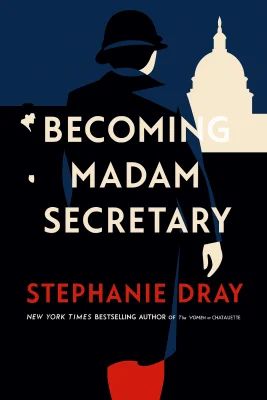
Becoming Madam Secretary
Categories
Fiction, Politics, Audiobook, Feminism, Historical Fiction, Adult, Womens, Book Club, Historical, American History
Content Type
Book
Binding
Hardcover
Year
2024
Publisher
Berkley
Language
English
ASIN
0593437055
ISBN
0593437055
ISBN13
9780593437056
File Download
PDF | EPUB
Becoming Madam Secretary Plot Summary
Introduction
# The Architect of Mercy: Frances Perkins and America's Safety Net The screams pierced through the March afternoon like broken glass. Frances Perkins stood frozen on the sidewalk, watching young women leap from the ninth floor of the Triangle Shirtwaist Factory, their bodies breaking against the pavement with sickening thuds. The fire escape had collapsed. The exit doors were locked. One hundred and forty-six workers died that day in 1911, their deaths seared into the mind of a thirty-one-year-old social worker who would spend the next fifty years ensuring such horror never happened again. Twenty-two years later, Frances would sit across from Franklin Roosevelt in his snow-covered Manhattan townhouse, negotiating the terms of her appointment as America's first female cabinet member. The path between that burning factory and the corridors of power was paved with personal sacrifice, political warfare, and a marriage that would crumble under the weight of public service. This is the story of how one woman's witness to industrial murder became the foundation for Social Security, unemployment insurance, and the forty-hour work week—the safety net that still catches falling Americans today.
Chapter 1: Witness to Tragedy: The Fire That Forged a Crusader
The orange flames licked at the windows of the Asch Building as Frances broke into a run, her heart hammering against her ribs. She had been having tea with friends when someone shouted about the fire, but she knew instinctively which building would be burning. The Triangle Shirtwaist Factory employed five hundred young immigrant women, mostly Italian and Jewish girls who worked fourteen-hour days in conditions that would make hardened policemen weep. The scene that greeted her defied comprehension. Girls pressed against the ninth-floor windows, trapped between flames and a ninety-foot drop. The fire escape buckled under their weight, sending bodies tumbling into the courtyard below. The stairwell doors were chained shut—the owners had locked them to prevent workers from taking breaks or stealing fabric scraps. Frances watched a girl no older than sixteen smooth down her burning skirt before stepping into empty air. Another clutched her friend's hand as they leaped together, their screams cut short by the unforgiving pavement. The fire department's ladders reached only to the sixth floor. The safety nets tore like tissue paper under the weight of falling bodies. Within eighteen minutes, it was over. The building itself was fireproof—not a brick was damaged. Only the workers had burned. Frances helped carry stretchers, her wedding dress stained with blood and ash. She held thirteen-year-old Maria as the girl identified her sister by her boots, the flesh too charred for recognition. Standing in the shadow of that building as dusk fell, Frances felt something crystallize within her. The Triangle fire had shown her the true face of American capitalism—beautiful factories built on the bones of expendable workers. The owners would be acquitted of manslaughter charges, claiming they didn't know the doors were locked when they fled to safety. They would even profit from the insurance money. But Frances Perkins had seen enough. The embers of that wicked fire settled in her chest, melting away any thought of a quiet life. She would answer this call or die trying. The one hundred and forty-six workers who died would not be forgotten. Their deaths would mean something. She would make sure of it.
Chapter 2: Love and Ambition: Marriage in the Shadow of Reform
Paul Caldwell Wilson was everything Frances thought she didn't want—wealthy, Republican, and devastatingly handsome. When they met at a dinner party in 1910, he pursued her with the persistence of a man accustomed to getting what he desired. Frances resisted, claiming she had no time for romance while investigating factory conditions that made her unable to eat bread without thinking of the nauseating bakeries she'd exposed. But Paul was patient, charming, and genuinely interested in her crusade. He would wait for hours in settlement house parlors while she documented child labor violations, never complaining about delayed dinners or cancelled theater dates. When he wagered that Theodore Roosevelt would answer her letter within a week, Roosevelt did respond, calling her "My dear Miss Perkins" and endorsing her cause. Over turtle soup and lobster Newburg at Fraunces Tavern, Paul listened as Frances told him about Mary Hogan—the thirteen-year-old basketball player whose hand was severed by a candy factory machine. It was the first time Frances had shared that story with anyone outside her family, and somehow telling Paul drained the poison from the memory. Their courtship unfolded against the backdrop of suffrage parades and legislative battles. When Paul proposed at the controversial Armory Show, he promised theirs would be a thoroughly modern marriage. Frances could keep her maiden name professionally—he preferred it, actually, since her radical speeches might embarrass the mayor he worked for. They eloped in September 1913, marrying at Grace Church after Frances had spent the morning on the phone with a factory owner's wife, begging for clemency in a criminal negligence case. Frances refused—mercy for him meant death for more girls. She arrived at the church shaken but resolute, and Paul's love felt like nothing short of grace. Their happiness was tested by heartbreak. Frances miscarried their first child, then gave birth to a stillborn son after a difficult pregnancy. The doctor told Paul that Frances likely wouldn't survive another attempt at motherhood. "Some women are not meant to be mothers," he said coldly. Those words shattered something inside Frances, and she separated from Paul, unable to bear the emptiness of their house with its locked nursery door. But love found a way. On Christmas Day 1916, Frances gave birth to Susanna—their golden-haired miracle who made all the pain worthwhile. As she held her daughter for the first time, Frances felt complete. She had a family, a calling, and the financial security Paul's inheritance provided. The future stretched before them like an open road.
Chapter 3: Breaking Barriers: The First Woman at the Table
The phone call came on a snowy February evening in 1933, crackling through the static like destiny itself. Franklin Roosevelt's voice was warm but commanding as he spoke the words that would change American history: "Frances, I want you to be my Secretary of Labor." Frances nearly dropped the receiver. She had known Roosevelt for twenty years, had watched him transform from a supercilious young senator who literally ran away from her lobbying efforts into a masterful politician. But this was unprecedented. No woman had ever served in a presidential cabinet. The very idea seemed absurd. The country was broken, Roosevelt explained. Thirteen million people were out of work. Banks were failing daily. Families were starving in Hoovervilles that stretched across the landscape like refugee camps. He needed someone who understood suffering, who had fought these battles in the trenches of social reform. He needed Frances Perkins. But accepting would mean abandoning her family when they needed her most. Paul was battling severe depression, his brilliant mind increasingly consumed by paranoid delusions about German spies and economic conspiracies. Seventeen-year-old Susanna was struggling with her own demons, resentful of her mother's absences and the constant scrutiny of public life. "There will be enormous opposition," Frances warned Roosevelt. "They'll say a woman can't handle labor disputes, can't negotiate with tough union bosses." Roosevelt's laugh carried through the phone lines. "Frances, I've seen you face down angry mobs and corrupt politicians. If anyone can handle a few union bosses, it's you." She thought of her grandmother's words: "When someone opens a door for you unexpectedly, walk right in and do the best you can. It means it's the Lord's will." But Frances had conditions—revolutionary demands that would transform America forever. "I want a federal works program," she told Roosevelt. "Unemployment insurance. Old-age pensions. The abolition of child labor. And something this country has never had—a comprehensive system of social security." There was silence on the other end. Then Roosevelt chuckled. "Frances, those ideas sound almost revolutionary." "They're not revolutionary, Mr. Roosevelt. They're necessary." When the announcement broke, editorial writers questioned whether a woman could handle the rough world of labor politics. Union leaders grumbled about being represented by a "society lady." But Frances had faced down Tammany bosses and corporate titans. She wasn't about to be cowed by bureaucrats who had never seen a factory floor.
Chapter 4: Personal Collapse: When Private Pain Meets Public Duty
The asylum smelled of disinfectant and despair. Frances walked down the sterile corridor, her heels clicking against the linoleum like a funeral march. Behind one of these locked doors was her husband Paul, the brilliant economist who had once been her partner in everything, now lost in the labyrinth of his own shattered mind. She found him sitting by the window, staring at nothing with eyes that had once calculated insurance risks with mathematical precision. Paul Caldwell Wilson had been a rising star in New York's financial circles, but now he couldn't calculate the risk of leaving his room without seeing enemies in every shadow. "Frances," he said without turning around, his voice flat and distant. "They're watching me. The Germans. They want my algorithms." It had started gradually—sleepless nights, grandiose schemes to solve the world's economic problems, periods of crushing depression followed by manic episodes where Paul believed he could predict market crashes with mystical accuracy. The final break came when he disappeared from their apartment, convinced that reporters were following their daughter Susanna to extract government secrets. Police found him sitting outside City Hall, clutching a bottle of pills, ready to "destroy the secret" by destroying himself. The brilliant mind that had helped insurance companies calculate actuarial tables was now calculating his own death with the same cold precision. "Paul, darling," Frances said gently, sitting beside him on the narrow bed. "You're safe here. No one is watching you." His eyes, once so sharp and calculating, now held the confused terror of a lost child. "I should have been shot that day at City Hall. It would have been better for everyone." Frances felt her heart breaking all over again. This wasn't the man she had married, the father who had held their newborn daughter with such tenderness. That man was trapped somewhere inside this shell, and she didn't know how to reach him. The doctors spoke of "manic-depressive insanity" and "hereditary weakness," offering little hope for recovery. Meanwhile, in Washington, the country was demanding her attention. Roosevelt needed her to implement massive public works programs, to negotiate with hostile union leaders, to build the foundation of Social Security while America teetered on the edge of complete collapse. Every day she spent with Paul was a day she couldn't spend serving thirteen million unemployed Americans. The guilt was crushing. She was failing as a wife, failing as a mother to Susanna, who was struggling with her own depression and eating disorders. Yet she was also failing her country if she abandoned her post during its darkest hour. How could she choose between her family's needs and the nation's survival? "I have to go back to Washington," she told Paul during one visit, her voice barely above a whisper. "But I'll come every weekend. I promise." He nodded absently, already lost in his delusions again. As Frances walked away, she heard him muttering about secret codes and enemy agents. The man she loved was disappearing, and there was nothing she could do to save him. But perhaps she could save everyone else.
Chapter 5: Building the New Deal: Architecture of American Security
The Oval Office reeked of cigarette smoke and desperation when Frances entered for the emergency cabinet meeting. President Roosevelt sat behind his massive desk, his withered legs hidden beneath a blanket, while his advisors argued about the latest economic catastrophe. Banks were failing hourly. Unemployment had reached twenty-five percent. In the Midwest, farmers were burning corn for fuel because it was cheaper than coal. "We need immediate action," Roosevelt declared, his cigarette holder clenched between his teeth like a weapon. "Frances, what do you propose?" Frances Perkins stood before the most powerful men in America, the only woman in a room full of skeptical faces. Some of these men had openly questioned whether a woman could handle the rough world of labor negotiations. Others whispered that she was a communist sympathizer, a dangerous radical who would destroy American capitalism with her bleeding-heart reforms. "We put them to work," she said simply, her voice cutting through the tobacco haze. "The Civilian Conservation Corps. We take unemployed young men and send them into the forests to plant trees, build dams, fight erosion. We give them purpose, dignity, and a paycheck they can send home to their families." Treasury Secretary William Woodin shook his head like a man swatting flies. "The cost would be enormous. Where would we house them? Feed them? Transport them to these remote locations?" "We use the Army," Frances replied without hesitation. "They have trucks, tents, equipment, organizational expertise. They're not busy fighting a war, so let them fight the Depression instead." The room erupted in arguments. Some called it socialism. Others worried about the constitutional implications of using military resources for civilian purposes. But Roosevelt's eyes gleamed with the light of a gambler seeing a winning hand. This was exactly the kind of bold thinking he needed to pull America back from the brink. Within months, Frances had mobilized a quarter million young men. They planted three billion trees, built eight hundred parks, constructed forty-six thousand bridges. More importantly, they sent their paychecks home to desperate families, pumping money into local economies that had been strangled by deflation and despair. But Frances wasn't finished. She pushed through legislation abolishing child labor, establishing the forty-hour work week, and guaranteeing workers' right to organize. When textile workers in the South went on strike, she personally traveled to the mill towns, walking through company housing that looked like slave quarters, seeing children who should have been in school working fourteen-hour shifts in cotton dust that would destroy their lungs. The mill owners tried to intimidate her, sending thugs to her hotel and flooding local newspapers with stories calling her a "communist agitator" and worse. But Frances had faced down angry mobs before. She negotiated fair wages and better working conditions, then moved on to the next crisis, leaving behind a trail of transformed lives and bitter enemies. Each victory came at enormous personal cost. While she was transforming American labor law, her husband's condition worsened. Her daughter Susanna, feeling abandoned, developed severe depression and eating disorders that would plague her for life. Frances was saving the country while her own family fell apart, piece by piece, like a house built on shifting sand.
Chapter 6: Under Siege: Defending Progress Against All Enemies
The impeachment petition landed on Frances's desk like a declaration of war, its bold headlines screaming "The Most Dangerous Woman in America." Conservative groups were demanding her removal from office, claiming she was a communist sympathizer who had infiltrated the government to destroy American capitalism from within. The charges were absurd, but the political threat was deadly serious. Frances had made powerful enemies by helping Jewish refugees flee Nazi Germany, by supporting Black workers' rights, by pushing through labor reforms that cut into corporate profits like a knife through butter. Now they wanted her head on a platter, and they had the votes to take it. "They can't actually impeach you," her young solicitor Charlie Wyzanski assured her, his voice betraying more hope than confidence. "You haven't committed any crimes." Frances smiled grimly as she studied the petition. "Charlie, my boy, you still don't understand Washington. They don't need crimes. They just need votes and enough public outrage to justify using them." The attacks came from all sides like artillery fire. Newspapers mocked her appearance, calling her a "prissy schoolmarm" who wore the same black dress every day because she was too cheap or too radical to buy proper clothes. Radio commentators questioned her loyalty, suggesting she was secretly Jewish or communist or both. Protesters gathered outside the Labor Department building, demanding her resignation and sometimes her deportation. But Frances had survived worse storms. She had faced down armed thugs during labor strikes, had been personally denounced by American Nazis at Madison Square Garden rallies, had endured years of sexist ridicule from politicians who couldn't accept a woman wielding real power in their masculine world. The real test came when Congress tried to strip her authority over Social Security, creating a separate board to run the program she had designed from the ground up. It was a deliberate humiliation, an attempt to marginalize her while claiming credit for her life's work. President Roosevelt called her to the White House, his face grave as a funeral director's. "Frances, they're willing to pass Social Security expansion, but only if they can remove all administrative authority from your department." Frances felt the sting of betrayal, but she kept her voice steady as granite. "Then you must accept the deal, Mr. President. If getting rid of me is what it takes to get Social Security through Congress, it's a small price to pay for the security of millions of Americans." Roosevelt frowned, his cigarette holder tilting at a dangerous angle. "I'm not getting rid of you, Frances. You think I don't know who you are? You've been a lightning rod since the day we met, drawing fire away from the administration. Did you think I hired you for your charm and social graces?" Despite everything, Frances laughed. Roosevelt was right—she had never tried to be popular or likeable. She had tried to be effective, to get things done, to build something lasting that would survive long after the politicians were forgotten. And she had succeeded beyond her wildest dreams, creating a social safety net that would catch falling Americans for generations to come.
Chapter 7: The Price of Legacy: What Remains When the Battles End
The hospital room was quiet except for the steady beeping of machines and the whispered conversations of nurses in the hallway. Frances sat beside her daughter Susanna's bed, watching her child's labored breathing and wondering where the years had gone. Susanna was forty-three now, but she looked older, worn down by decades of depression, failed marriages, and the constant shadow of her famous mother's legacy. "I should have been there more," Frances whispered, her voice cracking like old parchment. "I should have chosen you instead of them." Susanna's eyes fluttered open, still beautiful despite the ravages of illness and medication. "You couldn't have, Mother. You were saving the country. Someone had to do it, and it had to be you." Frances felt tears she had held back for decades finally break free. She had built America's safety net, brick by brick, law by law, year by year. Social Security protected millions of elderly Americans from destitution. Unemployment insurance helped workers weather economic storms. The forty-hour work week gave families time to be together. Child labor was abolished. Workplace safety regulations prevented tragedies like the Triangle fire. But the personal costs had been staggering. Paul had died in 1952, never fully recovering from his mental illness, spending his final years in institutions that smelled of disinfectant and broken dreams. Susanna had struggled with depression and addiction, always blaming her mother for choosing public service over family, for being absent during the moments that mattered most. "Do you remember," Susanna said softly, "when I was little, and you would tell me stories about the girls who died in the fire? You said they were watching over us, making sure we did the right thing." Frances nodded, her throat too tight for words. She had carried those one hundred and forty-six souls with her for more than fifty years, their voices whispering in her ear during every congressional hearing, every labor negotiation, every late night spent crafting legislation that would protect workers from the greed and indifference of their employers. "I think they would be proud," Susanna continued, her voice growing weaker. "All those people you saved, all those families who didn't have to choose between food and medicine because of Social Security. The children who got to go to school instead of working in factories. The workers who came home safe because of your safety regulations." As Frances held her daughter's hand, she thought about legacy and sacrifice, about the choices that define a life and the prices we pay for progress. She had transformed American society, creating institutions that would outlast presidents and politicians, that would protect the vulnerable and lift up the fallen long after she was forgotten. The Triangle fire had lit a flame inside her that burned for more than half a century, illuminating a path toward a more just and compassionate America. She had kept her promise to those young women who died because their employers valued profit over human life. She had built something that would ensure no American worker would ever again face such a choice between safety and survival.
Summary
Frances Perkins died in 1965, largely forgotten by a nation that had moved on to newer crises and younger leaders. But her legacy lived on in every Social Security check, every workplace safety regulation, every unemployment benefit that helped Americans weather economic storms. She had transformed a country that viewed poverty as a moral failing into one that recognized society's obligation to protect its most vulnerable citizens. The woman who had watched workers burn in the Triangle Shirtwaist Factory fire had spent her life ensuring that such tragedies could never happen again. She had paid an enormous personal price—her husband's sanity, her daughter's stability, her own happiness—but she had built something that would outlast them all. In the end, Frances Perkins had achieved what few people in history ever manage: she had made the world measurably better than she found it, creating a safety net that still catches falling Americans today. Her story reminds us that progress is never free, that every advance in human dignity comes at the cost of someone's sacrifice, and that one determined person really can change the world when they're willing to pay the price.
Best Quote
“Churchill once said that meeting Franklin Roosevelt was like opening your first bottle of champagne, and that knowing him was like drinking it.” ― Stephanie Dray, Becoming Madam Secretary
Review Summary
Strengths: The review highlights the book's engaging portrayal of Frances Perkins as a frank and fearless character, emphasizing her significant role in labor reform and her historic appointment as the first female cabinet member. The narrative is enriched by historical figures and events, such as Upton Sinclair and the Triangle Shirtwaist Factory Fire, which add depth and context. Overall: The reviewer expresses a positive sentiment, noting a newfound appreciation for Frances Perkins' contributions after reading the book. The narrative appears to be both informative and inspiring, making it a recommended read for those interested in historical figures and social reform.
About Author

Stephanie Dray
Dray interrogates historical narratives to spotlight the often-overlooked stories of remarkable women, merging biographical historical fiction with rich storytelling to inspire modern readers. She masterfully weaves her knowledge of law and political history into her novels, drawing from her diverse experiences as a lawyer, game designer, and teacher. Her thematic focus on revolutions and ordinary people rising to extraordinary circumstances offers a fresh perspective on the complexities of historical events. Dray's shift from historical fantasy to a more grounded style reflects her commitment to portraying women's untold stories responsibly through fiction rather than traditional biography.\n\nReaders who seek transformative tales will find much to appreciate in her American historical fiction works such as "America's First Daughter" and "My Dear Hamilton," co-written with Laura Kamoie. These books exemplify how Dray captures the intricacies of political maneuvering and personal resilience. Meanwhile, her European historical fiction like "The Women of Chateau Lafayette" and the forthcoming "Becoming Madam Secretary" expands on her dedication to portraying strong female figures navigating pivotal moments in history. Dray's novels, praised by literary colleagues and featured on the TODAY show, provide an engaging bio that brings to life the nuanced roles women have played in shaping the world. Her contributions to literary discourse, along with her translations into multiple languages, affirm her status as a leading voice in historical women's fiction.
Read moreDownload PDF & EPUB
To save this Black List summary for later, download the free PDF and EPUB. You can print it out, or read offline at your convenience.

Becoming Madam Secretary
by Stephanie Dray
