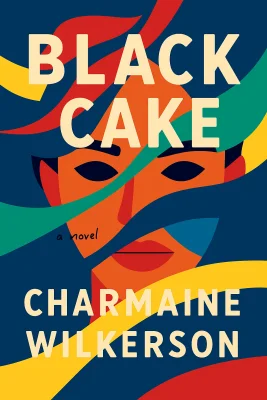
Black Cake
Categories
Fiction, Audiobook, Mystery, Historical Fiction, Adult, Family, Book Club, Historical, Contemporary, Literary Fiction
Content Type
Book
Binding
Hardcover
Year
2022
Publisher
Ballantine Books
Language
English
File Download
PDF | EPUB
Black Cake Plot Summary
Introduction
# Secrets Soaked in Rum: A Legacy of Identity and Reconciliation The lawyer's office reeked of old leather and broken promises. Byron Bennett shoved his sister away when she reached for him, eight years of silence crackling between them like live wire. Benny stood frozen, her blonde afro trembling as the elevator sealed their fate in this sterile tomb of family secrets. Their mother Eleanor was dead, and with her passing came an audio recording that would detonate everything they believed about their bloodline. The brown envelope on Mr. Mitch's mahogany desk bore their mother's careful script: "B and B." Inside, a USB drive and a cryptic note about black cake waiting in the freezer. But the real inheritance wasn't cake soaked in Caribbean rum. It was eight hours of their mother's voice unraveling a lie so vast it had consumed fifty years, revealing a sister they never knew existed and a past drenched in violence, escape, and stolen identities.
Chapter 1: The Final Message: A Family Divided and a Black Cake
The recording device clicked to life, carrying Eleanor Bennett's voice across the void of death. Her children sat like statues as their mother's confession began dismantling their world, word by careful word. She spoke of black cake, of buried names, of a daughter abandoned to strangers. But first, she told them about the night she died twice. Byron gripped his coffee until his knuckles went white. His sister Benny had returned home to find their mother already buried, their father's ashes waiting to be scattered like dust in the California wind. Charles Mitch, the family attorney, watched their faces crumble as Eleanor's story unfurled like a map of hidden territories. The voice on the recording trembled with decades of suppressed truth. Eleanor Bennett was a fiction. Her real name was Coventina Lyncook, and she came from a Caribbean island where the sea held both salvation and secrets. She told them about her mother Mathilda, who vanished when Covey was eleven, leaving behind only whispered promises and a wooden box of mysterious treasures. Her father Lin was a Chinese-Jamaican shopkeeper whose gambling addiction had delivered his daughter into the hands of a monster. The island's racial tensions simmered beneath the surface, where Chinese families controlled commerce while others struggled with colonialism's bitter aftermath. Pearl, their housekeeper, became Covey's surrogate mother, teaching her to swim in dangerous waters and bake the black cake that would become her only inheritance. But even Pearl's love couldn't protect Covey from the arrangement her father made with Clarence "Little Man" Henry, a deal sealed in desperation and paid for in flesh. The recording crackled with static as Eleanor described the wedding day that changed everything. The champagne glass falling from Little Man's hand. The convulsions. The chaos that followed. In that moment of confusion, she made a choice that would echo through generations.
Chapter 2: Covey's Origin: The Girl Who Loved the Sea
In 1965, seventeen-year-old Coventina Lyncook moved through the turquoise waters like a dolphin born to the depths. The Caribbean bay was her sanctuary, where she trained for harbor races that could be her ticket off the island. She dreamed of following her boyfriend Gibbs Grant to university in London, where they would build a life far from the cockfights and gambling debts consuming her father. Lin Lyncook owned shops in town, but his heart belonged to the roosters. Every Sunday, he fed his addiction at the fighting pits, watching his beautiful birds tear each other apart while his debts mounted like storm clouds. His daughter's swimming trophies lined the shelves, but Lin's eyes were fixed on the next bet, the next sure thing that would solve all his problems. Little Man Henry controlled half the island through fear and violence. His reputation preceded him like the stench of rotting fish, and everyone knew that crossing him meant disappearing into the mangrove swamps. When Lin's gambling debts reached breaking point, Little Man offered a solution that made the shopkeeper's blood run cold. The beauty of a thing, he said, justified its plunder. Covey felt the trap closing around her like a net. Her father's shame hung over their house like humidity, thick and suffocating. Pearl tried to shield her, teaching her to bake black cake while calypso music filled their kitchen with false cheer. But they all knew what was coming. Little Man had decided that Covey's beauty belonged to him, and on this island, what Little Man wanted, Little Man took. The wedding dress arrived like a burial shroud, white silk that felt cold against her skin. Covey stared at her reflection and saw a ghost, a girl already dead but still breathing. Tomorrow, she would stand at the altar and surrender her life to a man whose cruelty was legendary. Unless she found another way.
Chapter 3: A Wedding and an Escape: The Death of Little Man
The church bells tolled like a funeral dirge as Covey walked down the aisle in her white silk prison. At seventeen, she was being sacrificed to pay her father's debts, married to a gangster twice her age who collected beautiful things like trophies. The guests applauded as Little Man pressed his lips against hers, but Covey's heart had already turned to stone. Pearl had baked the wedding cake with tears streaming down her cheeks, decorating it with lilac flowers that Covey despised. It was a coded message of sympathy, a small rebellion in a ceremony that represented everything wrong with their world. The reception began with forced smiles and nervous laughter, everyone pretending this was celebration instead of sacrifice. Little Man Henry stood to make a toast, his champagne glass catching the light like a diamond. He spoke of ownership, of prizes won and debts settled, while Covey sat beside him like a mannequin. Then something extraordinary happened. The glass slipped from his fingers, shattering against the white tile floor. Little Man gasped, clutched his throat, and collapsed in convulsions that shook the earth. Chaos erupted as guests screamed and scattered. Someone shouted for a doctor while others whispered about curses and divine justice. In the confusion, Covey slipped away like smoke, her wedding dress abandoned on the beach where the waves could claim it. Everyone assumed she had drowned in the storm-tossed sea, another victim of the island's violent appetites. But Bunny Pringle knew better. She found Covey hiding in a sea cave, bloodied and desperate, and helped her escape with money and documents from Pearl's underground network. As police searched the waters for her body, Covey was already on a cargo ship bound for England, traveling under her mother's maiden name. The girl who loved the sea had finally found her freedom in its depths.
Chapter 4: Becoming Eleanor: Identity Reinvented After Tragedy
London in 1967 was a city of gray skies and closed doors for a young Caribbean woman trying to disappear. Covey found work as a nurse while studying at night school, slowly building a new life as Coventina Brown. She shared cramped lodgings with other island girls, including Eleanor Douglas, an orphan who dreamed of becoming a geologist and spoke of glaciers reshaping the world. Eleanor collected ancient shells and talked about opportunities beyond the narrow corridors of nursing. She had plans to study in Edinburgh, dreams that wouldn't be contained by other people's expectations. When the hospital matron refused to recommend Eleanor for university, she convinced Covey to run away with her to Scotland. They boarded a train heading north, carrying everything they owned and hopes too fragile to speak aloud. The screech of metal against metal shattered their dreams in an instant. The train derailed in a cascade of sparks and screaming steel, carriages folding like accordion bellows. Covey woke in the hospital to find Eleanor's lifeless hand still warm in hers, her friend's dreams scattered like the contents of their shared suitcase. The nurses called her Eleanor, and Covey was too broken to correct them. Eleanor Douglas had died in the crash, but her identity lived on in the woman who survived. In that moment of grief and confusion, Covey made another impossible choice. She became Eleanor Douglas, burying Coventina Brown in the official records as another victim of the rail disaster. The girl who had loved the sea was officially dead, replaced by an orphan with no past to haunt her. Eleanor Douglas could start fresh, could build a life without looking over her shoulder for Little Man's family or the ghosts of her father's failures. She had died twice now, and each death had bought her a new chance at life.
Chapter 5: The Lost Child: A Mother's Deepest Wound
Eleanor's new life in Edinburgh crumbled when her supervisor at the trading company cornered her after hours. The attack came without warning, leaving her shattered and pregnant with a child she never wanted. She couldn't name what had happened, couldn't find words for the violence that had torn through her carefully rebuilt existence. The pregnancy showed despite her attempts to hide it. Desperate and alone, she fled to London, where a home for unwed mothers promised salvation but delivered only shame. The nuns told her she was doing the right thing, that her child deserved better than what an unmarried woman could provide. They spoke of sacrifice and redemption while Eleanor's heart broke a little more each day. The baby arrived in winter, a pale, perfect girl with dark hair and tiny fingers that gripped Eleanor's soul. For six weeks, she nursed her daughter, memorizing every sound and smell, knowing their time together was borrowed. She named the baby Mathilda, after the mother who had abandoned her, and whispered promises she knew she couldn't keep. When they came to take the baby away, Eleanor screamed until her voice gave out. The child disappeared into the machinery of adoption that ground up inconvenient lives, leaving behind only empty arms and a wound that would never heal. She signed the papers with trembling hands, watching as strangers carried her screaming daughter down a hallway and out of her life forever. Eleanor spent months searching for her lost child, but the adoption agency had vanished like smoke. The nuns threatened to have her arrested if she didn't stop asking questions. Her first daughter was swallowed by a system designed to erase inconvenient truths, leaving Eleanor with nothing but guilt and an empty pram that haunted her dreams.
Chapter 6: Recreating a Life: Love Found Again in America
The London rain was falling when Eleanor saw him across the street, and time stopped. Gilbert Grant stood with a group of Caribbean men, older now but unmistakably the boy she had loved and lost. For a moment she was Covey again, seventeen and breathless with possibility. She tried to call his name but fainted instead, overwhelmed by the impossibility of their reunion. Gibbs caught her as she fell, and when she opened her eyes in his arms, five years of separation collapsed into nothing. He had mourned her death twice, first when she disappeared into the sea, then again when he learned of the train crash that supposedly killed Coventina Brown. Now she was alive, and he would never let her go again. They married quietly and reinvented themselves completely. Gilbert Grant became Bert Bennett, shortening his name and cutting all ties to his past. Eleanor Douglas remained Eleanor, but now she was Eleanor Bennett, wife and eventually mother. They fled to California, where the Pacific Ocean reminded Eleanor of home without carrying the weight of her history. Their children arrived like miracles. Byron, serious and brilliant, who would grow up to map the ocean floor. Benny, artistic and restless, who inherited her mother's stubborn streak and her grandfather's pale complexion. Eleanor taught them to surf and bake black cake, passing down the few traditions she dared to share. For the first time since childhood, Eleanor was truly happy. But the ghosts of her past never fully left her alone. She followed news of her first daughter through private investigators and chance encounters, always watching from a distance, never daring to make contact. The child had been adopted by a wealthy London couple and renamed Mabel Mathilda Martin, growing up to become Marble Martin, a food expert whose face appeared on television screens around the world.
Chapter 7: Fractures and Distances: The Price of Authenticity
The Bennett family's perfect facade began to crack when Benny dropped out of college and refused to explain why. She moved from Italy to Arizona, studying art instead of pursuing the prestigious career her parents had mapped out for her. When she finally came home for Thanksgiving in 2010, she tried to tell them about her complicated relationship with love. Benny spoke carefully about falling for people regardless of gender, about needing her family to accept all of who she was. But Bert Bennett, the man who had given up his own identity for love, couldn't understand his daughter's fluidity. He accused her of confusion, of indecency, of throwing away the opportunities they had sacrificed to give her. The argument exploded like a bomb in their pristine dining room. Benny walked out that day and didn't return, not even for her father's funeral six years later. Byron watched from the cemetery as a car circled the burial ground, convinced he glimpsed his sister's face in the passenger window before it drove away. Eleanor left voicemails for Benny over the years, tentative messages that revealed her growing understanding of her daughter's struggles. She had been researching, reading about people with complicated relationships, trying to bridge the gap her husband's pride had created. But Benny never called back, and Eleanor was too ashamed of her own secrets to push harder. The woman who had survived murder accusations, train crashes, and forced adoption couldn't find the courage to fight for her own daughter's love. She aged into respectability, but the weight of her secrets grew heavier with each passing year. When Bert died, she felt herself disappearing, becoming a ghost even to herself.
Chapter 8: The Truth Unveiled: Three Siblings and Their Heritage
Byron and Benny sat in stunned silence as their mother's voice filled the lawyer's office, eight hours of revelations that rewrote their entire understanding of their family. Eleanor Bennett had been Coventina Lyncook, a girl who disappeared into the Caribbean Sea on her wedding day. She had lived under stolen identities, given birth to a daughter she was forced to abandon, and carried the weight of these secrets for fifty years. The wooden box their mother left behind contained treasures from a Spanish shipwreck: gold medallions worth a fortune and a tortoiseshell comb that had belonged to an enslaved woman centuries before. These artifacts told stories of piracy and freedom, of people who had risked everything to escape their circumstances. Byron struggled with anger at the deception, feeling betrayed by the parents he had idolized. His successful career suddenly felt hollow, built on a foundation of lies. When he was passed over for promotion again, he finally understood the institutional racism that had always shadowed his achievements. Benny found unexpected comfort in her mother's story. The violence Eleanor had endured echoed her own experiences with an abusive boyfriend whose jealousy had kept her away from her father's funeral. She realized that her mother's apparent rejection had been rooted in fear, not judgment. The email to Marble Martin arrived like a thunderbolt, shattering her carefully constructed life in London. The American lawyer spoke of an estate, of a woman named Eleanor Bennett who had left her something important. Marble's height and coloring, so different from her adoptive parents, suddenly made terrible sense. The flight to California felt like traveling backward through time. Byron and Benny waited at the airport, two strangers who shared her face and her stubborn chin. The meeting was awkward, charged with decades of unspoken longing and resentment. Marble felt angry at being abandoned, even as she understood the circumstances that had forced her mother's hand.
Summary
The black cake waited in the freezer like a time capsule, holding the final secrets of Eleanor Bennett's extraordinary life. When the three siblings finally gathered in their mother's kitchen, they discovered a glass jar containing their parents' wedding rings, inscribed with the initials C and G for Coventina and Gilbert. The cockle shells from Eleanor's childhood beach completed the collection, physical proof of a life that had seemed like fiction. Eleanor Bennett had been many people in her lifetime: Coventina Lyncook, the island girl who swam through storms; Eleanor Douglas, the ambitious student who died too young; and finally Eleanor Bennett, the mother who built a family from the ashes of her former selves. Her children would carry all these identities forward, understanding that truth was not always simple, that love sometimes required deception, and that the most important inheritance was not what you received but what you chose to pass on. The black cake recipe lived on, adapted for new generations but always carrying the essence of home across oceans and time, a legacy of survival disguised as sweetness.
Best Quote
“Question yourself, yes, but don’t doubt yourself. There’s a difference.” ― Charmaine Wilkerson, Black Cake
Review Summary
Strengths: The reviewer appreciated the use of multiple points of view and timelines, as well as the short chapters. The focus on food and recipes was highlighted as an enjoyable element, providing a nostalgic connection to different times and places. The book concluded with a clean ending, addressing all questions. Weaknesses: The book attempted to cover too many topics superficially, lacking depth. The reviewer noted an overabundance of characters with similar names, which caused confusion. The heavy use of foreshadowing made plot reveals predictable, and character thoughts were overly explained and repetitive, reducing the opportunity for reader engagement. Overall: The book was interesting once it gained momentum, but it suffered from trying to cover too many topics without depth. The reviewer suggests it could benefit from more subtlety and editing.
About Author

Charmaine Wilkerson
Wilkerson delves into the intricate layers of personal identity and cultural heritage through her storytelling, crafting narratives that resonate with readers' sense of belonging and legacy. Her work often weaves together themes of familial history and the importance of storytelling, as seen in her debut novel, "Black Cake". In this book, Wilkerson uses the metaphor of a Caribbean dessert to symbolize family legacy and cultural transmission, inviting readers to explore how food can act as a vessel for stories and traditions. Meanwhile, her second novel, "Good Dirt", extends these themes across time and place, connecting a family's journey from West Africa to America and showcasing the interplay of loss, healing, and lineage.\n\nThe author employs a meticulous narrative style, conducting extensive research to ensure authentic portrayals of history and culture. This dedication to authenticity enriches her storytelling, offering readers a profound understanding of how objects and locations influence personal and family narratives. Through her work, Wilkerson provides insights into the transformative power of storytelling, making her books not only engaging reads but also valuable resources for those interested in exploring complex cultural dynamics.\n\nRecognition for Wilkerson's literary achievements underscores her impact in the field. Her debut novel, "Black Cake", became a New York Times bestseller and was adapted into a series by Oprah Winfrey's Harpo Films, reflecting its broad appeal and critical acclaim. With her works prominently featured in major publications like The New York Times and NPR, Wilkerson has cemented her status as a significant contemporary author. Her bio highlights her commitment to crafting narratives that invite readers to reflect on their own identities and heritage, making her books a meaningful addition to contemporary literature.
Read moreDownload PDF & EPUB
To save this Black List summary for later, download the free PDF and EPUB. You can print it out, or read offline at your convenience.
Black Cake
by Charmaine Wilkerson
