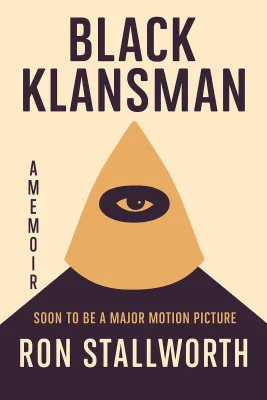
Black Klansman
A Memoir
Categories
Nonfiction, Biography, History, Memoir, Politics, Audiobook, True Crime, Biography Memoir, Race, Crime
Content Type
Book
Binding
Hardcover
Year
2018
Publisher
Flatiron Books
Language
English
ISBN13
9781250299048
File Download
PDF | EPUB
Black Klansman Plot Summary
Introduction
In the autumn of 1978, a young black detective in Colorado Springs made a decision that would seem impossible to most people: he answered a newspaper advertisement placed by the Ku Klux Klan, seeking new members. What followed was one of the most audacious undercover investigations in American law enforcement history, as Ron Stallworth managed to infiltrate the very organization that had terrorized people like him for over a century. Stallworth's remarkable story unfolds against the backdrop of late 1970s America, a time when the civil rights movement had achieved significant legal victories, yet racial tensions still simmered beneath the surface. As the first black detective in Colorado Springs Police Department history, Stallworth faced his own daily battles against prejudice within his own institution. Yet when the KKK began recruiting in his city, he saw an opportunity to strike back at hatred itself. Through this extraordinary investigation, readers will discover the power of intelligence over ignorance, the courage required to confront evil directly, and the unexpected ways that one person's determination can expose and defeat organized hate. His journey reveals not just the mechanics of undercover work, but the deeper truths about identity, justice, and the ongoing struggle for equality in America.
Chapter 1: Early Roots: Becoming Colorado's First Black Detective
Ron Stallworth's path to becoming a groundbreaking detective began not with grand ambitions, but with the modest goal of earning money for college. In 1972, at just nineteen years old, he applied to become a police cadet in Colorado Springs, never imagining he would make history. The cadet program had been designed specifically to boost minority recruitment, yet in four years of operation, it had never successfully hired a single black candidate. During his job interview, Stallworth faced questions that would be considered blatantly discriminatory today. The panel asked repeatedly whether he could withstand racial slurs without retaliating, referencing Jackie Robinson's ability to break baseball's color barrier through dignified restraint rather than confrontation. They questioned his loyalty, wondering if his "black brothers" might try to compromise him once word spread about his employment. These inquiries reflected the department's anxiety about hiring their first black officer in an era when America's cities were still recovering from race riots and social upheaval. Despite the challenging interview process, Stallworth impressed the panel with his composure and determination. He understood the weight of being a pioneer, knowing that his success or failure would influence future opportunities for other black officers. The responsibility was immense, but so was his resolve. When he was sworn in as a cadet on November 13, 1972, he began a journey that would transform both his life and his department. His early experiences tested his patience and character daily. When issued a uniform cap that was deliberately too small for his Afro hairstyle, Stallworth turned the lieutenant's petty racism into a teaching moment. Rather than conforming or complaining privately, he wore the ridiculously small cap proudly through downtown streets, creating such an absurd spectacle that the chief of police eventually intervened and ordered proper equipment. This incident revealed Stallworth's strategic thinking and his ability to use humor and persistence to overcome obstacles. The transition from cadet to full officer brought new challenges and opportunities. Stallworth's fascination with the undercover narcotics detectives who frequented his records bureau office sparked his ambition to join their ranks. These "hippie-looking" officers seemed to embody everything exciting about police work, operating in shadows and assuming different identities. His persistent requests to "make me a narc" became a running joke in the department, but they also demonstrated his unwavering focus on his goals.
Chapter 2: The Bold Deception: Phone Calls and Dual Identity
The investigation began almost by accident when Stallworth spotted a classified advertisement in the local newspaper. The Ku Klux Klan was actively recruiting in Colorado Springs, and what started as casual curiosity evolved into an elaborate deception that would challenge everything the hate group thought they knew about their enemies. Stallworth's decision to respond to the ad using his real name seemed like a tactical error at first, but it became the foundation for an unprecedented undercover operation. When Ken O'Dell, the local KKK organizer, called the undercover phone line seeking to speak with "Ron Stallworth," the detective faced an immediate dilemma. How could a black man convince a white supremacist that he was a fellow racist over the telephone? Drawing on his understanding of hate rhetoric and his natural intelligence, Stallworth crafted a persona that was everything the Klan wanted to hear. He spoke of hating "niggers, Jews, Mexicans" and anyone without "pure white Aryan blood," using the very language that had been weaponized against him throughout his life. The conversation revealed the crude simplicity of the local Klan chapter's operations. O'Dell, a Fort Carson soldier, described plans for cross burnings, charity drives for "needy white families," and recruitment efforts. His amateurish enthusiasm and lack of sophistication became apparent immediately, yet the threat he represented was real. The planned cross burnings were acts of terrorism designed to announce the Klan's presence and intimidate minority communities. Recognizing that phone conversations alone would not sustain the investigation, Stallworth developed an ingenious solution. He recruited Chuck, a white undercover narcotics officer, to serve as his physical double during face-to-face meetings. This created the central dynamic that would define the entire operation: Stallworth was the voice, Chuck was the face, and together they became "Ron Stallworth" in the eyes of the Klan. Their coordination had to be flawless, with every conversation shared between them so they could maintain consistency across all interactions. The dual identity strategy worked brilliantly, exploiting the Klansmen's assumptions and prejudices. They expected to see a white face when meeting their telephone contact, and Chuck's appearance confirmed their biases. Meanwhile, Stallworth's telephone conversations grew increasingly frequent and comfortable, as he established himself as an eager recruit hungry for Klan knowledge and approval. The psychological satisfaction of using the oppressor's own blindness against them added an extra dimension to what was already a professionally satisfying investigation.
Chapter 3: Face to Face with Hatred: Infiltrating Klan Meetings
The first face-to-face meeting at the Kwik Inn diner represented a crucial test of the dual identity deception. Chuck, wired for sound with Stallworth listening nearby, met with Ken O'Dell's contact in what felt like a scene from a spy thriller. The successful initial encounter led to a series of increasingly intimate meetings where the undercover officers gained unprecedented access to the inner workings of a hate group. At the Corner Pocket Lounge, Chuck met Ken O'Dell himself, along with other key figures in the local chapter. The conversations revealed the crude reality behind the Klan's grandiose rhetoric. O'Dell's personal story of joining the organization, supposedly after being shot by black men and having his wife raped by them, appeared to be entirely fabricated when investigators later checked police records. His claims about membership numbers and planned activities fluctuated wildly, suggesting either deliberate deception or, more likely, the desperate exaggerations of a man trying to make his small group seem more significant than it was. The meetings exposed the Klan's operational methods and immediate plans. They discussed the proper construction and ignition of crosses for burning ceremonies, using techniques O'Dell claimed to have learned from James Bond movies. The amateurish nature of their preparations might have seemed comical if not for the very real terror such acts would inflict on minority communities. Each cross burning was carefully planned for maximum visibility and psychological impact. Chuck's integration into the group progressed rapidly as the Klansmen embraced what they believed to be Ron Stallworth's enthusiasm for their cause. They shared their vision of a "White Christmas" charity program, their plans to recruit prisoners at the state penitentiary, and their dreams of a massive rally when Grand Wizard David Duke visited Colorado. The conversations revealed both the scope of their ambitions and the limitations of their capabilities. The undercover work required careful navigation of legal and ethical boundaries. Chuck had to appear enthusiastic about Klan activities without encouraging illegal actions that could constitute entrapment. When O'Dell proposed making Chuck the new local organizer, the offer presented both incredible intelligence opportunities and serious legal risks. The position would provide access to membership lists, planning sessions, and coordination with other hate groups, but it would also place an undercover officer in a leadership role that could compromise future prosecutions.
Chapter 4: Duke Encounter: Confronting the Grand Wizard
David Duke's visit to Colorado Springs in January 1979 represented the culmination of months of careful infiltration and preparation. As the Grand Wizard of the Knights of the Ku Klux Klan, Duke embodied a new, more sophisticated face of organized hatred. Unlike the stereotypical image of uneducated, crude Klansmen, Duke was articulate, educated, and media-savvy. He represented the modernization of white supremacy, packaging ancient hatred in contemporary political rhetoric. In an ironic twist that perfectly captured the absurdity of the entire investigation, Stallworth found himself assigned as Duke's personal bodyguard during the visit. Death threats against the Grand Wizard meant that a black detective would be responsible for protecting the leader of America's most notorious anti-black organization. The assignment created uncomfortable tensions within the police department, but it also provided Stallworth with unprecedented access to his target. The face-to-face encounter between Stallworth and Duke at the Bonanza Steakhouse was charged with unspoken ironies. Duke, unaware that he was shaking hands with the very "Ron Stallworth" he had spoken with by telephone, graciously accepted police protection while maintaining his public persona of respectability. The moment when Stallworth requested a photograph with Duke tested the limits of their relationship and revealed the Grand Wizard's true character beneath his polished exterior. Duke's refusal to be photographed in a friendly pose with a black officer exposed the hatred that lurked beneath his public relations veneer. When Stallworth cleverly maneuvered the situation to get the photograph anyway, Duke's angry reaction and attempt to destroy the evidence showed how the power dynamic had shifted. For once, a black man held authority over the Grand Wizard, armed with both legal power and photographic proof of their interaction. The day's events, including Duke's television debate and various media appearances, demonstrated both his rhetorical skills and his fundamental weaknesses. Duke could debate effectively and present his arguments with disturbing persuasiveness, but he could also be manipulated and outmaneuvered by someone who understood his psychology. Stallworth's successful management of their interactions throughout the day represented a complete reversal of traditional power relationships between the Klan and their intended victims.
Chapter 5: Military Connections: Exposing White Supremacy at NORAD
The investigation took an unexpected turn when it uncovered KKK infiltration of America's most sensitive military installations. The discovery that Klan members held security clearances at NORAD, the North American Aerospace Defense Command housed within Cheyenne Mountain, elevated the case from local law enforcement matter to national security concern. This development illustrated how hate groups could penetrate even the most supposedly secure government facilities. Stallworth's visit to NORAD provided one of the most surreal moments of the entire investigation. Driven through the facility's massive blast doors and into the hollowed-out mountain complex, he found himself in America's cold war nerve center, where officers monitored potential nuclear threats from the Soviet Union. The irony was palpable: a black detective whose Klan investigation had exposed security risks was now being briefed by military officials about the very people he had been investigating. The presence of KKK members in such sensitive positions raised serious questions about military screening procedures and ongoing security monitoring. These individuals had access to some of America's most classified defense information while maintaining membership in an organization dedicated to racial hatred and potential violence. Their dual loyalties represented a clear conflict of interest and a potential vulnerability that hostile foreign powers could exploit. The military's response was swift and decisive. Within hours of learning about the security breach, Pentagon officials ordered the immediate transfer of the compromised personnel to remote assignments. The "North Pole" reassignments effectively ended their access to sensitive information while avoiding the publicity that courts-martial might have generated. This quiet efficiency demonstrated both the seriousness of the breach and the military's desire to handle the situation discreetly. The NORAD revelations highlighted the broader implications of Stallworth's investigation. What had begun as monitoring a small, seemingly incompetent local hate group had revealed connections to national organizations, military installations, and potentially dangerous security vulnerabilities. The scope of white supremacist infiltration into American institutions was broader and more concerning than anyone had initially realized.
Chapter 6: Cross Burnings and Intelligence: Preventing Racial Terror
One of the most significant achievements of Stallworth's investigation was the prevention of multiple planned cross burnings that would have terrorized Colorado Springs' minority communities. Through his telephone conversations with Ken O'Dell and other Klan members, Stallworth gained advance knowledge of when, where, and how these acts of intimidation would be carried out. His ability to provide this intelligence to patrol units allowed the police department to prevent the terrorism before it could occur. The Klan's cross-burning methodology revealed both their commitment to traditional intimidation tactics and their operational amateurishness. O'Dell's reliance on techniques supposedly learned from James Bond movies, including cigarette and matchbook timing devices, showed how the modern Klan mixed pop culture references with historical terrorism methods. Their plans for eighteen-foot crosses at strategic locations demonstrated their understanding of psychological warfare, even if their execution was often bungled. Each prevented cross burning represented a significant victory for both law enforcement and the community. Stallworth understood that success in police work wasn't always measured by arrests and convictions, but sometimes by the crimes that never occurred. No minority family in Colorado Springs had to explain to their children why a burning cross had appeared in their neighborhood. No community had to live with the fear and trauma that such acts of terrorism were designed to create. The intelligence gathered during the investigation provided broader insights into hate group operations and coordination. Stallworth learned about connections between the local Klan chapter and other supremacist organizations, including the Posse Comitatus and various neo-Nazi groups. This information helped law enforcement agencies across Colorado and beyond understand the evolving landscape of organized hatred and domestic terrorism. The investigation also revealed the Klan's plans for expanding their influence through political action, prison recruitment, and military infiltration. These broader strategic goals showed that local chapters were part of a larger movement seeking to mainstream white supremacist ideology and gain institutional power. Stallworth's intelligence work provided crucial early warning about tactics that would become increasingly common in subsequent decades.
Chapter 7: Legacy and Parallels: From 1970s Klan to Modern Extremism
Stallworth's investigation of the Ku Klux Klan in the late 1970s provides disturbing insights into the persistence and evolution of white supremacist ideology in America. Many of the themes, tactics, and rhetorical strategies he encountered during his undercover work have resurfaced in contemporary political discourse and extremist movements. The parallels between David Duke's vision of a white-dominated America and modern nativist politics are neither coincidental nor subtle. The Klan's focus on border security and immigration control, including O'Dell's proposed armed patrols along the Rio Grande, prefigured many contemporary debates about immigration enforcement. Duke's statements about America being fundamentally a "white country" and his concerns about whites becoming "second-class citizens" echo directly in modern political rhetoric. The transformation of these fringe positions into mainstream talking points demonstrates how extremist ideas can gradually infiltrate broader political discourse. The investigation also revealed the adaptability and persistence of hate groups in the face of changing social conditions. Duke's modernization of the Klan, including his emphasis on suits instead of robes, political action instead of terrorism, and media manipulation instead of midnight raids, showed how sophisticated leaders could rebrand ancient hatred for contemporary audiences. This playbook has been repeatedly employed by subsequent generations of white supremacist leaders. Stallworth's work demonstrated both the vulnerability of hate groups to intelligent opposition and the importance of taking their threat seriously regardless of their apparent incompetence. While Ken O'Dell's local chapter might have seemed almost comically inept, their connections to national organizations, military installations, and other extremist groups revealed a broader network capable of real damage. The tendency to dismiss hate groups because of their obvious flaws can blind observers to their genuine dangers. The investigation's conclusion, with orders to destroy all evidence and pretend it never happened, reflects the institutional challenges that continue to hamper effective responses to domestic terrorism. The police chief's concern about public relations over public safety mirrors ongoing debates about how law enforcement should address white supremacist threats without appearing to legitimize them through attention or creating public panic through disclosure.
Summary
Ron Stallworth's infiltration of the Ku Klux Klan stands as a testament to the power of individual courage and intelligence in confronting organized hatred. His investigation proved that even the most venomous ideologies could be exposed and defeated when met with strategic thinking, personal bravery, and institutional support. The young detective's willingness to use his own identity as a weapon against those who would deny his humanity created one of the most remarkable undercover operations in American law enforcement history. The lessons from Stallworth's experience extend far beyond the specifics of his investigation. His story demonstrates that fighting hatred requires more than good intentions; it demands strategic thinking, personal sacrifice, and the courage to confront evil directly rather than hoping it will simply disappear. For anyone facing discrimination, injustice, or institutional barriers, Stallworth's example shows how intelligence, persistence, and strategic thinking can overcome seemingly impossible odds. His legacy reminds us that the most effective responses to organized hatred often come from those it seeks to destroy, armed with nothing more than their wit, courage, and refusal to be intimidated.
Best Quote
“Success often lies not in what happens but in what you prevent from happening” ― Ron Stallworth, Black Klansman: A Memoir
About Author

Ron Stallworth
Stallworth reframes the intersection of race, law enforcement, and undercover operations through his compelling narratives and experiences. By delving into themes of systemic racism and white supremacy, his works provide insightful explorations of the challenges faced by African Americans in the police force. His undercover infiltration of the Ku Klux Klan in the late 1970s exemplifies his bold approach to tackling racism from within, thereby disrupting planned KKK activities and revealing white supremacist elements in the military. \n\nHis major literary contributions, such as "Black Klansman: A Memoir", not only recount his experiences but also serve as critical examinations of race relations and the dynamics of gangsta rap. Stallworth's writings are grounded in factual storytelling, offering readers a memoir-based insight into the sociology of African American culture and the complexities of racial identity in America. Therefore, his work appeals to readers interested in understanding the deeper sociopolitical forces at play in contemporary society. The film adaptation of his book further amplifies his story's reach, providing a visual testament to his impact on cultural narratives about race and justice.\n\nIn recognition of his contributions, Stallworth has received accolades such as the 1998 Outstanding National Leadership Lifetime Achievement Award. His story has inspired many, with appearances in media outlets like CNN and NPR further cementing his legacy. This brief bio underscores Stallworth’s role as an author who not only documents his journey but also educates and challenges societal norms through his work.
Read moreDownload PDF & EPUB
To save this Black List summary for later, download the free PDF and EPUB. You can print it out, or read offline at your convenience.
Black Klansman
by Ron Stallworth
