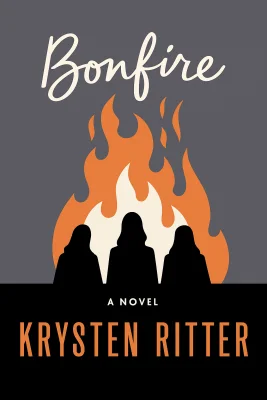
Bonfire
Categories
Fiction, Audiobook, Mystery, Thriller, Adult, Contemporary, Adult Fiction, Suspense, Crime, Mystery Thriller
Content Type
Book
Binding
Kindle Edition
Year
2017
Publisher
Three Rivers Press
Language
English
ASIN
B01NB1EOJ6
ISBN13
9781524759865
File Download
PDF | EPUB
Bonfire Plot Summary
Introduction
Abby Williams stared at the empty water bottle in her hands, watching the liquid swirl like liquid mercury. Ten years had passed since she fled Barrens, Indiana, swearing never to return. But now, armed with a law degree and working for the Center for Environmental Advocacy Work, she found herself drawn back by reports of contaminated water and sick children. The town looked different—cleaner, more prosperous, transformed by Optimal Plastics into something almost respectable. Yet beneath this veneer of progress, something rotten festered. The case seemed straightforward: investigate water contamination, gather evidence, file suit. But as Abby drove past familiar landmarks, memories surfaced like toxins rising from the depths of a poisoned well. She remembered Kaycee Mitchell, the golden girl who had supposedly faked illness for attention before vanishing into thin air. She remembered the cruelty, the isolation, the desperate need to escape. What Abby didn't know was that returning to Barrens meant confronting not just environmental corruption, but a web of exploitation and murder that had claimed the girl she once called friend.
Chapter 1: Returning to Toxic Ground: Abby Confronts Her Hometown
The courthouse in Barrens still smelled like disinfectant and broken dreams. Abby Williams adjusted her blazer, the expensive fabric feeling foreign against skin that remembered cheaper clothes and smaller aspirations. Ten years in Chicago had given her polish, but stepping back into this place stripped it away like paint in acid rain. She'd come to investigate reports of contaminated drinking water. Wyatt Gallagher, a local farmer, claimed chemicals from Optimal Plastics were poisoning his crops and sickening his livestock. It should have been routine—collect evidence, file complaints, let the system grind toward justice. But nothing about returning to Barrens felt routine. The town looked different. Cleaner. New community centers and playgrounds bore cheerful signs reading "Optimal Cares!" Where Abby remembered decay and desperation, she now saw prosperity. Fresh paint covered old wounds, and the streets bustled with an energy that hadn't existed when she was growing up here. At the Donut Hole, she encountered Misha Dale—now Jennings, now the vice principal at their old high school. The girl who had once made Abby's life a living hell now wore a pantsuit and spoke of community service. She'd married Peter Jennings and had a baby. The transformation was so complete it felt like meeting a stranger wearing a familiar face. "You were always the one who got out," Misha said, her smile sharp as broken glass. "Our big star." But behind the pleasantries lurked something else—wariness, calculation, the look of someone with secrets to protect. Their conversation turned to Kaycee Mitchell, the girl who had dominated their high school years through beauty, charisma, and casual cruelty. Kaycee, who had claimed to be mysteriously ill along with her friends, drawing media attention and threatening lawsuits against Optimal. Kaycee, who had fled town when the other girls confessed their symptoms were fake. "It's just like old times, isn't it?" Misha whispered as Abby prepared to leave. The words carried the weight of old wounds and unfinished business, settling into Abby's chest like a stone.
Chapter 2: Murky Depths: Investigating Optimal's Environmental Violations
Joe Carter arrived in Barrens with the enthusiasm of someone who'd never breathed small-town air thick with unspoken rules and buried secrets. Abby's colleague at the Center for Environmental Advocacy Work was brilliant, ambitious, and completely unprepared for the way investigation could become archaeology when every stone you overturned revealed another layer of the past. Their makeshift office in Wyatt Gallagher's barn buzzed with activity. Interns sorted through water samples while Joe coordinated with Environmental Testing Laboratories. The preliminary results painted a grim picture—lead levels five times the legal limit, mercury contamination, industrial pollutants with unpronounceable names. The reservoir that had once been Abby's childhood refuge was now a toxic soup. But proving contamination was only half the battle. Optimal had spent two decades cultivating relationships, buying loyalty, and perfecting the art of plausible deniability. Every inspection came back clean. Every official inquiry died in bureaucratic quicksand. The company employed half the town, sponsored Little League teams, and funded scholarships for promising students. Abby found herself digging deeper, following money trails that led to shell companies and political donations. Aaron Pulaski, the former county prosecutor, had received a convenient campaign contribution from Optimal's parent company just before dropping his investigation into their labor practices. The pattern was clear to anyone willing to look—but in Barrens, looking too closely was a dangerous habit. Late one night, as she reviewed financial records by the light of cheap fluorescents, Abby felt the weight of the town's expectations settling around her like fog. She was the girl who'd escaped, the one who'd made something of herself. But escape was an illusion when the past had its claws in you, when every familiar face carried the memory of who you used to be. The barn erupted in flames three days later, taking all their equipment and files with it. The message was clear—some secrets were worth killing to protect.
Chapter 3: The Game: Uncovering a Pattern of Exploitation and Silence
The charred remains of their temporary headquarters still smoldered when Abby learned about the Game. She'd heard whispers of it in high school—teenage boys competing to collect nude photos of their female classmates, using alcohol and peer pressure to create their twisted trophies. But she'd assumed it died with their generation, another cruelty left behind in adolescence. She was wrong. Cora Allen lived in a ramshackle house by the reservoir, her beauty consumed by drugs and despair. Once part of Kaycee Mitchell's inner circle, she now existed in the margins, surviving on beer and regret. When Abby found her, Cora seemed almost relieved to finally tell someone the truth. "It was Kaycee's idea to start charging," Cora said, scratching at scabs that never healed. "The boys had their little competition, but Kaycee figured out how to make money from it. Get the pictures, then ransom them back to the girls. Pay up or we show your parents, your teachers, everyone." The scheme had evolved over the years, growing more sophisticated and more vicious. Now it was connected to the Optimal Scholarships—promising opportunities luring desperate girls into situations they couldn't escape. Misha Jennings, in her role as vice principal, served as the perfect recruiter, identifying vulnerable students and feeding them into a system that consumed them. Abby visited Tatum Klauss in the hospital after the girl's suicide attempt. Surrounded by flowers and get-well cards, Tatum looked like a broken doll, beautiful and hollow. She spoke of parties, of older men from Optimal, of photographs that turned friendship into blackmail and dreams into nightmares. "I just wanted a new phone," Tatum whispered, tears streaming down her face. "My phone was such crap, but my mom said I'd have to buy it myself." The Game had never ended. It had just found new players, bigger stakes, and more efficient ways to break young lives for profit and pleasure.
Chapter 4: Ghosts in the Reservoir: Kaycee Mitchell's True Fate
Dr. Chun's voice carried the practiced kindness of someone accustomed to delivering death sentences. Abby's father had a brain tumor—aggressive, inoperable, with maybe six months if he was lucky. The news should have devastated her, but instead it felt like the final piece of a puzzle she'd been solving her entire life. Her father had been drinking before he found God, before he met her mother at a soup kitchen where she ladled kindness to broken men. The revelation recontextualized everything—his rage, his rules, his desperate need for control. He wasn't a monster. He was a drowning man who'd spent thirty years treading water. That night, he told her about finding Kaycee's purse by the reservoir, half-hidden in the brush. He'd assumed she'd forgotten it during one of the bonfire parties that marked the end of every school year. But people don't run away and leave their wallet, ID, and cell phone behind. People don't vanish without a trace unless someone makes them disappear. The fake phone call confirmed Abby's suspicions. When she mentioned Chestnut—her childhood dog that Kaycee had poisoned with rat poison—the voice on the other end hesitated. The real Kaycee would have remembered. The real Kaycee never apologized for anything. The real Kaycee Mitchell was sorry for many things, but sorry wasn't in her vocabulary. Someone was working very hard to maintain the fiction that Kaycee had escaped Barrens alive. Which meant she hadn't. It meant she'd been silenced before she could expose the corruption that was making powerful men rich and destroying young lives for sport. Joe called her theories crazy, accused her of conspiracy thinking, of projecting childhood trauma onto an environmental case. But Abby knew the difference between paranoia and pattern recognition. She'd spent ten years learning to see clearly. Now she understood that Kaycee's mysterious illness hadn't been fake—it had been a message, a desperate attempt to signal for help when she realized the Game had evolved beyond anything she'd intended.
Chapter 5: Chemical Corruption: The Web of Power, Money and Abuse
The photographs arrived without warning, stuffed in an unmarked envelope that felt heavy with secrets. Abby spread them across her kitchen table, her stomach churning as she recognized face after face. All Optimal Scholarship recipients. All photographed in various states of undress and intoxication. All young enough to make the images illegal in every way that mattered. Sophie Nantes stared back from several pictures, her resemblance to Kaycee Mitchell striking enough to be intentional. The scholarship program wasn't about academic achievement—it was a recruitment system, identifying vulnerable girls and grooming them for exploitation. Misha Jennings served as the gatekeeper, selecting candidates and facilitating their introduction to a network of powerful men who collected young bodies like trophies. The system was elegant in its brutality. Girls seeking escape from poverty and dysfunction were offered hope in the form of college scholarships. What they received instead was alcohol, manipulation, and camera phones that captured their desperation in digital permanence. The photographs became currency, traded among Optimal executives and used to secure favors from politicians and regulators. Lilian McMann had lost her job at the Indiana Department of Environmental Management for asking too many questions about Optimal's permits. Her teenage daughter received mysterious messages requesting nude photos, messages that arrived just as Lilian was preparing to file her report. The timing wasn't coincidental—it was precision targeting designed to silence her through shame and fear. "Some people would think Frank Mitchell had done a terrible thing by selling that kind of magazine," Misha had told Abby during their reunion at the community center. "But it would still be the right thing." She'd been describing her own moral calculus, the twisted logic that allowed her to feed girls to predators while convincing herself she was preventing worse outcomes. The web stretched through every institution that should have protected these children. Sheriff Kahn, who conveniently found reasons to arrest troublemakers like Monty Devue while ignoring real crimes. County prosecutors who dropped investigations after receiving campaign contributions. Environmental inspectors who filed clean reports despite obvious contamination. Everyone had their price, and Optimal knew exactly how to pay it.
Chapter 6: Fatal Reckonings: Surviving Brent's Betrayal
Brent O'Connell arrived at her father's house carrying expensive scotch and wearing the kind of concerned expression that fooled everyone except the person dying from poison. Abby should have recognized the signs—the way his sympathy felt rehearsed, how his shock at her revelations came too quickly to be genuine. But grief had made her careless, desperate for an ally who understood the scope of the corruption they faced. The drugs hit her system like a wave, dragging her consciousness down into dark water. When she surfaced, she was bound and helpless in a boat on the reservoir, watching the golden boy of her high school memories transform into something monstrous. Brent had been at the center of everything—not a victim of Optimal's corruption but its architect, the one who'd recognized that teenage lust could be monetized and weaponized. "You didn't have to come back," he said, his voice carrying the casual indifference of someone discussing the weather. "You could have left it alone." The engine hummed beneath them as he navigated toward deeper water, away from shore, away from witnesses. He told her about Kaycee's death with the detached professionalism of a man describing a business transaction. How Misha had laced her paints with mercury, slowly poisoning her while making her appear mentally unstable. How Kaycee had left Chestnut's collar in Abby's locker as a desperate signal—both of them poisoned, both of them victims of people they trusted. How that small act of communication had sealed her fate. "She made a lot of noise going down," Brent said, adjusting the rope around Abby's ankles. "I could have sworn she was dead before we put her in the boat, but I guess I was in a rush." His words painted a picture of panic, of violence escalating beyond its intended scope. But there was no remorse in his voice, only mild irritation at having to clean up loose ends. The fishing lure Dave Condor had made for her saved Abby's life. The hook, crafted from materials that spoke of patience and care, became a weapon when desperation gave her the strength to drive it through Brent's eye. His screams echoed across the water as she rolled over the side of the boat, her bound ankles dragging her down into the toxic depths where Kaycee Mitchell had been waiting for someone to find her. The reservoir tried to claim Abby as it had claimed her friend, but Dave Condor's rifle spoke from the shoreline with the accuracy of a man who'd learned to shoot in these very woods.
Chapter 7: Cleansing Waters: Finding Truth and Escape
Hannah Condor's drawings covered the hospital wall like windows into a child's wounded psyche. Flames and blood, broken bodies and desperate struggles—the artwork of someone too young to have witnessed such violence but too honest to pretend it hadn't happened. Dave sat beside Abby's bed, his daughter curled in his lap, both of them bearing the invisible scars that came from seeing clearly in a world that rewarded blindness. The federal investigation that followed moved with the momentum of a dam bursting. Optimal's carefully constructed empire of silence collapsed as victim after victim came forward, their testimonies painting a picture of systematic abuse spanning decades. The Optimal Scholarships were exposed as a recruitment program for predators. The environmental contamination was revealed to be the least of the company's crimes, though it had taken the lives of babies like Grayson Dobbs, born with malformed skulls from their mothers' poisoned water. Misha Jennings faced life in prison, her cooperation with investigators a desperate attempt at redemption that would never be enough to balance the scales. Sheriff Kahn's connection to the cover-up cost him his badge and pension. Aaron Pulaski's congressional career ended in handcuffs and headlines. The entire power structure of Barrens crumbled like a building with rotten foundations. But justice for the dead came slowly, if at all. Kaycee Mitchell's remains were recovered from the reservoir's depths, her bones bleached clean by contaminated water. Frank Mitchell wept at his daughter's funeral, the first tears he'd shed since convincing himself she'd run away. The lie had been kinder than the truth, but lies always demanded payment with interest. Abby testified before grand juries and congressional committees, her story becoming part of a larger narrative about corporate corruption and the vulnerability of children in forgotten places. The attention was overwhelming—cameras and reporters, advocacy groups and politicians eager to associate themselves with justice served. But fame felt hollow when it came at the price of so much suffering. As autumn painted the Indiana landscape in shades of ending, Abby packed her belongings and prepared to return to Chicago. Dave Condor watched from his doorway, understanding that some bonds were too fragile to survive the weight of shared trauma. Hannah pressed a book of drawings into Abby's hands—pictures of a superhero who saved drowning children, who pulled them from dark water into light.
Summary
The drive back to Chicago took Abby through landscapes transformed by truth. Barrens would never be the same—Optimal's factories stood empty, their smokestacks silent, their promises of prosperity revealed as poisoned gifts that had cost the town its children and its soul. But from the ashes of corruption, something cleaner might grow. The reservoir would be remediated, the water tested until it ran pure again. New leaders would emerge who understood that some prices were too high to pay for progress. Abby carried the weight of revelation with her as she rejoined the world beyond small-town secrets. Her condo in Lincoln Park welcomed her back with clean lines and empty spaces, a sanctuary from the complicated loyalties and buried truths that defined places like Barrens. But she would never again mistake silence for peace, or prosperity for innocence. The work continued—new cases, new battles against those who would poison the world for profit. Each investigation was an act of excavation, digging through layers of lies to find the truth that powerful people spent fortunes to bury. In the end, that was the only memorial Kaycee Mitchell needed—the promise that her death would light the way for others seeking justice in the dark.
Best Quote
“The problem is that people think in black and white. They think they can have the good without the bad. But everything that's good for one person is probably bad for someone else. Life isn't like the Bible says it is. It isn't a choice between good and evil. It's about choosing which evils you can stand.” ― Krysten Ritter, Bonfire
About Author

Krysten Ritter
Ritter reframes traditional narratives by centering her work around complex female protagonists facing both psychological and environmental challenges. Her background in rural Pennsylvania and an early start in modeling at age 15 significantly influenced her career trajectory, leading her to gain fame as an actress known for her roles in "Marvel's Jessica Jones" and "Don't Trust the B---- in Apartment 23." This foundation provided her with unique insights into portraying multifaceted characters, which she later carried into her writing and production work. Through her company, Silent Machine, Ritter seeks to highlight stories with strong female leads, thus aligning her production efforts with her thematic focus in both acting and writing.\n\nHer novels, such as "Bonfire" and "Retreat," explore psychological tension and identity deception while emphasizing suspenseful twists and deep character studies. These works are noted for their tight plotting and compelling anti-hero characters, showcasing Ritter's ability to weave intricate narratives that engage readers with their emotional and psychological depth. This approach not only captures the interest of thriller enthusiasts but also resonates with readers who appreciate nuanced portrayals of women's experiences.\n\nReaders interested in psychological thrillers will find Ritter's work particularly rewarding as it blends mystery elements with rich character exploration. Her dual roles as an actress and author allow her to bring a multidimensional perspective to her storytelling, offering insights into the complexities of human nature and the intricate dynamics of personal and environmental conflicts. With a career spanning various creative fields, Ritter continues to impact audiences through her diverse talents, seamlessly integrating her experiences in acting, writing, and music into a cohesive artistic vision.
Read moreDownload PDF & EPUB
To save this Black List summary for later, download the free PDF and EPUB. You can print it out, or read offline at your convenience.
Bonfire
by Krysten Ritter
