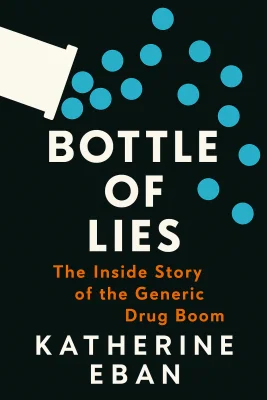
Bottle of Lies
The Inside Story of the Generic Drug Boom
Categories
Business, Nonfiction, Health, Science, History, Politics, Audiobook, Medicine, Health Care, Medical
Content Type
Book
Binding
ebook
Year
2019
Publisher
Ecco
Language
English
ASIN
0062338803
ISBN
0062338803
ISBN13
9780062338808
File Download
PDF | EPUB
Bottle of Lies Plot Summary
Introduction
# Bottle of Lies: How Pharmaceutical Fraud Endangers Global Health In a sterile laboratory in Gurgaon, India, a quality control manager stared at test results that would haunt him forever. The AIDS medications destined for African patients contained dangerously low levels of active ingredients—drugs that would fail to save lives in communities already devastated by poverty and disease. When he raised concerns about approving these substandard medicines, his supervisor's response was chilling: "Who cares? It's just blacks dying." This moment of moral reckoning would spark one of the most significant pharmaceutical fraud investigations in history, exposing a global crisis hiding in plain sight within our medicine cabinets. The promise of generic drugs seemed like a miracle for global health: identical medications at a fraction of brand-name costs, making life-saving treatments accessible to millions who couldn't afford expensive alternatives. Yet beneath this noble mission lay a darker reality where profit margins trumped patient safety, regulatory oversight failed across continents, and the world's most vulnerable populations became unwitting test subjects for substandard medicines. This investigation reveals how individual courage can expose institutional corruption, how ordinary people can challenge powerful systems, and why speaking truth to power remains one of our most essential human responsibilities, regardless of the personal cost.
Chapter 1: The Whistleblower's Awakening: Dinesh Thakur's Moral Journey
Dinesh Thakur never imagined that accepting a prestigious position at Ranbaxy Laboratories would transform him into one of the pharmaceutical industry's most important whistleblowers. In 2003, the meticulous scientist left his comfortable life at Bristol-Myers Squibb in Princeton to return to India, drawn by his colleague's vision of building a world-class pharmaceutical company that could serve both profit and humanitarian purposes. Ranbaxy was riding high on international acclaim for providing affordable AIDS medications to Africa, and Thakur felt proud to join this seemingly noble mission. But when research director Rajinder Kumar handed him a devastating World Health Organization audit, Thakur's world shifted forever. The document revealed that Ranbaxy had systematically falsified data for HIV drugs distributed across Africa. Clinical trials included patients who didn't exist, test results were fabricated, and medications that had never been properly tested were being shipped to the world's most vulnerable populations. Kumar's words echoed in the sterile conference room: "We have a problem. We are in big trouble." For months, Thakur wrestled with an impossible choice that would test every principle his father had taught him about moral courage. Speaking up would destroy his career and potentially endanger his family in a country where whistleblowers faced violent retaliation. Staying silent meant becoming complicit in fraud that could kill thousands of patients who trusted these medications with their lives. The decision crystallized when his own three-year-old son fell ill with an ear infection, and the Ranbaxy antibiotic failed to work—only a brand-name alternative brought down the child's dangerous fever. Thakur's eight-year journey from corporate executive to courageous truth-teller demonstrates that individual integrity can triumph over institutional corruption, even when the odds seem insurmountable. His decision to contact the FDA despite years of threats and intimidation reminds us that the most important battles aren't fought by armies or governments, but by ordinary people who refuse to look away when confronted with injustice. Sometimes the greatest courage isn't found in grand gestures, but in the quiet determination to do what's right when everything around you is wrong.
Chapter 2: Inside Ranbaxy: The Architecture of Systematic Deception
Behind the gleaming facades of Ranbaxy's manufacturing plants lay an elaborate system of deception that would have impressed any criminal organization. The company had perfected the art of regulatory theater, creating an entire parallel universe of fabricated data designed to fool inspectors and regulators worldwide. When FDA investigators arrived for scheduled inspections, they encountered what appeared to be model facilities with pristine laboratories and meticulous record-keeping that masked a far more sinister reality. The fraud wasn't the work of rogue employees but was embedded in the company's culture from top to bottom. Ranbaxy maintained two sets of books—one containing real data showing widespread quality failures, and another sanitized version for regulatory review. Failed tests were routinely deleted from computer systems and replaced with passing results. When stability tests showed drugs degrading in hot climates, technicians would simply retest samples stored in unauthorized refrigerators until they achieved acceptable numbers. The company even plagiarized data from brand-name manufacturers, copying their test results and presenting them as original research. The systematic nature of this deception revealed itself most clearly in the company's approach to different markets. Ranbaxy reserved its worst drugs for countries with weak regulatory oversight—precisely the places where patients had the least recourse and greatest need. AIDS patients in Africa received antiretroviral drugs that would degrade before providing any benefit. Children in Latin America were given antibiotics containing insufficient active ingredients to fight infections. Meanwhile, the company submitted fabricated data to regulators in wealthy countries, ensuring their most lucrative markets received better products. This architecture of deception exposes how easily noble intentions can be corrupted when the pursuit of profit becomes disconnected from human consequences. The executives who convinced themselves they were serving a greater good by making medicines affordable had lost sight of the fundamental truth that a drug which doesn't work—or causes harm—is no bargain at any price. Their systematic betrayal of patient trust reveals the devastating consequences when corporate culture prioritizes financial returns over the sacred responsibility pharmaceutical companies have to the people whose lives depend on their products.
Chapter 3: Regulatory Theater: How Companies Fool Global Inspectors
Jose Hernandez had built his legendary reputation as one of the FDA's most intuitive investigators through decades of domestic inspections where his mechanical understanding and encyclopedic knowledge of regulations made him nearly impossible to fool. He could detect dog meat in seafood processing plants and spot forged documents hidden in forest clearings behind pharmaceutical facilities. But when the FDA began sending him overseas to inspect foreign manufacturing plants, he discovered that his formidable skills were being systematically neutralized by a regulatory system designed to favor the very companies he was supposed to scrutinize. The fundamental problem wasn't Hernandez's abilities but the FDA's approach to foreign inspections, which transformed rigorous audits into carefully choreographed performances. Unlike domestic facilities that faced surprise inspections lasting as long as necessary, overseas plants received weeks of advance notice and hosted the very regulators meant to police them. Companies booked investigators' hotels, arranged their transportation, and essentially controlled every aspect of the inspection process. This system gave sophisticated manufacturers like Ranbaxy ample time to hide evidence, coach employees, and create elaborate deceptions. At Ranbaxy's Paonta Sahib plant, Hernandez walked directly past a large refrigerator filled with hundreds of unlabeled drug samples that violated every manufacturing protocol. Company officials had spent weeks preparing for his visit, moving incriminating evidence and creating false documentation to support their fabricated quality narrative. When he discovered suspicious notebook entries about unauthorized ingredients, executives smoothly explained them away with prepared responses. The three-and-a-half days allocated for his inspection weren't nearly enough to penetrate the sophisticated deceptions orchestrated for his arrival. The contrast with investigators like Mike Gavini revealed how cultural dynamics could further compromise oversight effectiveness. While Hernandez approached inspections with healthy skepticism, Gavini saw himself as a collaborative partner helping companies improve their operations rather than a law enforcement officer protecting public safety. His willingness to share draft reports with the companies he was inspecting and accept promises of future improvements as evidence of current compliance made him popular with pharmaceutical executives but ineffective at detecting systematic fraud. The globalization of drug manufacturing had created regulatory challenges that traditional oversight systems were fundamentally unprepared to handle.
Chapter 4: When Medicine Fails: Real Patients Pay the Price
Dr. Brian Westerberg arrived at Uganda's Mulago National Referral Hospital in 2013 with the confidence born from sixteen years of volunteer medical missions and the knowledge that modern antibiotics could cure even the most serious infections. When he encountered a thirteen-year-old boy suffering from bacterial meningitis, he immediately prescribed intravenous ceftriaxone, a powerful antibiotic that should have quickly controlled the life-threatening infection. What followed challenged everything he believed about the reliability of modern medicine and the promise of affordable generic drugs. Despite receiving what should have been effective treatment, the boy's condition continued deteriorating. His fever spiked to dangerous levels, his neurological symptoms worsened, and within days, he died from an infection that should have been easily curable with proper medication. When Westerberg later had the ceftriaxone tested at an independent laboratory, the results were devastating: the drug contained less than half the active ingredient stated on the label. The medicine designed to save lives had become an instrument of death, failing the most vulnerable patients who had no alternatives. This tragedy wasn't an isolated incident but part of a broader pattern of treatment failures plaguing healthcare systems across the developing world. In Rwanda, American anesthesiologist Sean Runnels witnessed new mothers dying from infections despite receiving full courses of antibiotics that were essentially useless. Doctors developed informal protocols for switching between different generic manufacturers when treatments failed, creating a medical lottery where patient outcomes depended on which company had produced their particular batch of medication. Wealthy patients could escape this dangerous game by purchasing brand-name drugs from private pharmacies, experiencing miraculous recoveries that were simply the result of receiving effective medicine. These stories illuminate the cruel irony at the heart of global pharmaceutical fraud: the very medications intended to address health disparities between rich and poor nations had become instruments of that inequality. When companies manufacture different quality standards for different markets, they create a two-tiered system where a patient's likelihood of recovery depends not just on access to treatment, but on their country's regulatory capacity and economic status. This systematic discrimination transforms medicine from a universal human right into a luxury good, with consequences measured not in dollars but in lives lost to preventable diseases.
Chapter 5: Global Apartheid: Different Drug Standards for Different Markets
When FDA investigator Peter Baker arrived at a manufacturing plant south of Hyderabad, he expected to find the usual violations that plagued Indian pharmaceutical facilities. What he discovered was far more disturbing: vials of cancer chemotherapy drugs with improperly sealed caps, making them non-sterile and potentially deadly to patients whose immune systems were already compromised by disease. When Baker asked plant officials what they had done with these contaminated medications, their casual response revealed a global pharmaceutical apartheid that few patients ever see: "We sent it to Africa." This wasn't an isolated incident but part of a systematic practice known as "dual-track" manufacturing that represented one of the most morally reprehensible aspects of global pharmaceutical fraud. Companies routinely produced different quality levels of the same medication depending on the destination market, sending their highest-quality drugs to countries with strict regulatory oversight while dumping substandard versions on developing nations with weaker regulatory systems. The same facilities that spent millions ensuring compliance for American regulators would cut corners ruthlessly when producing drugs for African or Asian markets. The economic logic was brutally simple and devastatingly effective. Companies could maximize profits by using cheaper ingredients, fewer manufacturing steps, and lower quality standards for markets where they were unlikely to face consequences. A drug batch that failed quality tests wasn't discarded as waste—it was simply redirected to a less regulated market where desperate patients would accept any treatment over none at all. This practice turned the world's poorest and most vulnerable populations into unwitting test subjects for pharmaceutical experiments, receiving medications that wealthy countries would never tolerate. The human consequences of this dual-track system played out in hospitals and clinics across the developing world, where healthcare providers learned to work around the limitations of substandard medications. In Uganda, doctors routinely doubled or tripled antibiotic doses because they knew the drugs contained insufficient active ingredients to be effective at normal dosing. The same companies celebrated for bringing affordable medications to developing countries were simultaneously condemning patients to treatment failure, antimicrobial resistance, and preventable death through their deliberate quality compromises—a betrayal that transformed humanitarian rhetoric into a cover for systematic exploitation of the world's most vulnerable populations.
Chapter 6: Fighting Back: Investigators Expose the Hidden Truth
Peter Baker revolutionized FDA overseas inspections by abandoning the traditional approach of announced visits and guided tours that had allowed companies to orchestrate elaborate deceptions for decades. Instead, he developed forensic investigative techniques that treated pharmaceutical facilities like crime scenes, spending hours analyzing computer systems to uncover deleted test results, hidden data files, and evidence of systematic fraud. His methodical approach and refusal to accept corporate explanations at face value began revealing the true scope of deception at manufacturing plants across India and beyond. The transformation was dramatic and immediate. Baker's unannounced inspection at Wockhardt's facility uncovered workers urinating in plant courtyards, black particles contaminating insulin destined for American diabetics, and sophisticated computer systems designed to hide manufacturing failures from regulators. When he examined the plant's electronic records, he found evidence of systematic data manipulation, including deleted test results and backdated documents created specifically to fool FDA investigators. Company officials became increasingly hostile as Baker methodically documented violations that previous announced inspections had completely missed. His techniques were so effective that pharmaceutical companies began surveilling airports and hotels to identify incoming FDA investigators, desperately trying to maintain their advantage in the regulatory cat-and-mouse game. At Ranbaxy's Toansa plant, Baker and colleague Dipesh Shah arrived unannounced on a Sunday to find dozens of workers frantically backdating documents and altering test results in preparation for their expected Monday inspection. The scene resembled a war room more than a pharmaceutical laboratory, with Post-it notes covering every surface indicating which data needed fabrication and which documents required falsification. Baker's work, along with that of other dedicated investigators and the courage of whistleblowers like Dinesh Thakur, gradually shifted the balance of power between regulators and pharmaceutical companies. Their persistence in the face of industry resistance, diplomatic pressure, and bureaucratic obstacles demonstrated that individual determination could challenge even the most entrenched systems of corporate deception. The import restrictions and manufacturing shutdowns that followed their investigations forced companies to choose between losing lucrative export markets or investing in genuine quality improvements, proving that rigorous oversight could drive meaningful change in global pharmaceutical manufacturing standards.
Chapter 7: The Path Forward: Reforming a Broken System
The battle for pharmaceutical reform has required sustained courage from individuals willing to challenge powerful interests despite enormous personal costs. When Dinesh Thakur attempted to reform India's fragmented drug regulatory system through the courts, he encountered the same institutional resistance that had protected fraudulent manufacturers for decades. His lawsuit challenging the corrupt oversight system was dismissed by India's Supreme Court on procedural grounds, with justices questioning his standing to bring the case as an overseas citizen, revealing how legal systems could be used to silence those seeking accountability. The failure of Thakur's legal challenge highlighted the complex political and economic forces perpetuating pharmaceutical fraud worldwide. Drug companies had become major employers and export earners for countries like India, creating powerful constituencies opposed to stricter regulation that might threaten their competitive advantages. Government officials often viewed quality concerns raised by foreign regulators as attacks on national sovereignty rather than legitimate public health issues, adopting defensive postures that protected domestic industries while exposing patients worldwide to substandard medications. However, the sustained pressure from whistleblowers, investigators, and patient advocates has begun producing meaningful changes in how the global pharmaceutical industry operates. The FDA's pilot program of unannounced inspections dramatically increased detection of manufacturing violations, leading to import restrictions that forced companies to improve their practices or lose access to lucrative markets. Some manufacturers, faced with the choice between continued deception and genuine compliance, began investing in real quality improvements rather than elaborate regulatory theater. The path forward requires recognizing that pharmaceutical quality is fundamentally a global public health issue that demands coordinated international action rather than nationalistic defensiveness. Regulatory agencies must resist industry pressure and diplomatic concerns to maintain rigorous oversight of manufacturing wherever it occurs. Healthcare providers need better tools to identify and report medication quality problems before they harm patients. Most importantly, patients deserve transparency about where their medications are manufactured and what quality standards apply, empowering them to make informed decisions about their healthcare while demanding accountability from the companies whose products they trust with their lives.
Summary
The global pharmaceutical fraud crisis reveals how individual courage can expose institutional corruption that threatens millions of lives worldwide. From Dinesh Thakur's lonely battle against corporate deception to Peter Baker's methodical investigations in hidden laboratories, these stories demonstrate that ordinary people can challenge the most powerful systems when they choose truth over comfort and patient welfare over personal advancement. The dual-track manufacturing system that sends inferior drugs to the world's poorest patients represents not just a business strategy but a moral catastrophe that undermines the very foundations of global health equity. The lessons from this crisis extend far beyond the pharmaceutical industry to remind us that in an interconnected world, quality and safety cannot be treated as luxury goods available only to those who can afford them. When we accept different standards for different populations, we create vulnerabilities that ultimately threaten everyone's wellbeing, as drug-resistant pathogens emerging from regions flooded with substandard medications prove that public health is truly global. Moving forward requires each of us to demand transparency, support those who expose wrongdoing despite personal risk, and never accept that substandard care is inevitable for any population, recognizing that the fight for pharmaceutical integrity demands sustained commitment to the principle that every human life deserves the highest standards of medical care.
Best Quote
“That sentiment seemed absent, and shockingly so. In a conference call with a dozen company executives, Spreen expressed her fears about the quality of the AIDS medicine that Ranbaxy was supplying for Africa. One of the company’s top medical executives responded, “Who cares? It’s just blacks dying.” ― Katherine Eban, Bottle of Lies: The Inside Story of the Generic Drug Boom
About Author

Katherine Eban
Eban interrogates the integrity of global pharmaceutical practices to uncover systemic fraud and hidden dangers. Her investigative journalism extends beyond mere reporting; it seeks to expose the deeply rooted problems in the pharmaceutical industry, particularly concerning the generic drug market. In her books like "Dangerous Doses" and "Bottle of Lies," Eban meticulously documents these issues, providing a narrative that challenges the status quo of drug manufacturing and distribution. These works emphasize the importance of accountability and transparency in powerful institutions, urging readers to critically evaluate the trustworthiness of pharmaceutical sources.\n\nIn parallel to her written work, Eban's articles for "Vanity Fair" and "Fortune" magazine broaden the scope of her inquiry into public health crises and covert government operations. Her exploration of topics such as pharmaceutical counterfeiting and the ethics of CIA interrogation techniques exemplifies her dedication to revealing the truths that impact public welfare and safety. This approach not only informs readers but also encourages policy changes and greater scrutiny within these sectors. The awards and recognition she has garnered, including the National Association of Science Writers award, underscore the impact of her findings on both national and international levels.\n\nFor readers interested in investigative journalism, Eban's bio provides a compelling case for the power of detailed research and fearless reporting. Her work benefits those seeking to understand the complexities and often concealed realities of the pharmaceutical world. Through her rigorous analysis and storytelling, Eban empowers audiences to demand higher standards of safety and ethics, both in medicine and beyond. This commitment to truth and integrity makes her an influential voice in journalism and a vital resource for those aiming to navigate the intricacies of public health and corporate accountability.
Read moreDownload PDF & EPUB
To save this Black List summary for later, download the free PDF and EPUB. You can print it out, or read offline at your convenience.
Bottle of Lies
by Katherine Eban
