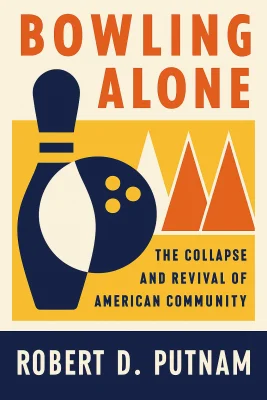
Bowling Alone
The Collapse and Revival of American Community
Categories
Nonfiction, Psychology, Philosophy, History, Politics, Sociology, Social Science, Society, Cultural, Political Science
Content Type
Book
Binding
Paperback
Year
2001
Publisher
Touchstone Books by Simon & Schuster
Language
English
ASIN
0743203046
ISBN
0743203046
ISBN13
9780743203043
File Download
PDF | EPUB
Bowling Alone Plot Summary
Introduction
# The Decline of American Social Capital: Evidence, Causes, and Democratic Consequences American democracy confronts a crisis that extends far beyond electoral politics or institutional gridlock. The fundamental bonds that once connected citizens in networks of mutual obligation and shared civic purpose have systematically weakened over several decades. This erosion manifests across virtually every domain of community life, from declining membership in voluntary organizations to reduced informal socializing, creating a society where individuals increasingly "bowl alone" rather than participate in collective activities that once defined American civic culture. The transformation represents more than shifting lifestyle preferences; it signals a profound alteration in the social infrastructure upon which democratic governance depends. Through rigorous analysis of extensive survey data, organizational records, and behavioral indicators spanning multiple decades, a comprehensive pattern emerges of civic withdrawal that began in the 1960s and has continued largely unabated. This systematic examination reveals not only the scope and depth of social disconnection but also its cascading effects on education, public health, economic development, and the capacity for democratic self-governance itself.
Chapter 1: Defining Social Capital: Networks, Trust, and Civic Infrastructure
Social capital encompasses the networks of relationships among people that enable society to function effectively through norms of reciprocity and trustworthiness. Unlike physical capital, which refers to tangible assets, or human capital, which represents individual skills and knowledge, social capital exists in the connections between people and the shared values that emerge from sustained interaction. These invisible bonds facilitate cooperation, reduce transaction costs, and create the foundation for both individual prosperity and collective problem-solving. The concept operates through multiple mechanisms that demonstrate its practical importance for community life. Networks of civic engagement foster norms of generalized reciprocity, encouraging individuals to act for collective benefit even when immediate personal rewards remain unclear. These networks improve information flow about the trustworthiness of individuals and institutions while embodying past successes at collaboration that serve as templates for future cooperation. Social capital also provides the foundation for social sanctions that discourage opportunistic behavior and reward civic virtue. Trust serves as the fundamental currency of social capital, operating at different levels from intimate personal relationships to broader societal interactions. Thick trust characterizes relationships among family members and close community members, while thin trust extends to strangers based on generalized expectations of reciprocity. Democratic societies require both forms of trust to function effectively, as citizens must be able to cooperate not only with those they know personally but also with distant others in complex institutional arrangements. The measurement of social capital requires attention to both formal and informal dimensions of civic life. Formal indicators include membership in voluntary associations, participation in religious congregations, and engagement in political activities. Informal indicators encompass socializing with neighbors, entertaining friends at home, and participating in community gatherings. Together, these measures reveal the density and vitality of social networks that bind communities together and enable collective action. Historical evidence demonstrates that American social capital reached unprecedented heights during the mid-twentieth century, particularly in the decades following World War II. This period witnessed extraordinary growth in civic participation across all sectors of society, creating the foundation for remarkable achievements in public policy, economic prosperity, and social progress. The subsequent reversal of this trend represents a dramatic departure from historical patterns that demands careful analysis and urgent attention.
Chapter 2: Empirical Evidence: Systematic Decline Across Multiple Civic Domains
The quantitative evidence for civic disengagement reveals a comprehensive pattern of decline that spans virtually every measurable dimension of community life. Membership in traditional voluntary associations has plummeted since the 1960s, with organizations like the Parent-Teacher Association, League of Women Voters, and fraternal groups experiencing dramatic losses. The PTA, once a cornerstone of community involvement, lost more than half its membership between 1960 and 1990 despite significant increases in the number of families with school-age children. Political participation has deteriorated beyond the widely noted decline in voter turnout, which fell from 62.8 percent in 1960 to 48.9 percent in 1996 for presidential elections. Attendance at public meetings dropped by 40 percent between 1973 and 1994, while participation in political campaigns and party organizations declined by similar margins. Even seemingly passive forms of civic engagement, such as signing petitions or writing letters to elected officials, have become substantially less common across all demographic groups. Religious participation, historically a cornerstone of American civic life, shows parallel patterns of decline. Church attendance has fallen steadily, particularly among younger generations, while involvement in church-related activities and organizations has decreased even more dramatically. This decline affects both the spiritual dimension of American life and the extensive social networks and community services that religious institutions traditionally provided. The erosion extends to informal social connections that once bound communities together in webs of mutual support and shared activity. Americans entertain friends at home far less frequently than previous generations, with dinner parties and social gatherings declining by 35 to 45 percent since the 1970s. Family dinners, neighborhood barbecues, and casual visits with friends have all become less common, reflecting a broader pattern of social withdrawal from collective life. Time-use studies provide additional confirmation of this retreat from civic engagement by documenting how citizens actually allocate their hours. Between 1965 and 1995, time devoted to organizational activities declined by nearly 50 percent, while time spent on informal socializing fell by approximately 25 percent. These changes represent millions of hours of civic engagement that have vanished from American life, replaced largely by passive consumption of entertainment and increased time spent in isolation.
Chapter 3: Causal Analysis: Technology, Demographics, and Structural Transformation
Television emerges as perhaps the most significant single factor in the decline of civic engagement, fundamentally altering American leisure patterns by drawing people away from social activities toward private entertainment. The introduction and proliferation of television coincided precisely with the beginning of civic decline, and the correlation proves both strong and persistent across different demographic groups. Each additional hour of television viewing correlates with measurable decreases in virtually every form of civic participation, from voting and volunteering to socializing with friends and family. The impact of television operates through multiple mechanisms beyond simple time displacement. Television privatizes leisure time, replacing social activities with solitary viewing, while potentially fostering cynicism and reducing interpersonal trust through its emphasis on conflict, violence, and sensationalism. The passive nature of television consumption contrasts sharply with the active engagement required for civic participation, contributing to habits of spectatorship rather than participation in democratic life. Economic pressures and changing work patterns represent another significant factor, particularly the massive entry of women into the paid workforce. Between 1965 and 1995, the proportion of women working outside the home increased from about 35 percent to nearly 70 percent, disrupting traditional patterns of community involvement that depended heavily on the unpaid civic labor of homemakers. Women who work full-time participate in civic activities at significantly lower rates, with the effect particularly pronounced for activities requiring regular time commitments. Suburban sprawl and increased residential mobility have weakened the geographic basis of community life by creating physical environments that discourage casual social interaction. The shift from dense, walkable neighborhoods to automobile-dependent suburbs has eliminated many informal gathering places where social capital was traditionally formed. Americans also move more frequently than previous generations, reducing incentives to invest in local relationships and institutions that require sustained commitment to flourish. Generational change amplifies these trends, as each successive cohort demonstrates lower levels of civic engagement than its predecessors. The generation that came of age during World War II showed exceptionally high levels of civic participation, while subsequent generations have displayed progressively less community involvement. This pattern suggests that declining social capital reflects fundamental shifts in social values and behavioral norms rather than temporary effects of particular historical circumstances.
Chapter 4: Generational Change: The Replacement of Civic Cohorts
The most striking feature of civic decline involves generational replacement, with each successive cohort showing markedly lower levels of social capital than its predecessors. Americans born in the first third of the twentieth century maintain levels of civic participation that far exceed those of later generations, and this gap persists even when controlling for age, education, income, and other demographic factors that typically predict civic engagement. The World War II generation, born between 1910 and 1940, demonstrates exceptional civic engagement across multiple domains. This cohort votes more frequently, joins more organizations, volunteers more often, and expresses greater trust in fellow citizens than any subsequent generation. Their civic commitment appears to reflect formative experiences during the Great Depression and World War II that emphasized collective action, mutual dependence, and shared sacrifice for common purposes. Baby boomers, despite their reputation for political activism during the 1960s, show significantly lower levels of sustained civic engagement throughout their adult lives. While this generation participated in social movements and protests, they demonstrated less involvement in traditional civic institutions and ongoing organizational commitments. Their approach to social engagement tends toward episodic activism rather than the routine participation in community organizations that characterized their parents' generation. Generation X, born after 1965, exhibits even lower levels of civic participation and social trust. This cohort shows less interest in politics, lower rates of organizational membership, and reduced confidence in social institutions. They express greater individualism and materialism while showing less commitment to collective endeavors and community involvement, patterns that appear to persist as they age rather than representing temporary effects of youth. These generational differences extend beyond formal civic participation to encompass informal social connections and basic social trust. Younger generations socialize with neighbors less frequently, entertain friends at home less often, and express lower levels of trust in other people. They rely more heavily on electronic communication and entertainment, spending less time in the face-to-face interactions that build social capital and civic skills. The persistence of generational differences across the life cycle suggests that these patterns reflect lasting changes in social values and behavioral norms rather than temporary effects that will disappear as cohorts mature. Each generation appears to carry its distinctive approach to civic engagement throughout its lifetime, creating long-term trends in social capital that transcend short-term fluctuations and point toward continued decline unless deliberate interventions occur.
Chapter 5: Democratic Costs: How Social Capital Loss Undermines Governance
The decline of social capital generates profound consequences for democratic governance by weakening the civic skills, social networks, and institutional trust that effective democracy requires. Citizens who participate in community organizations develop crucial democratic capabilities, including the ability to run meetings, organize events, work collaboratively toward common goals, and understand how democratic institutions operate. As civic participation declines, fewer Americans acquire these essential skills for democratic citizenship. Social capital provides the foundation for political participation that extends beyond mere voting to encompass the full range of activities that make democracy responsive and effective. Citizens embedded in civic networks receive more political information, discuss public issues more frequently, and participate in political activities at higher rates than their socially isolated counterparts. The decline of social capital thus skews political participation toward higher socioeconomic groups while reducing overall democratic engagement. Trust in government and fellow citizens, essential for democratic legitimacy and effectiveness, depends heavily on social capital formation through civic engagement. Citizens who participate in community organizations express greater confidence in democratic institutions and show more willingness to support collective action for public goods. As social capital erodes, political trust declines, making governance more difficult and reducing support for the public investments that democratic societies require. The quality of democratic deliberation suffers when citizens lack the social networks and civic skills that enable productive public discourse. Civic participation teaches citizens to listen to different viewpoints, seek common ground, and work through disagreements constructively. Without these experiences, political discourse becomes increasingly polarized and unproductive, as citizens retreat into ideological echo chambers rather than engaging across lines of difference. Local governance faces particularly severe challenges from declining social capital, as community problem-solving increasingly depends on voluntary cooperation and citizen initiative. Towns and cities with higher levels of civic engagement demonstrate superior performance across multiple measures, from educational achievement to economic development, while communities with weak social capital struggle to address collective challenges effectively. The interconnected nature of these democratic costs creates reinforcing cycles of decline. Political dysfunction erodes trust in institutions, while declining trust makes effective governance more difficult. Reduced civic engagement weakens democratic responsiveness, while unresponsive institutions discourage further participation. These feedback loops suggest that rebuilding social capital represents an essential prerequisite for democratic renewal rather than merely one among many possible reforms.
Chapter 6: Historical Precedent: Lessons from Progressive Era Civic Renewal
The Progressive Era of the late nineteenth and early twentieth centuries provides compelling evidence that periods of civic decline can be reversed through deliberate collective action and institutional innovation. Faced with social disruption caused by industrialization, urbanization, and immigration that parallels contemporary challenges, Americans of that era responded with remarkable creativity and energy, inventing new forms of civic organization that sustained democratic life for generations. Progressive reformers created institutional innovations adapted to modern urban, industrial society while preserving essential civic functions. Settlement houses brought middle-class volunteers into direct contact with immigrant communities, fostering cross-class cooperation and mutual understanding. Professional associations emerged to maintain standards and promote collective interests among growing ranks of educated workers. Women's clubs provided platforms for civic engagement that transcended traditional domestic roles while maintaining social respectability. The organizational forms created during this period proved remarkably durable, with many institutions founded between 1870 and 1920 continuing to operate more than a century later. The YMCA, Boy Scouts, Parent-Teacher Association, and numerous professional societies all emerged during this era of civic creativity. These organizations succeeded by combining traditional values of community service and mutual aid with modern organizational methods appropriate to changing social conditions. Educational reform played a central role in Progressive Era civic renewal, with reformers establishing kindergartens, expanding public education, and creating adult education programs. They recognized that civic engagement required both skills and opportunities, leading to systematic efforts to prepare citizens for democratic participation. Libraries, museums, and cultural institutions proliferated as communities invested in shared resources for learning and cultural development. The period also witnessed significant expansion of government capacity and responsibility, but this occurred in partnership with rather than replacement of voluntary civic institutions. Public-private cooperation characterized many reform initiatives, with government providing resources and coordination while voluntary organizations delivered services and maintained community connections. This model suggests possibilities for contemporary civic renewal that combine public support with grassroots initiative. Contemporary efforts to rebuild social capital can learn from both the successes and limitations of Progressive Era reform. The period's emphasis on institutional innovation, cross-class cooperation, and public-private partnership offers valuable models for current civic renewal efforts. However, the era's exclusion of racial minorities and many immigrants serves as a cautionary reminder that sustainable civic renewal must be inclusive and address rather than perpetuate social divisions.
Chapter 7: Bridging vs Bonding: Balancing Inclusion and Community Solidarity
Effective civic renewal requires careful attention to the balance between bonding social capital, which connects people who are similar to each other, and bridging social capital, which connects people across social divides. Both forms serve important functions, but their relative balance determines whether civic engagement promotes social cohesion or exacerbates fragmentation and conflict. Bonding social capital provides emotional support, practical assistance, and cultural reinforcement within homogeneous groups. Religious congregations, ethnic associations, and neighborhood organizations often exemplify bonding social capital by serving people who share common backgrounds, values, or circumstances. These connections prove essential for individual well-being and group solidarity, particularly for marginalized communities facing external challenges or discrimination. However, excessive reliance on bonding social capital can create insularity, prejudice, and conflict between groups. When civic engagement occurs primarily within homogeneous networks, it may reinforce existing divisions rather than building broader social cohesion. Communities characterized primarily by bonding social capital may develop strong internal solidarity while remaining suspicious or hostile toward outsiders, potentially undermining democratic values of tolerance and inclusion. Bridging social capital connects people across lines of race, class, religion, and other social divisions through civic organizations that bring together diverse participants, workplace relationships that cross social boundaries, and community initiatives that address shared concerns. These connections prove crucial for democratic governance, economic development, and social progress by creating understanding across group differences and enabling cooperation on common challenges. The most effective civic institutions combine both bonding and bridging elements, providing the solidarity and trust that come from shared identity while creating opportunities for interaction across social divides. Successful community organizations often begin with homogeneous membership that provides initial cohesion, then gradually expand to include more diverse participants as trust and capacity develop. Contemporary challenges of increasing diversity and persistent inequality make the balance between bonding and bridging social capital particularly important. Civic renewal efforts must acknowledge legitimate needs for group solidarity while actively promoting cross-cutting connections that build broader social cohesion. This requires institutional designs that respect difference while creating common ground, and leadership capable of navigating tensions between particular and universal loyalties. The goal involves not eliminating bonding social capital in favor of bridging connections, but ensuring that both forms contribute to rather than detract from democratic community. This balance requires ongoing attention and adjustment as social conditions change and new challenges emerge, recognizing that healthy democracies need both the solidarity that comes from shared identity and the cooperation that spans social differences.
Summary
The systematic erosion of American social capital represents one of the most significant challenges facing contemporary democracy, with measurable consequences extending across health, education, economic prosperity, and civic life itself. Through comprehensive analysis of multiple data sources spanning several decades, a clear pattern emerges of declining civic engagement, weakening social trust, and increasing social isolation that threatens the foundations of democratic community and collective problem-solving capacity. The path toward civic renewal requires learning from historical precedents like the Progressive Era while adapting to contemporary conditions, balancing legitimate needs for group solidarity with democratic imperatives for inclusive community, and recognizing that rebuilding social capital demands sustained commitment across multiple domains of social life. The stakes could not be higher, as the future of American democracy depends on our collective ability to reconnect with one another and rebuild the networks of trust and reciprocity that enable free societies to flourish and address common challenges effectively.
Best Quote
“People divorced from community, occupation, and association are first and foremost among the supporters of extremism.” ― Robert D. Putnam, Bowling Alone: The Collapse and Revival of American Community
Review Summary
Strengths: The book contains valuable information and keen insights. It is academically rigorous, providing a comprehensive analysis of social and political participation. Weaknesses: The book is criticized for relying too heavily on outdated community organizations and failing to address their divisive aspects. It inadequately acknowledges the significance of social movements and support-based groups. The measurement methods, such as using the GSS, are considered insufficient. The author is seen as dismissive of emerging forms of participation, such as those facilitated by technology and new social movements. Overall: The reviewer finds the book lacking in sincerity and depth regarding modern participation forms. While it offers valuable insights, it is recommended with caution due to its limitations in addressing contemporary social dynamics.
About Author

Robert D. Putnam
Putnam interrogates the complex dynamics of social capital in modern America, spotlighting its decline as a crucial societal issue. He develops his analysis through the lens of comparative politics, emphasizing the importance of civic engagement and community bonds. His two-level game theory argues that successful international agreements hinge on tangible domestic benefits, thereby linking global and local spheres in political discourse. In "Bowling Alone," Putnam's exploration of the collapse of civic life since the 1960s warns of the detrimental consequences this trend has on social and political structures.\n\nHis work, particularly "Our Kids: The American Dream in Crisis," expands the conversation to include the inequality of opportunity in the United States, underscoring systemic barriers that perpetuate disparity. Through detailed examination of these themes, Putnam not only critiques current societal trends but also provides a framework for understanding the broader implications of declining social capital. This makes his research invaluable for students and scholars of political science, reflected by his position as the fourth most frequently cited author in college syllabi for the discipline.\n\nReaders benefit from Putnam’s thorough analysis as it offers insights into the challenges faced by contemporary societies and the interconnectedness of global and local politics. His books serve as critical resources for understanding the transformation of social structures and the need for revitalizing civic life. By addressing these pressing issues, Putnam's bio provides a comprehensive overview of the mechanisms underlying political and social change, equipping readers with the knowledge to engage more thoughtfully with the complexities of modern governance.
Read moreDownload PDF & EPUB
To save this Black List summary for later, download the free PDF and EPUB. You can print it out, or read offline at your convenience.
Bowling Alone
by Robert D. Putnam
