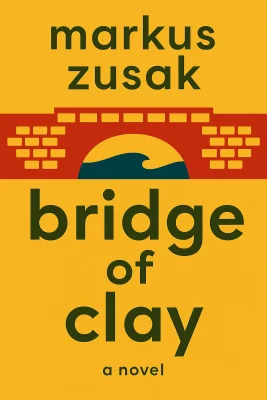
Bridge of Clay
Categories
Fiction, Unfinished, Audiobook, Historical Fiction, Young Adult, Family, Book Club, Contemporary, Realistic Fiction, Australia
Content Type
Book
Binding
Hardcover
Year
2018
Publisher
Doubleday
Language
English
ASIN
0385614292
ISBN
0385614292
ISBN13
9780385614290
File Download
PDF | EPUB
Bridge of Clay Plot Summary
Introduction
# Bridge of Clay: Spanning Rivers of Memory, Family, and Forgiveness The night Matthew Dunbar found himself punching keys on an old typewriter in his kitchen, the house around him held its breath. His four brothers slept, unaware that their story was about to be told—a story that began with a murderer, a mule, and Clay. But this wasn't the beginning, not really. The beginning was eleven years earlier, when their father walked back into their lives with a proposition that would tear them apart and rebuild them stronger. In the racing quarter of the city, at 18 Archer Street, five boys had raised themselves after their mother died and their father fled. They were Matthew the responsible one, Rory the invincible, Henry the schemer, Clay the quiet, and Tommy the youngest. They fought like contenders, swore like bastards, and somehow survived on their own terms. Until the day Michael Dunbar returned, asking for help to build a bridge across a distant river—and only Clay, the fourth son, would answer the call.
Chapter 1: The Prodigal Father's Return: A Bridge Proposal
The Murderer arrived at six o'clock on a blistering February evening, bent-postured and broken, leaning against the air as if waiting for it to finish him off. He stood at the mouth of Archer Street for ten minutes, terrified to move forward, before finally walking to number eighteen. Inside, he met Achilles first—not one of the boys, but their mule, standing guard in the kitchen with a what-the-hell-you-looking-at expression. Michael Dunbar hadn't expected to find a mule in his former home, but then again, he'd lost the right to expect anything. The house felt like a geography all its own, with its overcast walls and parched floors, the coastline of dirty dishes stretching toward the sink. When the boys finally came home—Matthew, Rory, Henry, Clay, and Tommy—they found him sitting at the kitchen table like a nervous wreck. The confrontation was swift and brutal. Matthew's anger filled the room like a river mouth of light, while Rory's scrap-metal eyes promised violence. Henry remained diplomatically hostile, Tommy simply said no. But Clay—Clay looked at the broken pieces of a clothes peg in their father's weathered hand and said the two words that changed everything: "Hi, Dad." The proposition was simple enough. Michael lived far from the city now, in the country, beside a river called the Amahnu. He needed to build a bridge—the old one had been destroyed by floods—and he was asking if any of his sons might help. One by one, they refused. All except Clay, who nodded silently, sealing his fate and fracturing his family in a single gesture. Matthew delivered his ultimatum on the front porch the next morning. Clay could leave if he wanted—Matthew couldn't stop him—but coming home meant getting through him first. The threat hung in the air like the city's heat, promising violence that would make their childhood games look like mercy. But Clay had already made his choice, even if he didn't fully understand why.
Chapter 2: Clay's Departure: Choosing Between Two Loyalties
Clay had been training for something his whole life, though he never knew what. His brothers had tortured him into strength—Matthew with integrity, Rory with brutality, Henry with schemes that always ended in pain. At Bernborough Park, the old athletics field, Clay would run laps while other boys tried to stop him, betting on how long he'd last. He always lasted longer than anyone expected, smiling only when the punishment was over. The morning after their father's visit, the house felt different. Clay spent his last days saying goodbye in his own quiet way. He helped Tommy with Achilles' hooves, ran the stairs one final time with Henry, and faced Rory at the 300-meter mark where his brother offered to teach him how to survive Matthew's eventual revenge. "You won't go fifteen seconds," Rory warned, but Clay knew better. He'd been training for this beating his whole life. On his final night, Clay visited Carey Novac at The Surrounds—the abandoned field behind their house where an old mattress lay among the household junk. Carey was sixteen, an apprentice jockey with auburn hair and sea-glass eyes who lived diagonally across from the Dunbar house. She gave him a wooden box containing a Zippo lighter engraved with "Matador in the fifth," and told him something that would echo through everything that followed: "That bridge will be made of you." At dawn, carrying his sports bag and suitcase, Clay walked away from Archer Street and dove into the gold-lit floodwater of his future. The train journey stretched eleven hours through landscapes that grew more desolate with each mile. When he finally arrived at Silver, his father was waiting in a field of eucalyptus trees, and they shook hands in the dark, their hearts pounding in their ears.
Chapter 3: Foundations in the Past: Michael and Penelope's Story
Before he was the Murderer, Michael Dunbar was a boy in Featherton who wanted to be a typist like his mother. She worked for the town's doctor, punching away at an old Remington typewriter, and sometimes brought it home for him to carry. "Show us your muscles," she'd say. "Can you help with the ol' TW?" The boy would smile and lug it away, dreaming of creating something beautiful with those keys. Everything changed when he found a calendar of great men in a charity box—Men Who Changed the World. December's page showed Michelangelo, and suddenly Michael had found his calling. He devoured every book about the master sculptor, memorizing the works: David, the Pietà, the Prisoners trapped forever in marble. By fourteen, he was painting and drawing, trying to capture even a fraction of that genius. Then came Abbey Hanley, the girl who'd crushed his toy spaceship in the doctor's waiting room years before. She was wild where he was careful, decisive where he hesitated. They fell in love with the intensity of small-town teenagers, and when their exam results came in, they escaped to the city together. For four years, they were happy—or thought they were. But happiness built on unequal foundations cannot last. Abbey grew stronger, more confident, while Michael remained the same uncertain boy who'd needed his dog to die before he could approach her door. The night she left him, she took The Quarryman—a book about Michelangelo she'd given him—and Michael lay on the garage floor among his paintings of her, crying into the passing faces of all the women he'd lost. Years later, he met Penelope Lesciuszko when piano movers delivered her instrument to the wrong address on Pepper Street. She was a Polish refugee who'd escaped communist Eastern Europe, carrying stories her father Waldek had whispered about survival and hope. Michael helped her push the piano to her apartment, and they looked at each other in glimpses, two damaged souls recognizing something familiar. When she finally knocked on his door months later, asking if he'd like to hear her play, neither of them knew they were beginning the story that would create five boys and end in heartbreak.
Chapter 4: The Boy Who Trained for Everything
Clay arrived at the Amahnu River after an eleven-hour train journey, walking through corridors of eucalyptus trees toward a house that looked like a hunchback with sad eyes. Michael was waiting in the field, and they shook hands in the dark, their hearts pounding in their ears. The country was cooling down around them, vast and empty and alive with the single note of insects. The house was hollow and smelled alone. Michael offered coffee, tea, food—all refused. They sat in the quiet of the lounge room, surrounded by books and bridge plans, two strangers connected by blood and abandonment. That first night, Clay unpacked his wooden box and arranged its contents: the broken clothes peg, the Zippo lighter, the feather from Tommy's pigeon, the iron from Monopoly, Henry's money, and the Murderer's address. For days, they fell into a careful routine. Michael would stand by the riverbank for hours, then come in to read and write on his loose-leaf papers. Clay explored on his own, sometimes walking upriver to the great blocks of stone, sitting and missing everyone. They were like two boxers in the opening rounds, neither willing to take too big a risk. When Michael left for ten days to work in the mines, Clay made his choice. He couldn't go home—not yet—so he stayed. That night, Michael showed him the bridge plans and told him about Pont du Gard, the Roman bridge that was Clay's favorite. "Do you know the legend?" Michael asked in the darkness. But Clay needed to sleep, needed to prepare for what was coming. The next morning, he found the sketch on the kitchen table: Final Bridge Plan: First Sketch. Clay spent the week alone digging a trench forty meters by twenty across the riverbed, working down to bedrock with nothing but a shovel and determination. His hands blistered raw, his body became part elastic, part hard. He slept sometimes in the riverbed itself, waking with dirt in his mouth and the stars wheeling overhead. When Michael returned and saw what Clay had accomplished, he could only shake his head in amazement. "I can't believe my eyes. I thought you'd only make a start."
Chapter 5: Building the Bridge: Hands Calloused, Heart Mending
They began the real work then, shifting earth from the river and praying for no rain that would make everything meaningless. At night, they designed the falsework—the wooden mold that would hold the arches until they could stand alone. Michael was mathematical and methodical, talking about trajectory and how each stone would need to be perfect. Clay was sick at the thought of voussoirs, those contoured blocks that would form the arch. The bridge would be made of stone, three arches like the Regensburg, like the Pilgrim's Bridge. But more than stone, it would be made of everything Clay brought to it—his training, his endurance, his willingness to suffer for something greater than himself. As they worked under the vast sky, father and son began to understand each other through the language of labor and shared purpose. Michael taught Clay the secrets of stone-cutting, showing him how to read the grain of the rock and split it along its natural lines. Clay learned to mix mortar, to set foundations, to calculate the precise angles needed to make an arch that would stand against time and weather. They worked mostly in silence, but it was a comfortable quiet now, filled with shared purpose rather than mutual recrimination. The breakthrough came on a night when exhaustion had worn away their usual defenses. They sat by a fire in the riverbed, the flames casting dancing shadows on the stone arches that rose around them like the ribs of some ancient beast. Michael began to talk, haltingly at first, then with growing confidence. He told Clay about his first marriage, about Abbey Hanley who became Abbey Dunbar and then Abbey Someone-Else when she left him for a better life. He spoke of the garage where he painted her portrait over and over, trying to capture something that was always just beyond his reach. He described the night she walked away, taking with her not just her belongings but his faith in his own worth. The divorce papers, the empty house, the years of loneliness that followed—all of it poured out in a torrent of words that had been dammed up for decades. In return, Clay shared his own secrets. He told his father about the wooden clothespeg he carried everywhere, a talisman from the morning Penny died. He described the weight of keeping his brothers together, the exhaustion of being strong when all he wanted to do was collapse. He talked about Carey, about the way she made him feel both invincible and terrified, about the fear that loving someone means eventually losing them.
Chapter 6: Memories Across Water: The Mother Who Shaped Them All
The story of Penelope Lesciuszko began in a watery wilderness, in the Eastern Bloc where her father Waldek raised her on Homer's epics. She was the Mistake Maker at the piano, her knuckles whipped with a spruce branch every time her hands dropped or she played a wrong note. But she learned, and the music became her salvation when her father decided to get her out. He sent her to Vienna for a concert, knowing she would never return. The letter he hid in her suitcase was both liberation and abandonment: "Do not turn around. Do not come back." She cried all the way to Vienna, then made her way to a refugee camp in the Austrian mountains, where she waited nine months for a country to accept her. When she finally reached the city, she was astounded by the mauling light, the heat that plundered and pillaged everything it touched. She worked cleaning public toilets, saving money for a piano, learning English from Mad magazines and old movies. The tears still welled up each night, but she was making progress toward the life her father had envisioned for her. Their marriage began with a piano painted with the words "PLEASE MARRY ME" across the keys. Penelope insisted all five boys learn to play, though most of them rebelled against the lessons. Only Clay showed real aptitude, his small fingers finding melodies while his brothers fought and argued around him. She taught English to troubled teenagers at Hyperno High, while Michael worked construction, his hands permanently dusted with concrete and plaster. But beneath the surface, cracks were already forming. Penelope's health began to deteriorate in small, almost imperceptible ways. A cough that wouldn't go away. Dizzy spells that she blamed on overwork. Blood on the pages of The Odyssey when she read to her students. By the time the doctors delivered their verdict—aggressive, they said, using the word like a weapon—it was already too late. The diagnosis shattered their carefully constructed world. Michael, who had survived one abandonment, found himself facing another. He began to withdraw, spending hours in the garage where he once painted portraits of his first wife. Penelope fought the cancer with the same fierce determination she brought to everything else, but even as her body failed, her spirit remained unbroken. The boys learned to cook and clean, to change bandages and empty bedpans, to pretend that everything was normal even as their mother slowly disappeared before their eyes.
Chapter 7: The Journey Home: Facing What Was Left Behind
After seventy-six days at the Amahnu, Clay received letters from home. Henry's was typically irreverent, demanding to know how long it takes to build a bridge anyway. Tommy and Rory had contributed their own messages—Tommy saying Achilles missed him, Rory telling him to give the old man a kick in the coins. But it was Carey's letter that broke his heart and gave him courage. She'd gotten her first mount, riding War of the Roses to third place, talking to the horse instead of whipping him. She'd finished The Quarryman again and understood why he loved it so much. She waited for him at The Surrounds every Saturday, hoping he'd come but knowing why he couldn't. "I hope you get to do something great out there too," she wrote. "You will. You have to. You will." Clay knew then that it was time. The bridge was taking shape, stone by stone, arch by arch. The falsework held while the voussoirs locked into place, each one perfectly cut and positioned. But the real bridge—the one made of him, of everything he'd brought to this place—was complete. He'd found what he'd been training for all his life. The journey home would be the hardest part. Matthew was waiting, and the promise of violence hung over Archer Street like summer heat. But Clay had learned something in the country, working beside his father, building something that would last. He'd learned that some things are worth the punishment, worth the pain of becoming who you're meant to be. The bridge would span the Amahnu, but Clay would span the distance between boy and man, between abandonment and forgiveness. When Clay finally returned to the city, carrying the weight of what he'd learned, he found his brothers waiting. The confrontation with Matthew was everything he'd expected—brutal, necessary, and ultimately healing. They fought like they'd always fought, with the desperate intensity of boys who'd raised themselves, but underneath the violence was love, the stubborn refusal to let each other go. The bridge stood completed in the dry riverbed, three perfect arches spanning nothing but dust and memory. But when the rains finally came to Silver, they came with biblical fury. The Amahnu roared back to life, testing the bridge that Clay and Michael had built, threatening to wash away months of backbreaking labor. But the arches held, the stones locked together in perfect tension, proving that some things, once properly built, can withstand any flood.
Summary
In the end, the bridge was built not just of stone and mortar, but of memory and forgiveness, of a boy's willingness to leave everything behind to understand where he came from. Clay Dunbar returned to Archer Street carrying the weight of what he'd learned—that families break and mend like rivers changing course, that love sometimes looks like abandonment, and that the greatest bridges are the ones we build between who we were and who we become. The Amahnu flows on, and the bridge stands, a testament to the power of choosing difficult love over easy hatred. In the racing quarter of the city, five brothers learned that sometimes you have to lose someone to find them, that the longest journeys are often the ones that bring you home. And in the kitchen where it all began, Matthew Dunbar punches keys on an old typewriter, telling the story of how they became who they are—not despite their brokenness, but because of it. The bridge spans more than water now—it reaches across time itself, connecting past and future, loss and hope, in arches that will stand long after the builders are gone.
Best Quote
“There are hundreds of thoughts per every word spoken, and that's if they're spoken at all.” ― Markus Zusak, Bridge of Clay
Review Summary
Strengths: The review highlights the book's profound emotional impact, describing it as "heartbreaking beauty" and "poignant and brilliant writing." It praises the author's return to roots reminiscent of the Wolfe Brothers series and appreciates the exploration of complex themes like family, forgiveness, and brotherhood. The narrative's raw and messy nature is seen as a necessary departure from the author's previous work. Weaknesses: The review notes initial confusion with the book's writing style, suggesting it may require multiple readings to fully grasp its nuances. Overall: The reviewer expresses deep admiration for the book, considering it tragically underrated and emotionally transformative. They recommend it highly, especially for those familiar with Markus Zusak's earlier works.
About Author

Markus Zusak
Zusak interrogates the human condition through a blend of historical narrative and emotional insight, emphasizing the transformative power of storytelling. His writing often tackles themes such as resilience, identity, and the moral complexities inherent in extreme circumstances, as vividly illustrated in "The Book Thief." The novel's exploration of loss and hope amidst the harsh realities of Nazi Germany reflects Zusak's deep understanding of human emotions and history. Meanwhile, his other works, like "The Messenger," delve into existential inquiries and social criticism, challenging readers to reflect on the nuances of life.\n\nFor Zusak, narrative innovation and lyrical prose are not just stylistic choices but methods to engage readers in a deeper conversation about humanity's enduring spirit. By weaving his multicultural heritage into his stories, he provides a unique perspective that resonates across cultural boundaries. Therefore, his books serve as powerful tools for readers seeking both emotional depth and intellectual engagement. Readers of his novels are often drawn to the intricate layers of meaning and the evocative language that brings characters and settings to life. \n\nIn this short bio, the impact of Zusak's work extends beyond entertainment, offering a literary experience that fosters empathy and introspection. The author’s ability to merge poignant storytelling with profound themes has not only captivated millions but also earned him significant accolades, such as the Printz Award Honor Book for "The Book Thief." His contributions to contemporary literature are especially significant for those who value narrative complexity and emotional resonance. In charting the landscapes of both historical and personal realms, Zusak has firmly positioned himself as a vital voice in modern fiction.
Read moreDownload PDF & EPUB
To save this Black List summary for later, download the free PDF and EPUB. You can print it out, or read offline at your convenience.
Bridge of Clay
by Markus Zusak
