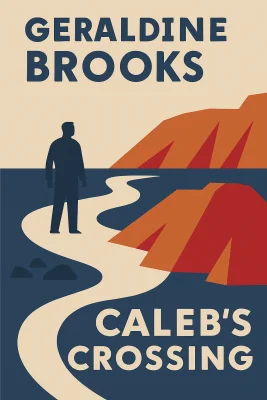
Caleb's Crossing
Categories
Fiction, Religion, Audiobook, Historical Fiction, Adult, Book Club, Historical, Adult Fiction, Native American, Native Americans
Content Type
Book
Binding
Hardcover
Year
2011
Publisher
Viking
Language
English
ASIN
0670021040
ISBN
0670021040
ISBN13
9780670021048
File Download
PDF | EPUB
Caleb's Crossing Plot Summary
Introduction
# Between Two Worlds: A Soul's Crossing in Colonial America The salt wind whips across Martha's Vineyard in 1660 as fifteen-year-old Bethia Mayfield slips away from her father's austere Puritan household, seeking forbidden knowledge in the island's hidden places. What she finds instead is Caleb, a young Wampanoag whose copper skin gleams with raccoon grease and whose intelligent eyes hold depths no English settler has ever bothered to explore. Their chance meeting by a secluded pond will ignite a friendship that defies every boundary their worlds have drawn—a bond forged in shared hunger for learning that will carry them both from the windswept shores of their childhood to the hallowed halls of Harvard College. But crossing between worlds demands a price that neither can foresee. As Bethia teaches Caleb to read Latin and he shows her the island's ancient secrets, they become living bridges between cultures locked in mistrust and misunderstanding. Their journey will test everything they believe about faith, identity, and the cost of knowledge itself, leading to triumphs that taste of ashes and sacrifices that echo through generations.
Chapter 1: Secret Shores: The Forbidden Friendship Begins
The morning mist clings to Martha's Vineyard as Bethia Mayfield guides her mare through dense woods, escaping the suffocating confines of her father's mission house. At fifteen, she burns with hunger for the Latin studies her minister father has forbidden her, declaring such learning unsuitable for daughters. Her restless mind craves more than scripture and domestic duties. She dismounts near a hidden pond, seeking solitude to practice conjugating the Latin verbs she memorizes by eavesdropping on her brother Makepeace's lessons. The water shimmers like hammered silver, and she's so absorbed in her forbidden studies that she doesn't notice the figure watching from the reeds until he steps into the clearing. The boy moves with fluid grace, perhaps her age, with skin like burnished copper and hair falling in a black cascade past his shoulders. He wears deerskin leggings and a shirt that was once English cloth but now bears shells and feathers. This is Caleb, son of a Wampanoag sonquem, and he belongs to this wild place as completely as she feels trapped by her civilized one. Their eyes meet across the water. Bethia's heart hammers, but she doesn't flee. Something in his intelligent gaze holds her fast. He speaks first, in accented but clear English, asking what strange words she's been muttering. When she explains about Latin, his eyes kindle with curiosity. He's heard of the English god-words but never encountered their ancient tongue. What begins as wary conversation becomes animated exchange. Caleb reveals a mind sharp as any scholar's, asking probing questions about English customs and beliefs. In return, he shares knowledge of his world—plants that heal or harm, star patterns that guide hunters, stories his people tell to explain thunder and tide. They part with unspoken agreement to meet again, each hungry for what the other possesses. Through summer they meet in secret groves and secluded beaches, always beyond watchful eyes. Bethia brings books pilfered from her father's study, teaching Caleb to read English letters while he instructs her in the fluid syllables of Wampanoag. Their friendship deepens with each clandestine lesson, two young minds discovering that wisdom recognizes no boundaries of blood or birth.
Chapter 2: Crossing Boundaries: Knowledge Shared in Shadow
Autumn paints the island in shades of fire as Bethia and Caleb's secret education continues. She smuggles Latin texts in her gathering basket, spreading them before him in hidden clearings while he teaches her to read wind patterns and animal signs. His mind proves remarkably quick—within months he's reading simple English passages, but when she introduces him to Latin, his true genius emerges. The ancient language seems to unlock something in Caleb's consciousness, as if he's waited his entire life for these precise tools of thought. He devours grammar and syntax with the same intensity he once brought to tracking deer, his pronunciation taking on rhythmic cadences that remind Bethia of sacred chants she's overheard from Wampanoag ceremonies. Their friendship carries constant danger. Bethia's Puritan world views Indians as either noble savages to be converted or dangerous heathens to be feared. Caleb's uncle Tequamuck, a powerful medicine man, regards the English as destroyers of ancient ways. The boy walks a knife's edge between worlds, drawn to English learning yet bound by blood to his people's traditions. The crisis comes when Bethia witnesses a Wampanoag ceremony at the colored cliffs. Hidden in beach scrub, she watches Tequamuck lead ritual dances and prayers in a natural amphitheater below. The ceremony fills her with wild ecstasy she's never felt in her father's austere meetinghouse. Against every teaching of her upbringing, she feels drawn to this heathen worship, sensing spiritual power that makes her own faith seem pale and bloodless. That night, unable to sleep, she returns to the cliffs. In darkness, with drums pounding in rhythm with her heartbeat, she sheds her proper English clothes and dances naked under stars. For those wild hours she's no longer Bethia Mayfield, minister's daughter, but something primal and free—a creature of the island itself, worshipping gods older than Christianity. The memory haunts her through winter months that follow. She's tasted forbidden knowledge and found it sweet, but she knows the price of such transgression. Her Puritan conscience tells her she's committed the gravest sin—idolatry, worship of false gods. Yet she cannot bring herself to repent, for in that pagan ritual she touched something true and vital her own faith seems to lack.
Chapter 3: Waves of Loss: When Tragedy Reshapes Destiny
Summer brings cascading tragedies that will reshape both their worlds forever. Bethia's mother dies in childbirth, leaving behind tiny Solace, a blue-eyed angel who becomes the center of Bethia's universe. Barely more than a child herself, she suddenly finds herself running the household and caring for an infant while her father throws himself deeper into missionary work among the Wampanoag. Caleb, now seventeen and on manhood's threshold, has grown tall and lean, his boyish features sharpened into something almost beautiful. Their meetings become more precious and dangerous—stolen moments when she can escape domestic duties to walk with him through the island's wild places. He tells her he'll soon undergo the traditional Wampanoag trial of manhood—months alone in wilderness, fasting and seeking visions until his spirit guide reveals itself. Their final meeting before his departure crackles with unspoken emotion. Standing on the beach where they first met, Caleb presses her catechism back into her hands and tells her not to look for him again. Bethia weeps then, unable to hide her grief at losing the one person who truly understands her. As he walks away into the dunes, she feels part of her own soul being torn away. The months blur together in domestic routine—rising before dawn to tend fires, cooking and cleaning and caring for Solace, falling exhausted into bed each night. Her father, consumed by his mission, barely notices her struggles. Her brother Makepeace, preparing for Harvard College, treats her more like a servant than sister. The end comes on a day so beautiful it seems impossible tragedy could touch it. Bethia goes to pick beans in their flourishing garden, leaving Solace napping in her cradle. When she returns, the baby is gone. They find her face-down in the shallow pit of their new well—just inches of rainwater, but enough to steal breath from tiny lungs. Caleb appears as if from nowhere, snatching Solace's limp body from muddy water and running with her to where Bethia stands frozen in horror. But it's too late. The child who was the light of Bethia's world is gone, her blue eyes staring sightlessly at sky, water dripping from golden hair like scattered diamonds. In her anguish, Bethia knows this is God's punishment for her sins—her worship of false gods and forbidden friendship with a heathen boy.
Chapter 4: Bonds of Servitude: The Journey to Cambridge
Winter after Solace's death brings news that shatters what remains of Bethia's world. Her father, driven by grief and religious fervor, has sailed to England to raise funds for his Indian mission. But the ship carrying John Mayfield never reaches its destination—torn apart in a supernatural storm many believe was conjured by Tequamuck, the Wampanoag medicine man who always opposed the Christian mission. Now truly orphans, Bethia and Makepeace find themselves at their grandfather's mercy. Thomas Mayfield is a practical man who invested heavily in his son's voyage to England, expecting rich returns from English benefactors. With those funds lost at sea, he faces a dilemma—how to pay for Makepeace's Harvard education without bankrupting the family. His solution is shocking as it is practical. Bethia will be indentured as servant to Master Elijah Corlett, who runs a preparatory school in Cambridge. In exchange for four years of her labor, Corlett will waive Makepeace's tuition and board. Her grandfather assures her it's temporary—she'll return at twenty-one, free to marry and start a family. But to Bethia, the indenture feels like a death sentence, her freedom sold to purchase her brother's future. The journey to Cambridge is a nightmare of seasickness and delay. Bethia huddles in cramped quarters of the coastal sloop, watching Martha's Vineyard disappear into haze, perhaps forever. With her travel Makepeace and two other young men bound for Master Corlett's school—Caleb and Joel Iacoomis, son of her father's first Indian convert. Both have been selected for an experimental program to educate promising Wampanoag men as ministers to their own people. Caleb has transformed himself for this new life, cutting his long hair and donning English clothes. In his plain doublet and white collar, he looks almost like any other colonial youth—except for copper skin and depths in dark eyes that speak of visions no English boy has ever seen. He treats Bethia with careful courtesy now, as if their childhood friendship never existed, as if he never called her Storm Eyes or taught her secret names of island creatures. Cambridge proves everything Bethia feared and worse. The town reeks of human waste and animal filth, its narrow streets churned to mud by constant traffic. Master Corlett's school is a cramped, cold building where she's given a pallet in the kitchen and duties that will consume every waking hour. She must cook for fourteen boys, wash their clothes, scrub their floors, and tend their needs while they pursue the education denied to her.
Chapter 5: Native Minds in English Halls: The Harvard Trial
Winter in Cambridge brings new challenges to Master Corlett's school. The cold seeps through every crack in the building's frame, and Bethia splits her meager firewood between cooking and keeping the boys from freezing in their crowded dormitory. She boils thin broths from scraps and tries to make threadbare clothes last another season while watching the dynamics unfold around her. The presence of Indian students creates tensions Master Corlett struggles to manage. Some English boys, led by arrogant Joseph Dudley, resent sharing their education with "salvages" and make their displeasure known through cruel comments and deliberate slights. But Caleb and Joel have formed a strong friendship, supporting each other through the challenges of adapting to English academic life while maintaining their cultural identity. Bethia observes from her position as servant, invisible to most but seeing everything. She watches how Caleb navigates between worlds, speaking perfect English in classrooms while maintaining connection to Wampanoag traditions in private moments. When she overhears him reading Hebrew aloud, his voice takes on rhythmic cadences of a medicine man chanting prayers, and she wonders what visions still haunt his dreams. As spring approaches, the true test draws near. The Indian students will sit for examinations determining whether they're ready for Harvard College, competing directly with English classmates for limited places. The pressure is enormous—failure would not only end their dreams but damage the entire experiment of Indian education their English benefactors have funded so generously. Caleb throws himself into studies with fierce determination, mastering Greek and Hebrew with the same intensity he once brought to hunting and tracking. Joel, quieter but no less dedicated, excels in logic and rhetoric. They're proving that Indian minds can match English ones in any intellectual contest, but success comes at a cost. The constant pressure to excel, combined with harsh living conditions and cultural isolation, is changing both students in ways that trouble Bethia. They're becoming something new—neither fully Indian nor fully English, but creatures caught between worlds, shaped by forces they cannot entirely control. In their transformation, she sees a reflection of her own journey from island girl to bond servant, and wonders what they'll all become when the crossing is complete.
Chapter 6: Hearts Divided: Identity, Sacrifice, and Survival
Spring brings examinations and Harvard's prospect for those who prove worthy. The pressure in Master Corlett's school intensifies as older boys prepare for tests that will determine their futures. Makepeace, now eighteen and the oldest student, struggles desperately with Greek and Hebrew while younger classmates surpass him with apparent ease. His shame at being outpaced by the Indian students he once scorned eats at him like acid. Caleb and Joel approach their examinations with quiet confidence. Both have mastered the classical curriculum with remarkable speed, their quick minds adapting to English learning methods while retaining something essentially their own. But the true test won't be academic—it will be whether Harvard's masters can accept Indian students as equals to their English counterparts. The examinations take place in Harvard's great hall, with President Chauncy and several tutors questioning each candidate in Latin, Greek, and Hebrew. Bethia isn't permitted to attend, but she hears the results from Master Corlett that evening. Caleb and Joel have both passed with distinction, earning places in Harvard's freshman class. Makepeace has also passed, though barely, his father's reputation and grandfather's influence perhaps weighing as much as his modest abilities. But success brings new challenges. As the only Indians at Harvard, Caleb and Joel will face isolation and prejudice far worse than anything they've experienced at preparatory school. They'll be living symbols of an experiment in racial equality that many colonists view with suspicion or outright hostility. The weight of representing their entire race will rest on their young shoulders. For Bethia, her brother's acceptance at Harvard means continued servitude at Master Corlett's school. She'll remain in Cambridge, cooking and cleaning for new groups of boys while Makepeace pursues his dream of becoming a minister. The marriage to Noah Merry that her brother arranged still looms over her future—a fate she dreads but seems powerless to escape. On their last evening together, Caleb seeks out Bethia in the kitchen where she's preparing a farewell meal. For a moment, the careful distance he's maintained between them cracks, and she sees the boy she once knew—Storm Eyes' companion, the youth who taught her the island's secrets. His voice carries undertones of the Wampanoag language they once shared as he tells her he hasn't forgotten what they were to each other, what she gave him. He'll carry it wherever he goes.
Chapter 7: Bittersweet Victory: The Price of Achievement
The years that follow test everyone's resolve in unimaginable ways. At Harvard College, Caleb and Joel face constant scrutiny and subtle persecution from classmates who see them as curiosities at best, threats at worst. They're barred from many social activities, excluded from study groups, and subjected to cruel pranks designed to remind them of their outsider status. Yet both persevere, their academic performance consistently outshining their English peers. Makepeace struggles more than anyone. His marginal abilities, barely adequate for admission, prove insufficient for Harvard's rigorous curriculum. He falls behind in studies, fails several examinations, and eventually withdraws from college in disgrace. The sacrifice of his sister's freedom has purchased nothing but humiliation and the collapse of his dreams of following their father's footsteps as a minister. Back at Master Corlett's school, Bethia watches these developments unfold through letters and occasional visits. Her own situation has stabilized into grinding routine of domestic labor, broken only by her growing friendship with Anne, a young Nipmuc girl whose story is darker than any she's yet encountered. Delivered to the school in the governor's carriage, Anne speaks perfect English but her green eyes hold shadows of unspeakable experiences. The crisis comes in Caleb's final year at Harvard. Despite his academic success, the college's masters begin questioning whether an Indian can truly be trusted with a degree that would make him equal to any English minister. Rumors spread that his education is merely facade, that he remains a heathen at heart who would corrupt any congregation placed under his care. The accusations strike at the heart of Caleb's identity. He's sacrificed much to succeed in the English world—his traditional dress, his long hair, his open connection to Wampanoag spiritual practices. He's learned to speak and think like an Englishman, to see the world through Christian eyes. But in the end, none of it matters to those who judge him by skin color rather than character content. Using skills learned from years of managing Master Corlett's correspondence, Bethia begins writing letters to influential people in England—members of Parliament, wealthy merchants, leaders of the Society for the Propagation of the Gospel. She tells them about Caleb's achievements, about the success of the Indian education experiment, about injustices being perpetrated in Christianity's name. Her letters find their mark, and pressure from English benefactors forces Harvard to award Caleb his degree, making him the first Indian to graduate from the college.
Chapter 8: The Weight of Crossing: Legacy Between Worlds
The Harvard commencement of 1665 should have been pure triumph. Caleb stands with his English classmates, the first Native American to earn a bachelor's degree from the colonial college. He's proven that Indian minds can master the highest learning European civilization has to offer. Yet victory is shadowed by tragedy and loss that will define the rest of his brief life. Joel never lived to receive his diploma. Traveling back to Martha's Vineyard before commencement, his ship wrecked on Nantucket's shores. He was murdered by desperate Indians who attacked the vessel for its cargo, not knowing they were killing one of their own people's greatest hopes. The irony was bitter—Joel, who dedicated his life to building bridges between cultures, died at the hands of those caught between worlds as surely as he was. At commencement, Caleb walks alone where he and Joel should have walked together. He receives his degree with quiet dignity, but those who know him can see grief etched in his gaunt features. The consumption that has been slowly consuming his lungs worsens after Joel's death, as if his will to live has been damaged along with his body. Thomas Danforth takes Caleb into his Charlestown home, hoping rest and good food might restore his health. But the young man who crossed so successfully from one world to another finds himself stranded between them, belonging fully to neither. His English education has estranged him from his people, while English society, for all its admiration of his achievements, will never truly accept him as equal. When Bethia visits Caleb's deathbed in 1666, she finds the vibrant youth who once moved through forest and field with natural grace now skeletal and pale. His cough brings up blood, and his eyes hold the distant look of one already half-departed from this world. In desperation, she travels back to Martha's Vineyard to seek out Tequamuck, Caleb's uncle and the last traditional medicine man on the island. Returning to Caleb's bedside, she carries sacred objects and ancient words that bridge the gap between his Christian education and native heritage. She places a wampum belt across his chest and whispers old songs in his ear, giving him permission to honor both the traditions of his birth and the faith of his choosing. Caleb's death comes as he lived his final years—caught between cultures but belonging to both, dying singing a traditional death song yet having spent his last conscious hours discussing theology with Christian ministers.
Summary
The Indian College at Harvard, built with such hope and ambition, began to crumble after Caleb's death. Other native students would come and go, but none would achieve what he had accomplished. The building itself was eventually torn down, its bricks recycled for other purposes—a fitting metaphor for dreams deferred and opportunities lost. Bethia lived on for many decades, watching the gulf between English and Indian communities widen into the chasm of King Philip's War and its bitter aftermath. In her final years, Bethia reflected on the price of the crossing she and Caleb had attempted. They had been children when they first met by that hidden pond, innocent of the forces that would shape their adult lives. Caleb's achievement had proven that native minds were equal to any intellectual challenge, but it had also demonstrated the crushing cost of such crossings. The answer to whether the sacrifice had been worth the knowledge gained lay not in immediate consequences but in the precedent set—that the boundaries between worlds were not as fixed as either side believed, and that in a world increasingly divided by fear and misunderstanding, even a brief and tragic crossing was a kind of victory.
Best Quote
“She was like a butterfly, full of color and vibrancy when she chose to open her wings, yet hardly visible when she closed them.” ― Geraldine Brooks, Caleb's Crossing
Review Summary
Strengths: The book highlights the laws governing women and emphasizes the value of learning. It is based on an intriguing historical premise, focusing on the first Native American to attend Harvard. Weaknesses: The reviewer found the book underwhelming, with a disjointed narrative due to significant time jumps. The character-driven story was not engaging, as the protagonist, Bethia, was perceived as boring. The storytelling style did not appeal to the reviewer, and the suspense was lacking. Overall: The reader was not impressed with "Caleb’s Crossing," describing it as suitable background noise rather than an engaging read. The book failed to elevate its narrative beyond individual struggles to represent broader community hopes. The recommendation level is low, with a rating of 3.5 stars.
About Author

Geraldine Brooks
Brooks investigates the intricate tapestry of human experience through the lens of meticulously researched historical fiction, engaging readers with narratives that interweave personal and global events. Her books often explore themes of loss, resilience, and cultural identity, exemplified by her Pulitzer Prize-winning novel "March," which delves into the American Civil War through the eyes of the March family. While Brooks's storytelling is intimate, it simultaneously spans vast historical landscapes, demonstrating her ability to blend factual details with imaginative elements.\n\nHer transition from journalism to fiction writing enriched her narrative style, which is both informative and evocative. This skill is particularly evident in "Year of Wonders," a book set during the bubonic plague, and "People of the Book," inspired by the Sarajevo Haggadah. Readers benefit from her ability to capture pivotal moments in history while providing insights into the complexities of human behavior. Brooks's background as a journalist informs her nonfiction works, such as "Nine Parts of Desire," which explores the lives of Muslim women, further highlighting her commitment to cultural understanding.\n\nGeraldine Brooks is celebrated not only for her storytelling prowess but also for her impact on contemporary literature. Her works resonate across cultures and generations, earning numerous accolades such as the Anisfield-Wolf Book Award for "Horse." Through her compelling narratives, Brooks offers readers a chance to connect with diverse perspectives, enriching their understanding of the past and its influence on the present. This short bio underscores her status as a distinguished author whose contributions continue to shape literary discourse.
Read moreDownload PDF & EPUB
To save this Black List summary for later, download the free PDF and EPUB. You can print it out, or read offline at your convenience.
Caleb's Crossing
by Geraldine Brooks
