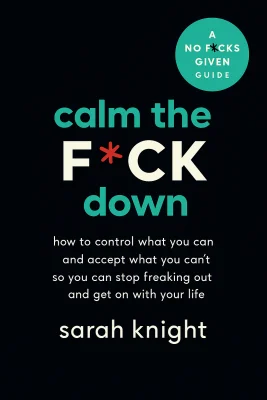
Calm the F*ck Down
How to Control What You Can and Accept What You Can't So You Can Stop Freaking Out and Get On With Your Life
Categories
Nonfiction, Self Help, Psychology, Health, Education, Mental Health, Audiobook, Personal Development, Adult, Humor
Content Type
Book
Binding
Hardcover
Year
2018
Publisher
Voracious
Language
English
ASIN
031652915X
ISBN
031652915X
ISBN13
9780316529150
File Download
PDF | EPUB
Calm the F*ck Down Plot Summary
Introduction
Life has a remarkable ability to catch us off guard. One moment we're cruising along, feeling in control of our circumstances, and the next we're faced with unexpected challenges that seem to spiral beyond our grasp. Whether it's a work crisis that threatens our career, a relationship conflict that shakes our emotional foundation, or simply the overwhelming weight of daily pressures, we often find ourselves trapped in a cycle of anxiety and reactive behavior that only makes things worse. The truth is, most of us have never learned how to effectively navigate chaos when it arrives. We panic, we overthink, we avoid, or we lash out in anger—all natural human responses that unfortunately tend to amplify our problems rather than solve them. But what if there was a different way? What if the very moments when everything feels out of control could become opportunities for clarity, growth, and genuine problem-solving? This transformation begins with a fundamental shift in how we approach life's inevitable storms, moving from reactive panic to purposeful response.
Chapter 1: Acknowledge the Problem: Identify What's Really Bothering You
The first step toward calm is brutal honesty about what's actually happening in your life. Too often, we find ourselves feeling anxious or overwhelmed without being able to pinpoint exactly why. We sense that something's wrong, but we can't name it, which leaves us spinning in circles of worry without direction or purpose. Consider the experience of Sarah, a successful professional who found herself waking up in panic attacks without understanding the source. She would lie awake at night feeling like "everything is a tarantula"—sensing threat everywhere but unable to identify what was actually bothering her. This vague anxiety was more debilitating than any specific problem could have been, because it felt impossible to address something she couldn't even name. The breakthrough came when Sarah learned to stop and ask herself a simple but powerful question: "What is it really?" Instead of accepting the blanket feeling that "everything is wrong," she forced herself to dig deeper. Was she worried about her upcoming presentation? Concerned about her mother's health? Anxious about financial security? By naming each specific concern, she transformed a shapeless monster of anxiety into concrete problems that could actually be addressed. To practice this acknowledgment process, set aside ten minutes when you're feeling overwhelmed. Write down every specific worry or concern that comes to mind, no matter how small or seemingly insignificant. Don't judge or try to solve anything yet—simply create a complete inventory of what's actually bothering you. You might discover that what felt like overwhelming chaos is actually three or four distinct issues that can be tackled one at a time. Remember that acknowledgment isn't about immediately fixing everything—it's about bringing clarity to confusion. When you can clearly see what you're dealing with, you've already taken the first crucial step toward regaining control. The problems haven't disappeared, but they're no longer invisible enemies lurking in the shadows of your mind. The power of acknowledgment lies in its simplicity. By honestly naming what's bothering you, you transform abstract anxiety into concrete challenges that your logical mind can begin to address.
Chapter 2: Analyze the Probability: Is This Worth Your Worry?
Once you've identified what's actually bothering you, the next crucial step is determining whether your concerns are based in reality or inflated by anxiety. Our minds have a remarkable ability to catastrophize, turning minor inconveniences into major disasters and unlikely scenarios into seemingly inevitable outcomes. Think of probability assessment like weather forecasting for your personal life. Just as meteorologists use data to predict whether a storm will actually hit your area, you can use logical analysis to determine whether your worries deserve the mental energy you're giving them. Sarah developed what she called her "Shitstorm Scale"—a way of categorizing potential problems from highly unlikely to inevitable, based on actual evidence rather than emotional intensity. When Sarah found herself panicking about a potential tarantula invasion of her home after discovering one spider, she forced herself to examine the facts. In several years of living in her location, she had encountered exactly one tarantula. While emotionally this felt like a Category 5 crisis, logically it rated as a Category 1—highly unlikely to recur. By focusing on probability rather than panic, she was able to redirect her mental energy toward more pressing concerns. To apply this analysis to your own life, take each concern from your acknowledgment list and honestly assess its likelihood. Ask yourself: Based on past experience and current evidence, how probable is this outcome? What data supports this worry, and what data contradicts it? Has this type of problem actually occurred before, or is it more of a theoretical fear? Create your own simple rating system—perhaps using a scale of one to five, where one represents "highly unlikely" and five represents "inevitable." Be ruthlessly honest about the evidence. Most of our daily anxieties will fall into the lower categories, revealing themselves as mental energy drains rather than legitimate concerns requiring immediate action. This probability analysis isn't about dismissing valid concerns—it's about matching your emotional investment to the actual likelihood of problems occurring. When you align your worry levels with realistic probabilities, you free up tremendous mental resources for addressing the challenges that truly matter and deserve your attention.
Chapter 3: Accept What You Can't Control and Let It Go
Perhaps the most transformative realization in achieving calm is understanding the clear distinction between what you can influence and what lies entirely beyond your power. This acceptance isn't about resignation or giving up—it's about strategically focusing your energy where it can actually make a difference. The concept becomes clear when we consider Sarah's experience during hurricane season. Living in the Caribbean, she faced the reality of powerful storms that could potentially damage her home. She could spend months worrying about whether hurricanes would strike, checking weather reports obsessively and losing sleep over meteorological possibilities. Or she could accept that weather patterns were completely beyond her control and focus instead on what she could influence—preparing emergency supplies, securing outdoor furniture, and having evacuation plans ready. This shift in focus transformed her relationship with uncertainty. Instead of exhausting herself trying to control the uncontrollable, she channeled that same energy into productive preparation. When Hurricane Maria approached her area, she wasn't paralyzed by anxiety because she had already done everything within her power. The storm's path was up to nature, but her response was up to her. The practice of letting go requires daily discipline and conscious choice. Start by identifying one worry that's been consuming your mental energy, then honestly ask yourself: "Can I control this outcome?" If the answer is no, practice actively releasing it. This might involve physical actions like writing the worry on paper and then tearing it up, or mental exercises like visualizing yourself setting the concern aside. When you catch yourself returning to worries about uncontrollable circumstances, redirect your attention to something within your sphere of influence. If you can't control whether you get the job, focus on perfecting your interview preparation. If you can't control other people's reactions, concentrate on your own behavior and communication. The freedom that comes from truly accepting what you cannot control is profound. It liberates enormous amounts of mental and emotional energy that can be redirected toward areas where you can actually create positive change. This isn't about becoming passive—it's about becoming strategically focused on where your power truly lies.
Chapter 4: Focus on Solutions: The Three Principles of Dealing With It
When chaos strikes and you're faced with real problems that demand action, having a clear framework for response becomes essential. Rather than letting panic drive your decisions, you can follow three fundamental principles that transform reactive scrambling into purposeful problem-solving. The first principle is taking stock—honestly assessing your situation without sugar-coating or catastrophizing. Sarah learned this when she discovered her house key was stuck in the door late at night, potentially leaving her locked out in mosquito-infested tropical heat. Instead of immediately panicking, she forced herself to calmly inventory the situation: What resources did she have? What were her realistic options? How urgent was immediate resolution versus waiting until morning? This assessment revealed that while inconvenient, the situation wasn't actually dire. Her husband could climb through a window they'd forgotten to lock, or she could call a locksmith in the morning and spend the night at a friend's place. By taking stock instead of panicking, she transformed what felt like a crisis into a manageable inconvenience with clear solutions. The second principle involves identifying your realistic ideal outcome. This means balancing what you want to happen with what's actually possible given your circumstances and resources. When Sarah's luggage was lost during travel, her ideal outcome would have been immediate return of all her belongings. But realistically, she needed to focus on replacing the most essential items quickly while pursuing airline assistance for the rest. This distinction helped her prioritize her time and energy effectively. The third principle is triage—determining which aspects of your problem need immediate attention and which can wait. Just like emergency room doctors must decide which patients require urgent care, you must identify which elements of your situation demand immediate action and which can be addressed later. This prevents you from scattering your efforts across multiple fronts when focused attention would be more effective. When implementing these principles, resist the urge to tackle everything simultaneously. Choose the most urgent element first, address it completely, then move to the next priority. This methodical approach prevents the overwhelm that often makes problems seem larger and more complex than they actually are. The power of this three-step framework lies in its ability to impose order on chaos, providing a clear path forward even when emotions are running high and circumstances feel overwhelming.
Chapter 5: Practice Emotional Puppy Crating for Mental Clarity
One of the most practical skills for maintaining calm during crisis is learning to temporarily set aside overwhelming emotions so you can think clearly and take effective action. This doesn't mean suppressing or ignoring your feelings—it means strategically managing when and how you experience them. Sarah discovered this technique during a particularly challenging period when multiple crises seemed to hit simultaneously. She compared emotions to puppies—sometimes delightful and comforting, but absolutely distracting when you need to focus on solving problems. Just as you might crate a puppy during important tasks, she learned to mentally "crate" her emotional responses during problem-solving periods, then release them when it was safe and appropriate to process them fully. When her flight was canceled during an important business trip, Sarah felt the familiar surge of panic and frustration. Instead of letting these emotions drive her actions, she acknowledged them briefly—"Yes, this is stressful and disappointing"—then consciously set them aside. She told herself, "Tonight Sarah's job is to find alternative travel arrangements. Tomorrow Sarah can process the frustration after the problem is solved." This mental compartmentalization allowed her to research options, make phone calls, and arrange backup plans without being paralyzed by anxiety. The key to emotional crating is timing and intention. You're not permanently suppressing feelings—you're temporarily postponing them to prevent them from interfering with necessary actions. Set a specific time when you'll return to process the emotions fully. This might be later in the evening, after the immediate crisis is resolved, or even the next day when you have mental space to feel and recover. To practice this skill, start with smaller stressors. When you notice strong emotions beginning to cloud your judgment during a problem-solving situation, pause and acknowledge what you're feeling. Then consciously choose to set those feelings aside for a specific period while you address the practical aspects of your situation. Remind yourself that you will return to process the emotions—this isn't avoidance, it's strategic timing. Physical actions can support this mental process. Take three deep breaths, splash cold water on your face, or do something that engages your hands while your mind focuses on solutions. The goal is creating enough emotional space to think clearly and act purposefully. This technique becomes increasingly powerful with practice, allowing you to maintain clarity and effectiveness even during your most challenging moments.
Chapter 6: Convert Anxiety into Productive Action (PHEW)
Rather than fighting against worry or trying to eliminate it entirely, you can transform anxious energy into productive action that actually addresses your concerns. This approach, which could be called Productive Helpful Effective Worrying, channels the mental energy you're already spending into activities that improve your situation. Consider the parent who constantly worries about their child's future success and happiness. Traditional advice might be to "stop worrying" or "let it go," but for many people, this feels impossible and even irresponsible. Instead, they can redirect that worried energy into researching good schools, developing their own parenting skills, creating college savings plans, or spending quality time building strong relationships with their children. Sarah experienced this transformation when dealing with her fear of public speaking disasters. Instead of lying awake at night imagining all the ways her presentations could go wrong, she began using that same mental energy to prepare more thoroughly. She researched her topics more deeply, practiced her delivery multiple times, prepared backup materials, and even developed contingency plans for technical failures. Her worry transformed from a liability into a competitive advantage. The process begins by identifying the specific concern underlying your anxiety, then asking: "What actions could I take that would actually address this worry?" If you're anxious about financial security, channel that energy into budgeting, skill development, or emergency fund building. If you're worried about your health, redirect the concern into exercise, nutrition improvements, or scheduling medical checkups. This approach works because it satisfies your mind's need to "do something" about legitimate concerns while actually improving your situation. Instead of spinning in unproductive worry cycles, you're taking concrete steps that reduce the likelihood of your fears becoming reality or increase your ability to handle challenges if they do arise. Start by choosing one persistent worry from your list and brainstorming five specific actions you could take to address it. Pick the most immediately achievable action and commit to completing it within the next week. As you build this habit, you'll find that anxiety becomes a signal to take productive action rather than a source of paralysis. The beautiful irony of this approach is that by taking constructive action, you often discover that your original worries were either less likely than you thought or more manageable than you feared. Action breeds confidence, which naturally reduces anxiety levels over time.
Chapter 7: Prioritize and Triage: Handle What Matters Most First
When multiple problems demand your attention simultaneously, the ability to effectively prioritize becomes crucial for maintaining both calm and effectiveness. Without clear priorities, you risk spreading your energy too thin and making little progress on any front, which typically increases anxiety and frustration. The concept of triage comes from emergency medicine, where healthcare workers must quickly determine which patients need immediate attention, which can wait, and which are beyond help. This same principle applies to managing personal crises and challenges. Not every problem requires immediate action, and attempting to address everything at once usually results in addressing nothing effectively. Sarah learned this lesson during a particularly chaotic week when her work deadline coincided with a family emergency and a home maintenance crisis. Her initial instinct was to try juggling all three situations simultaneously, which left her feeling scattered and ineffective. Instead, she stepped back and applied triage principles: Which situation would get worse without immediate attention? Which had the tightest timeline? Which could be temporarily managed with minimal effort while she focused elsewhere? She determined that the family emergency required her immediate presence and emotional energy, so she contacted her work supervisor to negotiate a brief deadline extension and hired a handyman to handle the home repairs. By consciously choosing to focus on one priority at a time, she was able to give each situation the attention it deserved without feeling overwhelmed by trying to manage everything simultaneously. To implement effective triage in your own life, list all current problems or concerns, then categorize them by urgency and importance. Urgent matters have immediate deadlines or consequences. Important matters significantly impact your long-term well-being or goals. Address urgent and important items first, then move to important but less urgent tasks. Delegate or postpone items that are urgent but not important, and eliminate activities that are neither urgent nor important. Remember that saying no to lower priorities is saying yes to higher ones. Every minute spent on a less important task is a minute not available for addressing your most significant challenges. This isn't about becoming rigid or inflexible—it's about being intentional and strategic with your limited time and energy. Effective prioritization also means accepting that some things will remain undone, at least temporarily. This requires releasing perfectionist tendencies and focusing on progress rather than completion. The goal is handling what matters most first, not handling everything perfectly.
Summary
The journey from chaos to calm isn't about eliminating problems from your life—it's about fundamentally changing how you respond to them. When you acknowledge what's really bothering you, assess the probability of your concerns, accept what you cannot control, and focus your energy on productive solutions, you transform from a reactor to a responder. As this approach demonstrates, "You cannot get through life without shit happening to you, but you can learn how to cope when it does." The most powerful realization is that calmness isn't a personality trait you either possess or lack—it's a skill you can develop through practice. Every challenge becomes an opportunity to strengthen your ability to think clearly under pressure, prioritize effectively, and take purposeful action even when emotions are running high. Start today by choosing one persistent worry and applying these principles: name it specifically, assess its realistic probability, determine what aspects you can actually influence, and take one concrete action toward addressing it. Your future self will thank you for beginning this transformation now.
Best Quote
“You can't stop worrying? Fine, worry away. But make it count for something.” ― Sarah Knight, Calm the F*ck Down: How to Control What You Can and Accept What You Can't So You Can Stop Freaking Out and Get On With Your Life
Review Summary
Strengths: The book is noted for its humorous and witty writing style, which provides entertainment even if the self-help techniques are not universally effective. The author articulates common sense advice in a clever manner, which some readers find refreshing and enjoyable. Weaknesses: Several readers criticize the book for its flippant tone and excessive use of profanity, which some find obnoxious and unhelpful. The advice is perceived as lacking depth and practicality, particularly for those with severe anxiety. Some readers feel the content could be condensed into a shorter format, such as an article or blog post. Overall: The book receives mixed reviews, with some readers appreciating its humor and others finding it lacking in substance and depth. It may appeal to those looking for light-hearted self-help content but might not satisfy readers seeking serious guidance.
About Author

Sarah Knight
Knight reframes personal development through her candid and humorous exploration of self-help, advocating for autonomy and authenticity. Her work dismantles societal pressures and encourages readers to prioritize their own needs and well-being. By blending irreverent humor with practical advice, her books, including "Get Your Sh"t Together" and "You Do You," offer guidance on setting boundaries and decluttering one's mental space. Knight's distinct style provides readers a fresh perspective on personal fulfillment, making her an influential figure in the genre.\n\nHer approach has significantly impacted those seeking empowerment, with her relatable writing resonating globally. Readers benefit from Knight's actionable insights that promote a less stressful, more authentic life, where individual quirks are embraced rather than suppressed. Her early book, "The Life-Changing Magic of Not Giving a F"ck," exemplifies this method, offering a framework to discard unnecessary obligations and focus on what genuinely matters. Beyond book sales, her influence extends to public speaking and podcasting, where her ideas continue to inspire a wide audience. \n\nThis impact is reflected in her works appearing on bestseller lists worldwide and her TEDx talk amassing millions of views. Her contributions to self-help literature not only provide practical strategies but also challenge conventional norms, encouraging a shift toward more personal and authentic life choices. Through her writing, Sarah Knight delivers a unique blend of humor and guidance, making self-help accessible and engaging for all.
Read moreDownload PDF & EPUB
To save this Black List summary for later, download the free PDF and EPUB. You can print it out, or read offline at your convenience.

Calm the F*ck Down
by Sarah Knight
