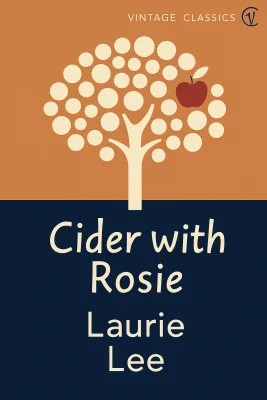
Cider with Rosie
Categories
Nonfiction, Biography, History, Memoir, Classics, Autobiography, Biography Memoir, 20th Century, British Literature, Modern Classics
Content Type
Book
Binding
Paperback
Year
2002
Publisher
Vintage
Language
English
File Download
PDF | EPUB
Cider with Rosie Plot Summary
Introduction
In the green valleys of Gloucestershire, where ancient beech woods whisper secrets and village lanes wind between stone cottages, a child's world unfolds with all the vivid intensity of first discovery. This is a realm where seasons dictate the rhythm of life, where every hedgerow holds adventure, and where the simple act of growing up becomes an epic journey through landscapes both external and internal. The narrator of this tale emerges from a time when England's countryside remained largely untouched by modernity, when horse-drawn carts still clattered down dusty roads and village life revolved around the eternal cycles of planting and harvest. Through the eyes of a boy navigating the complexities of family, friendship, and self-discovery, we witness not merely personal growth but the twilight of an entire way of life. The reader will encounter the fierce love and chaotic warmth of an unconventional household, the profound influence of strong female figures who shaped a young mind, and the bittersweet passage from innocence to awareness that marks every childhood's end. This portrait captures both the particular magic of one English valley and the universal experiences that define our earliest years, when every day brings revelation and the world seems infinite with possibility.
Chapter 1: Early Beginnings: First Light and Family Life
The story opens with a moment of primal terror and wonder, as a three-year-old child finds himself abandoned in grass taller than his small frame, overwhelmed by the alien sensations of a new world. This initial displacement from the familiar sets the tone for a childhood marked by constant discovery and adaptation. The cottage that becomes home stands precariously on a steep bank, its three floors housing a sprawling family of eight souls, each carving out their own territory in the cramped but loving chaos. The physical landscape of this new life reveals itself in layers of sensory detail. Water becomes a central force, both life-giving and threatening, as seasonal floods transform their hillside cottage into a kind of ark buffeted by storms. The young narrator learns to read the moods of the valley through the behavior of its streams and springs, developing an almost mystical connection to the rhythms of rain and drought that will shape his understanding of vulnerability and resilience. Family dynamics emerge through the lens of survival and interdependence. With no father present to impose order, the household operates under its own organic logic, where responsibilities shift fluidly between mother and sisters, and where the younger children learn to navigate both affection and neglect with equal adaptability. The kitchen becomes the heart of this domestic universe, a space where hunger and comfort, conflict and reconciliation play out against the backdrop of a wood-burning stove that must never be allowed to die. Through these early experiences, the foundation is laid for a sensibility that finds profound meaning in simple things. The texture of worn floorboards underfoot, the particular quality of light filtering through small windows, the communal sharing of scarce resources all contribute to a child's understanding that life is precious precisely because it is precarious. These first impressions create a template for appreciating beauty and finding joy even in circumstances that might seem, to outsiders, marked more by deprivation than abundance.
Chapter 2: The Mother's Influence: Unconventional Love and Wisdom
At the center of this domestic whirlwind stands a woman whose contradictions embody both the tragedy and triumph of her circumstances. Abandoned by her husband yet never bitter, overwhelmed by responsibilities yet never defeated, she navigates single motherhood with a combination of fierce determination and charming incompetence that becomes the defining influence of her children's early years. Her approach to child-rearing follows no conventional wisdom, relying instead on intuition, improvisation, and an unshakeable belief that love can compensate for most other deficiencies. Her relationship with practical matters borders on the fantastical. Bills arrive like mysterious visitations to be puzzled over rather than systematically addressed, while household routines bend to accommodate her artistic temperament and tendency toward grand gestures. She might spend the family's last pennies on an elaborate feast for Sunday dinner, then survive the following week on bread and imagination. This approach to domestic management, while often creating genuine hardship, also demonstrates a refusal to be diminished by poverty or to allow material limitations to constrain the family's sense of possibility. The mother's own backstory reveals a woman shaped by missed opportunities and thwarted ambitions, yet who channels her disappointments into a determination that her children should experience beauty and culture despite their circumstances. Her memories of grander households where she once worked as a servant provide both inspiration and instruction, as she attempts to recreate elements of refinement within their humble cottage. Piano lessons, poetry recitations, and elaborate table settings appear sporadically, creating islands of cultivation in the midst of chaos. Perhaps most significantly, she possesses an innate understanding that childhood should be allowed its full expression, even when adult concerns press urgently for attention. She permits her children freedoms that more conventional parents might deny, trusting their natural instincts for exploration and discovery while providing just enough guidance to prevent genuine disaster. This balance between protection and independence proves crucial in developing the confidence and curiosity that will serve them throughout their lives. Her influence extends beyond immediate family matters to encompass a worldview that finds wonder in everyday experiences and maintains optimism despite evident hardships. Through her example, her children learn that dignity need not depend on material success, that intelligence can flourish without formal education, and that love expressed authentically matters more than love demonstrated through conventional means.
Chapter 3: Village Education: Learning Through Nature and Community
The village school emerges as a battleground between institutional authority and individual spirit, where education happens as much despite official curriculum as because of it. The small stone building, divided by wooden partitions into infant and senior sections, contains the entire intellectual universe available to local children, presided over by teachers whose methods range from benignly ineffective to actively terrorizing. Here, the narrator encounters his first sustained exposure to the wider community beyond family boundaries, discovering that the world contains both allies and adversaries in roughly equal measure. The formal education provided consists largely of rote memorization and mechanical repetition, with little attention paid to individual aptitude or interest. Students chant multiplication tables and historical dates with the same fervor once reserved for religious incantations, absorbing information through pure repetition rather than understanding. Yet this apparent educational poverty conceals unexpected benefits, as children learn to find their own paths to knowledge and develop strategies for survival that serve them well beyond the schoolroom walls. More significant than any official lesson are the social dynamics that play out daily among the mixed-age student population. Friendships form and dissolve with the intensity of diplomatic alliances, while rivalries develop the complexity of long-running feuds. The narrator learns to navigate these relationships with increasing sophistication, discovering that popularity, power, and protection operate according to unwritten rules that bear little resemblance to adult moral instruction. The physical environment of the school provides its own curriculum in adaptation and endurance. Inadequate heating means winter days spent shivering around a single stove, while summer brings stifling conditions that make concentration nearly impossible. These shared hardships create bonds between students that transcend social differences, as children from farm families and cottage dwellings unite in common cause against the tyranny of uncomfortable circumstances and unsympathetic authority. Outside the classroom, the real education continues through exploration of the surrounding countryside, where practical knowledge accumulates through direct experience. The location of bird nests, the identification of edible plants, the seasonal patterns of weather and wildlife all become part of a informal curriculum that proves far more engaging than anything offered within the school's walls. This parallel education develops skills and sensitivities that will remain valuable long after formal lessons are forgotten.
Chapter 4: Seasonal Rhythms and Rural Traditions
The passage of time in this rural world follows ancient patterns largely unchanged since medieval days, where the year's progression is marked not by calendar months but by the specific tasks and celebrations that each season demands. Winter arrives as a transformation so complete that it seems to alter the fundamental nature of reality, turning familiar landscapes into crystalline kingdoms where ordinary rules no longer apply. The village responds to winter's challenges with communal strategies developed over generations, sharing resources and labor in ways that ensure survival while creating opportunities for the kind of intense fellowship that only shared hardship can provide. The carol-singing expeditions of December represent one such tradition, where groups of boys traverse miles of frozen countryside to bring music to isolated households in exchange for modest rewards. These journeys become epic adventures that test endurance while strengthening bonds between participants, as they navigate treacherous roads and unpredictable weather to fulfill their seasonal obligations. The ritual aspects of these expeditions connect the young singers to centuries of similar winter customs, making them participants in cultural continuity that extends far beyond their individual experience. Spring's arrival brings different rituals centered around renewal and hope, as gardens are planted and livestock produce new offspring that must be tended with careful attention. The narrator learns to read the subtle signs that indicate winter's end, developing sensitivity to changes in light and temperature that escape urban notice. These observations become part of a practical education in natural cycles that provides both knowledge and a sense of connection to forces larger than human concerns. Summer represents the year's climax, when the accumulated energy of months of growth explodes into abundance that must be gathered, preserved, and celebrated before autumn's inevitable arrival. Harvest festivals transform the village church into a cornucopia of local produce, where the community's agricultural success is both displayed and blessed in ceremonies that blend Christian theology with older pagan traditions of thanksgiving and propitiation. The cycle completes itself with autumn's mixture of abundance and loss, as crops are gathered but growing things begin to die, creating the bittersweet awareness that all prosperity is temporary and all achievements subject to time's passage. Yet this awareness brings not despair but rather a heightened appreciation for present joys and a deepened understanding that meaning comes not from permanent possession but from full participation in life's recurring rhythms.
Chapter 5: Awakening: First Encounters with Love and Desire
The stirring of adolescent consciousness brings with it a new awareness of the opposite sex that transforms familiar playmates into mysterious beings possessed of previously unnoticed powers. The narrator's early romantic education begins with tentative explorations that blend curiosity with confusion, as he attempts to understand the strange new urgencies that have begun to reshape his interior landscape. These first encounters occur within the accepting environment of village life, where such experimentation is regarded as natural development rather than moral transgression. The character of Jo emerges as the first object of focused romantic attention, her quiet compliance and gentle nature making her a safe target for initial explorations of intimacy. Their encounters in secluded spots around the village follow ritual patterns that suggest play rather than genuine passion, yet they serve crucial developmental purposes in helping the narrator begin to map the territory between childhood innocence and adult understanding. The games they play carry echoes of adult relationships while remaining essentially innocent in their execution and intent. As awareness develops, other girls begin to attract attention for different qualities, each representing various aspects of emerging desire and romantic possibility. The bold Bet offers provocative directness that both attracts and intimidates, while the more sophisticated Rosie presents challenges that require greater courage and more complex strategies. These varying personalities help the narrator understand that attraction operates according to multiple principles and that different relationships serve different developmental needs. The pivotal encounter with Rosie in the hayfield represents a watershed moment where innocent play gives way to something approaching genuine passion. The combination of cider, summer heat, and mutual attraction creates conditions for an experience that transcends previous experimentation and introduces elements of genuine intensity and emotional risk. This episode marks the end of childhood's safety and the beginning of adolescence's more dangerous territories. The social dynamics surrounding these romantic awakenings reveal a community that maintains traditional moral standards while also recognizing the inevitability and naturalness of sexual development. The village's approach to young romance reflects a practical wisdom that seeks to channel rather than suppress natural impulses, understanding that complete prohibition often proves less effective than careful guidance and community oversight in ensuring that experimentation remains within acceptable bounds.
Chapter 6: The Uncles: Colorful Characters of a Vanishing World
The narrator's maternal uncles represent a generation of men shaped by military service and global adventure, who return from the Great War bearing both physical scars and enlarged perspectives that set them apart from their more provincially minded neighbors. These five brothers embody different responses to the challenge of readjusting to civilian life after experiencing the violence and excitement of modern warfare, each finding his own path back to peacetime existence while carrying within himself the permanent mark of extraordinary experiences. Uncle Charlie, the forest worker, channels his wartime skills into a deep relationship with the natural world, becoming one of the region's most gifted tree-planters and woodsmen. His connection to growing things provides both practical employment and spiritual restoration, as he transforms his knowledge of destruction into expertise in creation and renewal. His quiet competence and gentle humor make him a stabilizing influence within the extended family, offering a model of how military experience might be transformed into civilian virtue. Uncle Tom represents a different path, using his natural charm and social skills to navigate the complex world of domestic service and romantic relationships. His career as a coachman places him at the intersection of traditional rural life and emerging modernity, as he witnesses the gradual replacement of horse-drawn transport with motorized vehicles. His romantic adventures provide entertainment for the entire family while also demonstrating both the opportunities and dangers that await those who venture beyond familiar boundaries. Uncle Ray embodies the most dramatic response to post-war possibilities, using his military training to seek fortune in the expanding frontiers of North America. His periodic returns home bring exotic stories and foreign money, along with evidence of how far a determined individual might travel from humble origins. His larger-than-life personality and spectacular adventures capture the imagination of his young relatives while also suggesting the costs associated with such ambitious wandering. The contrasting fate of Uncle Sid illustrates how military glory might fail to translate into civilian success, as his athletic achievements and wartime honors provide insufficient preparation for the mundane challenges of peacetime employment. His struggles with authority and alcohol reflect broader difficulties faced by veterans attempting to adjust to a world that seems diminished after the intensity of wartime experience. Through these various uncle figures, the narrator gains exposure to possibilities that extend far beyond village boundaries, learning that men might choose from multiple paths toward adulthood and that success can be measured by different standards depending on individual temperament and circumstances. Their collective presence provides masculine influence that compensates for the absent father while offering diverse models of how to approach the challenges and opportunities of adult male life.
Chapter 7: The End of an Era: Modernity Reaches the Valley
The gradual transformation of village life accelerates during the narrator's later childhood years, as technological innovations and social changes begin to erode the traditional patterns that have governed rural existence for centuries. The arrival of motor vehicles represents perhaps the most visible symbol of this transformation, as horse-drawn transport gives way to motorized alternatives that collapse distances and alter the fundamental relationship between the village and the wider world. These changes bring both opportunities and losses, expanding possibilities while also threatening the intimate scale and slower rhythms that have defined rural life. The death of the local squire marks another significant transition, as the feudal relationships that have provided social structure begin to dissolve without being replaced by equally coherent alternatives. The sale of the great house and dispersal of its contents symbolize the end of a social order based on hierarchy and deference, creating space for more egalitarian relationships while also removing sources of employment and cultural leadership that have anchored community life for generations. Changes in religious observance reflect broader shifts in social attitudes and beliefs, as traditional forms of worship begin to seem less relevant to lives increasingly influenced by secular concerns and modern entertainments. The church's authority weakens as alternative sources of information and pleasure become available through radio broadcasts, cinema screenings, and improved transportation that makes urban diversions accessible to rural populations. The narrator's own family experiences these transitions most dramatically through the romantic entanglements of his older sisters, whose courtships and marriages represent their individual departures from childhood home while also symbolizing the broader social changes affecting all traditional arrangements. The young men who come calling bring with them values and expectations shaped by factory work and urban influences, creating tensions between old and new ways of understanding family loyalty and individual ambition. As the narrator approaches his own departure from childhood, he recognizes that he has been privileged to witness the final flowering of a way of life that will soon disappear entirely. His growing awareness of loss is balanced by excitement about future possibilities, creating the bittersweet awareness that characterizes all significant transitions. The world he is preparing to enter promises greater opportunities and broader horizons, but it also threatens to sweep away the intimate connections and deep satisfactions that have made his childhood world so rich with meaning and beauty.
Summary
This portrait of rural childhood captures a pivotal moment in English social history when ancient patterns of village life were giving way to modern possibilities, filtered through the consciousness of a young person simultaneously experiencing individual growth and collective transformation. The narrator's journey from bewildered three-year-old to self-aware adolescent parallels his community's passage from traditional isolation to modern connectivity, creating a double narrative of personal and cultural change that illuminates both individual development and historical transition. The enduring value of this childhood lies in its demonstration that profound education can occur through direct engagement with natural and social environments, independent of formal instruction or material abundance. The lessons learned through seasonal observation, family relationships, community participation, and romantic experimentation provide foundations for lifelong learning that prove more durable and personally meaningful than conventional academic achievement. For contemporary readers seeking to understand how children might develop resilience, creativity, and deep satisfaction through direct experience rather than mediated entertainment, this account offers both inspiration and practical guidance toward richer, more authentic approaches to childhood development and environmental connection.
Best Quote
“Bees blew like cake-crumbs through the golden air, white butterflies like sugared wafers, and when it wasn't raining a diamond dust took over which veiled and yet magnified all things” ― Laurie Lee, Cider with Rosie
Review Summary
Strengths: The review highlights Laurie Lee's exceptional writing, characterized by sumptuous imagery and poetic prose. The memoir's nostalgic depiction of post-World War I rural England is compared to Gerald Durrell's work, with a noted Steinbeck-esque darkness. The portrayal of indelible characters and poignant stories, such as the rivalry between two "grannies" and the plight of an elderly couple, is praised for its evocative and timeless quality. Weaknesses: The review notes that the book occasionally becomes bogged down, with some sections not fully realizing their potential. Long passages about church festivals and group outings are implied to be less engaging. Overall: The reader expresses a generally positive sentiment, appreciating the memoir's nostalgic and evocative storytelling, despite some uneven pacing. The book is recommended, with a rating of 3.5 stars, rounded up.
About Author

Laurie Lee
Lee explores the interplay between personal history and broader societal changes through his evocative writing. Emphasizing themes such as rural life, childhood memory, and personal experience, he captures the essence of an England on the cusp of change. His writing, rich with imagery and lyrical prose, reflects the influence of poets like W.H. Auden and Federico Garcia Lorca, blending a poetic sensibility with autobiographical narrative. This method not only brings his past to life but also enables readers to understand the intricacies of an individual's journey through tumultuous times.\n\nLee's autobiographical trilogy, notably including "Cider with Rosie," immerses readers in his rural upbringing in the Slad Valley while confronting the realities of adulthood in "As I Walked Out One Midsummer Morning" and the stark experiences of war in "A Moment of War." Beyond his well-known prose, his early career as a poet, highlighted by works such as "The Sun My Monument," demonstrates his ability to distill complex emotions into verse. Readers of Lee's books gain insight into the contrast between innocence and socio-political upheaval, experiencing a blend of nostalgia and historical awareness.\n\nHis literary contributions, bolstered by awards like the MBE for his work on the 1951 Festival of Britain, continue to resonate. Those interested in English literature and history find his works to be a compelling intersection of personal narrative and cultural commentary. As this short bio outlines, Laurie Lee's exploration of life's complexities, presented through his unique stylistic lens, offers a rich tapestry for readers to explore the profound impacts of time, place, and identity.
Read moreDownload PDF & EPUB
To save this Black List summary for later, download the free PDF and EPUB. You can print it out, or read offline at your convenience.

Cider with Rosie
by Laurie Lee
