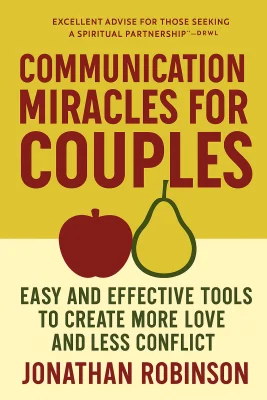
Communication Miracles for Couples
Easy and Effective Tools to Create More Love and Less Conflict
Categories
Nonfiction, Self Help, Psychology, Communication, Relationships, Reference, Audiobook, Marriage
Content Type
Book
Binding
Paperback
Year
2012
Publisher
Conari Press
Language
English
ISBN13
9781573245838
File Download
PDF | EPUB
Communication Miracles for Couples Plot Summary
Introduction
Have you ever felt that frustrating disconnect with your partner—where words seem to make things worse instead of better? You're not alone. Many couples find themselves trapped in cycles of blame, misunderstanding, and hurt feelings despite their genuine love for each other. The problem isn't usually a lack of love but rather how we express (or fail to express) that love through our communication. When communication breaks down, even the simplest disagreement can spiral into painful conflict. But here's the good news: the same communication tools that can inflame tensions can also be transformed into powerful instruments of healing and connection. The techniques in this book represent proven methods that have helped countless couples move from frustration to understanding, from disconnection to intimacy. Whether you're facing serious relationship challenges or simply want to enhance an already good partnership, these practical communication miracles will help you build the safe, loving connection you both desire.
Chapter 1: Acknowledge Feelings to Build Safety and Trust
At the core of every meaningful relationship is the need to feel seen, heard, and understood. When we fail to acknowledge our partner's feelings, we inadvertently create distance. Acknowledgment is like oxygen for relationships—without it, the connection suffocates. This chapter introduces the power of validation and how it serves as the foundation for all successful communication. The Acknowledgment Formula provides a simple but profound framework for validating your partner's experience: "It sounds like you..." (paraphrase what they've expressed), "That must feel..." (reflect the emotion), "I'm sorry you feel..." (express empathy). This structured approach helps bypass the natural tendency to defend or dismiss, allowing your partner to feel truly heard. When people feel acknowledged, their defensive barriers naturally lower. Consider the case of Jill and Bob who came to therapy as a last resort before divorce. They were subtle blamers—they never shouted but constantly undermined each other. When Bob would express his feelings, Jill immediately explained why he was wrong to feel that way. After learning the Acknowledgment Formula, Jill was able to say, "I can see how you've felt blamed by me, and how that must have really hurt. I'm sorry you've felt that way." The transformation was immediate—Bob's eyes filled with tears, and for the first time in months, they genuinely connected. Their downward spiral ended in less than five minutes. This simple shift creates what therapists call psychological safety—the feeling that it's okay to be vulnerable with your partner. Without acknowledgment, people remain guarded; with it, they open up and real intimacy becomes possible. The beauty of acknowledgment is that it doesn't require you to agree with your partner's perspective—only to validate that their experience is real to them. Acknowledgment works because it addresses our universal human need to feel worthwhile. Think of it as making deposits in your partner's "self-esteem bank account." When this account is low, people become defensive or aggressive. By acknowledging feelings first, you help replenish their emotional reserves before attempting to solve problems or express your own views. To master this skill, practice the Acknowledgment Formula in low-stress situations before attempting it during conflicts. Pay attention to your tone of voice and body language, as these often convey more than your words. Remember that acknowledgment is not about fixing problems but creating the safety needed for real solutions to emerge.
Chapter 2: Charm Your Partner's Heart with Loving Actions
Just as everyone has different learning styles, each person has a unique way they need to receive love. Understanding how to "charm your partner's heart"—knowing precisely what makes them feel deeply loved—is like discovering a magic key that unlocks their ability to feel connected to you. This knowledge allows you to create meaningful moments of tenderness instantly, regardless of how busy life becomes. The heart-charming approach begins with a simple truth: the way we prefer to express love is usually how we want to receive it. This misalignment creates countless missed connections. Take Cheryl and her boyfriend, who were unknowingly hurting each other while trying to show love. He frequently gave her shoulder massages because physical touch made him feel loved, while she constantly said "I love you" because words of affirmation were her love language. What he intended as loving care, she experienced as uncomfortable pressure. What she offered as verbal affection, he dismissed as "just words." Through honest conversation, they discovered these fundamental differences. He learned that when she heard the words "I really love you" spoken in a gentle voice, she immediately felt cherished. She discovered that even a brief massage could make him feel completely loved and accepted. Once they understood these differences, they could efficiently create feelings of love in each other. To discover your partner's heart-charming preferences, try this simple exercise: Have them sit comfortably and say, "Close your eyes and think of a specific time you felt really loved by me. Remember where we were, what we were doing, and exactly what happened that let you know I really loved you." After giving them time to fully recall the moment, ask, "What was most important in letting you know I fully loved you? Was it something I said, the way I looked at you, how I touched you, or something else?" This exploration often reveals surprisingly specific details. Jim struggled to make Sarah feel loved until he learned that saying "Honey, I really love you" in a soft, gentle voice brought tears to her eyes every time. The tone and specific words mattered tremendously to her. Similarly, Helena discovered that saying "I'm crazy about you" never failed to make her partner feel completely loved. When you charm your partner's heart, you make deposits into your shared "love account." With abundant love in this account, handling problems becomes much easier. If a disagreement arises, you'll have plenty of emotional reserves to navigate the challenge without feeling bankrupt. Make a commitment to regularly perform the specific actions that make your partner feel deeply loved—even if they seem unusual to you—and watch your relationship transform.
Chapter 3: Create Connection Beyond Words Through Touch
Communication extends far beyond words. Research shows that 93 percent of our communication impact comes through nonverbal cues—tone of voice, facial expressions, body language, and touch. While most communication books focus solely on verbal techniques, mastering nonverbal methods of creating safety and intimacy can dramatically transform your relationship with minimal effort. The first nonverbal technique is disarmingly simple: smile when you first see your partner. A warm smile silently communicates acceptance, appreciation, and safety more effectively than any words. Studies show that simply seeing a smile can trigger positive neurochemical changes in the observer. In one prison study, painting smiley faces inside cells reduced violence by 25 percent. Your partner subconsciously judges your feelings toward them by watching your nonverbal cues, especially your facial expressions when you first encounter each other. Mirroring—subtly matching your partner's body position—creates a powerful subconscious sense of safety and rapport. When David first met his girlfriend's military father, who greeted him with folded arms and a stern demeanor, David instinctively mirrored the man's posture and formal tone. By dinner's end, the father proclaimed David "the finest young man he had ever met," despite his initial skepticism. The psychological principle is simple: we trust people who seem similar to us, and body language creates a powerful subconscious sense of similarity. Caring, nonsexual touch forms the third pillar of nonverbal connection. Laurie and Jeff came to therapy with a perfectly functioning intellectual relationship but no physical passion. They communicated well verbally but rarely touched except during occasional sex. Their therapist prescribed "touch vitamins"—three daily nonsexual touches: hugs lasting longer than ten seconds, massages longer than thirty seconds, feather-light touches through the hair, or gentle caressing. Within a week, their physical connection had transformed completely. Many women complain their partners only touch them when initiating sex, which creates resistance rather than connection. Men who frequently touch their partners in caring, nonsexual ways find their partners become much more interested in sexual intimacy. Women feel safer and more valued when touch isn't always sexualized. Similarly, men need regular affectionate touch—though if their sexual needs aren't being met, they may initially interpret all touch as a sexual invitation. For those wanting to experience profound nonverbal connection, "electric sex" offers a remarkable experience. Despite the name, it involves no sexual touching: partners sit facing each other, holding hands, maintaining eye contact, and breathing in sync for at least five minutes. This practice creates a deep energetic connection that many couples report feels as intense as profound lovemaking. Though simple to describe, the experience can be transformationally intimate. By consciously incorporating these nonverbal techniques—smiling, mirroring, nonsexual touch, and synchronized breathing—you access communication channels that often prove more powerful than words alone in creating safety, trust, and love.
Chapter 4: Transform Blame into Understanding and Compassion
When couples communicate, they often reach a critical crossroads: will they choose to be right or to be loved? This seemingly simple choice shapes the entire trajectory of their relationship. Blame—the insistence on being right while making your partner wrong—acts as a slow-acting poison that can eventually contaminate even the deepest love. Conflict itself isn't the problem. In fact, well-managed disagreements can actually strengthen relationships. The real relationship killer is blame. When we're convinced we're right, everything we say comes out wrong because our partner's "blame detector" goes off, immediately shutting down their ability to hear us. This chapter presents powerful techniques to escape the blame trap. The WILL WISE questions provide a practical framework for shifting from blame to understanding. When feeling righteously angry, ask yourself: "What Is Likely to happen if I insist on being right?" "Would I Like to feel Loved or be right?" and "What Is Something I Especially like about my partner?" These questions help redirect your mind from winning the argument to reconnecting emotionally. Consider Jonathan's experience with his partner Helena, who was late for an important event where he was speaking. By the time they left, he was furious and convinced he was completely right. When his initial blame triggered her defensiveness, he remembered to ask himself the WILL WISE questions. Reflecting on what would happen if he continued blaming (a ruined evening and poor speech performance), whether he'd rather feel loved than right (reluctantly yes), and what he appreciated about Helena (her shoulder rubs, her excitement when he came home), he felt a trickle of love return. He reached his finger toward her hand, she responded with her finger, and soon they were holding hands, the anger dissolved. By the time they arrived, they were "like newlyweds." The Contribution Question offers another powerful way to escape blame: "How might I have contributed to the situation we have here?" This question disrupts your mind's automatic assignment of fault to your partner. When Helena forgot to pick up Jonathan's package despite his reminders, his first response was self-righteousness. But after asking the Contribution Question, he realized he hadn't written a reminder note, hadn't considered her busy schedule, and hadn't been attentive to her needs lately. This realization transformed his anger into understanding and compassion. These techniques aren't about denying your feelings or accepting mistreatment. Rather, they help you escape the trap of self-righteousness that blocks genuine connection. When you feel intensely angry and unwilling to let go of being right, it's better to take a timeout—perhaps even having a private "tantrum" with pillows—than to speak from blame. The choice between being right and being loved presents itself in nearly every relationship conflict. By consistently choosing connection over correctness, you build a foundation of trust and understanding that can weather any disagreement.
Chapter 5: Navigate Conflicts with the Spoon Tune Method
Arguments begin when one or both partners dip below a certain level in their "self-esteem bank account." The reasons can be anything—a bad day, a snide comment, or simply a lousy mood. Once we feel bad, we instinctively look for someone to blame, and our partner makes an easy target. This chapter reveals why couples argue and provides two remarkably effective methods to prevent arguments entirely. The Spoon Tune method originated from a simple observation: when we're upset, we behave like bratty babies—and babies calm down when held. The technique has just two simple steps: First, at the earliest sign of upset, lie down with your partner in the "spoon" position (one person's front side hugging the other's back side). Second, breathe in unison for at least four minutes without talking. This combination of physical connection and synchronized breathing creates a neurological sense of safety that quickly diffuses tension. Jonathan describes using this method with Helena when he was "absolutely certain" he was right and she was wrong. Although reluctant to spoon when angry, they had agreed that refusing would require ripping up a $10 bill. As they spooned and breathed together, his internal monologue gradually shifted from "She is being such a bitch!" to "It wasn't really that big of a deal" to "What we share together is really very special." After four minutes, he couldn't even remember what they'd been arguing about. For the Spoon Tune to work effectively, couples need an ironclad agreement to use it whenever either partner requests it—ideally with a small consequence for refusing. It's also crucial that no talking occurs during the spooning, as conversation often reignites the argument. The method works because it bypasses the rational mind and connects people physically and energetically, reminding them they're on the same team. The "And What Else?" technique offers an alternative approach for partners who prefer talking through emotions. When one person is upset, the listener says nothing except "And what else?" during pauses in their partner's speaking. This creates a safe space for the upset person to fully express themselves without interruption or defense. Only when they declare "I'm done" can the listener request a turn to speak. In one example, Jenny began by angrily accusing Joe of treating her "like a maid." As Joe repeatedly asked "And what else?" without defending himself, Jenny moved beyond her initial blame to express her deeper needs: "I want to feel special... I want us to share special moments again... I don't want to nag you or blame you. I just want us to care more about each other." This technique works because it allows people to peel away the outer layer of anger to reveal the vulnerable feelings underneath. By creating safety through not resisting or interrupting your partner's emotions, you make it impossible for them to maintain an adversarial position. These simple yet powerful techniques can transform how couples handle conflicts. By agreeing to use them before tensions escalate, you can create a relationship where arguments become rare or nonexistent, replaced by deeper understanding and connection.
Chapter 6: Express Your Vulnerable Truth Without Triggering Defenses
The word "intimacy" contains its own definition: in-to-me-see. True connection happens when we allow ourselves to be vulnerable and show our partner how we truly feel. Yet most people struggle to express vulnerability in ways that actually bring them closer rather than triggering defensiveness. This chapter introduces a powerful method called "I feel/I want" that helps create deep connection without activating your partner's blame detector. When David tried to express his feelings about Marcia slamming doors during arguments, he said, "I feel she has a problem, and I want her to stop getting upset like that." This subtle form of blame immediately triggered Marcia's defenses. The "I feel/I want" method provides a more precise structure: "When you (briefly describe situation), I feel (sad, hurt, afraid, or impatient) because I (explain the psychological need you have). What I want is (describe the precise action you would like)." The method recommends using only four specific emotion words—sad, hurt, afraid, or impatient—because other terms like "angry," "frustrated," or "devastated" often trigger defensiveness. For example, instead of saying "I feel angry because you're insensitive," you might say, "When you watch TV when you come home after work, I feel hurt because I have a need for you to hug me when you first come home." The power of this approach became evident when Marcia needed to discuss David's past affair. Her first attempt—"I feel outraged that you could be so cold-hearted!"—immediately triggered his defensiveness. With coaching, she tried again: "I feel deeply hurt and afraid because I love you a lot, and I'm afraid to lose you." This vulnerable truth moved David to tears as he responded, "I am so sorry I hurt you. I'm here because I love you—so we can work through this. I don't ever want to leave you." They embraced as if saved from a burning building. The second half of the formula involves expressing what you want with precision. Vague requests like "I want you to be more affectionate" typically trigger defensiveness. Instead, specific requests like "I want you to hug me when you first come home" give your partner clear direction. Compare these blaming statements with their vulnerable translations: "I am fed up with having to clean up after the messes you make." Translation: "When you leave dishes in the sink, I feel hurt because I need to know you respect me, and I interpret your not doing your dishes as a sign you don't appreciate me." "All you care about is your own sexual needs." Translation: "When you rush through foreplay, I feel hurt and impatient because I want to be able to share sexual pleasure with you, and I haven't had enough experience of doing that lately." Jonathan recounts using this method when he misled Helena about a class he'd signed up for. Instead of being a cooking class about peppers as she expected, it was actually a self-defense class about pepper spray at a gun shop—something Helena strongly opposed. With only minutes before the class, he said: "I feel afraid because I want you to do a big favor for me, and it's hard for me to ask when I think you might be upset with me. I forgot to tell you this is really a class on pepper spray. I'm sorry I misled you. I understand you don't like gun shops, yet I feel so much love for you that I can't bear the thought of anything happening to you. Would you be willing to take this class? It would help me feel less anxious when you hike alone." This vulnerable communication transformed Helena's anger into understanding, and she took the class—which proved fortunate when she encountered a threatening situation while hiking the following week. By speaking your vulnerable truth without blame, you create the safety necessary for deep connection and mutual understanding.
Chapter 7: Negotiate Solutions That Work for Both Partners
In today's relationships, the old rulebook about who does what has largely disappeared. Without culturally defined standards, couples must create their own agreements about everything from finances to parenting. This chapter reveals how to negotiate solutions that satisfy both partners, permanently resolving issues rather than rehashing the same conflicts repeatedly. The process begins with understanding that every person has unique, often unspoken "rules" about how things should be done. These different rules—regarding money, sex, communication styles, and dozens of other areas—create conflict when not addressed. For example, one partner might believe "If you love me, you'll spend five nights a week having quality time together," while the other thinks "If you love me, you'll give me space to pursue my interests." Frank and Cindy had argued about money management for twenty-five years without resolution. Using the A-PI-SWAPED negotiation method (Appreciation, Positive Intention, Say What the problem is, Ask Partner for solutions, Work out an Experimental solution, Declare your agreement), they finally created a workable compromise. Despite initial difficulty staying on track—Cindy started with "The problem is Frank has a problem with money"—they eventually clarified their real needs: she wanted some financial autonomy without constant questioning, while he needed assurance they were saving adequately for retirement. After clarifying these underlying needs, they negotiated an agreement: Frank would maintain primary control of finances but give Cindy $50 weekly for discretionary spending. She wouldn't use credit cards without permission or write checks over $100 without consultation. They would review their savings together and plan a vacation if their financial situation looked solid. This one agreement transformed their marriage—reducing money arguments from several times weekly to almost never. The key question in this process is: "Considering what we each want here, what do you propose might work better for both of us?" This question steers the conversation away from blame toward practical solutions. For negotiations to succeed, partners must be more committed to finding solutions than to proving themselves right. Jonathan describes using this approach to resolve a recurring issue with Helena. When upset, he would exaggerate problems while she would immediately offer solutions—a combination that only increased his frustration. Through the negotiation process, they discovered he needed empathy and validation when upset, not problem-solving. Their simple agreement—that Helena would offer empathy first rather than solutions—eliminated a persistent source of tension. The experimental nature of these agreements is crucial—knowing you can renegotiate reduces the fear of commitment to a solution. Most couples find that even imperfect agreements dramatically improve their relationship by eliminating recurring conflicts. Through continued negotiation, solutions can be refined until they work well for both partners. These negotiated agreements create a foundation of predictability and safety in relationships. Rather than feeling burdened by problems, couples who master this skill experience the lightness and joy that comes from knowing they can successfully navigate any challenge together.
Summary
Throughout this book, we've explored communication methods that transform relationship struggles into opportunities for deeper connection. These techniques aren't merely nice ideas—they're practical tools that have helped countless couples repair trust, navigate conflicts, and rediscover the joy of being together. As Jonathan Robinson writes, "When you learn to communicate with less blame and more understanding, things can get much better than you'd ever imagined." The journey toward better communication begins with a simple yet profound shift in perspective. Rather than focusing on being right, focus on creating safety and understanding. Practice acknowledging feelings, charming your partner's heart, and expressing your vulnerable truth without triggering defenses. Start today by choosing just one technique from this book—perhaps the Acknowledgment Formula or the Spoon Tune method—and commit to using it consistently for one week. Watch how this small change creates ripples of positive transformation in your relationship, bringing you closer to the love and connection you both desire.
Best Quote
Review Summary
Strengths: The review highlights several effective communication strategies for improving relationships, such as the power of a warm smile, the importance of specific appreciation, and the benefits of understanding over self-justification. It emphasizes the value of acceptance and non-resistance in resolving conflicts and enhancing mutual understanding.\nOverall Sentiment: Enthusiastic\nKey Takeaway: The review suggests that effective communication in relationships involves warmth, acceptance, and specific appreciation. By focusing on understanding and supporting each other, partners can overcome adversarial positions and foster a more harmonious and loving relationship.
About Author

Jonathan Robinson
Robinson reframes the landscape of personal development and psychotherapy by intertwining practical methods with profound insights. His work focuses on enhancing human relationships and spiritual enlightenment, reaching over 200 million people worldwide. The author's purpose is clear: to make complex psychological and spiritual concepts accessible and actionable. Robinson's books, such as "Communication Miracles for Couples," highlight his dedication to improving communication and reducing conflict, while "The Enlightenment Project" delves into personal transformation through interviews with spiritual luminaries.\n\nHis approach combines practical advice with engaging storytelling, offering readers the tools to enhance personal growth and find joy. By integrating scientific and technological approaches into his works, Robinson situates himself as a transformative figure in the self-help genre. His book "The Technology of Joy" exemplifies this blend, providing readers with insights into apps, gadgets, and tools that enhance well-being. Meanwhile, Robinson's engagement with major corporations and his podcast "Awareness Explorers" further extend his impact, offering audiences both humor and gravitas.\n\nThis bio highlights Robinson's influence on a diverse audience, ranging from individuals seeking personal growth to professionals in corporate settings. His literary style ensures that readers, regardless of their background, can benefit from his insights. By merging his psychotherapy background with a focus on spirituality, Robinson charts a unique path in the realm of personal development. Through his works and speaking engagements, he continues to inspire a journey toward a more enlightened and connected existence.
Read moreDownload PDF & EPUB
To save this Black List summary for later, download the free PDF and EPUB. You can print it out, or read offline at your convenience.
Communication Miracles for Couples
by Jonathan Robinson
