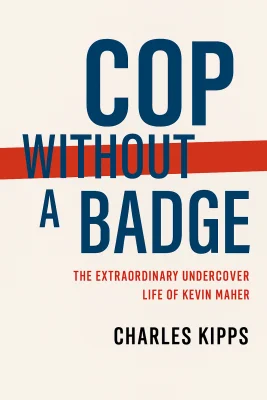
Cop Without a Badge
The Extraordinary Undercover Life of Kevin Maher
Categories
Nonfiction, Biography, True Crime, Crime
Content Type
Book
Binding
Paperback
Year
2009
Publisher
Scribner
Language
English
ISBN13
9781439177112
File Download
PDF | EPUB
Cop Without a Badge Plot Summary
Introduction
# Badge without Authority: The Confidential Informant's Journey In the gritty streets of 1970s New York, where the line between cop and criminal often blurred in the shadows of urban decay, Kevin Maher's story began with a stolen car and a high-speed chase that would forever alter the trajectory of his life. What started as a seventeen-year-old's reckless joyride through the Bronx evolved into something far more complex—a two-decade journey through the dangerous underworld of confidential informants, where survival depended on the ability to seamlessly navigate between criminal enterprises and law enforcement operations. Maher's transformation from convicted felon to one of the most effective informants in New York's history reveals the extraordinary possibilities for redemption that exist within America's criminal justice system. Through Maher's experiences, readers will discover the psychological complexity of living a double life, where maintaining multiple identities becomes both an art form and a survival mechanism. His story illuminates the intricate relationships between informants and their handlers, the moral ambiguities inherent in undercover work, and the personal costs of serving justice from the shadows. From his early encounters with organized crime figures to his dangerous infiltration of Colombian drug networks, Maher's journey offers unprecedented insight into a world where trust is currency, deception is survival, and the difference between hero and villain often depends on which side of the badge you're standing on.
Chapter 1: From Car Thief to Prison: Early Brushes with the Law
Kevin Maher's descent into the criminal justice system began on a cold November night in 1971, when the seventeen-year-old Irish kid from the Bronx made a decision that would haunt him for years to come. Behind the wheel of a stolen 1969 Plymouth Roadrunner Hemi, Maher embodied the restless energy of countless teenagers in the economically ravaged Bronx, where stealing cars had become a twisted rite of passage. Unlike his peers who stole vehicles for mere joy rides, however, Maher possessed a sophisticated understanding of VIN numbers and the automotive shell game that could transform stolen property into seemingly legitimate vehicles. The chase that ensued would become legendary in law enforcement circles—a hundred-mile odyssey from the Bronx to the Catskill Mountains at speeds exceeding 140 miles per hour. Through five New York counties, past shattered toll booths and roadblocks, Maher demonstrated a skill behind the wheel that was both breathtaking and terrifying. When state troopers opened fire, bullets slamming into the trunk and shattering the rear window, the teenager pressed on through the darkness, his headlights destroyed, navigating by instinct and adrenaline alone. The aftermath revealed the harsh realities of a justice system that could be both arbitrary and unforgiving. Despite having no prior record and being a minor, Maher received a four-year sentence that shocked even seasoned attorneys. The punishment seemed disproportionate to the crime, but it reflected the political ambitions of Bronx District Attorney Burton Roberts, who treated every case as if he were pursuing Public Enemy Number One. Maher's alcoholic lawyer proved woefully inadequate, and the young man found himself trapped in a system that seemed designed to crush rather than rehabilitate. Prison became Maher's unwilling university, where he learned lessons that no classroom could teach. At Rikers Island, he earned the nickname "Dirty Red" after a vicious fight that established his reputation among hardened criminals. The experience of incarceration at such a young age left deep psychological scars, but it also revealed an inner strength and resilience that would serve him well in the dangerous years ahead. When his father died of heart complications while Maher was still behind bars, the young man's world shattered completely, leaving him with a profound sense of guilt and loss that would drive many of his future decisions. The prison years also introduced Maher to figures who would later play crucial roles in his story, including Morris Weiss, the aging Murder, Inc. operative who took a liking to the young Irishman. These relationships would eventually provide Maher with his first opportunities to work with law enforcement, setting the stage for a career that would define the rest of his life. By the time he walked out of Coxsackie Correctional Facility in August 1974, Maher had been transformed from a reckless teenager into someone far more complex and dangerous.
Chapter 2: Becoming Informant: Partnership with Sergeant Doherty
The meeting between Kevin Maher and Detective Sergeant Jim Doherty in May 1975 marked the beginning of one of the most unlikely and significant partnerships in law enforcement history. Doherty, a veteran investigator with clear blue eyes and an Irish smile, possessed none of the cynicism that Maher had come to expect from cops. Instead, he exhibited a fatherly demeanor that immediately disarmed the young ex-convict who had grown accustomed to viewing law enforcement as the enemy. When Maher desperately needed help getting to a parole hearing at Green Haven Prison, Doherty didn't just make promises—he delivered, driving four hours upstate on Memorial Day weekend to ensure that justice was served. This act of unexpected kindness created a bond that transcended the typical informant-handler relationship. Doherty saw something in Maher that others had missed—not just potential, but a fundamental decency that had been obscured by circumstances and poor choices. The veteran detective had built his career on the principle of giving people second chances, and his willingness to trust Maher with increasingly dangerous assignments reflected a faith that few in law enforcement would have shown. When Doherty told Maher to "do the right thing," he wasn't issuing an order but rather appealing to the young man's conscience in a way that proved far more effective than threats or coercion. Maher's initial contributions to Doherty's cases revealed both his street smarts and his growing commitment to redemption. The recovery of a stolen Persian rug led to more significant operations, including the infiltration of organized crime figures and the exposure of murder-for-hire plots. Each successful operation built Maher's confidence and deepened his relationship with Doherty, who treated him not as a disposable asset but as a valued partner in the fight against crime. The detective's willingness to go to bat for Maher—getting charges dropped, arranging bail reductions, and providing emotional support—created a loyalty that would endure for decades. The partnership also revealed the complex moral landscape that informants must navigate. Maher found himself in situations where he had to betray the trust of criminals who considered him a friend, while simultaneously risking his life to gather evidence for law enforcement. The psychological toll of this double life was immense, but Doherty's steady presence provided an anchor of stability and purpose. The detective understood that Maher's effectiveness came not just from his criminal connections, but from his genuine desire to make amends for his past mistakes. Perhaps most importantly, Doherty gave Maher something he had never experienced before—unconditional support from a father figure. The detective's belief in Maher's potential for good became a self-fulfilling prophecy, transforming a bitter ex-convict into someone willing to risk everything for the cause of justice. This transformation would be tested repeatedly in the dangerous years ahead, but the foundation laid by Doherty's trust and mentorship would prove unshakeable, providing the moral compass that would guide Maher through the treacherous waters of his undercover career.
Chapter 3: Undercover Operations: The Dangerous Double Life
The world of undercover operations thrust Maher into a realm where survival depended on split-second decisions and the ability to maintain multiple identities simultaneously. Wearing a wire while meeting with dangerous criminals required nerves of steel and an actor's ability to project confidence while fighting internal terror. When mobsters patted him down during crucial meetings, Maher's heart pounded as their hands came dangerously close to hidden microphones, knowing that discovery would mean certain death. The constant threat of equipment malfunction added another layer of danger, leaving his handlers blind and helpless when technical failures occurred at the worst possible moments. Each operation brought new challenges and escalating risks that tested Maher's psychological limits. Convincingly portraying a contract killer willing to murder for money required him to inhabit roles that demanded the suppression of his natural empathy and moral instincts. The psychological strain of maintaining such personas took its toll, forcing Maher to compartmentalize his emotions and develop an almost schizophrenic ability to switch between identities. Yet these performances were crucial to building cases that would ultimately save lives and remove dangerous criminals from the streets. The complexity of maintaining cover stories while navigating the criminal underworld demanded constant vigilance and an encyclopedic memory for details. Maher had to remember not just his own fabricated identity, but also the intricate web of relationships and rivalries that existed among the criminals he encountered. A single mistake—using the wrong name, forgetting a crucial detail, or displaying knowledge he shouldn't possess—could expose him as an informant and trigger violent retaliation. The stress of this constant performance created a hyperawareness that became both his greatest asset and his heaviest burden. Perhaps most challenging was extracting confessions from disturbed killers whose actions disgusted him while maintaining the facade of friendship and understanding. The detailed accounts of brutal murders that suspects provided—their casual descriptions of beating victims to death—left Maher sickened but determined to see justice served. The successful prosecutions that followed validated the importance of his work, even as they highlighted the emotional cost of such operations and the psychological damage inflicted by prolonged exposure to human evil. The isolation inherent in living a double life created barriers between Maher and those he loved most. Unable to share the details of his work with family and friends, he became increasingly disconnected from normal human relationships. The excitement and danger of undercover operations became addictive, providing an adrenaline rush that normal life couldn't match. This addiction to danger would prove to be one of Maher's greatest weaknesses, repeatedly drawing him back into situations that threatened not only his safety but also his relationships and his future stability.
Chapter 4: Personal Relationships: Romance, Family, and Loyalty
The relationship between Kevin Maher and Elizabeth Eschert began under circumstances so unusual they bordered on the surreal—she was the wife of a convicted contract killer, and Maher had been instrumental in securing her husband's conviction. Their initial attraction, sparked during a prison visit, developed slowly as Maher helped maintain the Fair Lawn home where Beth struggled to understand her husband's true nature. Beth's intelligence and warmth drew Maher in, while her vulnerability as a single mother awakened protective instincts that had been dormant since his own troubled childhood. The bizarre blessing that Robert Eschert gave to their relationship—actually encouraging Maher to care for his wife's needs during his imprisonment—created a moral complexity that haunted both lovers. Maher struggled with the knowledge that he had helped convict the father of Beth's child, while Beth grappled with the realization that the man she had married was a remorseless killer. Their love affair became a form of mutual healing, two damaged souls finding solace in each other's arms while trying to build something positive from the wreckage of their pasts. Bobby Eschert's acceptance of Maher as a father figure added another layer of complexity to their unconventional family. The boy, hungry for male attention and guidance, embraced Maher wholeheartedly, calling him "Dad" and proudly taking his surname. For Maher, who had grown up without a stable father figure himself, the opportunity to be the parent he had always needed became one of the most rewarding aspects of his new life. Teaching Bobby about cars, helping with homework, and simply being present for the daily moments of childhood gave Maher a sense of purpose that his undercover work, however important, could never provide. The decision to relocate and start fresh represented their commitment to building a legitimate life together. Moving to Wood-Ridge, finding stable employment, and creating a normal suburban existence seemed to offer the possibility of escaping their troubled pasts. Beth's career success at various magazines provided financial stability, while Maher's work with the railroad offered the steady income and benefits that came with legitimate employment. For a time, they achieved something approaching domestic bliss, complete with a German shepherd named Samantha and dreams of homeownership that seemed within reach. However, the shadows of their past never fully disappeared, and the brutal murder of Alice Molese served as a stark reminder of the violence that had touched their lives. Beth's growing distance from her imprisoned husband and eventual divorce represented a final break with that dark chapter, but the trauma of those experiences left lasting scars. Maher's inability to completely abandon his undercover work created persistent tension in their relationship, as Beth recognized the addictive nature of the danger and excitement he craved. The delicate balance they had achieved would be repeatedly tested by Maher's choices and the inevitable consequences that followed.
Chapter 5: Working the Streets: Major Cases and Crime Networks
Maher's return to active informant work in the early 1980s revealed how dramatically the criminal landscape had evolved during his brief retirement from undercover operations. The auto theft rings he infiltrated were no longer simple chop shops but sophisticated networks with corporate-like structures and interstate connections that challenged traditional law enforcement approaches. Anthony Marconi's operation in Belleville, New Jersey, represented the new breed of criminal enterprise—professional, well-organized, and seemingly impenetrable to conventional investigative techniques. Maher's ability to gain access to these closed circles demonstrated both his enduring street credibility and his evolving skills as an undercover operative. The collaboration with FBI Agent Bob DeBellis marked a new phase in Maher's career, bringing federal resources and expertise to bear on increasingly complex cases. DeBellis's willingness to honor his financial commitments, even when other agencies claimed credit for successful operations, established a trust that would prove crucial in future investigations. The agent's professional approach and fair dealing contrasted sharply with some of Maher's previous experiences with law enforcement bureaucracy, reinforcing his belief that there were still honest cops worth risking his life for. The Ciasullo case presented unique challenges that tested Maher's abilities in entirely new ways, requiring him to navigate the dangerous intersection between street crime and organized criminal enterprises. The attempted robbery of an off-duty police officer who moonlighted as a jeweler revealed the interconnected nature of criminal networks, with tentacles reaching from street-level thieves to organized crime figures. Maher's successful infiltration of the robbery crew and his ability to extract detailed confessions from the participants demonstrated his growing sophistication as an investigator and his remarkable talent for gaining the trust of suspicious criminals. However, the case also highlighted the political complexities and jurisdictional jealousies that could complicate even the most successful law enforcement efforts. The suspicion directed at Maher by Queens Chief of Detectives Michael Willis reflected the institutional skepticism that many veteran cops felt toward informants, regardless of their track record or contributions. Despite passing a polygraph test and providing evidence that led to successful prosecutions, Maher found himself fighting for credibility and respect within the law enforcement community that he had served faithfully for years. The success of these operations established Maher's reputation as one of the most effective confidential informants in the New York metropolitan area, with multiple agencies competing for his services. His ability to gain the trust of criminals while maintaining his cover, combined with his exceptional skill at extracting incriminating statements and evidence, made him a valuable asset whose services were in constant demand. However, this success came at an increasingly steep personal cost, as the constant danger and deception took a mounting toll on his relationships and his psychological well-being, creating an identity crisis that would have profound consequences for his future.
Chapter 6: Addiction and Temptation: The Cocaine Years
The introduction of cocaine into Maher's life in 1983 marked a devastating turning point that would nearly destroy everything he had worked to build over the previous decade. What began innocuously as a gift from John Uribe, a young Colombian involved in money laundering operations, quickly evolved into a dangerous habit that compromised Maher's judgment and threatened the stability of his relationships. The drug's initial euphoric effects masked its insidious nature, and Maher found himself drawn deeper into a world where the lines between law enforcement and criminality became increasingly blurred and ultimately meaningless. The relationship with Uribe exemplified the complex moral compromises that characterized this darkest period of Maher's life. While ostensibly maintaining his role as a legitimate businessman and part-time informant, Maher became deeply involved in money laundering operations that put him squarely on the wrong side of the law he had sworn to serve. His rationalization that he was merely changing small bills for large denominations, rather than truly laundering drug money, demonstrated the kind of self-deception that addiction inevitably produces. The easy money and constant supply of high-quality cocaine created a lifestyle that was both seductive and ultimately unsustainable. The transformation in Maher's behavior was both dramatic and deeply troubling to those who knew him best. The man who had once risked his life to help law enforcement began consorting openly with drug dealers and engaging in criminal activities that would have horrified his younger self. His infidelity to Beth, facilitated by cocaine-fueled encounters with women he met in the drug world, represented a betrayal of the values and relationships that had anchored his life during his period of stability. The drug's stimulant effects kept him awake for days at a time, while its psychological impact eroded his moral compass and clouded his decision-making abilities. The physical and emotional toll of escalating cocaine use became increasingly apparent as Maher's habit spiraled out of control. Chest pains and anxiety attacks forced him to seek medical attention, though he remained unable to be honest with doctors about the true cause of his symptoms. His extended sick leave from legitimate work provided more opportunities to engage in drug-related activities, creating a downward spiral that threatened to consume everything he had worked to achieve. The financial pressures created by his reduced income made the money from laundering operations even more tempting, despite the obvious risks to his freedom and safety. Perhaps most tragically, Maher's cocaine use began to affect his relationship with Bobby, the young man he had helped raise as his own son and who represented his greatest achievement in building a normal family life. The boy's exposure to the drug culture through Uribe's frequent presence in their lives represented a profound failure of Maher's responsibilities as a father figure. The expensive gifts and attention that Uribe showered on Bobby, including motorcycles and other presents, created a dangerous association between criminal activity and material rewards. This period of Maher's life demonstrated how addiction could corrupt even the strongest bonds and most cherished relationships, threatening to destroy the family he had worked so hard to build and protect.
Chapter 7: Seeking Legitimacy: The Struggle for Identity
The constant tension between Maher's desire for legitimacy and his addiction to the excitement of undercover work created a psychological battleground that defined much of his adult existence. His repeated attempts to maintain steady employment with the railroad were consistently undermined by his inability to resist the call of law enforcement operations that promised both financial rewards and the adrenaline rush he had come to crave. The harassment he faced from petty supervisors, including arbitrary rules and discriminatory treatment, reflected the broader challenges that ex-convicts faced in trying to build legitimate careers in a society that rarely offered genuine second chances. The purchase of increasingly expensive and powerful automobiles represented Maher's attempt to channel his need for excitement and status into legal activities that wouldn't compromise his relationships or freedom. His succession of Corvettes became both symbols of his success and outlets for his competitive nature, allowing him to dominate the drag racing scene while maintaining a veneer of respectability. However, even this seemingly innocent hobby became corrupted by his associations with drug dealers and criminals, as the money for automotive modifications often came from questionable sources that undermined his efforts at legitimacy. Maher's relationship with law enforcement remained complicated throughout this period, as he struggled to maintain his identity as someone who helped rather than hindered the cause of justice. His work with various agencies provided a sense of purpose and validation that his regular job could never match, but it also exposed him to constant danger and moral ambiguity that took an increasing psychological toll. The respect and trust he earned from detectives and FBI agents represented the kind of recognition he desperately craved, but it came at the cost of living a double life that isolated him from normal relationships and experiences. The financial rewards of informant work, while modest compared to what he could have earned through criminal activities, provided important validation of his worth and contributions to society. However, the irregular nature of these payments and the political complexities that sometimes prevented compensation created additional stress and uncertainty in his already chaotic life. Maher's insistence on being paid for his services reflected not just financial need but also a deeper desire for recognition and respect from the law enforcement community that had once viewed him as nothing more than a disposable criminal. The ongoing struggle to define himself—as a criminal, a cop, or something entirely different—created an identity crisis that would persist throughout Maher's life and ultimately define his legacy. His genuine desire to help law enforcement and protect innocent people conflicted with his attraction to the criminal world and its promise of easy money and excitement. The relationships he formed on both sides of the law complicated his ability to choose a clear path forward, as he found himself caring deeply about people whose interests were fundamentally opposed to each other. This internal conflict, exacerbated by his cocaine use and the pressures of maintaining multiple identities, would continue to shape his choices and define his character in the years to come.
Summary
Kevin Maher's extraordinary journey from teenage car thief to one of law enforcement's most effective confidential informants reveals the complex interplay between redemption and temptation that defines the human condition. His story demonstrates that people are capable of profound transformation when given the opportunity and support they need, but also shows how easily those changes can be undermined by poor choices, addictive behaviors, and the seductive appeal of danger and excitement. Through his relationship with Detective Sergeant Jim Doherty and his dangerous work infiltrating criminal organizations, Maher found a way to transform his troubled past into a force for justice, even as he struggled with personal demons that threatened to destroy everything he had built. The lessons from Maher's life speak to the importance of second chances and the transformative power of mentorship in helping people overcome their past mistakes and find meaningful purpose. His story also serves as a cautionary tale about the psychological costs of living a double life and the way that the pursuit of excitement and validation can lead even well-intentioned people astray. For readers interested in crime, law enforcement, or stories of personal transformation, Maher's journey offers both inspiration and warning about the choices that define our character and ultimately determine our fate in an unforgiving world.
Best Quote
Review Summary
Strengths: The book is described as a fast-paced, interesting, and exciting read, with a compelling narrative that is hard to put down. It provides a fascinating insight into the life of Kevin Maher, a former criminal turned police informant. The story is engaging for those interested in crime and law enforcement themes, akin to "The Fast and the Furious" or "The Sopranos." Weaknesses: Some readers found the content unsettling, particularly the detailed crime cases, leading to discomfort. There is also a sentiment that the book's connection to "The Real Housewives of New Jersey" was overstated, with minimal relevance to the show's characters. Overall: The general sentiment is positive, with readers finding the book entertaining and engaging. It is recommended for those interested in crime stories, though some may find the content intense. The book's association with "The Real Housewives of New Jersey" may not meet all expectations.
About Author

Charles Kipps
Kipps delves into the intersection of crime, music, and psychological intrigue, crafting narratives that offer more than mere entertainment. His works often delve into the complex world of law enforcement and espionage, revealing an affinity for character-driven stories with deep cultural backdrops. This thematic interest is vividly illustrated in his Conor Bard Mysteries, where the protagonist, an NYPD detective with musical aspirations, navigates crime-ridden narratives. Meanwhile, Kipps' book "Absolute Threshold" introduces readers to a CIA psychiatrist, merging psychological insights with espionage to create a gripping thriller. \n\nHis methodical approach to storytelling incorporates authentic procedural details and psychological depth, thereby enriching the reader’s experience. By integrating music and cultural references, Kipps offers a multifaceted exploration of his characters' worlds, enhancing the thematic complexity of his narratives. This approach resonates with readers who appreciate a layered storytelling style that prioritizes both plot and character development. Therefore, his works not only entertain but also engage audiences with a rich tapestry of themes, making his books appealing to fans of crime and mystery genres.\n\nKipps' recognition in the industry is underscored by several prestigious awards, including an Emmy and an Edgar Award, highlighting his significant impact across multiple media platforms. His contributions to television and film further demonstrate his versatility, as he has written and produced for renowned projects like "Exiled: A Law & Order Movie" and "Fat Albert: The Movie". For those interested in a detailed exploration of crime and cultural dynamics, Kipps' bio and body of work offer insightful perspectives and a profound understanding of narrative construction.
Read moreDownload PDF & EPUB
To save this Black List summary for later, download the free PDF and EPUB. You can print it out, or read offline at your convenience.
Cop Without a Badge
by Charles Kipps
