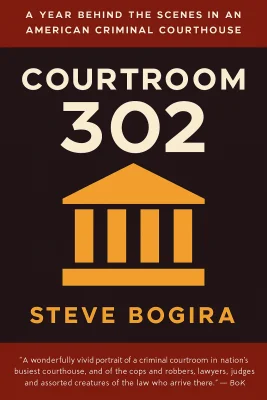
Courtroom 302
A Year Behind the Scenes in an American Criminal Courthouse
Categories
Nonfiction, Memoir, Politics, Sociology, True Crime, Law, Social Justice, Journalism, Crime, Drugs
Content Type
Book
Binding
Paperback
Year
2006
Publisher
Vintage
Language
English
ASIN
0679752064
ISBN
0679752064
ISBN13
9780679752066
File Download
PDF | EPUB
Courtroom 302 Plot Summary
Introduction
# Justice on Trial: Inside America's Broken Courts Every morning at 9 AM sharp, the metal doors of Cook County's Criminal Court building swing open to reveal a scene that would shock most Americans. Hundreds of defendants in orange jumpsuits shuffle through corridors that smell of disinfectant and desperation, while their families clutch crumpled bail money and pray for mercy from judges they've never met. This is where justice happens in America—not in the pristine courtrooms of television dramas, but in overcrowded facilities where human lives are processed with assembly-line efficiency. What unfolds behind these courthouse doors challenges everything we believe about equal justice under law. Through unprecedented access to judges, prosecutors, defendants, and their families, you'll discover how race and poverty shape verdicts more than evidence, why innocent people plead guilty to crimes they didn't commit, and how political pressures corrupt the pursuit of truth. You'll witness the daily moral calculations that judges make when choosing between justice and efficiency, understand how systemic failures create wrongful convictions even in cases with strong safeguards, and gain insight into what genuine reform would require. Most importantly, you'll come to appreciate that justice is not a mechanical process but a deeply human endeavor, shaped by the courage or cowardice of individuals who hold extraordinary power over ordinary lives.
Chapter 1: The Assembly Line: When Speed Trumps Justice
Larry Bates crosses his fingers on both hands as he climbs the courthouse steps at dawn, a superstitious ritual he performs before every court appearance. The forty-four-year-old crack addict knows that in a few hours, Judge Daniel Locallo will decide whether he goes home or to prison, and the outcome will depend less on the evidence than on factors completely beyond his control—the judge's mood, the jail's overcrowding, the prosecutor's caseload that day. When Bates finally stands before Locallo for violating probation, the entire proceeding takes less than three minutes. "Do you wanna be able to leave this courtroom?" the judge asks without looking up from his paperwork. Bates stammers a yes, receives another court date, and glides out amazed at his luck. This scene repeats itself thousands of times daily across America's criminal courts, where defendants' futures hang on brief encounters with overworked judges processing dozens of cases each morning. The bond hearing, supposedly a careful weighing of flight risk and public safety, becomes a rapid-fire assembly line where life-altering decisions are made in seconds based on incomplete information. Judges spend perhaps two minutes per defendant while determining whether they'll sleep in jail or at home for months while their cases crawl toward resolution. The system's relentless focus on efficiency reveals a fundamental truth about American justice: speed has become more important than accuracy. When judges are evaluated primarily on how many cases they dispose of rather than how well they serve justice, the incentives become dangerously misaligned. Every defendant deserves careful consideration of their individual circumstances, but crushing caseloads make such deliberation a luxury few can afford. What makes Bates's story particularly troubling is how it illustrates the random nature of criminal justice outcomes. Had he appeared before a different judge, or had Locallo been in a different mood, or had the jail been less crowded, his fate might have been entirely different. In a system that processes human lives with industrial efficiency, luck becomes as important as law, and the promise of equal treatment becomes a cruel fiction for those who need it most. The human cost of this assembly-line justice extends far beyond individual cases to undermine public faith in the entire system. When people see that outcomes depend more on chance than on careful deliberation, they lose trust in the law's ability to deliver fair results. True reform requires acknowledging that justice cannot be mass-produced like automobiles, and that some things are too important to be rushed.
Chapter 2: Guilty Until Proven Wealthy: How Money Determines Freedom
Tony Cameron sits in a Cook County Jail dormitory at 4:15 AM, mechanically spooning bland oatmeal while contemplating whether to plead guilty to armed robbery. He's been locked up for five months, sleeping on a thin foam mattress in a room with forty-nine other men, because he cannot afford the $75,000 bail set by a judge who spent less than two minutes reviewing his case. His public defender has delivered a stark ultimatum: plead guilty and get six years, or go to trial and risk thirty. "Ain't no way I'm gonna win on this case," Cameron mutters to himself. "Ain't nothing gonna go in my favor. It never have." When Cameron finally appears before Judge Locallo for his plea hearing, something unexpected happens. Instead of simply accepting his guilty plea and moving to the next case, Cameron begins speaking from his heart about a lifetime of abandonment and abuse. "I always been rejected from society. I never had a chance in life," he tells the courtroom. His words reveal sixteen psychiatric hospitalizations, an IQ of 62, and childhood neglect that never entered the official record. Within twenty minutes, Cameron has pled guilty and been sentenced to thirty-eight years in prison. The conveyor belt of justice rolls forward to the next case. Cameron's experience exposes the brutal economics underlying American criminal justice. Those who can afford bail walk free while awaiting trial, able to work with their lawyers to build a defense and maintain family relationships. The poor remain locked up for identical charges, facing enormous pressure to plead guilty just to escape pretrial detention. This economic discrimination shapes every subsequent decision in a case, as jailed defendants are statistically more likely to be convicted and receive harsher sentences than those who remain free. The plea bargaining system that ensnared Cameron was supposed to reward defendants who accepted responsibility for their crimes. Instead, it has become a mechanism for coercing guilty pleas from people who may be innocent but cannot afford to risk the consequences of asserting their innocence. Public defenders, overwhelmed with caseloads exceeding one hundred clients, often have no choice but to encourage guilty pleas regardless of their clients' actual guilt or innocence. This two-tiered system of justice makes a mockery of the constitutional promise that all defendants are presumed innocent until proven guilty. In practice, poverty creates a presumption of guilt that can only be overcome by those with sufficient resources to mount an adequate defense. When we allow wealth to determine freedom, we abandon the principle of equal justice under law and create a system where the poor are systematically disadvantaged at every stage of the process.
Chapter 3: The Confession Factory: Coercion Behind Closed Doors
Leroy Orange sits shackled to a chair in the Area 2 police station, enduring what he later describes as systematic torture designed to force him to confess to a quadruple murder. According to Orange, detectives led by Commander Jon Burge attach electrical devices to his ears, nose, and genitals, sending jolts of current through his body until he agrees to sign a confession he cannot read. The techniques are sophisticated, leaving few visible marks but causing excruciating pain that breaks down his resistance over hours of interrogation. Orange's allegations might have been dismissed as the desperate lies of a guilty man, except that dozens of other suspects tell remarkably similar stories about their treatment at Area 2. They describe a "black box" that generates electrical shocks, plastic bags placed over their heads to simulate suffocation, and beatings administered with phone books to avoid leaving bruises. The consistency of these accounts, combined with medical evidence and testimony from fellow officers, eventually leads to Burge's firing and a federal investigation that uncovers a systematic pattern of torture spanning decades. The Area 2 scandal reveals how the pressure to solve high-profile crimes can corrupt the investigative process. Detectives facing intense public scrutiny and political pressure convince themselves that extracting confessions by any means necessary serves the greater good. They tell themselves that the suspects are guilty anyway, that a little rough treatment is justified if it brings closure to grieving families and removes dangerous criminals from the streets. But coerced confessions are not just morally reprehensible—they are also unreliable. When people are tortured, they will say anything to make the pain stop, including confessing to crimes they didn't commit. This means that torture doesn't just violate the rights of the guilty; it can send innocent people to prison while the real perpetrators remain free to commit more crimes. Every confession obtained through force is tainted, every conviction based on such evidence is suspect. The legacy of Area 2 reminds us that the ends never justify the means in criminal justice. When we allow police to use torture or coercion to extract confessions, we undermine the very foundations of our legal system. True justice requires that we hold law enforcement officers to the highest standards of conduct, recognizing that their power to deprive citizens of liberty comes with an absolute obligation to respect human dignity and constitutional rights.
Chapter 4: Color of Justice: Race and the Scales of Law
On a warm March afternoon in 1997, thirteen-year-old Lenard Clark rides his bicycle into Bridgeport, a predominantly white Chicago neighborhood, to get free air for his tire. What should be a simple errand becomes a brutal hate crime when Frank Caruso Jr. spots the young African American boy and allegedly declares his intention to "beat the fuck out of these motherfuckers." According to witnesses, Caruso and his friends chase Lenard through the streets, cornering him and beating him so severely that he spends weeks in a coma with permanent brain damage. The case becomes a lightning rod for racial tensions in Chicago, with African American leaders demanding justice while Bridgeport residents rally around the Caruso family. Judge Locallo finds himself at the center of this racial storm, knowing that his handling of the case will be scrutinized by everyone from the White House to the streets of Chicago. When the jury convicts Caruso of aggravated battery but acquits him of attempted murder, both sides claim victory and defeat. Locallo sentences Caruso to eight years in prison, a decision that satisfies neither prosecutors who wanted more nor defense lawyers who expected less. The Lenard Clark case exposes how race continues to poison the pursuit of justice, even decades after the civil rights movement. The demographics of Cook County's criminal courts tell the story starkly—84 percent of prosecutors, 69 percent of public defenders, and 74 percent of judges are white, while the vast majority of defendants are minorities. This racial disparity reflects the intersection of poverty, segregation, and law enforcement practices that funnel minority defendants into a system controlled by white officials. When cases become symbols rather than individual tragedies, the pressure to deliver a politically satisfying verdict can overwhelm the careful weighing of evidence that justice requires. Judges must resist the temptation to sentence defendants based on public opinion rather than legal precedent, even when the political costs are enormous. The challenge lies in maintaining judicial independence while acknowledging the legitimate concerns of communities that have historically been denied equal treatment under law. True racial justice cannot be achieved through symbolic prosecutions or politically motivated sentences. It requires a fundamental commitment to treating all defendants equally, regardless of their race or the race of their victims. This means having the courage to follow the evidence wherever it leads, even when the destination disappoints those demanding retribution, and working to address the systemic inequalities that create racial disparities in the first place.
Chapter 5: Reasonable Doubt Unreasonably Applied: Truth in the Balance
In the cramped jury room of Courtroom 302, twelve citizens wrestle with one of the most fundamental questions in American justice: what does it mean to prove guilt beyond a reasonable doubt? The case involves Kevin Betts, accused of stabbing a fellow inmate in a jail barbershop. The evidence seems compelling—Betts was the last person to get a haircut from the victim, he was seen leaving after the attack, and he was found with the victim's jewelry. Yet five convicted murderers have testified that another inmate, now dead, was the real culprit. Bill Massey, a sixty-three-year-old mailroom clerk, finds himself in the role of the lone holdout against eleven jurors eager to convict. Massey is troubled by missing evidence, conflicting testimony, and a dubious hospital identification of Betts by the victim. "Justice is being sure of things," he tells his fellow jurors, "not going in and trying to slip something in quickly." But the other jurors are impatient, with one complaining about theater tickets that will go to waste if they don't reach a verdict soon. The pressure on Massey mounts throughout the afternoon as his colleagues try to convince him that the word of guards and investigators should be trusted over that of convicted killers. The deadlock in the Betts case illustrates the messy reality of how juries actually function. Despite the idealized image of twelve citizens carefully weighing evidence, the reality is often far different. Jurors bring their own biases, prejudices, and life experiences to their deliberations, and these factors can be as important as the evidence in determining outcomes. Some trust authority figures like police officers almost automatically, while others are more skeptical. Some are eager to get home to their families, while others take their civic duty more seriously. What makes Massey's stand particularly admirable is his willingness to resist not just pressure from fellow jurors but the broader social expectation that he should defer to law enforcement officials. In a system where police and prosecutors are presumed to be seeking truth and justice, questioning their conclusions requires both courage and independence. Massey's refusal to compromise his principles represents both a victory for the presumption of innocence and a frustration for a system designed to produce definitive outcomes. The hung jury that results from Massey's stand demonstrates the continuing vitality of the jury system as a check on government power. In an era when plea bargaining has largely eliminated jury trials, the few cases that do reach juries provide crucial opportunities for citizens to scrutinize the work of police, prosecutors, and judges. When jurors take their responsibilities seriously, they serve as a reminder that the power to deprive citizens of their liberty should not be exercised lightly, and that reasonable doubt means something more than a technicality to be brushed aside.
Chapter 6: When Politics Meets the Gavel: Independence Under Fire
Judge Locallo's handling of the Bridgeport case occurs just weeks before his retention election, creating a perfect storm of legal and political pressures. The timing is no coincidence—Locallo has rushed to sentence Frank Caruso before the election, knowing that his judicial future might depend on public perception of his handling of the racially charged case. When he sentences Caruso to eight years but allows his co-defendants to plead guilty to probation, both sides erupt in fury. African American leaders accuse Locallo of being too lenient with the co-defendants, while Caruso's supporters launch a campaign to defeat him in the retention election. "Dump Locallo" signs appear throughout Bridgeport, and the Caruso family organizes a systematic effort to turn voters against the judge. The campaign reveals the fundamental tension between judicial independence and democratic accountability—judges must be free to make decisions based on law and evidence, not political pressure, yet in a democracy they must ultimately answer to the people they serve. Locallo survives the election with 78 percent of the vote, but the experience leaves him shaken. He has done what he believes is legally required, following the evidence and the law even when it disappoints those seeking symbolic justice. Yet he finds himself under attack from all sides, his integrity questioned and his career threatened because he tried to do the right thing. The politicization of justice extends far beyond retention elections, as judges depend on lawyers for campaign contributions, creating potential conflicts when those same lawyers appear in their courtrooms. The pressure to deliver politically satisfying verdicts corrupts the judicial process in subtle but profound ways. Prosecutors face pressure to seek high-profile convictions that will advance their careers, while defense attorneys must balance their clients' interests against their need to maintain good relationships with judges and prosecutors. When justice becomes a political commodity, defendants don't receive fair trials, victims don't get true closure, and the public loses faith in the system's ability to deliver impartial justice. We must find ways to insulate judges from political pressure while still holding them accountable for their performance. This means creating systems that evaluate judges based on their adherence to legal principles rather than the popularity of their decisions, and ensuring that judicial selection processes prioritize legal competence over political connections. Only when judges are free to follow the law without fear of political retribution can we hope to achieve the equal justice under law that our Constitution promises.
Summary
The machinery of American criminal justice operates with ruthless efficiency, processing human lives like products on an assembly line while the promise of equal justice under law remains largely unfulfilled for those who need it most. The key insight from this penetrating examination is that justice is not a mechanical process but a deeply human endeavor, shaped more by individual courage and institutional pressures than by the neutral application of law. Transform your understanding of justice by attending local court proceedings to witness how cases are actually handled versus how you imagine they should be. Demand accountability from criminal justice institutions by supporting policies that address root causes of crime rather than simply punishing symptoms, and advocate for reforms that prioritize accuracy over efficiency in case processing. Challenge the assumption that speed and fairness are compatible in criminal justice—sometimes the right outcome requires slowing down the machinery long enough to see the human beings caught in its gears. Remember that meaningful change requires sustained civic engagement from citizens who refuse to accept injustice simply because it is efficient or politically convenient.
Best Quote
Review Summary
Strengths: The review highlights the book's fascinating concept and valuable insights into the criminal justice system, particularly through its detailed portrayal of the Cook County Courthouse. The book's fly-on-the-wall quality and its ability to capture the lesser-known aspects of criminal justice are praised. Weaknesses: The review notes that the book is often uneven, with dramatic high points mixed with narrative lulls. The repetitive nature of the subject matter, focusing on small-time offenders, is said to bog down the narrative towards the end. Overall: The reader finds "Courtroom 302" to be a valuable but uneven exploration of the criminal justice system, with a strong start but diminishing impact due to repetitive content. The book is recommended for its insightful depiction of courthouse life, despite its pacing issues.
About Author

Steve Bogira
Bogira delves into the intricacies of the American criminal justice system, examining the daily life within a Chicago courthouse to reveal broader socio-political themes. Through his seminal book, "Courtroom 302: A Year Behind the Scenes in an American Criminal Courthouse", he explores the complex human stories and legal challenges that define urban life in Chicago. His literary journalism method blends detailed reporting with narrative storytelling, highlighting the intersection of law, justice, and the socio-political dynamics of urban society. Therefore, his work serves as a vital resource for understanding these multifaceted issues.\n\nHis career is marked by a commitment to uncovering the nuances of justice and urban life, while his educational role at Northwestern University extends his influence into academic fields. By engaging students in literary journalism, he fosters a new generation of writers who are equipped to tackle similar themes with depth and empathy. Meanwhile, readers of Bogira's work, particularly those interested in the legal system and urban sociology, gain a comprehensive understanding of the forces shaping their communities. This aligns with his recognition as a prize-winning journalist, underscoring the quality and impact of his contributions.
Read moreDownload PDF & EPUB
To save this Black List summary for later, download the free PDF and EPUB. You can print it out, or read offline at your convenience.
Courtroom 302
by Steve Bogira
